
KSA Polyurethane Foam Market Outlook to 2030
Region:Saudi Arabia
Author(s):Shubham Kashyap
Product Code:KROD1196
Region:Saudi Arabia
Author(s):Shubham Kashyap
Product Code:KROD1196
November 2024
100
The KSA polyurethane foam market is competitive, with a mix of multinational corporations and local manufacturers. Leading companies such as BASF, Dow Chemical, and Covestro dominate the market, offering a wide range of polyurethane foam products and solutions. These companies focus on innovation, sustainable solutions, and strategic partnerships to maintain their market positions. Local companies like SABIC and Nama Chemicals also play a significant role, leveraging their strong distribution networks and local expertise to cater to the growing demand for polyurethane foam products in the region.
|
Company Name |
Establishment Year |
Headquarters |
Revenue (2023) |
Employees |
Key Product |
R&D Investment |
Key Clients |
Partnerships |
|
BASF |
1865 |
Germany |
- |
- |
- |
- |
- |
- |
|
Dow Chemical |
1897 |
USA |
- |
- |
- |
- |
- |
- |
|
Covestro |
2015 |
Germany |
- |
- |
- |
- |
- |
- |
|
SABIC |
1976 |
Saudi Arabia |
- |
- |
- |
- |
- |
- |
|
Nama Chemicals |
1992 |
Saudi Arabia |
- |
- |
- |
- |
- |
- |
Growth Drivers:
Market Challenges:
The KSA polyurethane foam market is expected to witness steady growth over the forecast period, driven by expanding construction and automotive sectors, rising demand for energy-efficient materials, and the growing preference for comfort products. Government initiatives to promote local manufacturing and reduce reliance on imports will also play a crucial role in driving market growth.
Future Market Opportunities:
|
By Foam |
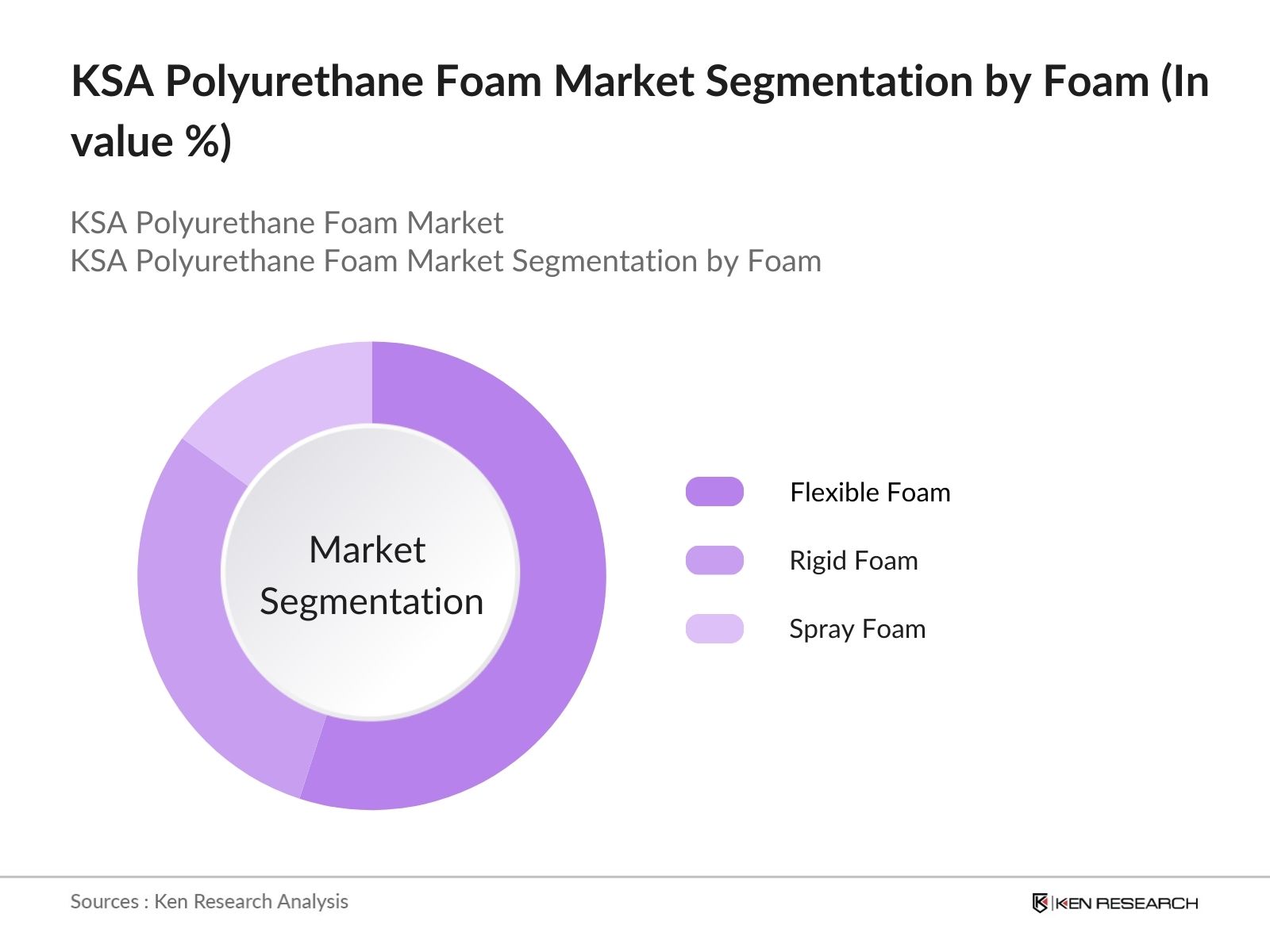
Rigid Foam Flexible Foam Spray Foam |
|
By End-User |
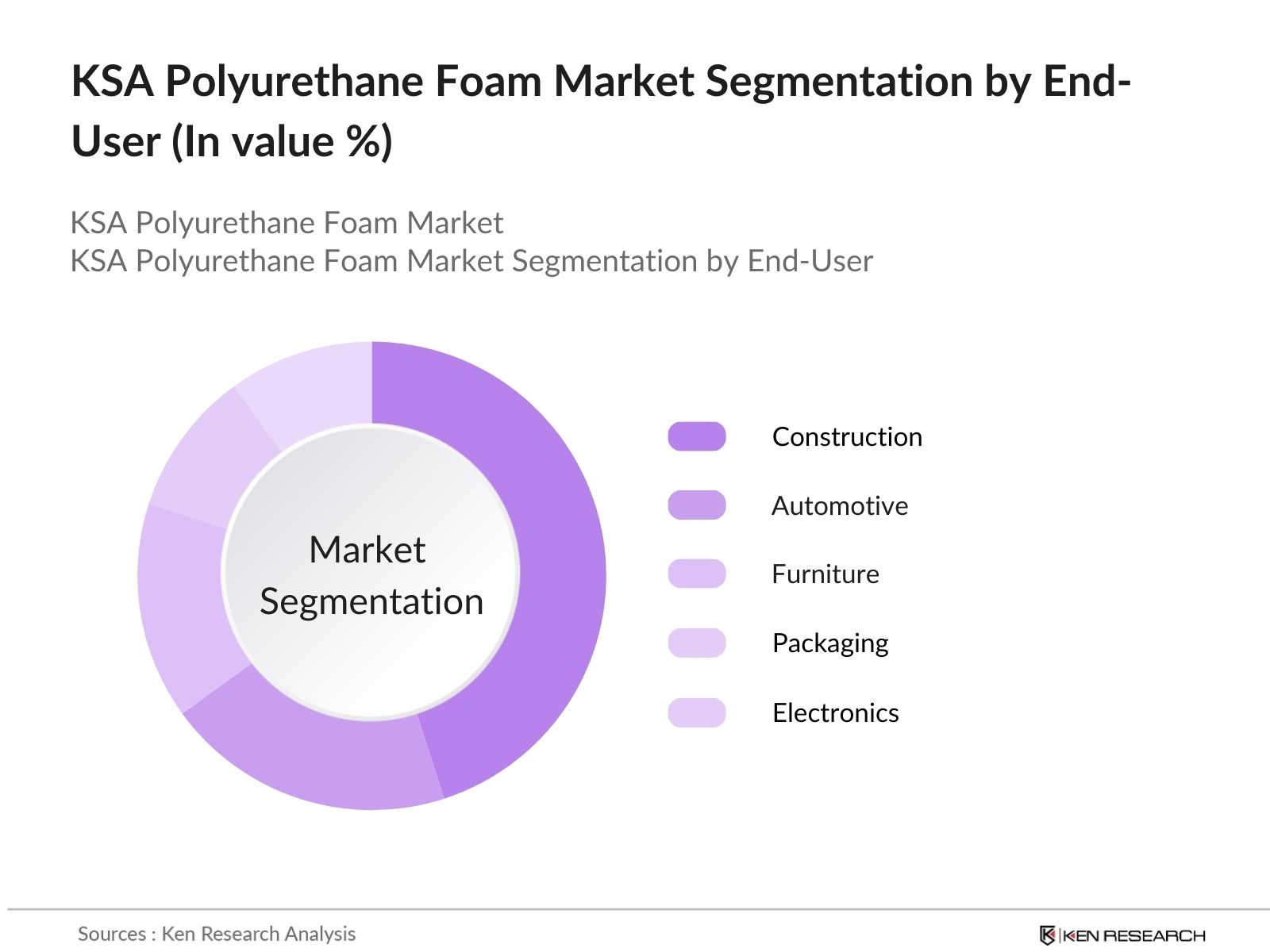
Construction Automotive Furniture Packaging Electronics |
|
By Application |
Insulation Seating Mattresses Packaging Others |
|
By Density |
Low-Density Foam Medium-Density Foam High-Density Foam |
|
By Region |
Central Eastern Western Southern |
1.1. Definition and Scope
1.2. Market Taxonomy
1.3. Market Growth Rate (CAGR, Drivers)
1.4. Market Segmentation Overview (By Type of Foam, By End-User, By Application, By Density, By Region)
2.1. Historical Market Size (Market Value and Volume)
2.2. Year-On-Year Growth Analysis (Trends, Economic Factors)
2.3. Key Market Developments and Milestones (Infrastructure Projects, Industry Initiatives)
3.1. Growth Drivers
3.1.1. Construction Sector Expansion (Mega Projects, Energy Efficiency Regulations)
3.1.2. Automotive Industry Growth (Vehicle Production Increase, Seating Solutions)
3.1.3. Rising Demand for Insulation Solutions (Sustainability, Green Building Regulations)
3.1.4. Increasing Urbanization (Residential Projects, Infrastructure Expansion)
3.2. Market Challenges
3.2.1. High Raw Material Costs (Fluctuating Petrochemical Prices)
3.2.2. Environmental Concerns (Non-Biodegradable, Chemical Composition)
3.2.3. Supply Chain Disruptions (Logistics Challenges, Import Reliance)
3.2.4. Stringent Environmental Regulations (Emissions, Recycling)
3.3. Opportunities
3.3.1. Development of Bio-based Polyurethane Foam (Eco-Friendly Alternatives)
3.3.2. Expansion into Smart Construction Materials (Integration with IoT)
3.3.3. Investments in Local Production Facilities (Reduced Import Dependence)
3.3.4. Rising Export Potential (GCC Demand, Global Market Opportunities)
3.4. Trends
3.4.1. Sustainability and Green Construction Initiatives (LEED, BREEAM Certifications)
3.4.2. Increasing Use of Flexible Foam in Furniture and Bedding (Comfort, Durability)
3.4.3. Growth in Spray Foam for Insulation (Energy Efficiency, Air Sealing Solutions)
3.5. Government Regulation
3.5.1. SASO Compliance (Safety and Quality Standards)
3.5.2. Energy Efficiency Regulations (Building Codes, Insulation Standards)
3.5.3. Vision 2030 Impact (Diversification, Industrial Growth)
3.5.4. Environmental Regulations (Recycling Programs, Emissions Standards)
3.6. SWOT Analysis
3.7. Stakeholder Ecosystem (Raw Material Suppliers, Distributors, End-Users)
3.8. Porters Five Forces (Supplier Bargaining Power, Buyer Power, Industry Rivalry, Threat of Substitutes, Entry Barriers)
3.9. Competition Ecosystem
4.1. By Type of Foam (In Value %)
Rigid Foam
Flexible Foam
Spray Foam
4.2. By End-User Industry (In Value %)
Construction
Automotive
Furniture
Packaging
Electronics
4.3. By Application (In Value %)
Insulation
Seating
Mattresses
Packaging
Others
4.4. By Density (In Value %)
Low-Density Foam
Medium-Density Foam
High-Density Foam
4.5. By Region (In Value %)
Central KSA (Riyadh)
Eastern Province (Dammam, Al-Khobar)
Western KSA (Jeddah, Makkah)
Northern KSA (Tabuk)
Southern KSA (Asir, Najran)
5.1. Detailed Profiles of Major Companies
5.1.1. BASF
5.1.2. Dow Chemical
5.1.3. Covestro
5.1.4. SABIC
5.1.5. Huntsman Corporation
5.1.6. Bayer MaterialScience
5.1.7. Recticel
5.1.8. Woodbridge Foam Corporation
5.1.9. Rogers Corporation
5.1.10. FXI
5.1.11. Carpenter Co.
5.1.12. Sekisui Chemical Co.
5.1.13. Covestro AG
5.1.14. British Vita
5.1.15. Zotefoams
5.2. Cross Comparison Parameters (Production Capacity, Revenue, Inception Year, Sustainability Initiatives, R&D Investment, Client Base, Manufacturing Sites, Strategic Partnerships)
5.3. Market Share Analysis
5.4. Strategic Initiatives
5.5. Mergers and Acquisitions
5.6. Investment Analysis
5.7. Venture Capital Funding
5.8. Government Grants
5.9. Private Equity Investments
6.1. Polyurethane Foam Manufacturing Standards (SASO, International Regulations)
6.2. Energy Efficiency Standards (Insulation Requirements, Building Regulations)
6.3. Environmental Certifications (Green Building Standards, Recycling Initiatives)
7.1. Future Market Size Projections (Expected Growth, Factors Driving Growth)
7.2. Key Factors Driving Future Market Growth (Vision 2030 Projects, Technological Advancements)
8.1. By Type of Foam (In Value %)
8.2. By End-User Industry (In Value %)
8.3. By Application (In Value %)
8.4. By Density (In Value %)
8.5. By Region (In Value %)
9.1. TAM/SAM/SOM Analysis (Addressable Market Size, Available Market)
9.2. Customer Cohort Analysis (Key Consumer Segments, Buying Behavior)
9.3. Marketing Initiatives (Positioning Strategies, Advertising Campaigns)
9.4. White Space Opportunity Analysis (Untapped Markets, Niche Segments)
Disclaimer Contact Us
The initial phase involves mapping out all major stakeholders within the KSA Polyurethane Foam Market. This is achieved through comprehensive desk research and leveraging proprietary databases to gather key industry information. The main objective is to identify the key variables influencing the market, such as raw material availability, regulatory changes, and technological advancements.
Historical data is analyzed to understand market trends, penetration, and key industry drivers. This phase also assesses the impact of various end-user industries on the demand for polyurethane foam. Additionally, market sizing and segmentation are conducted using revenue figures and market share estimates for different product categories.
Market hypotheses, including growth projections and demand factors, are validated through interviews and consultations with industry experts. These interviews provide critical insights into operational challenges, competitive dynamics, and product innovation, helping refine market estimates and projections.
The final stage involves synthesizing the research findings and producing the final report. This includes cross-verifying data collected from multiple sources to ensure accuracy. The final output is a comprehensive analysis of the KSA Polyurethane Foam market, including growth drivers, opportunities, challenges, and future outlook.
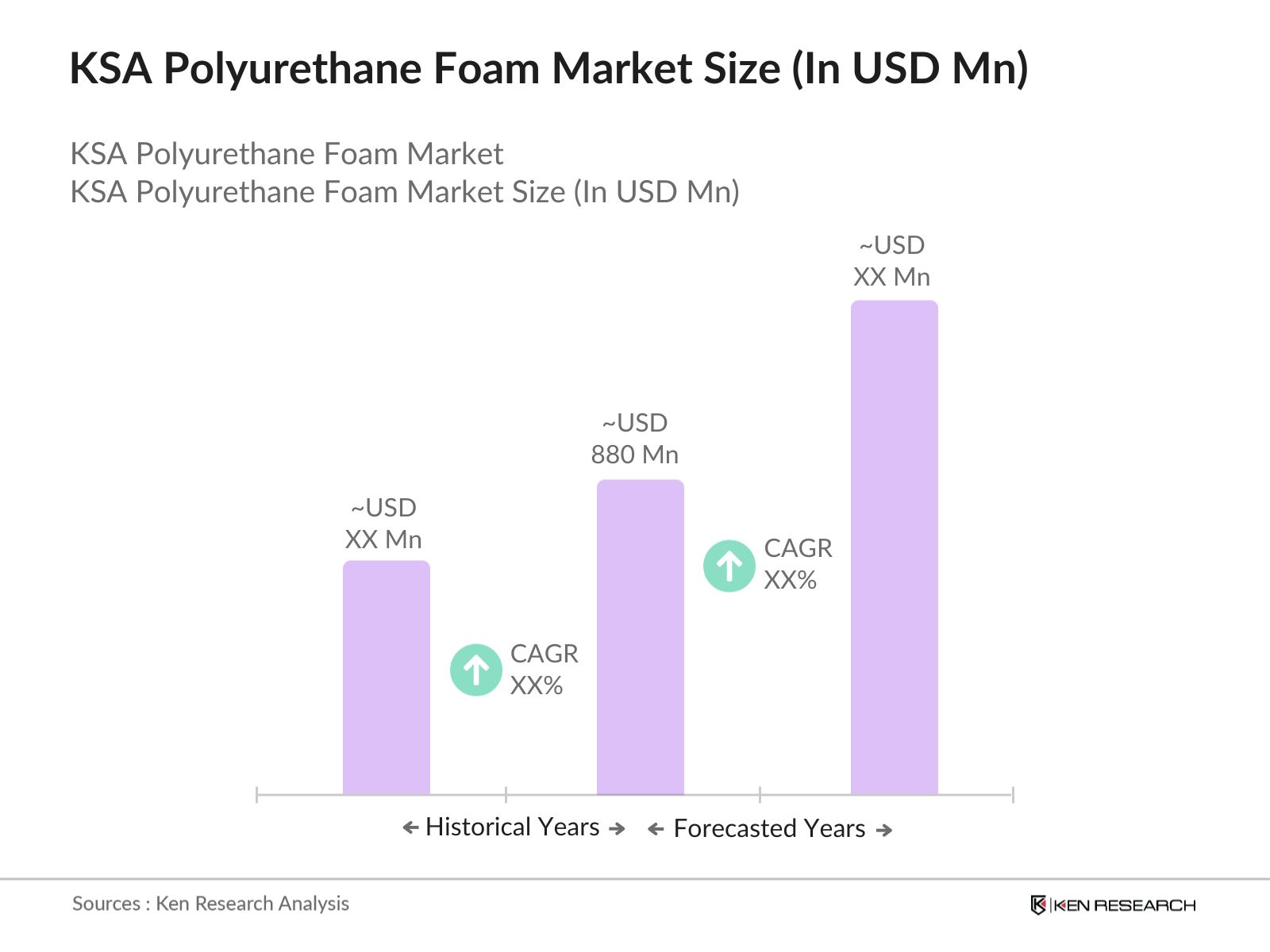
The KSA Polyurethane Foam market is valued at USD 880 million, driven by strong demand in construction, automotive, and furniture industries. The market benefits from the countrys push towards energy-efficient and sustainable building materials.
The KSA Polyurethane Foam market growth drivers include increased construction activities aligned with Vision 2030, expanding automotive production, and growing demand for energy-efficient insulation materials. The government's focus on sustainability is also boosting demand for environmentally friendly foam solutions.
Major players in the KSA Polyurethane Foam market include BASF, Covestro, Dow Chemical, SABIC, and Huntsman Corporation. These companies dominate the market due to their extensive product portfolios, strong R&D investments, and strategic partnerships with key industries.
Challenges in the KSA Polyurethane Foam market include fluctuating raw material costs, environmental concerns related to polyurethane foam production, and strict regulatory requirements for emissions and sustainability. These factors can impact profit margins and market expansion.

What makes us stand out is that our consultants follows Robust, Refine and Result (RRR) methodology. i.e. Robust for clear definitions, approaches and sanity checking, Refine for differentiating respondents facts and opinions and Result for presenting data with story

We have set a benchmark in the industry by offering our clients with syndicated and customized market research reports featuring coverage of entire market as well as meticulous research and analyst insights.

While we don't replace traditional research, we flip the method upside down. Our dual approach of Top Bottom & Bottom Top ensures quality deliverable by not just verifying company fundamentals but also looking at the sector and macroeconomic factors.

With one step in the future, our research team constantly tries to show you the bigger picture. We help with some of the tough questions you may encounter along the way: How is the industry positioned? Best marketing channel? KPI's of competitors? By aligning every element, we help maximize success.

Our report gives you instant access to the answers and sources that other companies might choose to hide. We elaborate each steps of research methodology we have used and showcase you the sample size to earn your trust.

If you need any support, we are here! We pride ourselves on universe strength, data quality, and quick, friendly, and professional service.