
KSA Smart Building Market Outlook to 2030
Region:Saudi Arabia
Author(s):Paribhasha Tiwari
Product Code:KROD3869
Region:Saudi Arabia
Author(s):Paribhasha Tiwari
Product Code:KROD3869
November 2024
86
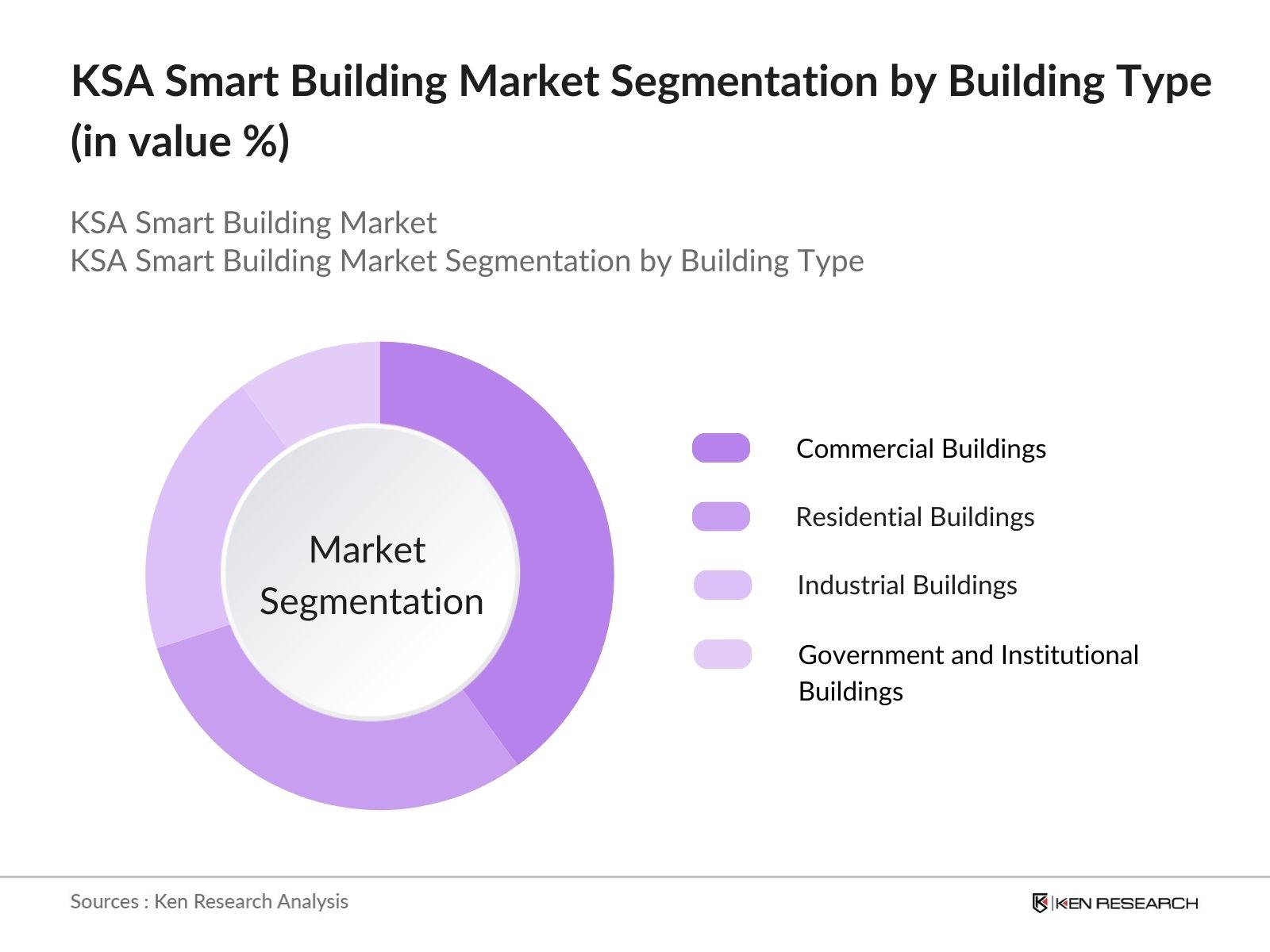
By Building Type: The KSA Smart Building market is segmented by building type into commercial buildings, residential buildings, industrial buildings, and government and institutional buildings. Commercial buildings hold a dominant share due to the increasing number of smart office spaces and commercial facilities integrating advanced building automation systems. The significant demand for smart solutions in commercial real estate, driven by corporate tenants seeking energy-efficient and technologically integrated workspaces, solidifies this segments market dominance. Additionally, large-scale commercial projects, such as shopping malls and business parks, further fuel growth in this segment.
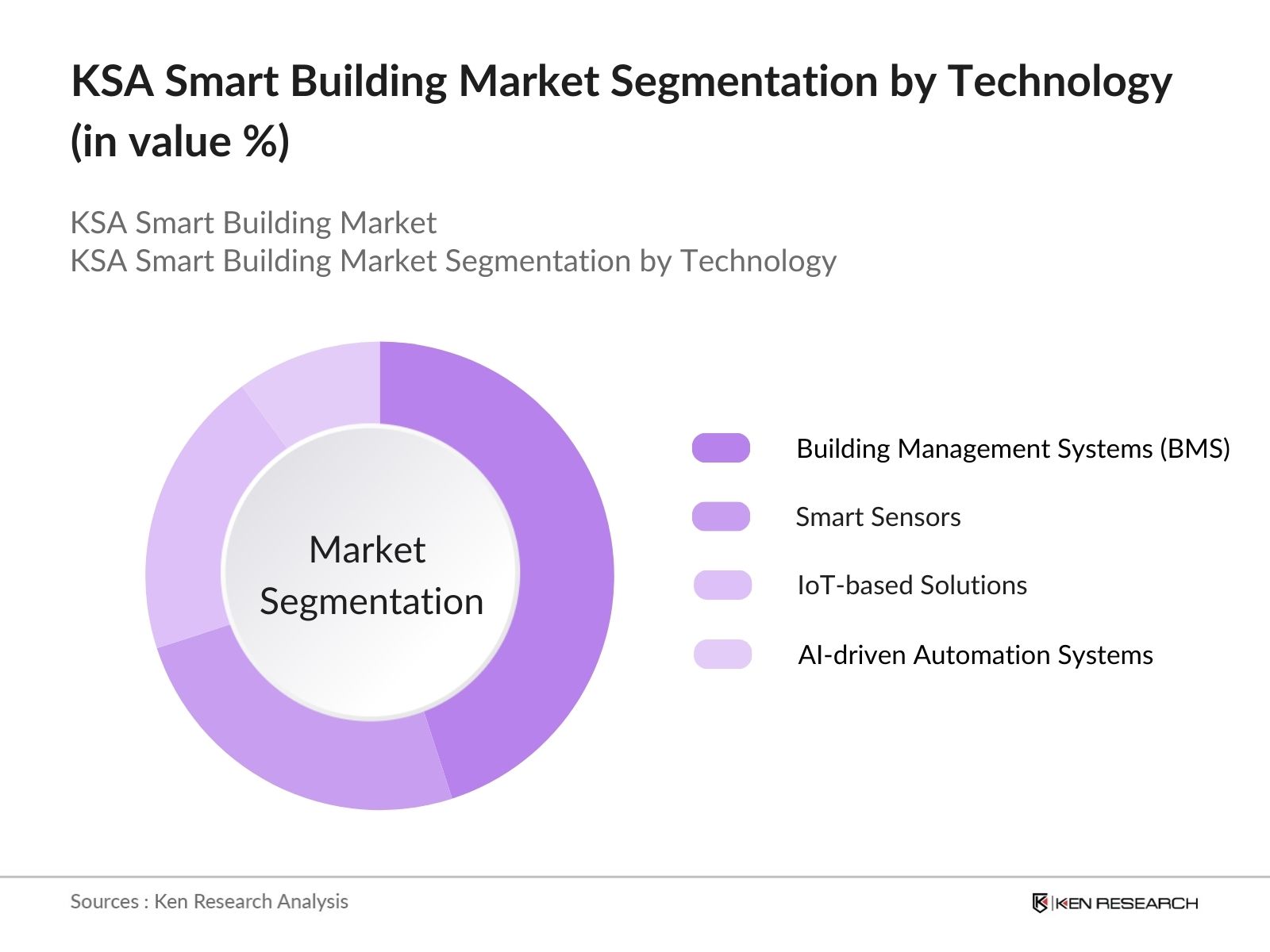
By Technology: The market is also segmented by technology into smart sensors, building management systems (BMS), IoT-based solutions, and AI-driven automation systems. Building Management Systems (BMS) currently dominate this segment due to their critical role in overseeing all aspects of building operations, from HVAC and lighting to security and access control. The ability of BMS to integrate various smart technologies into a single, centralized system has made it indispensable in both new smart buildings and retrofitting older structures with automation capabilities. Furthermore, the energy savings provided by BMS systems are aligned with government regulations focusing on reducing carbon emissions and promoting sustainability.
The KSA Smart Building Market is dominated by several key players, both local and international. The consolidation of key companies has provided a strong competitive landscape, with global tech giants and local construction firms working together to revolutionize building systems in the Kingdom. The market benefits from high investments in research and development, strong supplier networks, and technological innovation. Notable competitors include companies such as Johnson Controls International and Honeywell, which have been pivotal in providing smart building solutions across commercial and residential sectors.
|
Company |
Establishment Year |
Headquarters |
R&D Investment |
Revenue (USD bn) |
Smart Technology Patents |
Global Market Reach |
Sustainability Initiatives |
|
Johnson Controls International |
1885 |
Ireland |
- |
- |
- |
- |
- |
|
Honeywell International |
1906 |
USA |
- |
- |
- |
- |
- |
|
Siemens AG |
1847 |
Germany |
- |
- |
- |
- |
- |
|
Schneider Electric |
1836 |
France |
- |
- |
- |
- |
- |
|
ABB Group |
1988 |
Switzerland |
- |
- |
- |
- |
- |
Over the next five years, the KSA Smart Building Market is expected to grow significantly due to the continuous expansion of urban areas and government support for smart city projects. The rapid adoption of IoT and AI technologies, alongside the demand for energy-efficient solutions, will drive the growth of smart buildings. Saudi Arabia's Vision 2030 initiative will also play a key role, promoting sustainable development and high-tech infrastructure.
|
By Building Type |
Commercial Residential Industrial Government |
|
By Technology |
Smart Sensors BMS IoT-based Solutions AI-driven Building Automation |
|
By Application |
Energy Management Security HVAC Control Lighting Control |
|
By Component |
Hardware Software Services |
|
By Region |
Riyadh Jeddah Dammam Al Khobar Mecca |
1.1. Definition and Scope
1.2. Market Taxonomy
1.3. Market Growth Rate
1.4. Market Segmentation Overview
2.1. Historical Market Size
2.2. Year-On-Year Growth Analysis
2.3. Key Market Developments and Milestones
3.1. Growth Drivers
3.1.1. Urbanization and Population Density
3.1.2. Increased Energy Efficiency Regulations
3.1.3. Rising Investments in Smart Cities (Government-backed projects, e.g., Neom)
3.1.4. Growing Awareness of Sustainable Development
3.2. Market Challenges
3.2.1. High Initial Investment Costs (Smart Technology, Automation)
3.2.2. Lack of Skilled Workforce
3.2.3. Resistance to Adoption Due to Traditional Building Practices
3.3. Opportunities
3.3.1. Technological Advancements in IoT and AI
3.3.2. Collaboration Between Construction and Technology Sectors
3.3.3. Expansion into Non-Metropolitan Areas
3.4. Trends
3.4.1. Integration of AI for Predictive Maintenance
3.4.2. Use of Smart Sensors for Energy Management
3.4.3. Increasing Demand for Green Buildings
3.5. Government Regulations
3.5.1. Vision 2030 Smart Infrastructure Initiatives
3.5.2. Regulatory Framework for Energy Consumption Reduction
3.5.3. Public-Private Partnerships for Smart Cities Development
3.6. SWOT Analysis
3.7. Stakeholder Ecosystem
3.8. Porters Five Forces Analysis
3.9. Competition Ecosystem
4.1. By Building Type (In Value %)
4.1.1. Commercial Buildings
4.1.2. Residential Buildings
4.1.3. Industrial Buildings
4.1.4. Government and Institutional Buildings
4.2. By Technology (In Value %)
4.2.1. Smart Sensors
4.2.2. Building Management Systems (BMS)
4.2.3. IoT-based Solutions
4.2.4. AI-driven Building Automation
4.3. By Application (In Value %)
4.3.1. Energy Management
4.3.2. Security and Access Control
4.3.3. HVAC Control Systems
4.3.4. Lighting Control Systems
4.4 By Component (In Value %)
4.4.1. Hardware
4.4.2. Software
4.4.3. Services
4.5. By Region (In Value %)
4.5.1. North
4.5.2. South
4.5.3. East
4.5.4. West
5.1. Detailed Profiles of Major Companies
5.1.1. Johnson Controls International
5.1.2. Honeywell International
5.1.3. Siemens AG
5.1.4. Schneider Electric
5.1.5. ABB Group
5.1.6. Cisco Systems Inc.
5.1.7. Legrand
5.1.8. United Technologies Corporation
5.1.9. IBM Corporation
5.1.10. Hitachi Ltd.
5.1.11. Panasonic Corporation
5.1.12. General Electric
5.1.13. Honeywell Building Solutions
5.1.14. Trane Technologies
5.1.15. Daikin Industries Ltd.
5.2. Cross Comparison Parameters (No. of Employees, Headquarters, Inception Year, Revenue, R&D Investment, Market Share, Sustainability Initiatives, Smart Building Patents)
5.3. Market Share Analysis
5.4. Strategic Initiatives
5.5. Mergers and Acquisitions
5.6. Investment Analysis
5.7. Venture Capital Funding
5.8. Government Grants and Incentives
6.1. Building and Energy Codes
6.2. Smart Building Certification Requirements
6.3. Green Building Certifications (LEED, BREEAM)
6.4. Government-Sponsored Smart Building Programs
7.1. Future Market Size Projections
7.2. Key Factors Driving Future Market Growth
8.1. By Building Type (In Value %)
8.2. By Technology (In Value %)
8.3. By Application (In Value %)
8.4. By Component (In Value %)
8.5. By Region (In Value %)
9.1. TAM/SAM/SOM Analysis
9.2. Customer Cohort Analysis
9.3. Marketing Initiatives
9.4. White Space Opportunity Analysis
Disclaimer Contact UsThe first step involves mapping the entire ecosystem of the KSA Smart Building Market. Desk research is utilized to gather market information from secondary sources, government databases, and industry reports. The goal is to identify the critical variables that influence market trends, including technology adoption and government regulations.
In this step, historical data is compiled to understand market penetration and the financial performance of key players. The data is evaluated to measure service quality and market opportunities, ensuring accurate revenue estimates.
Market hypotheses are formulated based on initial findings. These are then validated through expert interviews from leading smart building technology providers, offering insights into market operations, challenges, and opportunities.
The final phase involves data validation and synthesis from smart building solution providers. This ensures the accuracy of market estimates and provides a well-rounded perspective on industry performance.
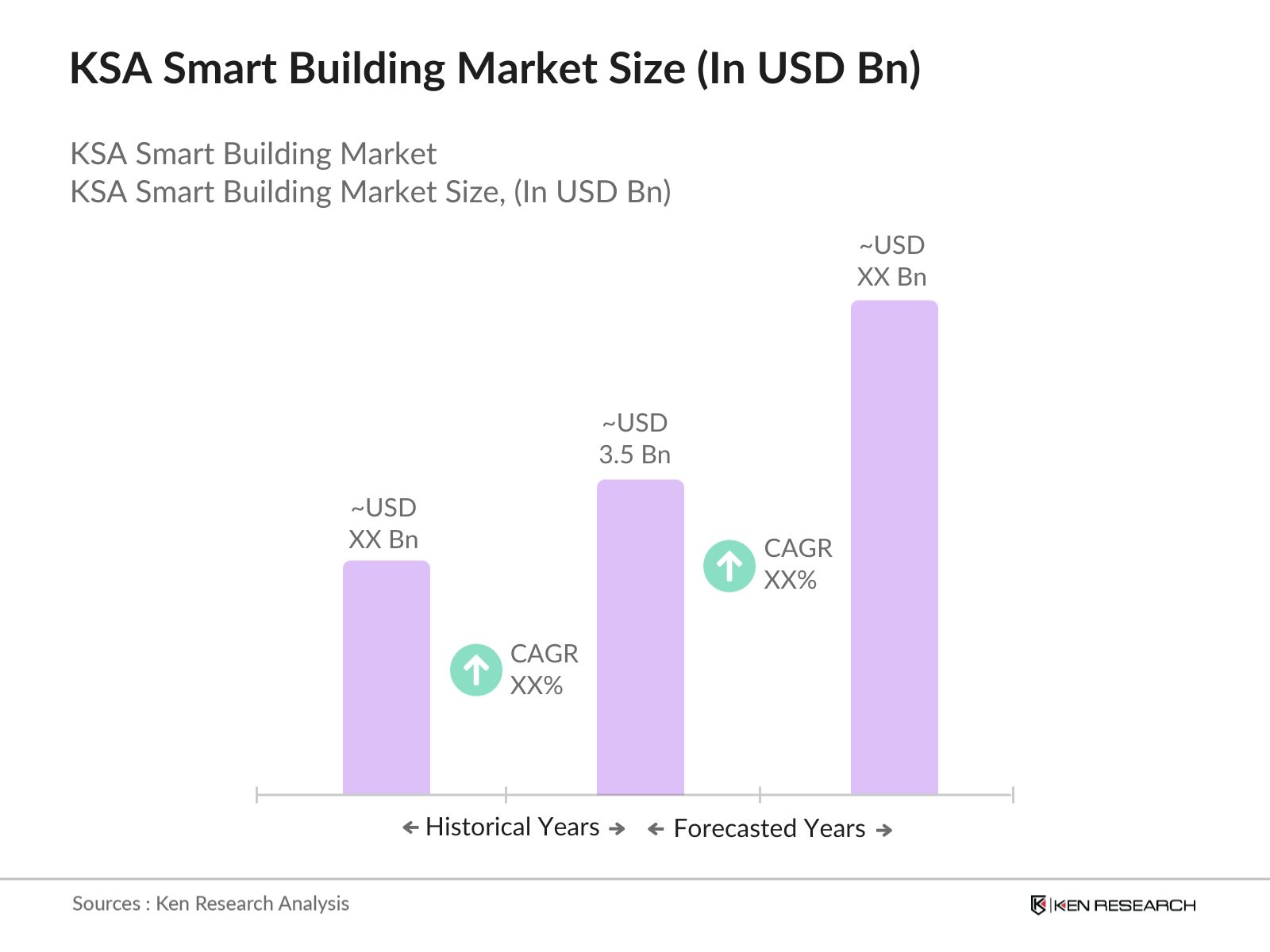
The KSA Smart Building Market is valued at USD 3.5 billion, driven by government initiatives like Vision 2030 and increasing investments in smart infrastructure projects.
Challenges include high initial investment costs, the need for skilled labor to implement smart technologies, and resistance to adopting automation solutions in traditional buildings.
Key players include Johnson Controls International, Honeywell International, Siemens AG, Schneider Electric, and ABB Group, all of which lead due to their expertise in building management systems and smart technologies.
Growth is propelled by government-backed smart city projects, increased demand for energy-efficient solutions, and the integration of AI and IoT into building automation systems.

What makes us stand out is that our consultants follows Robust, Refine and Result (RRR) methodology. i.e. Robust for clear definitions, approaches and sanity checking, Refine for differentiating respondents facts and opinions and Result for presenting data with story

We have set a benchmark in the industry by offering our clients with syndicated and customized market research reports featuring coverage of entire market as well as meticulous research and analyst insights.

While we don't replace traditional research, we flip the method upside down. Our dual approach of Top Bottom & Bottom Top ensures quality deliverable by not just verifying company fundamentals but also looking at the sector and macroeconomic factors.

With one step in the future, our research team constantly tries to show you the bigger picture. We help with some of the tough questions you may encounter along the way: How is the industry positioned? Best marketing channel? KPI's of competitors? By aligning every element, we help maximize success.

Our report gives you instant access to the answers and sources that other companies might choose to hide. We elaborate each steps of research methodology we have used and showcase you the sample size to earn your trust.

If you need any support, we are here! We pride ourselves on universe strength, data quality, and quick, friendly, and professional service.