Region:Middle East
Author(s):Shubham
Product Code:KRAD3564
Pages:90
Published On:November 2025
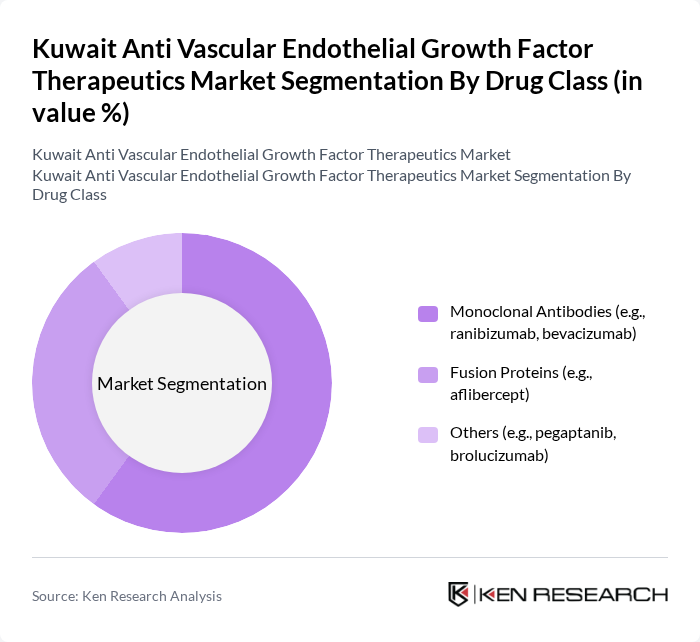
By Drug Class:The market is segmented into three main drug classes: Monoclonal Antibodies, Fusion Proteins, and Others. Monoclonal antibodies, such as ranibizumab and bevacizumab, dominate the market due to their proven efficacy and widespread acceptance among healthcare professionals. Fusion proteins like aflibercept are also gaining traction, while other treatments, including pegaptanib and brolucizumab, hold a smaller share. The increasing adoption of these therapies is driven by their effectiveness in managing various retinal conditions. The market’s preference for monoclonal antibodies is reinforced by their established safety profile and broad clinical use in Kuwait’s hospital network .
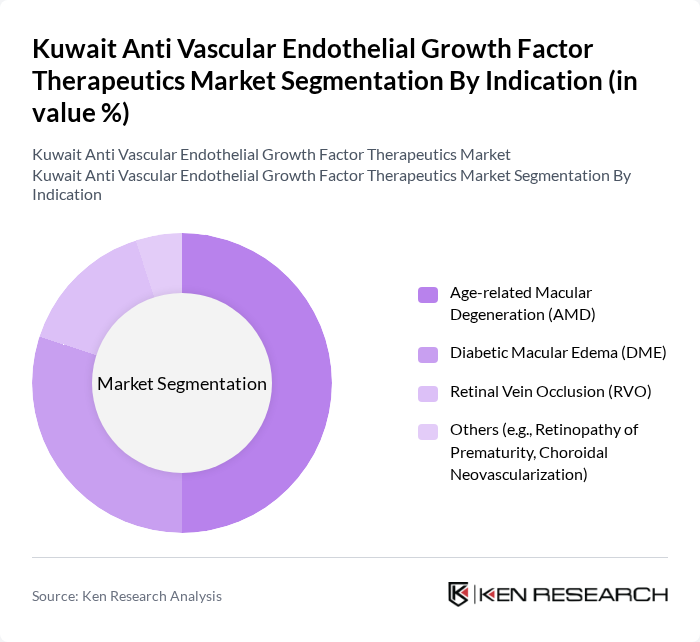
By Indication:The market is segmented based on indications, including Age-related Macular Degeneration (AMD), Diabetic Macular Edema (DME), Retinal Vein Occlusion (RVO), and Others. Age-related Macular Degeneration is the leading indication, driven by the aging population and increasing awareness of eye health. Diabetic Macular Edema follows closely, reflecting the rising incidence of diabetes in the region. Other indications, while important, represent a smaller segment of the market. The high prevalence of diabetes and chronic eye conditions in Kuwait directly supports the dominance of AMD and DME in anti-VEGF therapy utilization .
The Kuwait Anti Vascular Endothelial Growth Factor Therapeutics Market is characterized by a dynamic mix of regional and international players. Leading participants such as Novartis AG, F. Hoffmann-La Roche Ltd., Bayer AG, Regeneron Pharmaceuticals, Inc., Amgen Inc., Pfizer Inc., Santen Pharmaceutical Co., Ltd., Allergan (an AbbVie company), Teva Pharmaceutical Industries Ltd., Hikma Pharmaceuticals PLC, Alcon Inc., Viatris Inc. (Mylan), Xbrane Biopharma AB, Sanofi S.A., AbbVie Inc. contribute to innovation, geographic expansion, and service delivery in this space.
The future of the anti-VEGF therapeutics market in Kuwait appears promising, driven by ongoing advancements in healthcare infrastructure and increasing public awareness campaigns. As the government invests in healthcare facilities and technology, access to innovative treatments will improve. Additionally, the integration of telemedicine is expected to enhance patient engagement and follow-up care, ensuring that more individuals receive timely treatment for retinal diseases, ultimately fostering market growth and improving patient outcomes.
| Segment | Sub-Segments |
|---|---|
| By Drug Class | Monoclonal Antibodies (e.g., ranibizumab, bevacizumab) Fusion Proteins (e.g., aflibercept) Others (e.g., pegaptanib, brolucizumab) |
| By Indication | Age-related Macular Degeneration (AMD) Diabetic Macular Edema (DME) Retinal Vein Occlusion (RVO) Others (e.g., Retinopathy of Prematurity, Choroidal Neovascularization) |
| By Route of Administration | Intravitreal Injections Others (e.g., Topical, Subretinal) |
| By End User | Hospitals Ophthalmic Clinics Ambulatory Surgical Centers Others (e.g., Research Institutes, Academic Centers) |
| By Distribution Channel | Hospital Pharmacies Retail Pharmacies Online Pharmacies |
| By Geography | Urban Areas Rural Areas |
| By Treatment Stage | First-Line Treatment Second-Line Treatment |
| By Patient Demographics | Age Group (Pediatric, Adult, Geriatric) Gender (Male, Female) |
| Scope Item/Segment | Sample Size | Target Respondent Profiles |
|---|---|---|
| Oncology Clinics | 60 | Oncologists, Clinical Pharmacists |
| Ophthalmology Practices | 50 | Ophthalmologists, Retina Specialists |
| Hospital Administrators | 40 | Procurement Managers, Pharmacy Directors |
| Patient Advocacy Groups | 40 | Patient Representatives, Healthcare Advocates |
| Health Insurance Providers | 40 | Medical Directors, Claims Analysts |
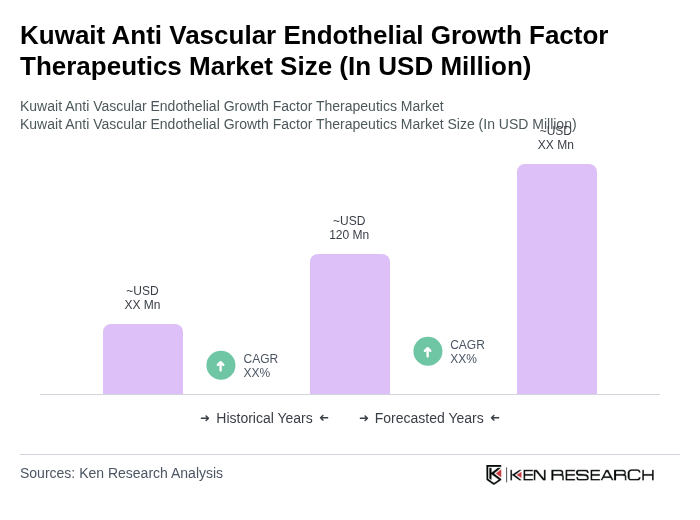
The Kuwait Anti Vascular Endothelial Growth Factor Therapeutics Market is valued at approximately USD 120 million, reflecting a significant growth driven by the rising prevalence of retinal diseases and advancements in therapeutic options.

What makes us stand out is that our consultants follow Robust, Refine and Result (RRR) methodology. Robust for clear definitions, approaches and sanity checking, Refine for differentiating respondents' facts and opinions, and Result for presenting data with story.

We have set a benchmark in the industry by offering our clients with syndicated and customized market research reports featuring coverage of entire market as well as meticulous research and analyst insights.

While we don't replace traditional research, we flip the method upside down. Our dual approach of Top Bottom & Bottom Top ensures quality deliverable by not just verifying company fundamentals but also looking at the sector and macroeconomic factors.

With one step in the future, our research team constantly tries to show you the bigger picture. We help with some of the tough questions you may encounter along the way: How is the industry positioned? Best marketing channel? KPI's of competitors? By aligning every element, we help maximize success.

Our report gives you instant access to the answers and sources that other companies might choose to hide. We elaborate each steps of research methodology we have used and showcase you the sample size to earn your trust.

If you need any support, we are here! We pride ourselves on universe strength, data quality, and quick, friendly, and professional service.













