Region:Middle East
Author(s):Geetanshi
Product Code:KRAC4407
Pages:93
Published On:October 2025
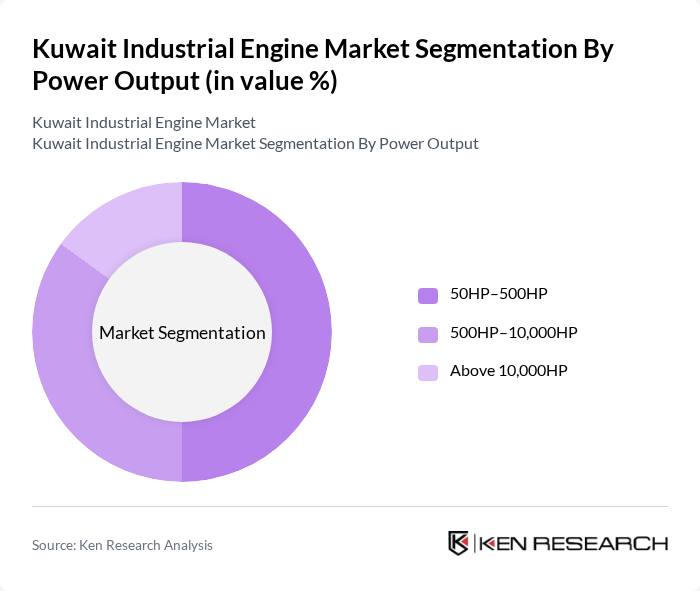
By Power Output:The power output segmentation of the market includes three subsegments: 50HP–500HP, 500HP–10,000HP, and Above 10,000HP. The 50HP–500HP segment is currently the most dominant due to its widespread application in various industries, including agriculture and small-scale manufacturing. The 500HP–10,000HP segment is also significant, particularly in the oil and gas sector, where higher power outputs are required for heavy machinery. The Above 10,000HP segment, while smaller, caters to specialized applications in large-scale industrial operations. Market segmentation by power rating is supported by industry analysis, though exact share figures for Kuwait are not publicly available in the cited sources.
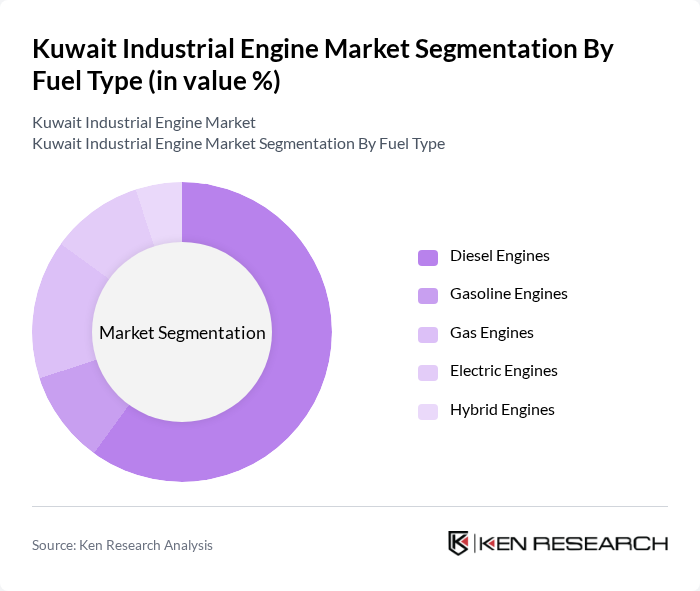
By Fuel Type:The fuel type segmentation includes Diesel Engines, Gasoline Engines, Gas Engines, Electric Engines, and Hybrid Engines. Diesel Engines dominate the market due to their efficiency and reliability in heavy-duty applications, particularly in the oil and gas sector. Gas Engines are gaining traction as a cleaner alternative, while Electric Engines are emerging due to the increasing focus on sustainability. Gasoline and Hybrid Engines, although smaller segments, are also witnessing growth driven by advancements in technology and changing consumer preferences. While global data shows diesel engines hold a majority share, specific Kuwaiti market breakdowns by fuel type are not detailed in the available sources.
The Kuwait Industrial Engine Market is characterized by a dynamic mix of regional and international players. Leading participants such as Caterpillar Inc., Cummins Inc., MAN Energy Solutions, Mitsubishi Heavy Industries, Ltd., Wärtsilä Corporation, Volvo Penta, Perkins Engines Company Limited, Yanmar Co., Ltd., Deutz AG, Kohler Co., Scania AB, Hatz Diesel, FPT Industrial S.p.A., Isuzu Motors Ltd., John Deere, Al-Bahar (Caterpillar dealer, Kuwait), Alghanim Industries, Al-Sayer Group contribute to innovation, geographic expansion, and service delivery in this space.
The future of the Kuwait industrial engine market appears promising, driven by technological advancements and a strong focus on sustainability. As industries increasingly adopt automation and IoT technologies, the demand for smart, efficient engines is expected to rise. Additionally, the government's commitment to infrastructure development will likely create new opportunities for engine manufacturers. In future, the market is anticipated to evolve significantly, with a shift towards hybrid and renewable energy solutions becoming more prevalent, aligning with global sustainability trends.
| Segment | Sub-Segments |
|---|---|
| By Power Output | HP–500HP HP–10,000HP Above 10,000HP |
| By Fuel Type | Diesel Engines Gasoline Engines Gas Engines Electric Engines Hybrid Engines |
| By Type | Stroke Engines Stroke Engines |
| By End-Use | Power Generation General Manufacturing Oil & Gas Marine Agriculture/Off-road Vehicles Construction Mining & Metallurgy Transportation Others |
| By Sales Channel | Direct Sales Distributors Online Sales Retail Others |
| By Distribution Mode | Wholesale Retail E-commerce Direct Delivery Others |
| By Price Range | Low-End Mid-Range High-End Luxury |
| By Policy Support | Subsidies Tax Exemptions Grants Others |
| Scope Item/Segment | Sample Size | Target Respondent Profiles |
|---|---|---|
| Construction Equipment Engines | 80 | Project Managers, Equipment Procurement Officers |
| Manufacturing Machinery Engines | 65 | Operations Managers, Production Supervisors |
| Oil & Gas Industry Engines | 70 | Field Engineers, Maintenance Managers |
| Marine Engine Applications | 50 | Marine Operations Managers, Fleet Supervisors |
| Power Generation Engines | 75 | Energy Managers, Technical Directors |
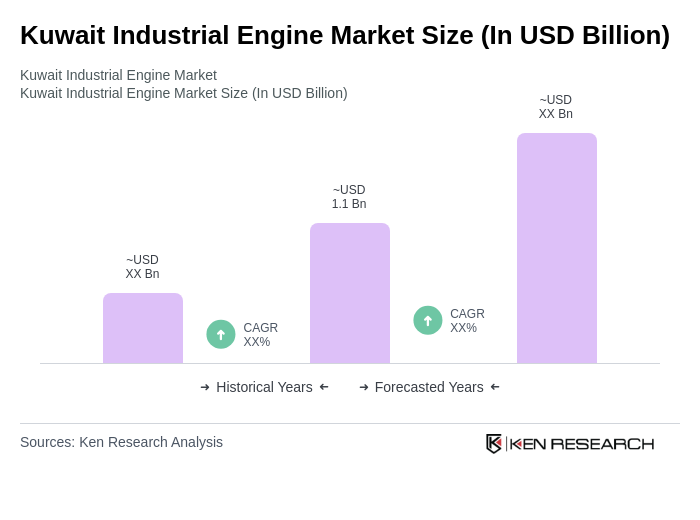
The Kuwait Industrial Engine Market is valued at approximately USD 1.1 billion, driven by increasing demand in sectors such as oil and gas, construction, and manufacturing, alongside government initiatives for economic diversification and infrastructure development.

What makes us stand out is that our consultants follow Robust, Refine and Result (RRR) methodology. Robust for clear definitions, approaches and sanity checking, Refine for differentiating respondents' facts and opinions, and Result for presenting data with story.

We have set a benchmark in the industry by offering our clients with syndicated and customized market research reports featuring coverage of entire market as well as meticulous research and analyst insights.

While we don't replace traditional research, we flip the method upside down. Our dual approach of Top Bottom & Bottom Top ensures quality deliverable by not just verifying company fundamentals but also looking at the sector and macroeconomic factors.

With one step in the future, our research team constantly tries to show you the bigger picture. We help with some of the tough questions you may encounter along the way: How is the industry positioned? Best marketing channel? KPI's of competitors? By aligning every element, we help maximize success.

Our report gives you instant access to the answers and sources that other companies might choose to hide. We elaborate each steps of research methodology we have used and showcase you the sample size to earn your trust.

If you need any support, we are here! We pride ourselves on universe strength, data quality, and quick, friendly, and professional service.













