Region:Middle East
Author(s):Rebecca
Product Code:KRAE0832
Pages:84
Published On:December 2025
By Type:The market can be segmented into various types of storage furniture, including wooden storage furniture, plastic storage furniture, metal storage furniture, fabric storage solutions, modular storage units, themed storage furniture, and others. Each type caters to different consumer preferences and needs, influencing market dynamics significantly.
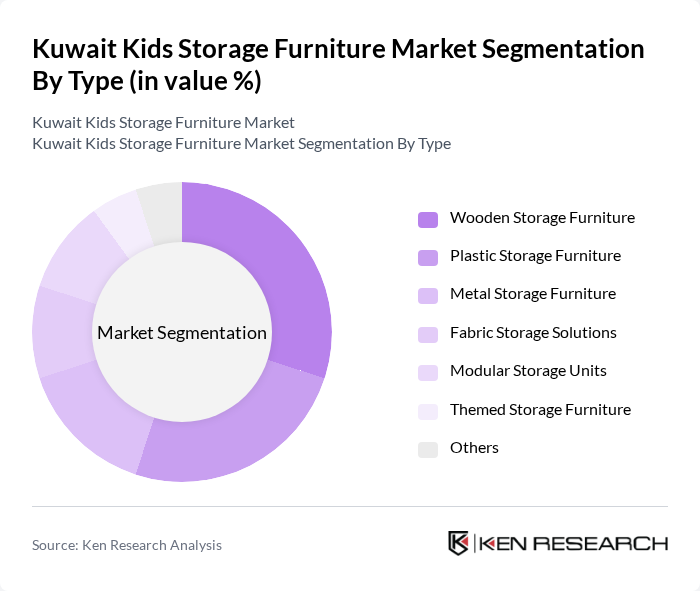
The wooden storage furniture segment dominates the market due to its durability, aesthetic appeal, and the perception of quality associated with wood. Consumers often prefer wooden options for their children's rooms as they are seen as safer and more environmentally friendly. Additionally, the trend towards sustainable living has further boosted the demand for wooden products. Plastic storage furniture follows closely, appealing to budget-conscious consumers and those seeking lightweight, easy-to-clean options. The versatility and affordability of plastic solutions make them popular among families.
By End-User:The market can also be segmented based on end-users, which include households, schools, daycare centers, retail stores, and others. Each end-user category has distinct requirements and preferences that shape the market landscape.
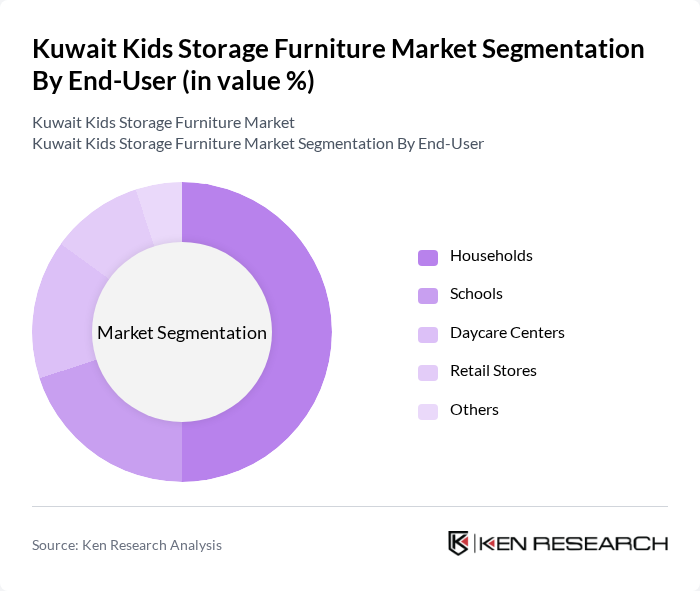
Households represent the largest segment in the market, driven by the increasing number of families and the need for organized storage solutions for children's toys, clothes, and other items. The growing trend of personalized children's spaces has led to a rise in demand for unique and functional storage options. Schools and daycare centers also contribute significantly to the market, as they require durable and safe storage solutions for educational materials and children's belongings. Retail stores, while smaller in comparison, play a crucial role in showcasing and selling these products to consumers.
The Kuwait Kids Storage Furniture Market is characterized by a dynamic mix of regional and international players. Leading participants such as IKEA, Home Centre, Pan Emirates, Al-Futtaim Group, KidKraft, Little Tikes, Delta Children, Dream On Me, Step2, Melissa & Doug, Totsy, Pali Design, Graco, Sorelle, DaVinci contribute to innovation, geographic expansion, and service delivery in this space.
The future of the Kuwait kids storage furniture market appears promising, driven by evolving consumer preferences and technological advancements. As families increasingly prioritize sustainability, manufacturers are likely to adopt eco-friendly materials and practices. Additionally, the integration of smart technology into furniture design will cater to tech-savvy parents seeking innovative solutions. The rise of e-commerce platforms will further enhance accessibility, allowing consumers to explore diverse options conveniently, thus shaping a dynamic market landscape in the coming years.
| Segment | Sub-Segments |
|---|---|
| By Type | Wooden Storage Furniture Plastic Storage Furniture Metal Storage Furniture Fabric Storage Solutions Modular Storage Units Themed Storage Furniture Others |
| By End-User | Households Schools Daycare Centers Retail Stores Others |
| By Material | Wood Plastic Metal Fabric Others |
| By Design | Traditional Modern Minimalist Themed Others |
| By Distribution Channel | Online Retail Offline Retail Direct Sales Others |
| By Price Range | Budget Mid-Range Premium Others |
| By Age Group | Toddlers Preschoolers School-Aged Children Others |
| Scope Item/Segment | Sample Size | Target Respondent Profiles |
|---|---|---|
| Retail Furniture Outlets | 100 | Store Managers, Sales Representatives |
| Online Furniture Retailers | 80 | E-commerce Managers, Digital Marketing Specialists |
| Parents of Children Aged 0-12 | 150 | Parents, Guardians |
| Interior Designers Specializing in Kids' Spaces | 50 | Interior Designers, Home Decor Consultants |
| Manufacturers of Kids' Furniture | 70 | Product Managers, R&D Heads |
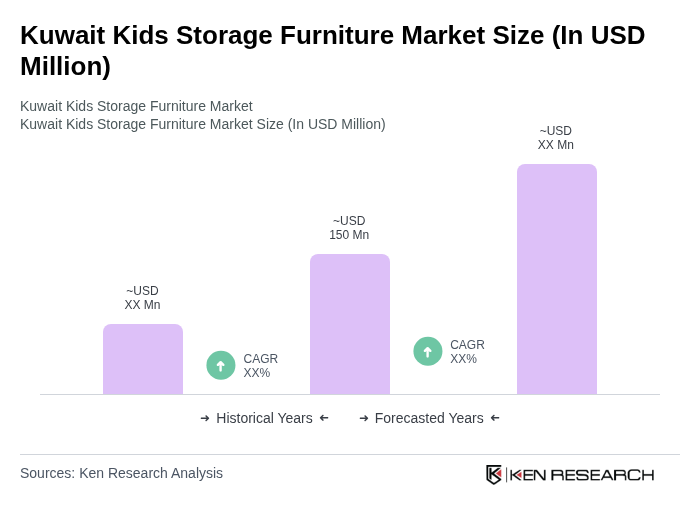
The Kuwait Kids Storage Furniture Market is valued at approximately USD 150 million, reflecting a significant growth trend driven by urbanization, rising disposable incomes, and a growing emphasis on organized living spaces for children.

What makes us stand out is that our consultants follow Robust, Refine and Result (RRR) methodology. Robust for clear definitions, approaches and sanity checking, Refine for differentiating respondents' facts and opinions, and Result for presenting data with story.

We have set a benchmark in the industry by offering our clients with syndicated and customized market research reports featuring coverage of entire market as well as meticulous research and analyst insights.

While we don't replace traditional research, we flip the method upside down. Our dual approach of Top Bottom & Bottom Top ensures quality deliverable by not just verifying company fundamentals but also looking at the sector and macroeconomic factors.

With one step in the future, our research team constantly tries to show you the bigger picture. We help with some of the tough questions you may encounter along the way: How is the industry positioned? Best marketing channel? KPI's of competitors? By aligning every element, we help maximize success.

Our report gives you instant access to the answers and sources that other companies might choose to hide. We elaborate each steps of research methodology we have used and showcase you the sample size to earn your trust.

If you need any support, we are here! We pride ourselves on universe strength, data quality, and quick, friendly, and professional service.













