About the Report
Base Year 2024Kuwait Pelvic Floor Electric Stimulator Market Overview
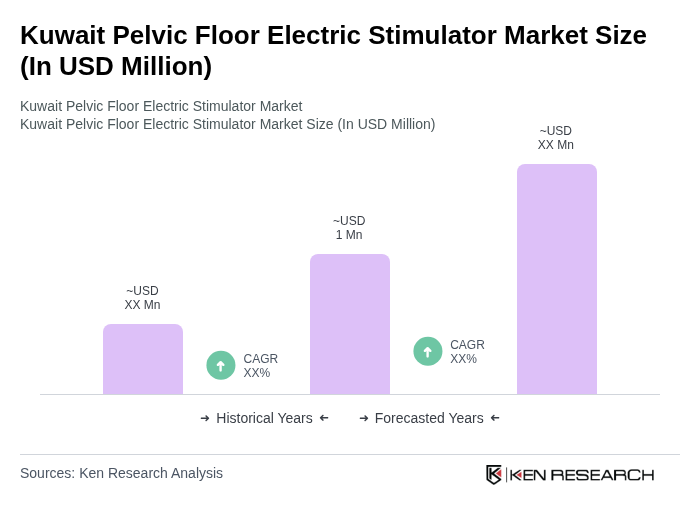
- The Kuwait Pelvic Floor Electric Stimulator Market is valued at USD 1 million, based on a five-year historical analysis. This growth is primarily driven by increasing awareness of pelvic health issues, rising incidences of urinary incontinence, and advancements in medical technology that enhance treatment efficacy. The market is also supported by a growing geriatric population, which is more susceptible to pelvic floor disorders, along with broader adoption of non-invasive, device-based pelvic rehabilitation solutions.
- Kuwait City is the dominant region in the market due to its advanced healthcare infrastructure and concentration of medical facilities, consistent with the country’s pattern of centralized tertiary care and higher specialist service availability in the capital. Other notable areas include Hawalli and Al Ahmadi, where there is a significant demand for pelvic health solutions driven by a higher prevalence of lifestyle-related chronic conditions and access to private clinics. The urbanization and healthcare investments in these regions, including expansion of outpatient rehabilitation and women’s health services, further bolster market growth.
- Medical devices, including pelvic floor electric stimulators, are regulated under the Medical Device Regulation issued by the Kuwait Ministry of Health’s Drug and Food Control Administration, which requires product registration, conformity to international standards (such as CE or FDA clearance), authorized local representation, and post-market vigilance as conditions for importation and public-sector procurement. Within this framework, devices that are registered and listed for hospital use can be procured through government tenders and covered under public healthcare financing, supporting access for patients with pelvic floor disorders and promoting adoption across public and private healthcare facilities.
Kuwait Pelvic Floor Electric Stimulator Market Segmentation
By Product Type:
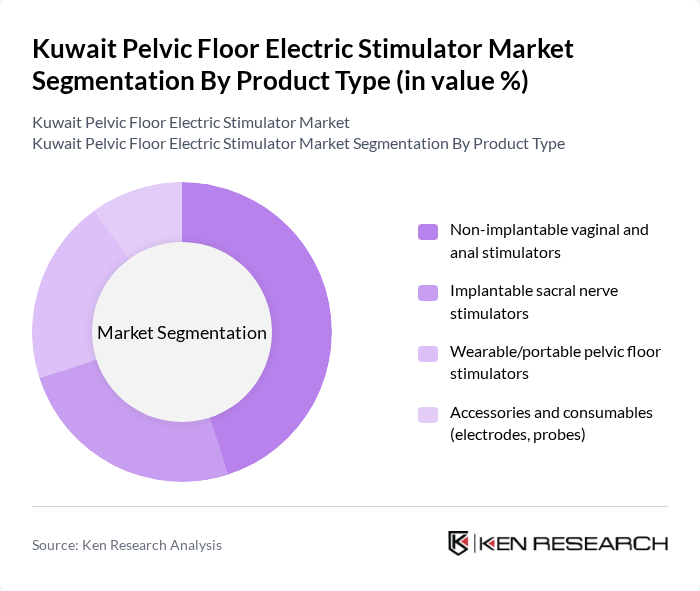
The product type segmentation includes Non-implantable vaginal and anal stimulators, Implantable sacral nerve stimulators, Wearable/portable pelvic floor stimulators, and Accessories and consumables (electrodes, probes). This structure is aligned with global pelvic floor electric stimulator market definitions, which distinguish non-implantable devices, implantable neuromodulation systems, and accessory components. Among these, Non-implantable vaginal and anal stimulators dominate the market due to their ease of use, lower procedure-related risk compared with implants, and accessibility for home-based therapy. These devices are often recommended for home use, making them popular among consumers seeking non-invasive treatment options. The growing awareness of pelvic health, particularly among women, and the increasing number of patients seeking treatment for stress and mixed urinary incontinence contribute to the strong demand for this sub-segment.
By Technology:
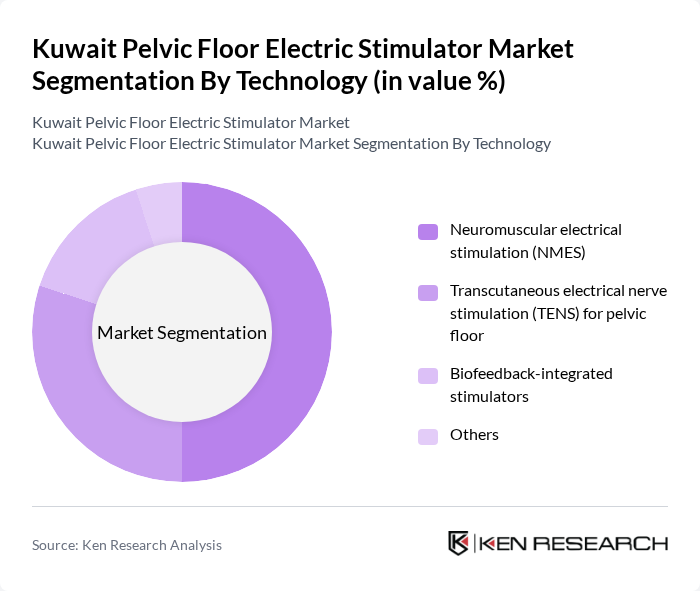
The technology segmentation includes Neuromuscular electrical stimulation (NMES), Transcutaneous electrical nerve stimulation (TENS) for pelvic floor, Biofeedback-integrated stimulators, and Others. This breakdown is consistent with clinical and commercial categorization of pelvic floor stimulation technologies, where NMES is widely used for pelvic floor muscle strengthening and rehabilitation, and TENS is used for modulation of pain and urgency symptoms. Neuromuscular electrical stimulation (NMES) is the leading technology in the market, favored for its effectiveness in muscle strengthening, neuromuscular re-education, and improvement of continence outcomes in pelvic floor dysfunction. The increasing preference for non-invasive treatment options and the growing body of clinical evidence supporting NMES efficacy contribute to its dominance. Additionally, advancements such as user-friendly interfaces, preset continence programs, and integration with mobile apps and biofeedback features have made NMES devices more convenient for both clinic-based and home-based use, further driving their adoption.
Kuwait Pelvic Floor Electric Stimulator Market Competitive Landscape
The Kuwait Pelvic Floor Electric Stimulator Market is characterized by a dynamic mix of regional and international players, in line with the broader global market where multinational manufacturers supply to the Middle East through distributors and local agents. Leading participants such as Medtronic plc, Boston Scientific Corporation, Neen Healthcare (Ceek Women’s Health), Laborie Medical Technologies Inc., Verity Medical Ltd, I.EM S.r.l. (I-Tech Medical Division), BTL Industries, Zynex Medical, Inc., Nurotron Biotechnology Co., Ltd., Everyway Medical Instruments Co., Ltd., Shenzhen XFT Medical Limited, TENSCare Ltd, Prometheus Group (a Division of Compass Health Brands), DJO Global, Inc. (Enovis Corporation), Ova Med Medical & Scientific Equipment Trading Co. (Kuwait distributor) contribute to innovation, geographic expansion, and service delivery in this space, offering a spectrum of non-implantable pelvic floor stimulators, sacral neuromodulation systems, and related accessories.
Kuwait Pelvic Floor Electric Stimulator Market Industry Analysis
Growth Drivers
- Increasing Awareness of Pelvic Health:The awareness of pelvic health issues in Kuwait has surged, with over 60% of women aged 30-60 acknowledging the importance of pelvic floor health. This rise in awareness is supported by health campaigns and educational programs, leading to a greater demand for pelvic floor electric stimulators. The Ministry of Health reported a 30% increase in consultations related to pelvic health in the last two years, indicating a growing recognition of the need for effective treatment options.
- Rising Prevalence of Pelvic Floor Disorders:The prevalence of pelvic floor disorders in Kuwait is estimated to affect approximately 35% of women, particularly post-menopausal individuals. According to the Kuwait Health Ministry, the number of diagnosed cases has increased by 20% over the past five years. This growing incidence is driving demand for pelvic floor electric stimulators, as patients seek non-invasive treatment options to manage their conditions effectively and improve their quality of life.
- Technological Advancements in Electric Stimulators:Recent technological advancements have led to the development of more effective and user-friendly pelvic floor electric stimulators. Innovations such as Bluetooth connectivity and app integration have enhanced user experience, making devices more accessible. The Kuwait Medical Devices Authority reported that the introduction of these advanced devices has resulted in a 25% increase in sales over the past year, reflecting a positive market response to improved technology in pelvic health solutions.
Market Challenges
- High Cost of Advanced Devices:The high cost of advanced pelvic floor electric stimulators poses a significant barrier to market growth in Kuwait. Prices for these devices can range from KWD 160 to KWD 550, making them unaffordable for many potential users. The average monthly income in Kuwait is approximately KWD 1,300, which limits the purchasing power of individuals seeking these treatments. This financial constraint can hinder widespread adoption and limit market expansion.
- Limited Availability of Trained Professionals:The shortage of trained healthcare professionals specializing in pelvic health is a critical challenge in Kuwait. Currently, there are only about 55 certified pelvic health physiotherapists in the country, which is insufficient to meet the growing demand. The World Health Organization estimates that Kuwait needs at least 110 additional specialists to adequately address pelvic floor disorders, thereby impacting the effective use and promotion of electric stimulators in clinical settings.
Kuwait Pelvic Floor Electric Stimulator Market Future Outlook
The future of the pelvic floor electric stimulator market in Kuwait appears promising, driven by increasing healthcare investments and a shift towards home-based therapies. As the government allocates more resources to healthcare infrastructure, the accessibility of these devices is expected to improve. Additionally, the integration of smart technology into pelvic health solutions will likely enhance user engagement and treatment efficacy, fostering a more personalized approach to pelvic health management in the future.
Market Opportunities
- Expansion of Telehealth Services:The growth of telehealth services in Kuwait presents a significant opportunity for pelvic floor electric stimulators. With a reported 50% increase in telehealth consultations during the pandemic, healthcare providers can leverage this trend to offer remote monitoring and support for patients using these devices, enhancing treatment adherence and outcomes.
- Development of User-Friendly Devices:There is a growing opportunity for manufacturers to develop user-friendly pelvic floor electric stimulators tailored for home use. As consumer preferences shift towards convenience, devices that are easy to operate and integrate with mobile applications can capture a larger market share, appealing to a broader audience seeking effective pelvic health solutions.
Scope of the Report
| Segment | Sub-Segments |
|---|---|
| By Product Type | Non-implantable vaginal and anal stimulators Implantable sacral nerve stimulators Wearable/portable pelvic floor stimulators Accessories and consumables (electrodes, probes) |
| By Technology | Neuromuscular electrical stimulation (NMES) Transcutaneous electrical nerve stimulation (TENS) for pelvic floor Biofeedback-integrated stimulators Others |
| By Application | Stress urinary incontinence Urge and mixed urinary incontinence Fecal incontinence Pelvic organ prolapse–related dysfunction Chronic pelvic pain and sexual dysfunction |
| By End-User | Public hospitals (MOH and government hospitals) Private hospitals and specialty clinics Physiotherapy and rehabilitation centers Home care and self-use |
| By Distribution Channel | Direct tenders and institutional procurement Medical device distributors in Kuwait Hospital and clinic pharmacies Online channels (e-commerce and telehealth platforms) |
| By Patient Profile | Female (postpartum, perimenopausal, postmenopausal) Male (post-prostatectomy and other indications) Geriatric patients (65+ years) Others |
| By Province | Al Asimah (Kuwait City) Hawalli Al Farwaniyah Al Ahmadi Al Jahra and Mubarak Al-Kabeer |
Key Target Audience
Investors and Venture Capitalist Firms
Government and Regulatory Bodies (e.g., Ministry of Health, Kuwait Food and Drug Administration)
Manufacturers and Producers
Distributors and Retailers
Healthcare Providers and Clinics
Medical Device Importers
Industry Associations
Health Insurance Companies
Players Mentioned in the Report:
Medtronic plc
Boston Scientific Corporation
Neen Healthcare (Ceek Womens Health)
Laborie Medical Technologies Inc.
Verity Medical Ltd
I.EM S.r.l. (I-Tech Medical Division)
BTL Industries
Zynex Medical, Inc.
Nurotron Biotechnology Co., Ltd.
Everyway Medical Instruments Co., Ltd.
Shenzhen XFT Medical Limited
TENSCare Ltd
Prometheus Group (a Division of Compass Health Brands)
DJO Global, Inc. (Enovis Corporation)
Ova Med Medical & Scientific Equipment Trading Co. (Kuwait distributor)
Table of Contents
Market Assessment Phase
1. Executive Summary and Approach
2. Kuwait Pelvic Floor Electric Stimulator Market Overview
2.1 Key Insights and Strategic Recommendations
2.2 Kuwait Pelvic Floor Electric Stimulator Market Overview
2.3 Definition and Scope
2.4 Evolution of Market Ecosystem
2.5 Timeline of Key Regulatory Milestones
2.6 Value Chain & Stakeholder Mapping
2.7 Business Cycle Analysis
2.8 Policy & Incentive Landscape
3. Kuwait Pelvic Floor Electric Stimulator Market Analysis
3.1 Growth Drivers
3.1.1 Increasing awareness of pelvic health
3.1.2 Rising prevalence of pelvic floor disorders
3.1.3 Technological advancements in electric stimulators
3.1.4 Growing geriatric population
3.2 Market Challenges
3.2.1 High cost of advanced devices
3.2.2 Limited availability of trained professionals
3.2.3 Regulatory hurdles in product approval
3.2.4 Lack of awareness among potential users
3.3 Market Opportunities
3.3.1 Expansion of telehealth services
3.3.2 Increasing investment in healthcare infrastructure
3.3.3 Development of user-friendly devices
3.3.4 Collaborations with healthcare providers
3.4 Market Trends
3.4.1 Shift towards home-based therapies
3.4.2 Integration of smart technology in devices
3.4.3 Focus on personalized treatment plans
3.4.4 Rise in online sales channels
3.5 Government Regulation
3.5.1 Standards for medical device safety
3.5.2 Guidelines for clinical trials
3.5.3 Licensing requirements for manufacturers
3.5.4 Reimbursement policies for pelvic health treatments
4. SWOT Analysis
5. Stakeholder Analysis
6. Porter's Five Forces Analysis
7. Kuwait Pelvic Floor Electric Stimulator Market Market Size, 2019-2024
7.1 By Value
7.2 By Volume
7.3 By Average Selling Price
8. Kuwait Pelvic Floor Electric Stimulator Market Segmentation
8.1 By Product Type
8.1.1 Non-implantable vaginal and anal stimulators
8.1.2 Implantable sacral nerve stimulators
8.1.3 Wearable/portable pelvic floor stimulators
8.1.4 Accessories and consumables (electrodes, probes)
8.2 By Technology
8.2.1 Neuromuscular electrical stimulation (NMES)
8.2.2 Transcutaneous electrical nerve stimulation (TENS) for pelvic floor
8.2.3 Biofeedback-integrated stimulators
8.2.4 Others
8.3 By Application
8.3.1 Stress urinary incontinence
8.3.2 Urge and mixed urinary incontinence
8.3.3 Fecal incontinence
8.3.4 Pelvic organ prolapse–related dysfunction
8.3.5 Chronic pelvic pain and sexual dysfunction
8.4 By End-User
8.4.1 Public hospitals (MOH and government hospitals)
8.4.2 Private hospitals and specialty clinics
8.4.3 Physiotherapy and rehabilitation centers
8.4.4 Home care and self-use
8.5 By Distribution Channel
8.5.1 Direct tenders and institutional procurement
8.5.2 Medical device distributors in Kuwait
8.5.3 Hospital and clinic pharmacies
8.5.4 Online channels (e-commerce and telehealth platforms)
8.6 By Patient Profile
8.6.1 Female (postpartum, perimenopausal, postmenopausal)
8.6.2 Male (post-prostatectomy and other indications)
8.6.3 Geriatric patients (65+ years)
8.6.4 Others
8.7 By Province
8.7.1 Al Asimah (Kuwait City)
8.7.2 Hawalli
8.7.3 Al Farwaniyah
8.7.4 Al Ahmadi
8.7.5 Al Jahra and Mubarak Al-Kabeer
9. Kuwait Pelvic Floor Electric Stimulator Market Competitive Analysis
9.1 Market Share of Key Players
9.2 Cross Comparison of Key Players
9.2.1 Company name and headquarters
9.2.2 Kuwait-specific pelvic floor stimulator revenue and growth (CAGR)
9.2.3 Share of non-implantable vs implantable devices in Kuwait portfolio
9.2.4 Number of pelvic floor SKUs registered with Kuwait MOH
9.2.5 Average selling price band in Kuwait (premium vs value)
9.2.6 Tender wins and institutional contracts (public hospitals/clinics)
9.2.7 Installed base and active patient users in Kuwait
9.2.8 Local distribution and service footprint (distributors, service centers)
9.2.9 R&D and product innovation focus in pelvic floor therapy
9.2.10 Regulatory and quality certifications relevant to Kuwait (e.g., CE, FDA, Gulf/MOH approvals)
9.3 SWOT Analysis of Top Players
9.4 Pricing Analysis
9.5 Detailed Profile of Major Companies
9.5.1 Medtronic plc
9.5.2 Boston Scientific Corporation
9.5.3 Neen Healthcare (Ceek Women’s Health)
9.5.4 Laborie Medical Technologies Inc.
9.5.5 Verity Medical Ltd
9.5.6 I.EM S.r.l. (I-Tech Medical Division)
9.5.7 BTL Industries
9.5.8 Zynex Medical, Inc.
9.5.9 Nurotron Biotechnology Co., Ltd.
9.5.10 Everyway Medical Instruments Co., Ltd.
9.5.11 Shenzhen XFT Medical Limited
9.5.12 TENSCare Ltd
9.5.13 Prometheus Group (a Division of Compass Health Brands)
9.5.14 DJO Global, Inc. (Enovis Corporation)
9.5.15 Ova Med Medical & Scientific Equipment Trading Co. (Kuwait distributor)
10. Kuwait Pelvic Floor Electric Stimulator Market End-User Analysis
10.1 Procurement Behavior of Key Ministries
10.1.1 Budget Allocation for Health Services
10.1.2 Decision-Making Processes
10.1.3 Evaluation Criteria for Procurement
10.1.4 Supplier Relationship Management
10.2 Corporate Spend on Infrastructure & Energy
10.2.1 Investment in Healthcare Facilities
10.2.2 Funding for Medical Equipment
10.2.3 Partnerships with Private Sector
10.2.4 Others
10.3 Pain Point Analysis by End-User Category
10.3.1 Challenges Faced by Hospitals
10.3.2 Issues in Rehabilitation Centers
10.3.3 Concerns of Home Care Providers
10.3.4 Others
10.4 User Readiness for Adoption
10.4.1 Awareness Levels
10.4.2 Training Needs
10.4.3 Accessibility of Devices
10.4.4 Others
10.5 Post-Deployment ROI and Use Case Expansion
10.5.1 Measurement of Treatment Outcomes
10.5.2 User Feedback Mechanisms
10.5.3 Opportunities for Device Upgrades
10.5.4 Others
11. Kuwait Pelvic Floor Electric Stimulator Market Future Size, 2025-2030
11.1 By Value
11.2 By Volume
11.3 By Average Selling Price
Go-To-Market Strategy Phase
1. Whitespace Analysis + Business Model Canvas
1.1 Market Gaps Identification
1.2 Value Proposition Development
1.3 Revenue Streams Analysis
1.4 Cost Structure Evaluation
1.5 Key Partnerships Exploration
1.6 Customer Segmentation
1.7 Channels of Distribution
2. Marketing and Positioning Recommendations
2.1 Branding Strategies
2.2 Product USPs
2.3 Target Audience Identification
2.4 Communication Strategies
2.5 Digital Marketing Approaches
2.6 Offline Marketing Tactics
2.7 Performance Metrics
3. Distribution Plan
3.1 Urban Retail Strategies
3.2 Rural NGO Tie-ups
3.3 E-commerce Integration
3.4 Direct Sales Approaches
3.5 Distribution Partnerships
3.6 Logistics and Supply Chain Management
3.7 Performance Evaluation
4. Channel & Pricing Gaps
4.1 Underserved Routes
4.2 Pricing Bands Analysis
4.3 Competitor Pricing Strategies
4.4 Customer Willingness to Pay
4.5 Price Sensitivity Analysis
4.6 Recommendations for Pricing Adjustments
4.7 Monitoring Pricing Trends
5. Unmet Demand & Latent Needs
5.1 Category Gaps Identification
5.2 Consumer Segments Analysis
5.3 Emerging Trends Exploration
5.4 Recommendations for Product Development
5.5 Market Entry Opportunities
5.6 Customer Feedback Mechanisms
5.7 Performance Metrics
6. Customer Relationship
6.1 Loyalty Programs
6.2 After-sales Service
6.3 Customer Engagement Strategies
6.4 Feedback Collection Mechanisms
6.5 Relationship Management Tools
6.6 Performance Metrics
6.7 Recommendations for Improvement
7. Value Proposition
7.1 Sustainability Initiatives
7.2 Integrated Supply Chains
7.3 Customer-Centric Approaches
7.4 Competitive Differentiation
7.5 Value Communication Strategies
7.6 Performance Metrics
7.7 Recommendations for Value Enhancement
8. Key Activities
8.1 Regulatory Compliance
8.2 Branding Initiatives
8.3 Distribution Setup
8.4 Training and Development
8.5 Performance Monitoring
8.6 Risk Management Strategies
8.7 Recommendations for Key Activities
9. Entry Strategy Evaluation
9.1 Domestic Market Entry Strategy
9.1.1 Product Mix Considerations
9.1.2 Pricing Band Analysis
9.1.3 Packaging Strategies
9.2 Export Entry Strategy
9.2.1 Target Countries Identification
9.2.2 Compliance Roadmap Development
10. Entry Mode Assessment
10.1 Joint Ventures
10.2 Greenfield Investments
10.3 Mergers & Acquisitions
10.4 Distributor Model Evaluation
10.5 Performance Metrics
10.6 Recommendations for Entry Modes
11. Capital and Timeline Estimation
11.1 Capital Requirements Analysis
11.2 Timelines for Market Entry
11.3 Financial Projections
11.4 Risk Assessment
11.5 Recommendations for Capital Allocation
12. Control vs Risk Trade-Off
12.1 Ownership Considerations
12.2 Partnership Opportunities
12.3 Risk Mitigation Strategies
12.4 Performance Metrics
12.5 Recommendations for Control vs Risk
13. Profitability Outlook
13.1 Breakeven Analysis
13.2 Long-term Sustainability Strategies
13.3 Financial Health Monitoring
13.4 Recommendations for Profitability Enhancement
14. Potential Partner List
14.1 Distributors
14.2 Joint Ventures
14.3 Acquisition Targets
14.4 Performance Metrics
14.5 Recommendations for Partner Selection
15. Execution Roadmap
15.1 Phased Plan for Market Entry
15.1.1 Market Setup
15.1.2 Market Entry
15.1.3 Growth Acceleration
15.1.4 Scale & Stabilize
15.2 Key Activities and Milestones
15.2.1 Activity Planning
15.2.2 Milestone Tracking
15.2.3 Performance Evaluation
Research Methodology
Phase 1: Approach1
Desk Research
- Analysis of market reports from healthcare associations and medical device regulatory bodies in Kuwait
- Review of published articles and journals focusing on pelvic floor disorders and electric stimulation therapies
- Examination of demographic and health statistics from the Kuwait Ministry of Health
Primary Research
- Interviews with urologists and gynecologists specializing in pelvic floor treatments
- Surveys conducted with physiotherapists and rehabilitation specialists using electric stimulators
- Focus group discussions with patients experiencing pelvic floor issues to gather insights on treatment preferences
Validation & Triangulation
- Cross-validation of findings through multiple expert interviews to ensure consistency
- Triangulation of data from clinical studies, market reports, and expert opinions
- Sanity checks through feedback from a panel of healthcare professionals in the field
Phase 2: Market Size Estimation1
Top-down Assessment
- Estimation of the total addressable market based on national healthcare expenditure on pelvic health
- Segmentation of the market by treatment type, including invasive and non-invasive electric stimulation methods
- Incorporation of trends in healthcare technology adoption and patient awareness in Kuwait
Bottom-up Modeling
- Collection of sales data from leading manufacturers and distributors of pelvic floor electric stimulators
- Estimation of unit sales based on treatment protocols and patient demographics
- Cost analysis of electric stimulators, including pricing strategies and reimbursement rates
Forecasting & Scenario Analysis
- Development of growth projections based on historical data and emerging healthcare trends
- Scenario analysis considering factors such as regulatory changes and advancements in medical technology
- Creation of baseline, optimistic, and pessimistic forecasts through 2030
Phase 3: CATI Sample Composition1
| Scope Item/Segment | Sample Size | Target Respondent Profiles |
|---|---|---|
| Healthcare Providers (Urologists & Gynecologists) | 60 | Medical Doctors, Specialists in Pelvic Health |
| Physiotherapists in Rehabilitation Centers | 50 | Physical Therapists, Rehabilitation Specialists |
| Patients with Pelvic Floor Disorders | 120 | Individuals undergoing treatment, Patient Advocates |
| Healthcare Administrators | 40 | Hospital Administrators, Clinic Managers |
| Medical Device Distributors | 40 | Sales Representatives, Distribution Managers |
Frequently Asked Questions
What is the current value of the Kuwait Pelvic Floor Electric Stimulator Market?
The Kuwait Pelvic Floor Electric Stimulator Market is valued at approximately USD 1 million, reflecting a five-year historical analysis. This growth is attributed to increased awareness of pelvic health issues and advancements in medical technology.
What factors are driving the growth of the pelvic floor electric stimulator market in Kuwait?
Which regions in Kuwait have the highest demand for pelvic floor electric stimulators?
What types of pelvic floor electric stimulators are available in Kuwait?
Other Regional/Country Reports
Indonesia Pelvic Floor Electric Stimulator Market
Malaysia Pelvic Floor Electric Stimulator Market
KSA Pelvic Floor Electric Stimulator Market
APAC Pelvic Floor Electric Stimulator Market
SEA Pelvic Floor Electric Stimulator Market
Vietnam Pelvic Floor Electric Stimulator Market
Other Adjacent Reports
Indonesia Urinary Incontinence Devices Market
Brazil Pelvic Organ Prolapse Treatment Market
Brazil Neuromodulation Devices Market
Malaysia Womens Health Devices Market
Germany Physiotherapy Equipment Market
Mexico Biofeedback Devices Market
Japan Sacral Nerve Stimulation Market
Indonesia Gynecological Devices Market
Egypt Home Healthcare Devices Market
South Africa Rehabilitation Equipment Market
Why Buy From Us?

What makes us stand out is that our consultants follow Robust, Refine and Result (RRR) methodology. Robust for clear definitions, approaches and sanity checking, Refine for differentiating respondents' facts and opinions, and Result for presenting data with story.

We have set a benchmark in the industry by offering our clients with syndicated and customized market research reports featuring coverage of entire market as well as meticulous research and analyst insights.

While we don't replace traditional research, we flip the method upside down. Our dual approach of Top Bottom & Bottom Top ensures quality deliverable by not just verifying company fundamentals but also looking at the sector and macroeconomic factors.

With one step in the future, our research team constantly tries to show you the bigger picture. We help with some of the tough questions you may encounter along the way: How is the industry positioned? Best marketing channel? KPI's of competitors? By aligning every element, we help maximize success.

Our report gives you instant access to the answers and sources that other companies might choose to hide. We elaborate each steps of research methodology we have used and showcase you the sample size to earn your trust.

If you need any support, we are here! We pride ourselves on universe strength, data quality, and quick, friendly, and professional service.