
MEA Fast-Food Market Outlook to 2030
Region:Egypt
Author(s):Meenakshi Bisht
Product Code:KROD5637
Region:Egypt
Author(s):Meenakshi Bisht
Product Code:KROD5637
November 2024
98
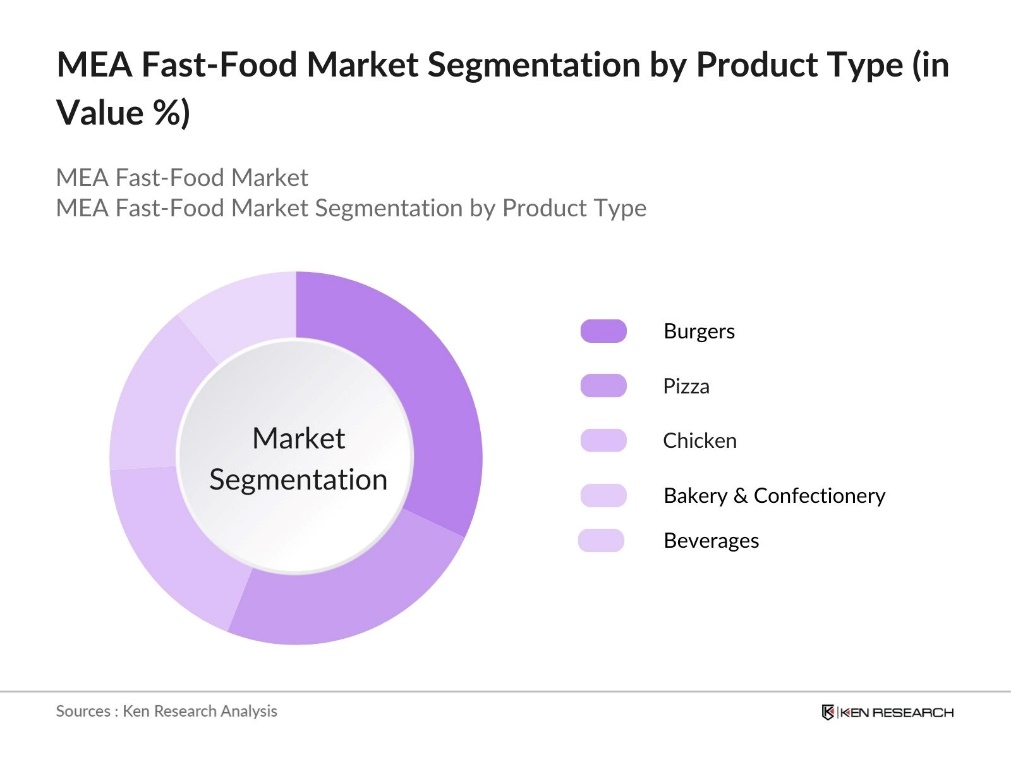
By Product Type: The market is segmented by product type into burgers, pizza, chicken, bakery & confectionery, and beverages. Recently, burgers have maintained a dominant position within the product type segment, largely due to the enduring popularity of well-established brands like McDonald's, Burger King, and Hardee's. These brands have tailored their offerings with local flavors to attract a diverse customer base. Moreover, the simplicity and affordability of burger meals contribute to their widespread acceptance, particularly among younger consumers seeking quick and tasty meals.
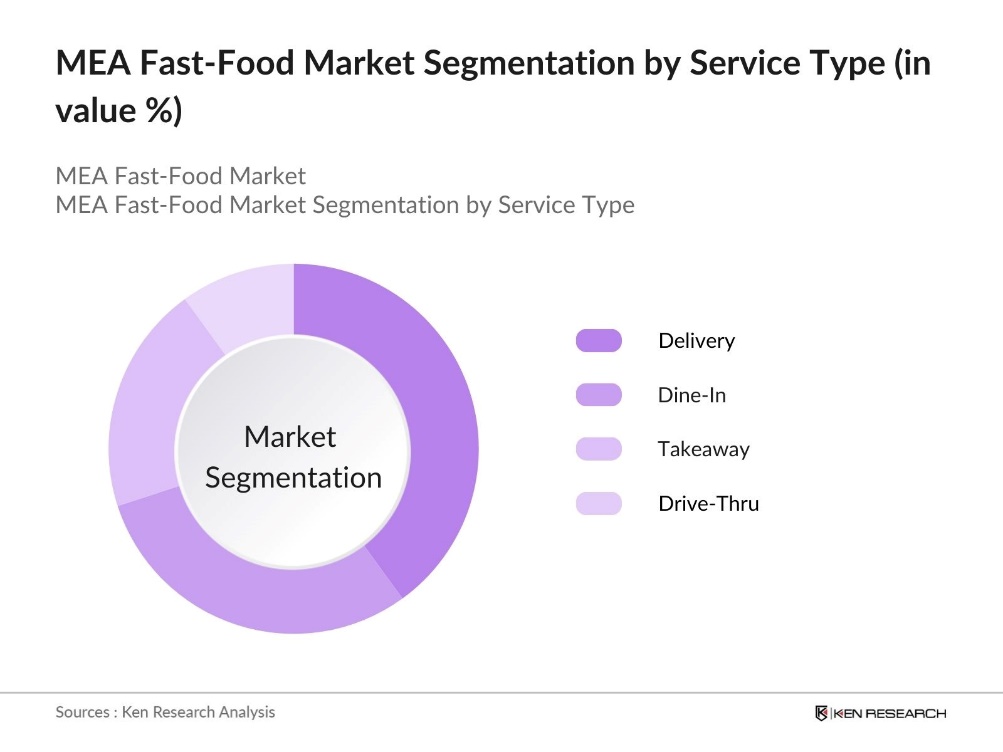
By Service Type: The market is segmented by service type into dine-in, drive-thru, takeaway, and delivery. The delivery segment has emerged as the most dominant due to the rise of digital food delivery platforms like Talabat and Uber Eats. The convenience of ordering from home, coupled with the region's increasing smartphone penetration, has driven the growth of delivery services. Additionally, consumer preferences for contactless and time-saving food options have accelerated the demand for delivery, especially in urban centers.
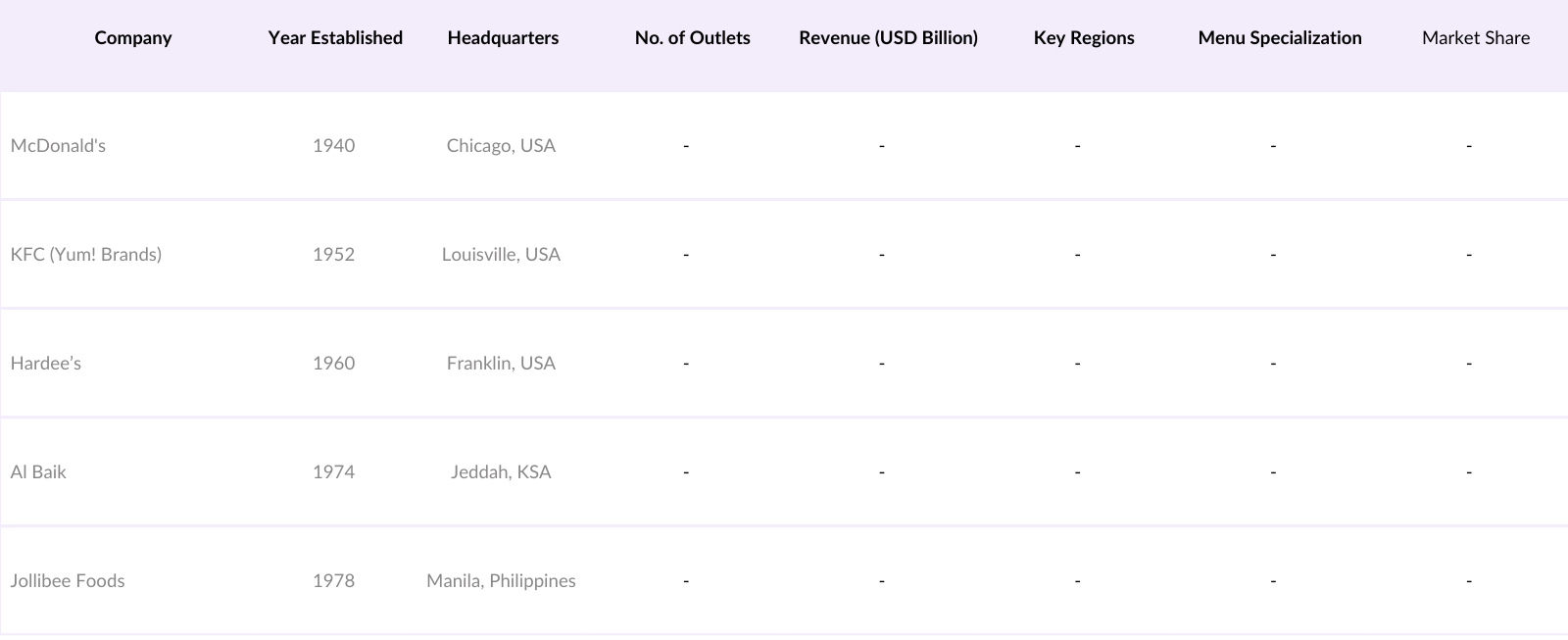
The MEA fast-food landscape is marked by the strong presence of both international giants like McDonald's and KFC, as well as regional favorites such as Al Baik, which cater to local tastes and preferences. This market consolidation illustrates the competitive advantage held by established brands that leverage both brand recognition and strategic partnerships with local operators.
Over the next five years, the MEA fast-food market is expected to witness continued growth, driven by the expansion of delivery services, innovative product offerings, and enhanced customer experiences through digital platforms. Increasing urbanization and the ongoing development of digital ordering channels will further fuel the markets growth trajectory. Additionally, the demand for healthier fast-food options and sustainable practices is anticipated to shape product development and menu innovations among key players.
|
Product Type |
Burgers and Sandwiches Pizza and Pasta Chicken Bakery and Confectionery Beverages |
|
Service Type |
Dine-In Drive-Thru Takeaway Delivery |
|
Age Group |
Children Teenagers Adults Seniors |
|
Distribution Channel |
Company-Owned Outlets Franchises Online Platforms Aggregators |
|
Region |
GCC North Africa Sub-Saharan Africa Levant |
1.1. Definition and Scope
1.2. Market Taxonomy
1.3. Market Growth Rate
1.4. Market Segmentation Overview
2.1. Historical Market Size
2.2. Year-On-Year Growth Analysis
2.3. Key Market Developments and Milestones
3.1. Growth Drivers
3.1.1. Urbanization and Demographic Shifts
3.1.2. Increased Disposable Income
3.1.3. Changing Lifestyle Preferences
3.1.4. Influence of Western Culture
3.2. Market Challenges
3.2.1. Health Concerns Among Consumers
3.2.2. Stringent Food Safety Regulations
3.2.3. Rising Competition from Local and International Players
3.2.4. Supply Chain Disruptions
3.3. Opportunities
3.3.1. Expansion of Digital Ordering and Delivery Services
3.3.2. Innovation in Healthy Fast-Food Alternatives
3.3.3. Growth in Vegan and Plant-Based Menus
3.3.4. Collaborations with Local Suppliers
3.4. Trends
3.4.1. Adoption of Mobile Applications for Ordering
3.4.2. Rise of Ghost Kitchens
3.4.3. Increased Focus on Sustainability
3.4.4. Personalized Marketing through Data Analytics
3.5. Government Regulation
3.5.1. Food Safety Standards
3.5.2. Nutritional Labeling Requirements
3.5.3. Advertising Restrictions for Children
3.5.4. Licensing and Franchise Regulations
3.6. SWOT Analysis
3.7. Stake Ecosystem
3.8. Porters Five Forces
3.9. Competitive Ecosystem
4.1. By Product Type (In Value %)
4.1.1. Burgers and Sandwiches
4.1.2. Pizza and Pasta
4.1.3. Chicken
4.1.4. Bakery and Confectionery
4.1.5. Beverages
4.2. By Service Type (In Value %)
4.2.1. Dine-In
4.2.2. Drive-Thru
4.2.3. Takeaway
4.2.4. Delivery
4.3. By Age Group (In Value %)
4.3.1. Children
4.3.2. Teenagers
4.3.3. Adults
4.3.4. Seniors
4.4. By Distribution Channel (In Value %)
4.4.1. Company-Owned Outlets
4.4.2. Franchises
4.4.3. Online Platforms
4.4.4. Aggregators
4.5. By Region (In Value %)
4.5.1. GCC
4.5.2. North Africa
4.5.3. Sub-Saharan Africa
4.5.4. Levant
5.1. Detailed Profiles of Major Companies
5.1.1. McDonald's Corporation
5.1.2. Yum! Brands, Inc. (KFC, Pizza Hut)
5.1.3. Restaurant Brands International (Burger King)
5.1.4. Subway
5.1.5. Dominos Pizza
5.1.6. Al Baik
5.1.7. Hardee's
5.1.8. Jollibee Foods Corporation
5.1.9. Popeyes
5.1.10. Dunkin' Donuts
5.1.11. Starbucks Corporation
5.1.12. Krispy Kreme
5.1.13. TGI Fridays
5.1.14. Baskin-Robbins
5.1.15. Pizza Express
5.2. Cross Comparison Parameters (Number of Outlets, Market Share, Revenue, Region of Operation, Employee Count, Annual Growth Rate, Menu Diversity, Technological Advancements)
5.3. Market Share Analysis
5.4. Strategic Initiatives
5.5. Mergers and Acquisitions
5.6. Investment Analysis
5.7. Private Equity and Venture Capital Funding
5.8. Government and Private Grants
5.9. Franchise Investments
6.1. Health and Safety Standards
6.2. Food Quality and Compliance
6.3. Import Regulations for Food Ingredients
7.1. Future Market Size Projections
7.2. Key Factors Influencing Future Market Growth
8.1. By Product Type (In Value %)
8.2. By Service Type (In Value %)
8.3. By Age Group (In Value %)
8.4. By Distribution Channel (In Value %)
8.5. By Region (In Value %)
9.1. Total Addressable Market (TAM) / Serviceable Available Market (SAM) Analysis
9.2. Customer Segmentation Analysis
9.3. Effective Marketing Strategies
9.4. Emerging Market Opportunities
Disclaimer Contact UsThis step involves identifying the core dynamics within the MEA fast-food market, including factors such as consumer preferences, regulatory frameworks, and technological advancements. The data gathering encompasses a comprehensive survey of market databases and sector reports, helping to isolate critical variables for further analysis.
The second step entails aggregating and analyzing historical market data to assess trends and market penetration across the MEA region. This phase includes evaluating consumer demographics, revenue streams, and shifts in distribution channels to ensure an accurate understanding of market structures.
Market hypotheses are formulated based on initial findings and then validated through direct consultations with industry experts, who provide insights on operational strategies and regional market nuances. These expert inputs serve as a crucial layer of verification for the data and trends observed.
The final synthesis includes integrating qualitative and quantitative data, with an emphasis on building a robust market model that captures revenue projections and growth factors. This stage involves feedback from fast-food chain operators, which is used to finalize the analysis and provide actionable insights into the MEA fast-food market.
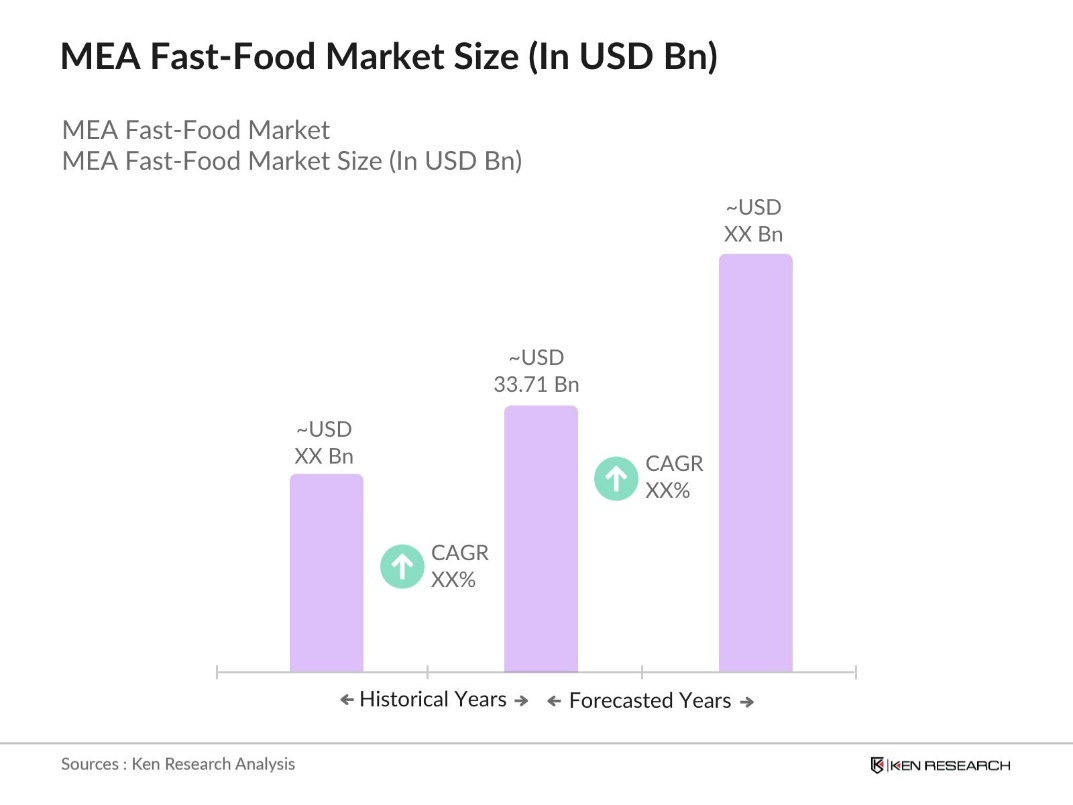
The MEA fast-food market is valued at USD 33.71 billion, driven by the growing demand for quick and convenient dining options across key regions.
Challenges in MEA fast-food market include regulatory hurdles, a highly competitive landscape, and rising consumer concerns over health and nutrition in fast food.
Leading players in MEA fast-food market include McDonald's, KFC, Al Baik, Subway, and Hardee's, each leveraging brand strength and customer loyalty to maintain dominance.
Key growth drivers in this MEA fast-food market include urbanization, digital transformation in food delivery, and changing lifestyle preferences toward quick-service dining.

What makes us stand out is that our consultants follows Robust, Refine and Result (RRR) methodology. i.e. Robust for clear definitions, approaches and sanity checking, Refine for differentiating respondents facts and opinions and Result for presenting data with story

We have set a benchmark in the industry by offering our clients with syndicated and customized market research reports featuring coverage of entire market as well as meticulous research and analyst insights.

While we don't replace traditional research, we flip the method upside down. Our dual approach of Top Bottom & Bottom Top ensures quality deliverable by not just verifying company fundamentals but also looking at the sector and macroeconomic factors.

With one step in the future, our research team constantly tries to show you the bigger picture. We help with some of the tough questions you may encounter along the way: How is the industry positioned? Best marketing channel? KPI's of competitors? By aligning every element, we help maximize success.

Our report gives you instant access to the answers and sources that other companies might choose to hide. We elaborate each steps of research methodology we have used and showcase you the sample size to earn your trust.

If you need any support, we are here! We pride ourselves on universe strength, data quality, and quick, friendly, and professional service.