















MEA Fencing Market Outlook to 2030
Region:Global
Author(s):Shambhavi
Product Code:KROD6912
December 2024
83
About the Report
MEA Fencing Market Overview
- The MEA Fencing Market is valued at USD 2 billion, based on a five-year historical analysis. This growth is primarily driven by heightened security needs and infrastructure developments across both residential and commercial sectors. Furthermore, government initiatives to improve public safety and enforce border security policies have fueled the demand for high-security fencing solutions, while the agricultural sector has seen increased adoption of electric and protective fencing for livestock and crop protection.
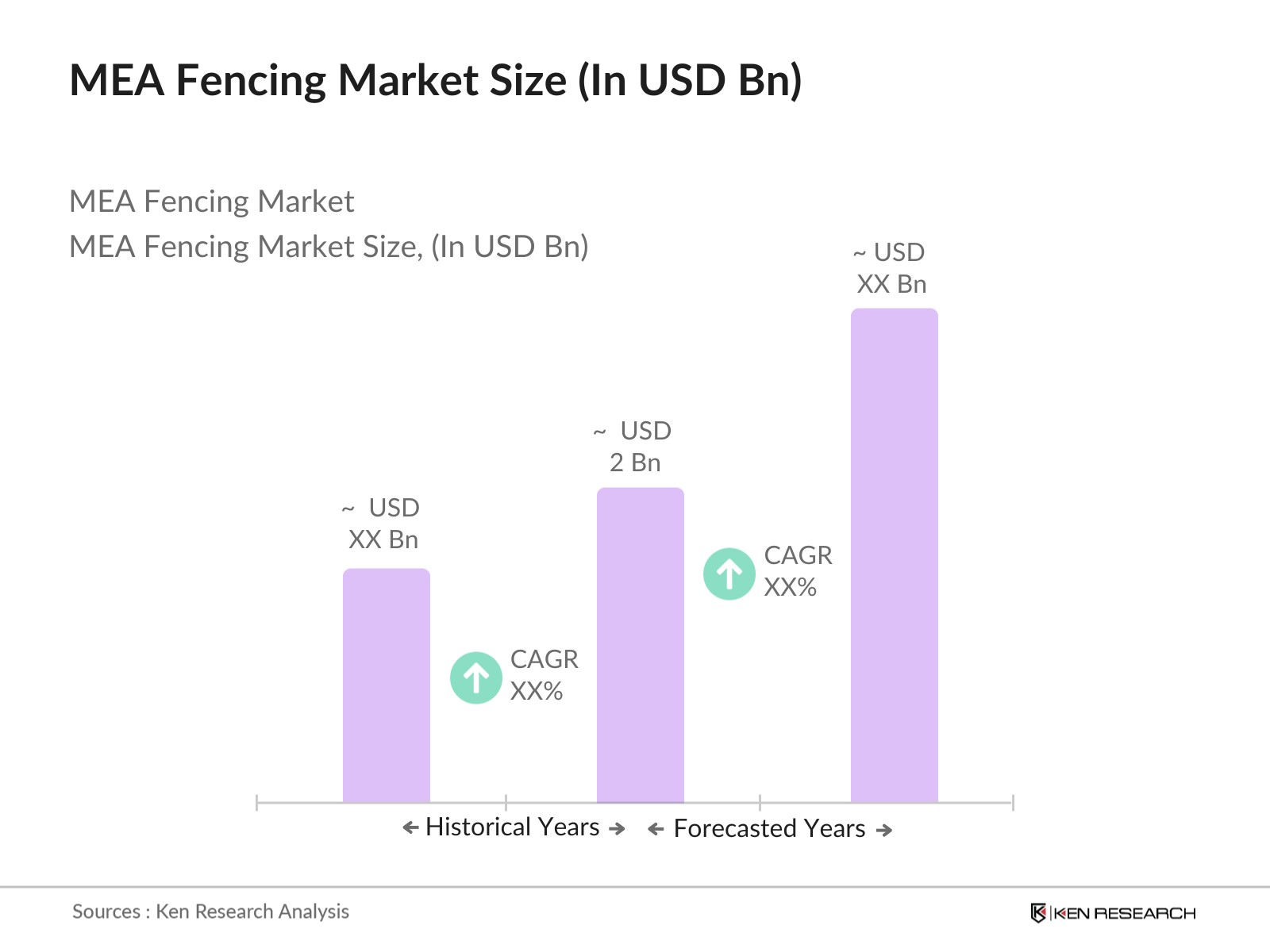
- Countries such as the UAE, Saudi Arabia, and Egypt dominate the MEA fencing market due to their substantial investments in infrastructure and security initiatives. In these countries, urbanization and expanding commercial properties necessitate diverse fencing solutions. Additionally, cities like Riyadh, Dubai, and Cairo have accelerated their development of residential projects, further driving fencing demand, particularly in high-security and aesthetically oriented fencing to meet the premium housing market's needs.
- The MEA region has stringent safety regulations governing fencing installations in public and private sectors. For example, the UAE requires certification for fencing in residential and commercial areas, particularly regarding high-strength materials for public safety. Compliance with safety standards is mandatory for contractors, ensuring the quality and durability of fencing solutions used in critical infrastructure. These requirements drive demand for certified, robust fencing options across the MEA region
MEA Fencing Market Segmentation
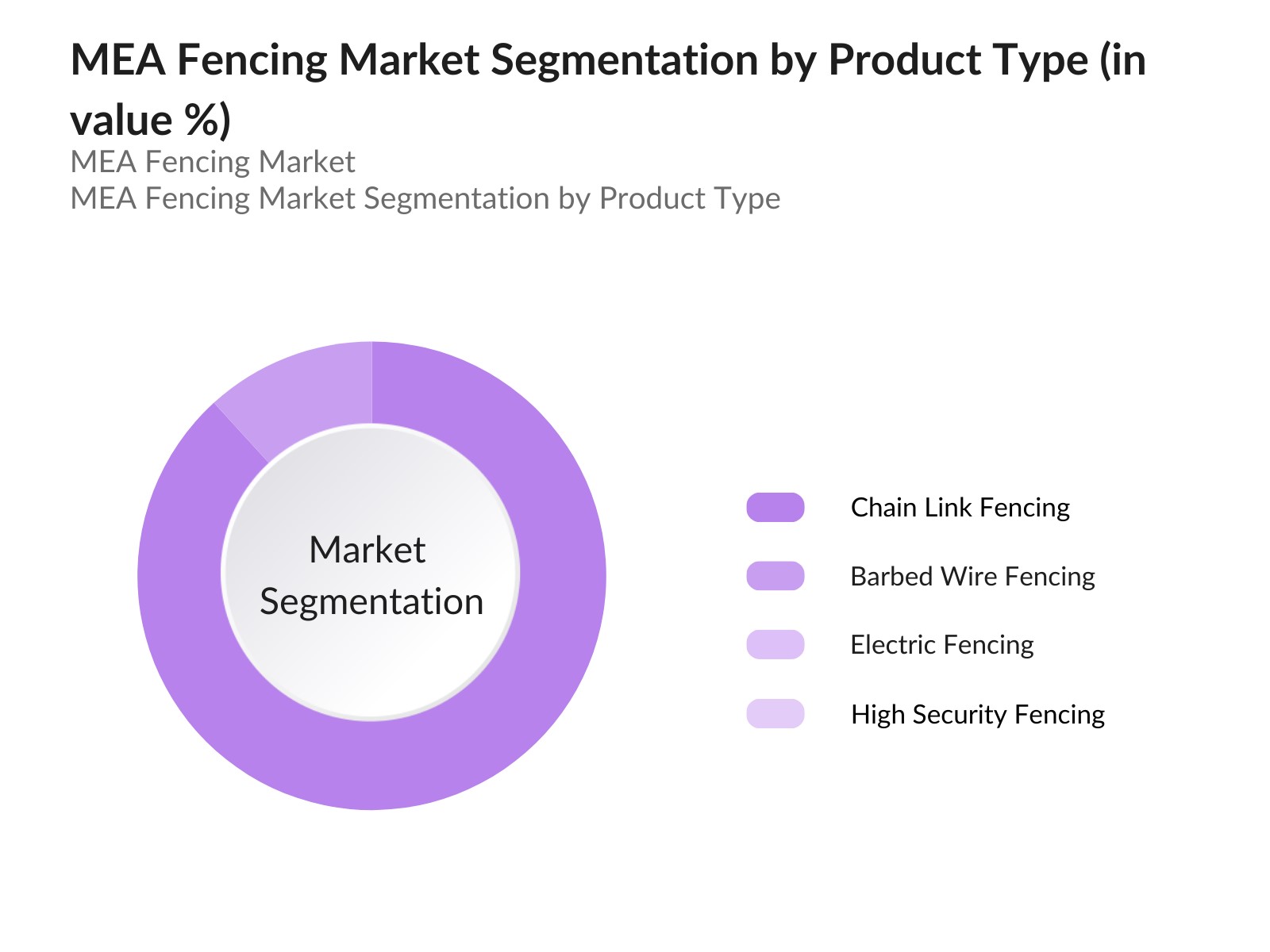
By Product Type: The MEA fencing market is segmented by product type into chain link fencing, barbed wire fencing, electric fencing, and high-security fencing. Chain link fencing holds a dominant share in the product type segmentation due to its widespread use in both urban and rural areas for residential and commercial applications. Its durability, affordability, and versatility make it a preferred choice among customers seeking a cost-effective yet secure solution. Additionally, the products adaptability to various terrains enhances its popularity across multiple sectors, including industrial and government facilities.
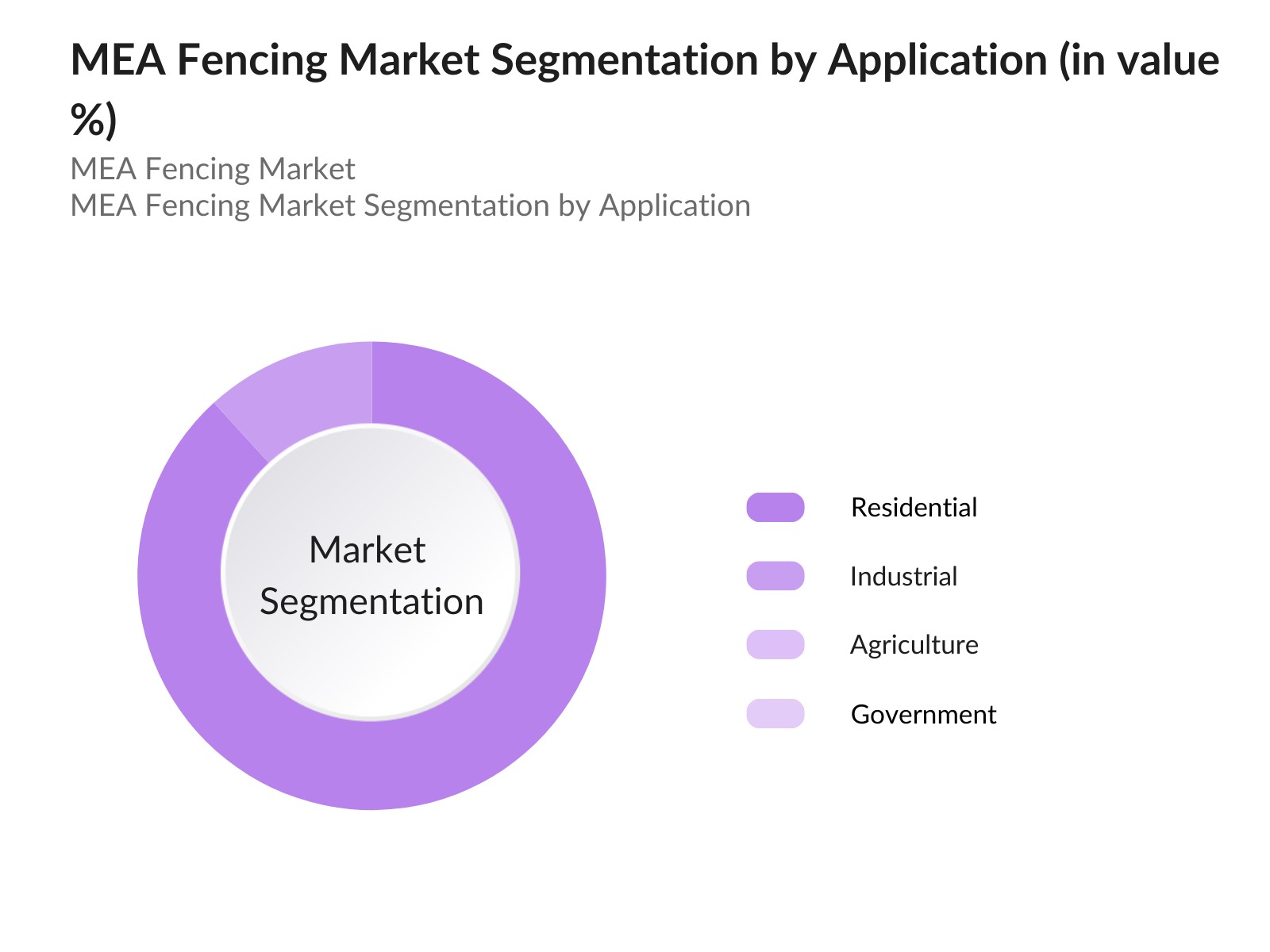
By Application: The MEA fencing market is segmented by application into residential, industrial, agricultural, and government sectors. The residential sector leads in market share under this segmentation due to increasing urbanization and a growing preference for secured properties across metropolitan areas. This demand is particularly high in countries with significant construction activities, where residential fencing ensures both aesthetic appeal and safety. Residential projects often opt for high-security and decorative fencing that complements the architectural design of premium housing communities.
MEA Fencing Market Competitive Landscape
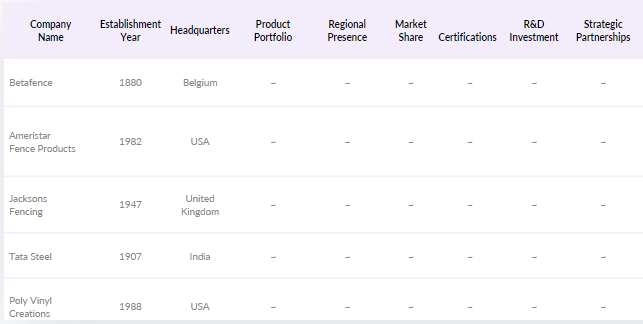
The MEA Fencing Market is dominated by a few major players with extensive operations across the region. This consolidation reflects the high standards required for quality and security compliance, where companies have established strong reputations based on their product durability and innovation. Key companies like Betafence and Tata Steel lead with large-scale installations across government projects, while players like Jacksons Fencing and Poly Vinyl Creations cater to a broad range of applications from residential to high-security settings.
MEA Fencing Market Analysis
Growth Drivers
- Urbanization and Infrastructure Development: Rapid urbanization and extensive infrastructure projects across the Middle East and Africa (MEA) have significantly increased the demand for fencing solutions, especially in rapidly developing urban centers like Riyadh, Dubai, and Johannesburg. As cities expand and new suburban neighborhoods emerge, residential developments require fencing for boundary demarcation, privacy, and aesthetic value. Major infrastructure projects, such as highways, airports, and public parks, also necessitate the installation of secure fencing for both access control and safety purposes. For instance, in Saudi Arabia, substantial investments in "giga-projects" like NEOM and Qiddiya emphasize security-focused fencing installations for these expansive developments. Urbanization, driving construction activities across these nations, makes the demand for high-durability fencing solutions critical
- Security Concerns and Border Control: The geopolitical landscape in the MEA region, characterized by ongoing security issues, is a major factor pushing the demand for high-security fencing solutions. Border fencing and perimeter security are essential to prevent unauthorized access, and thus governments prioritize advanced fencing that incorporates anti-climb features, surveillance technology, and electrical integrations. Notably, UAE and Saudi Arabia have increased investments in security fencing around critical infrastructure, such as oil facilities and border areas, to mitigate threats. The necessity for reliable perimeter security is further accentuated in urban residential and commercial properties, as these regions experience a consistent focus on anti-intrusion and safety measures for both private and public assets
- Increase in Landscaping and Aesthetic Applications: The rise of gated communities and luxury real estate in MEA cities has amplified the demand for visually appealing and functional fencing solutions. Homeowners and developers in affluent areas like Dubai and Cape Town seek decorative and landscaping fencing options that align with modern architectural designs. This trend towards aesthetic appeal extends to commercial properties and public spaces, where fences serve both functional and decorative roles. Fencing solutions with materials like wrought iron and glass panels are now preferred in upscale housing and commercial developments, driving growth in the aesthetic fencing segment across the MEA region
Market Challenges
- High Installation and Maintenance Costs: The cost of fencing installations in the MEA market is influenced by material expenses and ongoing maintenance requirements, which vary based on environmental factors. For instance, high temperatures in Gulf countries accelerate the wear on metal fences, requiring frequent maintenance and upgrades. Furthermore, advanced fencing systems, like electric and smart fences, demand specialized installation and technical upkeep, often increasing overall operational expenses. Countries facing budget constraints or economic fluctuations may see delayed or downsized fencing projects due to these costs, impacting market growth
- Limited Durability in Extreme Weather Conditions: MEAs diverse climatic conditions, ranging from extreme heat in the Gulf to heavy rains in Sub-Saharan Africa, present significant durability challenges for fencing materials. Metals, widely used in commercial and high-security fencing, are prone to corrosion in coastal and arid environments. Similarly, wooden and plastic fencing options face degradation due to UV exposure and sand erosion in desert regions. These environmental impacts lead to increased material wear and replacement costs, affecting both private and government-led projects
MEA Fencing Market Future Outlook
Over the next five years, the MEA Fencing Market is expected to grow significantly due to expanding infrastructure projects, heightened security awareness, and advancements in smart fencing technologies. Increasing government investments in public infrastructure and security, alongside the adoption of smart fencing solutions incorporating IoT, will enhance market growth. Additionally, the agriculture sector's need for secure fencing solutions to protect high-value crops is projected to drive demand further.
Future Market Opportunities
- Growing Demand for Electric Fencing in Agricultural Sector: The MEA regions agricultural sector increasingly adopts electric fencing to protect livestock and crops from wild animals and trespassers. In African countries with significant rural land and wildlife presence, electric fences offer cost-effective solutions for livestock management and crop protection. Demand for electric fencing solutions in regions like Kenya and South Africa is bolstered by government initiatives to improve agricultural productivity and reduce human-wildlife conflict. The agricultural sectors adoption of electric fencing points to ongoing market opportunities
- Technological Advancements in Anti-Climb Fencing: Technological advancements are fostering the development of anti-climb fencing systems, widely used in high-security facilities across the MEA. Incorporating features like angled tops, electrification, and smart sensors, these fences are essential for critical infrastructure protection in regions with heightened security needs. Innovations in materials, such as using composite metals that offer both strength and corrosion resistance, provide added durability in high-security applications. The rise of such technologically advanced solutions indicates potential growth in specialized fencing segments
Scope of the Report
|
Product Type |
Chain Link Fencing Barbed Wire Fencing Electric Fencing High-Security Fencing |
|
Application |
Residential Industrial Agricultural Government |
|
Material Type |
Metal (Aluminum, Steel, Iron) Wood Vinyl and PVC Composite Materials |
|
Installation Type |
DIY Installation Contractor Installation |
|
Region |
Middle East North Africa Sub-Saharan Africa |
Products
Key Target Audience
Investor and Venture Capitalist Firms
Government and Regulatory Bodies (e.g., Dubai Municipality, Saudi Standards, Metrology and Quality Organization)
Construction and Infrastructure Companies
Agricultural Cooperatives and Associations
Urban Development Authorities
Residential Property Developers
Industrial Property Owners and Managers
Security and Surveillance Providers
Companies
Players Mentioned in the report
Betafence
Ameristar Fence Products
Jacksons Fencing
Tata Steel
Poly Vinyl Creations
Long Fence
Merchants Metals
CertainTeed
Bekaert Group
Gregory Industries
FenceHub
Allied Tube & Conduit
Jerith Manufacturing
Guardiar
Prolink Fence Solutions
Table of Contents
1. MEA Fencing Market Overview
1.1 Definition and Scope
1.2 Market Taxonomy
1.3 Market Growth Rate
1.4 Market Segmentation Overview
2. MEA Fencing Market Size (In USD Mn)
2.1 Historical Market Size
2.2 Year-On-Year Growth Analysis
2.3 Key Market Developments and Milestones
3. MEA Fencing Market Analysis
3.1 Growth Drivers
3.1.1 Urbanization and Infrastructure Development (Residential and Commercial)
3.1.2 Security Concerns and Border Control
3.1.3 Increase in Landscaping and Aesthetic Applications
3.1.4 Government Initiatives for Public Security
3.2 Market Challenges
3.2.1 High Installation and Maintenance Costs
3.2.2 Limited Durability in Extreme Weather Conditions
3.2.3 Supply Chain and Material Sourcing Constraints
3.3 Opportunities
3.3.1 Growing Demand for Electric Fencing in Agricultural Sector
3.3.2 Technological Advancements in Anti-Climb Fencing
3.3.3 Expansion of Urban Landscape Development
3.4 Trends
3.4.1 Adoption of Sustainable and Eco-Friendly Materials
3.4.2 Smart Fencing with IoT Integration
3.4.3 Increasing Usage of Prefabricated Fencing Solutions
3.5 Government Regulation
3.5.1 Safety Standards and Certification Requirements
3.5.2 Border Security Protocols
3.5.3 Zoning and Environmental Compliance
3.6 SWOT Analysis
3.7 Stakeholder Ecosystem
3.8 Porters Five Forces Analysis
3.9 Competition Ecosystem
4. MEA Fencing Market Segmentation
4.1 By Product Type (In Value %)
4.1.1 Chain Link Fencing
4.1.2 Barbed Wire Fencing
4.1.3 Electric Fencing
4.1.4 High-Security Fencing
4.2 By Application (In Value %)
4.2.1 Residential
4.2.2 Industrial
4.2.3 Agricultural
4.2.4 Government
4.3 By Material Type (In Value %)
4.3.1 Metal (Aluminum, Steel, Iron)
4.3.2 Wood
4.3.3 Vinyl and PVC
4.3.4 Composite Materials
4.4 By Installation Type (In Value %)
4.4.1 DIY Installation
4.4.2 Contractor Installation
4.5 By Region (In Value %)
4.5.1 Middle East
4.5.2 North Africa
4.5.3 Sub-Saharan Africa
5. MEA Fencing Market Competitive Analysis
5.1 Detailed Profiles of Major Companies
5.1.1 Betafence
5.1.2 Ameristar Fence Products
5.1.3 Jacksons Fencing
5.1.4 Tata Steel
5.1.5 Long Fence
5.1.6 Merchants Metals
5.1.7 Poly Vinyl Creations
5.1.8 CertainTeed
5.1.9 Bekaert Group
5.1.10 Gregory Industries
5.1.11 FenceHub
5.1.12 Allied Tube & Conduit
5.1.13 Jerith Manufacturing
5.1.14 Guardiar
5.1.15 Prolink Fence Solutions
5.2 Cross Comparison Parameters (Revenue, Product Portfolio, Regional Presence, Market Share, No. of Employees, Certifications, Manufacturing Capabilities, Partnerships)
5.3 Market Share Analysis
5.4 Strategic Initiatives
5.5 Mergers and Acquisitions
5.6 Investment Analysis
5.7 Government Grants
5.8 Private Equity Investments
6. MEA Fencing Market Regulatory Framework
6.1 Security Standards for Commercial and Residential Use
6.2 Safety Compliance and Testing Protocols
6.3 Certification Requirements
6.4 Zoning Laws and Property Regulations
7. MEA Fencing Future Market Size (In USD Mn)
7.1 Future Market Size Projections
7.2 Key Factors Driving Future Market Growth
8. MEA Fencing Future Market Segmentation
8.1 By Product Type (In Value %)
8.2 By Application (In Value %)
8.3 By Material Type (In Value %)
8.4 By Installation Type (In Value %)
8.5 By Region (In Value %)
9. MEA Fencing Market Analysts Recommendations
9.1 TAM/SAM/SOM Analysis
9.2 Consumer Cohort Analysis
9.3 Marketing Initiatives
9.4 White Space Opportunity Analysis
Research Methodology
Step 1: Identification of Key Variables
The initial phase focuses on identifying the major stakeholders, factors influencing the MEA fencing market, and potential drivers of growth. Comprehensive desk research is employed to gather insights into consumer needs, product trends, and security standards across the region.
Step 2: Market Analysis and Construction
Historical data is compiled and analyzed, covering fencing installation rates, material durability comparisons, and associated costs. This data is then cross-referenced with primary sources to establish reliable market size estimates.
Step 3: Hypothesis Validation and Expert Consultation
Market assumptions are validated through interviews with key industry stakeholders, including manufacturers, suppliers, and local distributors. This step ensures that market insights are consistent with industry realities.
Step 4: Research Synthesis and Final Output
The final phase integrates data from all research stages to create a comprehensive market analysis. By correlating field data with quantitative insights, a validated report is developed to provide stakeholders with actionable recommendations and accurate forecasts.
Frequently Asked Questions
01 How big is the MEA Fencing Market?
The MEA Fencing Market is valued at USD 2 billion, driven by the expansion of infrastructure projects and the rise in demand for security solutions across various sectors.
02 What are the key challenges in the MEA Fencing Market?
Key challenges include high installation costs, limited durability under extreme weather, and material sourcing issues, which can impact market profitability and growth.
03 Who are the major players in the MEA Fencing Market?
Major players include Betafence, Tata Steel, Ameristar Fence Products, Jacksons Fencing, and Poly Vinyl Creations. Their established reputation in security standards contributes to their market dominance.
04 What are the growth drivers of the MEA Fencing Market?
Growth drivers include government initiatives for security, urban development, and the agricultural sectors increasing demand for fencing to protect crops and livestock
Why Buy From Us?

What makes us stand out is that our consultants follows Robust, Refine and Result (RRR) methodology. i.e. Robust for clear definitions, approaches and sanity checking, Refine for differentiating respondents facts and opinions and Result for presenting data with story

We have set a benchmark in the industry by offering our clients with syndicated and customized market research reports featuring coverage of entire market as well as meticulous research and analyst insights.

While we don't replace traditional research, we flip the method upside down. Our dual approach of Top Bottom & Bottom Top ensures quality deliverable by not just verifying company fundamentals but also looking at the sector and macroeconomic factors.

With one step in the future, our research team constantly tries to show you the bigger picture. We help with some of the tough questions you may encounter along the way: How is the industry positioned? Best marketing channel? KPI's of competitors? By aligning every element, we help maximize success.

Our report gives you instant access to the answers and sources that other companies might choose to hide. We elaborate each steps of research methodology we have used and showcase you the sample size to earn your trust.

If you need any support, we are here! We pride ourselves on universe strength, data quality, and quick, friendly, and professional service.