Region:Middle East
Author(s):Geetanshi
Product Code:KRAD0094
Pages:97
Published On:August 2025
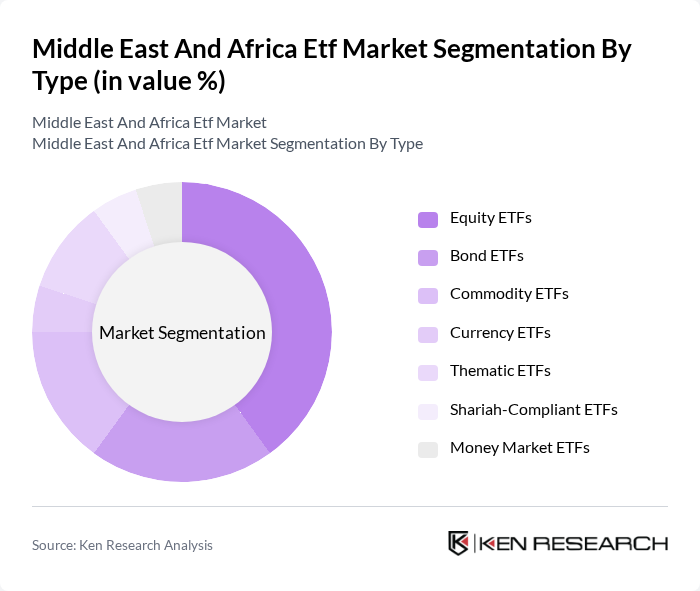
By Type:The ETF market can be segmented into various types, including Equity ETFs, Bond ETFs, Commodity ETFs, Currency ETFs, Thematic ETFs, Shariah-Compliant ETFs, and Money Market ETFs. Each type serves different investment strategies and risk profiles, catering to a diverse range of investor needs. Equity ETFs remain the most prominent, but there is notable growth in Fixed-Income ETFs, particularly those aligned with Shariah principles and sukuk demand, as well as increased interest in thematic and commodity ETFs .
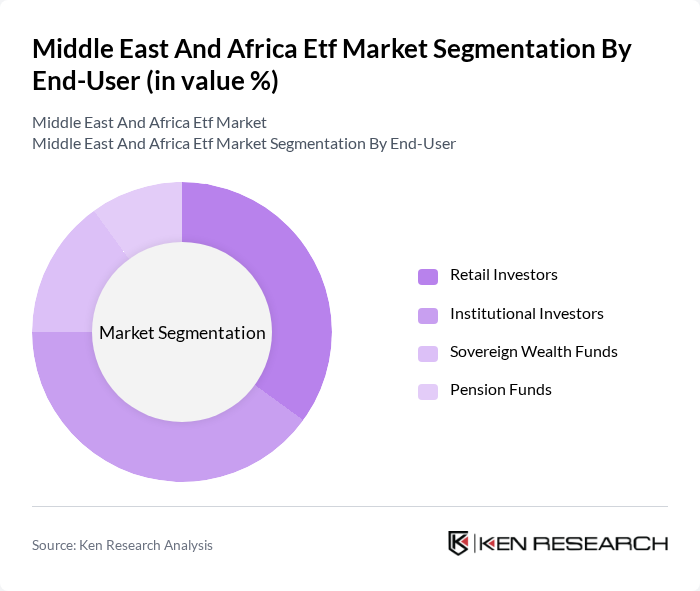
By End-User:The end-user segmentation includes Retail Investors, Institutional Investors, Sovereign Wealth Funds, and Pension Funds. Each of these segments has distinct investment goals and strategies, influencing their participation in the ETF market. Retail investors are the primary volume drivers, accounting for the majority of turnover, largely due to the accessibility provided by digital platforms and low investment thresholds. Institutional investors, including sovereign wealth funds and pension funds, also play a significant role in market growth .
The Middle East and Africa ETF market is characterized by a dynamic mix of regional and international players. Leading participants such as Alinma Investment, HSBC Saudi Arabia, Al Rajhi Capital, Emirates NBD Asset Management, Qatar National Bank Asset Management, BlackRock, Amundi Asset Management, Lyxor Asset Management, Franklin Templeton Investments, Xtrackers (DWS), FNB (First National Bank) South Africa, 1nvest (Standard Bank Group), Old Mutual Investment Group, Satrix Managers (South Africa), and ICBC Standard Bank contribute to innovation, geographic expansion, and service delivery in this space .
The future outlook for the ETF market in the Middle East and Africa appears promising, driven by increasing investor education and the expansion of digital financial services. As awareness of ETFs grows, more investors are likely to embrace these products for their cost-effectiveness and diversification benefits. Additionally, the ongoing trend towards sustainable investing is expected to further enhance the appeal of ETFs, particularly those focused on ESG criteria, as investors seek to align their portfolios with their values.
| Segment | Sub-Segments |
|---|---|
| By Type | Equity ETFs Bond ETFs Commodity ETFs Currency ETFs Thematic ETFs Shariah-Compliant ETFs Money Market ETFs |
| By End-User | Retail Investors Institutional Investors Sovereign Wealth Funds Pension Funds |
| By Investment Strategy | Passive Investment Active Investment Smart Beta |
| By Distribution Channel | Online Brokerage Platforms Banks & Financial Institutions Direct Investment |
| By Asset Class | Equities Fixed Income (including Sukuk) Commodities Alternatives |
| By Geographic Focus | Domestic Markets International Markets |
| By Risk Profile | Low Risk Medium Risk High Risk |
| Scope Item/Segment | Sample Size | Target Respondent Profiles |
|---|---|---|
| Institutional Investor Insights | 60 | Pension Fund Managers, Asset Allocators |
| Retail Investor Behavior | 100 | Individual Investors, Financial Advisors |
| ETF Provider Perspectives | 40 | Product Managers, Marketing Directors |
| Market Analysts Feedback | 50 | Equity Analysts, Economic Researchers |
| Regulatory Insights | 40 | Compliance Officers, Regulatory Affairs Specialists |
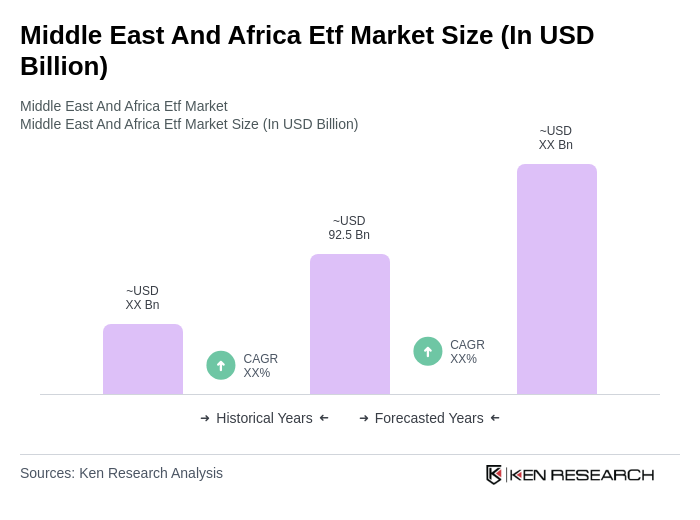
The Middle East and Africa ETF market is valued at approximately USD 92.5 billion, reflecting significant growth driven by increased investor interest in diversified investment options and the rise of digital trading platforms.

What makes us stand out is that our consultants follow Robust, Refine and Result (RRR) methodology. Robust for clear definitions, approaches and sanity checking, Refine for differentiating respondents' facts and opinions, and Result for presenting data with story.

We have set a benchmark in the industry by offering our clients with syndicated and customized market research reports featuring coverage of entire market as well as meticulous research and analyst insights.

While we don't replace traditional research, we flip the method upside down. Our dual approach of Top Bottom & Bottom Top ensures quality deliverable by not just verifying company fundamentals but also looking at the sector and macroeconomic factors.

With one step in the future, our research team constantly tries to show you the bigger picture. We help with some of the tough questions you may encounter along the way: How is the industry positioned? Best marketing channel? KPI's of competitors? By aligning every element, we help maximize success.

Our report gives you instant access to the answers and sources that other companies might choose to hide. We elaborate each steps of research methodology we have used and showcase you the sample size to earn your trust.

If you need any support, we are here! We pride ourselves on universe strength, data quality, and quick, friendly, and professional service.













