Region:Middle East
Author(s):Geetanshi
Product Code:KRAC3791
Pages:93
Published On:October 2025
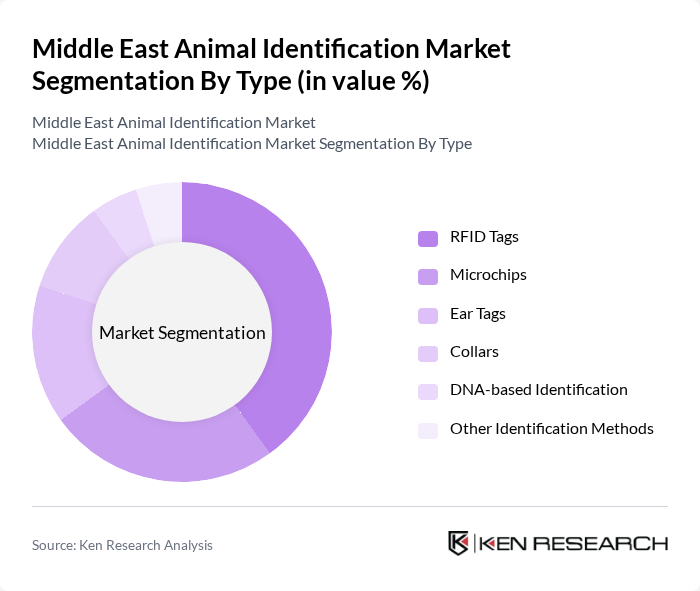
By Type:The segmentation by type includes various identification methods such as RFID Tags, Microchips, Ear Tags, Collars, DNA-based Identification, and Other Identification Methods. Among these, RFID Tags are gaining significant traction due to their efficiency and ease of use in tracking livestock. Microchips are also becoming popular for pet identification, while Ear Tags remain a traditional choice for farmers. The demand for DNA-based identification is increasing, particularly in research and conservation efforts.
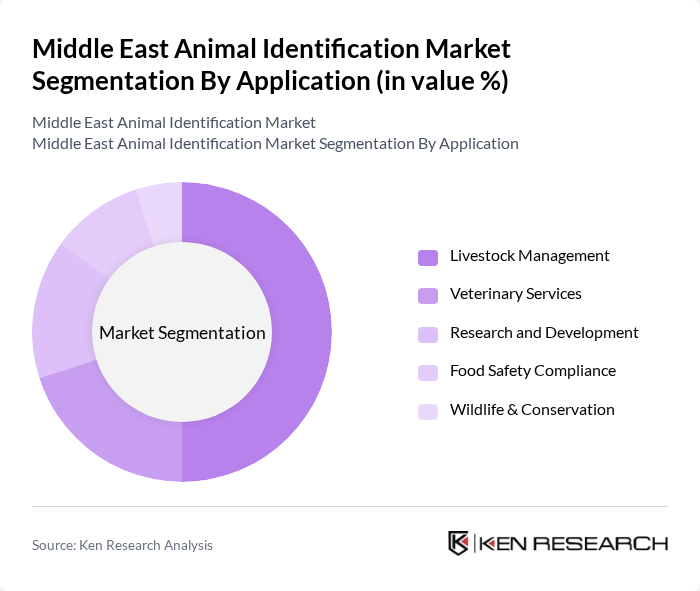
By Application:The application segmentation includes Livestock Management, Veterinary Services, Research and Development, Food Safety Compliance, and Wildlife & Conservation. Livestock Management is the leading application area, driven by the need for efficient tracking and management of animals. Veterinary Services are also crucial, as they require accurate identification for health monitoring. Food Safety Compliance is gaining importance due to increasing regulations and consumer demand for traceability in food supply chains.
The Middle East Animal Identification Market is characterized by a dynamic mix of regional and international players. Leading participants such as Allflex Livestock Intelligence (MSD Animal Health), Datamars SA, Zoetis Inc., Merck Animal Health, Neogen Corporation, HID Global Corporation, Avid Identification Systems, Inc., Smartbow GmbH (Zoetis), Caisley International GmbH, Leader Products Pty Ltd, Syscom Group, Shearwell Data Ltd, Microchip Technology Inc., Identipet (Pty) Ltd, EID Solutions Ltd contribute to innovation, geographic expansion, and service delivery in this space.
The future of the Middle East animal identification market appears promising, driven by increasing investments in technology and government support for animal health initiatives. As consumer awareness of food safety and ethical sourcing grows, the demand for traceability solutions will likely rise. Additionally, the integration of IoT and blockchain technologies is expected to enhance data management and transparency, fostering a more efficient livestock sector. This evolution will create a more robust framework for animal identification and management in the region.
| Segment | Sub-Segments |
|---|---|
| By Type | RFID Tags Microchips Ear Tags Collars DNA-based Identification Other Identification Methods |
| By Application | Livestock Management Veterinary Services Research and Development Food Safety Compliance Wildlife & Conservation |
| By End-User | Farmers Government Agencies Veterinary Clinics Research Institutions Livestock Traders & Exporters |
| By Distribution Channel | Direct Sales Online Retail Distributors Veterinary Clinics |
| By Region | GCC Countries (Saudi Arabia, UAE, Qatar, Kuwait, Oman, Bahrain) Levant Region (Jordan, Lebanon, Syria, Iraq, Palestine) North Africa (Egypt, Libya, Algeria, Morocco, Tunisia) Rest of Middle East & Africa |
| By Price Range | Low Price Mid Price High Price |
| By Technology | Passive RFID Active RFID GPS Tracking IoT-based Solutions Other Technologies |
| Scope Item/Segment | Sample Size | Target Respondent Profiles |
|---|---|---|
| Cattle Identification Practices | 120 | Livestock Farmers, Veterinary Technicians |
| Sheep and Goat Traceability | 100 | Farm Managers, Animal Health Inspectors |
| Regulatory Compliance in Animal Identification | 80 | Government Officials, Policy Makers |
| Technology Adoption in Livestock Management | 120 | Technology Providers, Agricultural Consultants |
| Consumer Awareness of Animal Traceability | 90 | Consumers, Retail Managers |
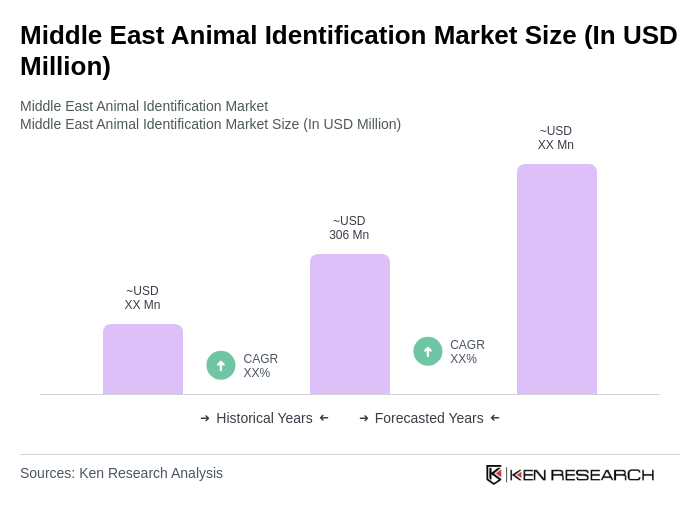
The Middle East Animal Identification Market is valued at approximately USD 306 million, driven by increasing livestock management needs, advancements in identification technologies, and rising concerns over food safety and traceability.

What makes us stand out is that our consultants follow Robust, Refine and Result (RRR) methodology. Robust for clear definitions, approaches and sanity checking, Refine for differentiating respondents' facts and opinions, and Result for presenting data with story.

We have set a benchmark in the industry by offering our clients with syndicated and customized market research reports featuring coverage of entire market as well as meticulous research and analyst insights.

While we don't replace traditional research, we flip the method upside down. Our dual approach of Top Bottom & Bottom Top ensures quality deliverable by not just verifying company fundamentals but also looking at the sector and macroeconomic factors.

With one step in the future, our research team constantly tries to show you the bigger picture. We help with some of the tough questions you may encounter along the way: How is the industry positioned? Best marketing channel? KPI's of competitors? By aligning every element, we help maximize success.

Our report gives you instant access to the answers and sources that other companies might choose to hide. We elaborate each steps of research methodology we have used and showcase you the sample size to earn your trust.

If you need any support, we are here! We pride ourselves on universe strength, data quality, and quick, friendly, and professional service.













