Region:Middle East
Author(s):Dev
Product Code:KRAD1579
Pages:100
Published On:November 2025
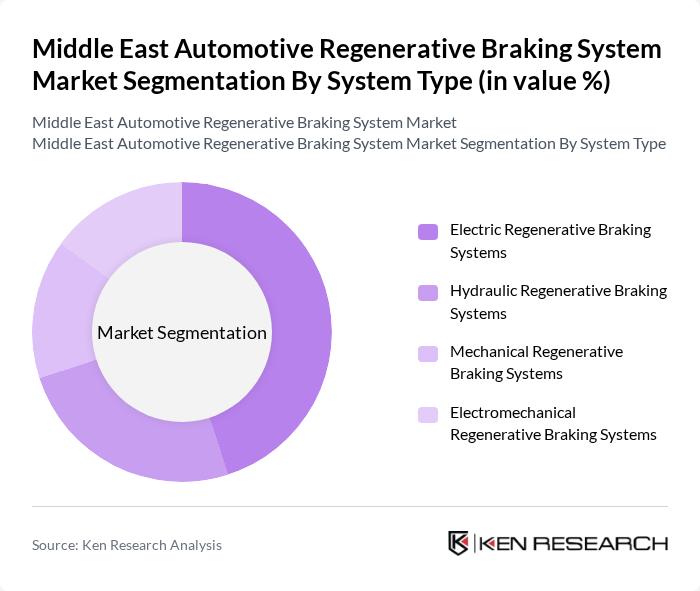
By System Type:The market is segmented into four main system types: Electric Regenerative Braking Systems, Hydraulic Regenerative Braking Systems, Mechanical Regenerative Braking Systems, and Electromechanical Regenerative Braking Systems. Among these, Electric Regenerative Braking Systems dominate the market due to their efficiency and compatibility with electric and hybrid vehicles. The increasing demand for electric vehicles has led to a surge in the adoption of electric regenerative braking systems, which are known for their ability to recover energy during braking and improve overall vehicle performance.
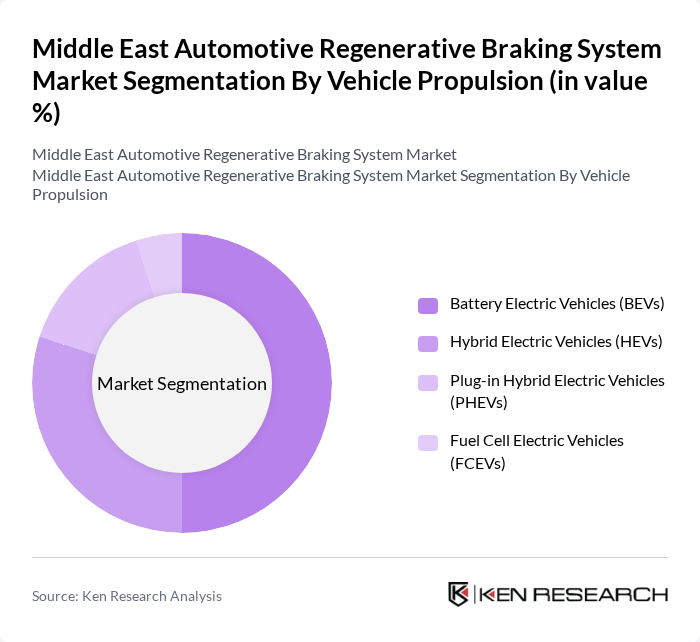
By Vehicle Propulsion:The market is categorized into Battery Electric Vehicles (BEVs), Hybrid Electric Vehicles (HEVs), Plug-in Hybrid Electric Vehicles (PHEVs), and Fuel Cell Electric Vehicles (FCEVs). Battery Electric Vehicles (BEVs) are the leading segment, driven by the increasing consumer preference for fully electric vehicles and the growing availability of charging infrastructure. The rise in environmental awareness and government incentives for electric vehicle adoption further support the dominance of BEVs in the regenerative braking system market.
The Middle East Automotive Regenerative Braking System Market is characterized by a dynamic mix of regional and international players. Leading participants such as Robert Bosch GmbH, Continental AG, ZF Friedrichshafen AG, Aisin Corporation, DENSO Corporation, Hitachi Astemo, Ltd., Nissin Kogyo Co., Ltd., Brembo S.p.A., WABCO (now part of ZF Group), Knorr-Bremse AG, TRW Automotive (now ZF TRW), Valeo S.A., Mahindra Electric Mobility Ltd., BYD Company Limited, Tesla, Inc., Hyundai Mobis Co., Ltd., Mando Corporation contribute to innovation, geographic expansion, and service delivery in this space.
The future of the Middle East automotive regenerative braking system market appears promising, driven by increasing investments in electric vehicle infrastructure and technological advancements. As governments continue to enforce stricter emission regulations, the demand for energy-efficient solutions will likely rise. Furthermore, the integration of artificial intelligence in braking systems is expected to enhance performance and safety, making regenerative braking more appealing to consumers. This evolving landscape presents a fertile ground for innovation and growth in the coming years.
| Segment | Sub-Segments |
|---|---|
| By System Type | Electric Regenerative Braking Systems Hydraulic Regenerative Braking Systems Mechanical Regenerative Braking Systems Electromechanical Regenerative Braking Systems |
| By Vehicle Propulsion | Battery Electric Vehicles (BEVs) Hybrid Electric Vehicles (HEVs) Plug-in Hybrid Electric Vehicles (PHEVs) Fuel Cell Electric Vehicles (FCEVs) |
| By Vehicle Type | Passenger Cars Light Commercial Vehicles (LCVs) Heavy Commercial Vehicles (HCVs) Buses & Coaches |
| By Component | Electric Motors/Generators Energy Storage Units (Batteries, Ultracapacitors) Controllers & Power Electronics Brake Control Units |
| By Distribution Channel | OEMs Aftermarket |
| By Country | United Arab Emirates Saudi Arabia Turkey Egypt Rest of Middle East |
| Scope Item/Segment | Sample Size | Target Respondent Profiles |
|---|---|---|
| Automotive Manufacturers | 45 | Product Development Managers, R&D Engineers |
| Fleet Management Companies | 50 | Fleet Operations Managers, Procurement Specialists |
| Automotive Component Suppliers | 40 | Supply Chain Managers, Technical Sales Representatives |
| Regulatory Bodies | 25 | Policy Makers, Environmental Compliance Officers |
| Consumer Focus Groups | 60 | Car Owners, Eco-conscious Consumers |
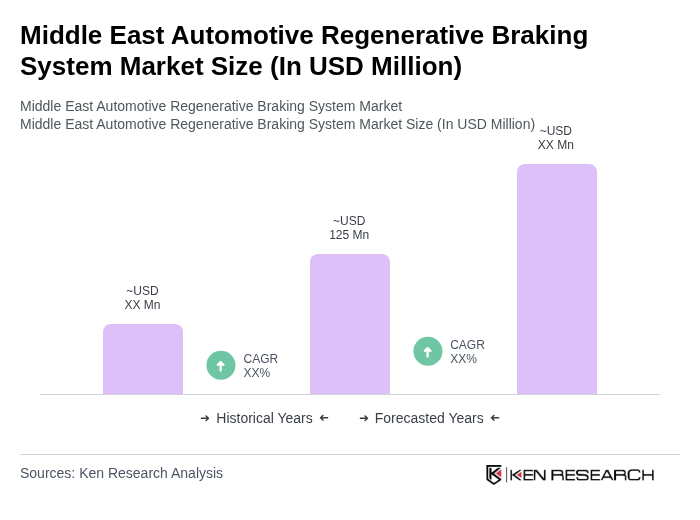
The Middle East Automotive Regenerative Braking System Market is valued at approximately USD 125 million, reflecting a significant growth trend driven by the increasing adoption of electric and hybrid vehicles, as well as government initiatives aimed at reducing carbon emissions.

What makes us stand out is that our consultants follow Robust, Refine and Result (RRR) methodology. Robust for clear definitions, approaches and sanity checking, Refine for differentiating respondents' facts and opinions, and Result for presenting data with story.

We have set a benchmark in the industry by offering our clients with syndicated and customized market research reports featuring coverage of entire market as well as meticulous research and analyst insights.

While we don't replace traditional research, we flip the method upside down. Our dual approach of Top Bottom & Bottom Top ensures quality deliverable by not just verifying company fundamentals but also looking at the sector and macroeconomic factors.

With one step in the future, our research team constantly tries to show you the bigger picture. We help with some of the tough questions you may encounter along the way: How is the industry positioned? Best marketing channel? KPI's of competitors? By aligning every element, we help maximize success.

Our report gives you instant access to the answers and sources that other companies might choose to hide. We elaborate each steps of research methodology we have used and showcase you the sample size to earn your trust.

If you need any support, we are here! We pride ourselves on universe strength, data quality, and quick, friendly, and professional service.













