Region:Middle East
Author(s):Dev
Product Code:KRAB8774
Pages:82
Published On:October 2025
 Market.png "Middle East Automotive Testing Inspection & Certification (TIC) Market Size")
By Type:
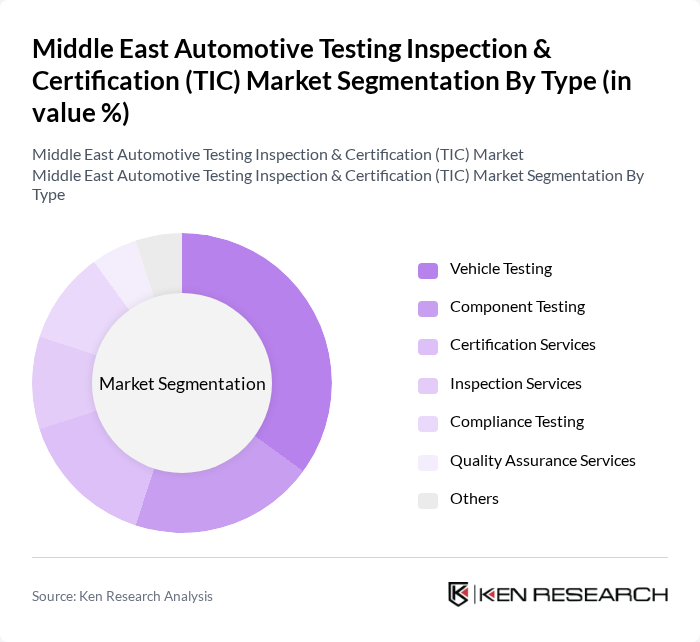
The market segmentation by type includes various subsegments such as Vehicle Testing, Component Testing, Certification Services, Inspection Services, Compliance Testing, Quality Assurance Services, and Others. Among these, Vehicle Testing is the leading subsegment, driven by the increasing focus on safety and regulatory compliance. The demand for thorough vehicle assessments has surged as consumers become more aware of safety standards and manufacturers strive to meet stringent regulations. This trend is further supported by technological advancements in testing methodologies, enhancing the accuracy and efficiency of vehicle assessments.
By End-User:
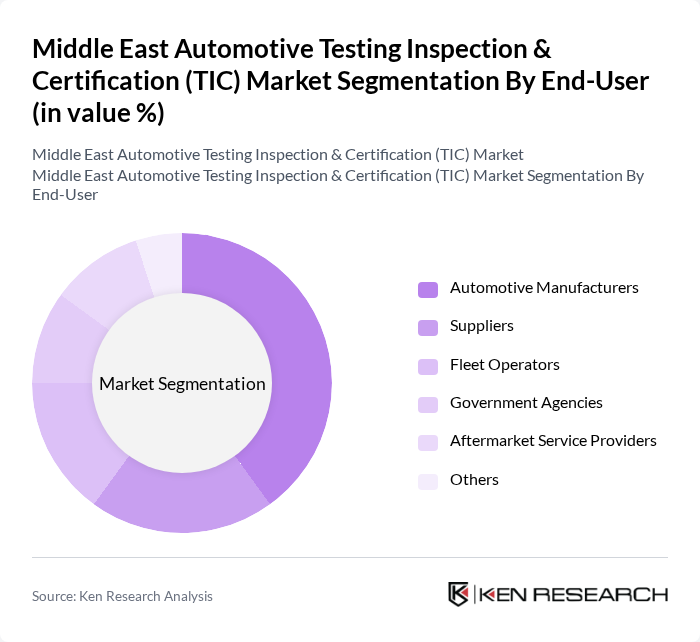
This segmentation includes Automotive Manufacturers, Suppliers, Fleet Operators, Government Agencies, Aftermarket Service Providers, and Others. Automotive Manufacturers represent the dominant subsegment, as they require extensive testing and certification to ensure compliance with safety and environmental regulations. The increasing production of vehicles in the region, coupled with the need for high-quality standards, drives the demand for TIC services among manufacturers. Additionally, the growing trend of electric vehicles necessitates specialized testing and certification, further solidifying the position of automotive manufacturers in the market.
The Middle East Automotive Testing Inspection & Certification (TIC) Market is characterized by a dynamic mix of regional and international players. Leading participants such as SGS S.A., Bureau Veritas S.A., Intertek Group plc, TÜV Rheinland AG, DNV GL AS, Applus+, ALS Limited, Eurofins Scientific SE, DEKRA SE, UL LLC, TUV SUD AG, ATESTEO GmbH, FEV Group GmbH, KPMG International, Ernst & Young Global Limited contribute to innovation, geographic expansion, and service delivery in this space.
The Middle East automotive TIC market is poised for significant transformation, driven by the integration of digital solutions and a heightened focus on sustainability. As electric vehicle production accelerates, testing protocols will evolve to accommodate new technologies. Additionally, partnerships between TIC providers and automotive manufacturers are expected to strengthen, fostering innovation and improving service delivery. The emphasis on cybersecurity in automotive systems will also shape future testing requirements, ensuring that vehicles meet modern safety and security standards.
| Segment | Sub-Segments |
|---|---|
| By Type | Vehicle Testing Component Testing Certification Services Inspection Services Compliance Testing Quality Assurance Services Others |
| By End-User | Automotive Manufacturers Suppliers Fleet Operators Government Agencies Aftermarket Service Providers Others |
| By Service Type | Pre-Delivery Inspection Periodic Testing Compliance Audits Certification Audits Others |
| By Geographic Coverage | GCC Countries Levant Region North Africa Others |
| By Customer Type | OEMs Tier 1 Suppliers Tier 2 Suppliers Independent Workshops Others |
| By Testing Methodology | Destructive Testing Non-Destructive Testing Performance Testing Environmental Testing Others |
| By Certification Type | ISO Certifications National Standards Certifications Industry-Specific Certifications Others |
| Scope Item/Segment | Sample Size | Target Respondent Profiles |
|---|---|---|
| Automotive Manufacturers | 100 | Quality Assurance Managers, Compliance Officers |
| Testing Laboratories | 80 | Laboratory Directors, Testing Engineers |
| Certification Bodies | 60 | Certification Managers, Regulatory Affairs Specialists |
| Government Regulatory Agencies | 50 | Policy Makers, Safety Inspectors |
| Industry Associations | 40 | Research Analysts, Advocacy Directors |
The Middle East Automotive Testing Inspection & Certification (TIC) Market is valued at approximately USD 1.2 billion, reflecting a significant growth driven by increasing vehicle safety demands and environmental compliance in the region's expanding automotive sector.

What makes us stand out is that our consultants follow Robust, Refine and Result (RRR) methodology. Robust for clear definitions, approaches and sanity checking, Refine for differentiating respondents' facts and opinions, and Result for presenting data with story.

We have set a benchmark in the industry by offering our clients with syndicated and customized market research reports featuring coverage of entire market as well as meticulous research and analyst insights.

While we don't replace traditional research, we flip the method upside down. Our dual approach of Top Bottom & Bottom Top ensures quality deliverable by not just verifying company fundamentals but also looking at the sector and macroeconomic factors.

With one step in the future, our research team constantly tries to show you the bigger picture. We help with some of the tough questions you may encounter along the way: How is the industry positioned? Best marketing channel? KPI's of competitors? By aligning every element, we help maximize success.

Our report gives you instant access to the answers and sources that other companies might choose to hide. We elaborate each steps of research methodology we have used and showcase you the sample size to earn your trust.

If you need any support, we are here! We pride ourselves on universe strength, data quality, and quick, friendly, and professional service.













