About the Report
Base Year 2024Middle East Comic Books Market Overview
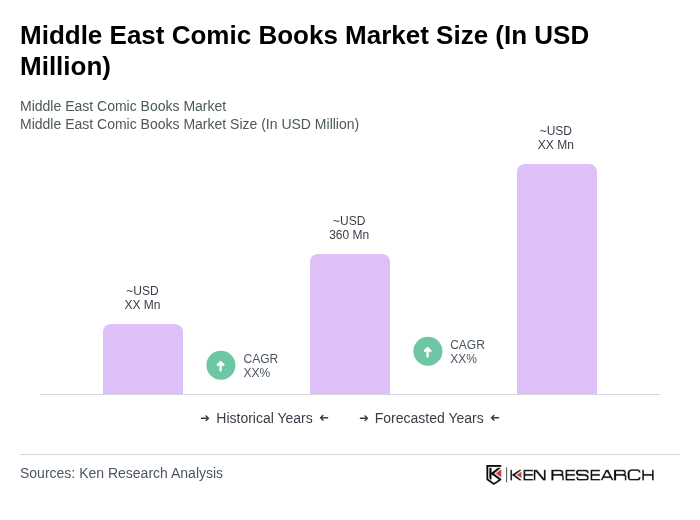
- The Middle East Comic Books Market is valued at USD 360 million, based on a five-year historical analysis. This growth is primarily driven by the increasing popularity of comic book adaptations in films and television, a rising interest in graphic novels and manga among younger audiences, and the expanding influence of digital platforms. The market has seen a surge in both local and international publications, catering to diverse tastes and preferences, with digital formats rapidly gaining traction due to widespread smartphone adoption and high internet penetration .
- Key players in this market include countries like the United Arab Emirates, Saudi Arabia, and Egypt. The UAE stands out due to its vibrant cultural scene and numerous comic conventions, while Saudi Arabia has a growing youth population eager for entertainment. Egypt's rich history of storytelling and art also contributes to its prominence in the comic book sector. Localizing themes and characters with Arab and Islamic traditions, regional history, and contemporary social issues is a defining trend, resonating with local audiences and attracting international interest .
- The UAE Cabinet Resolution No. 55 of 2023, issued by the United Arab Emirates Cabinet, established a framework to promote local creative industries, including comic book creators. This regulation provides funding for creative projects and tax incentives for publishers, encouraging the growth of homegrown talent and fostering a more diverse comic book landscape in the region. The regulation mandates eligibility criteria for funding, compliance with content standards, and reporting requirements for beneficiaries .
Middle East Comic Books Market Segmentation
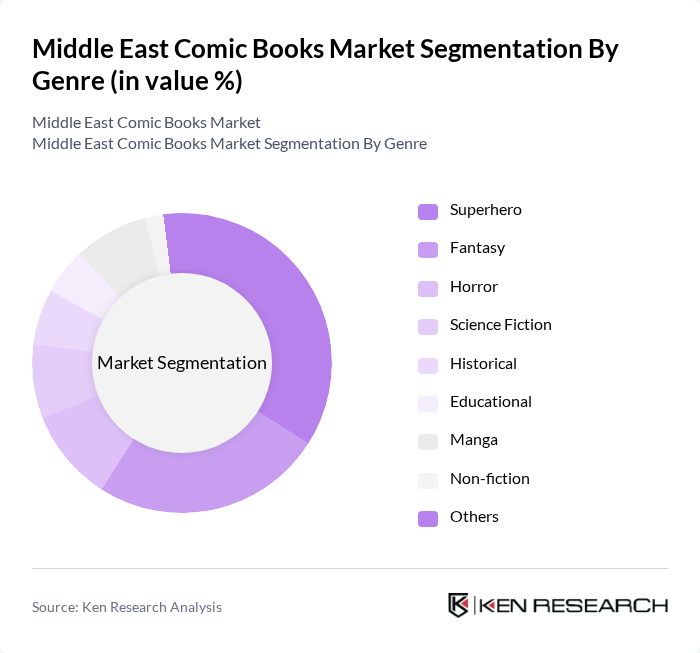
By Genre:The genre segmentation of the comic book market showcases a variety of themes that cater to different audience preferences. The dominant genres include Superhero, Fantasy, and Manga, which have gained significant traction due to their global popularity and cultural relevance. Superhero comics, in particular, resonate well with audiences due to their cinematic adaptations, while Fantasy and Manga appeal to younger readers seeking escapism and adventure. Educational and Historical genres are also emerging, reflecting a growing interest in learning through engaging narratives. Local content reflecting regional history and social themes is increasingly prominent .
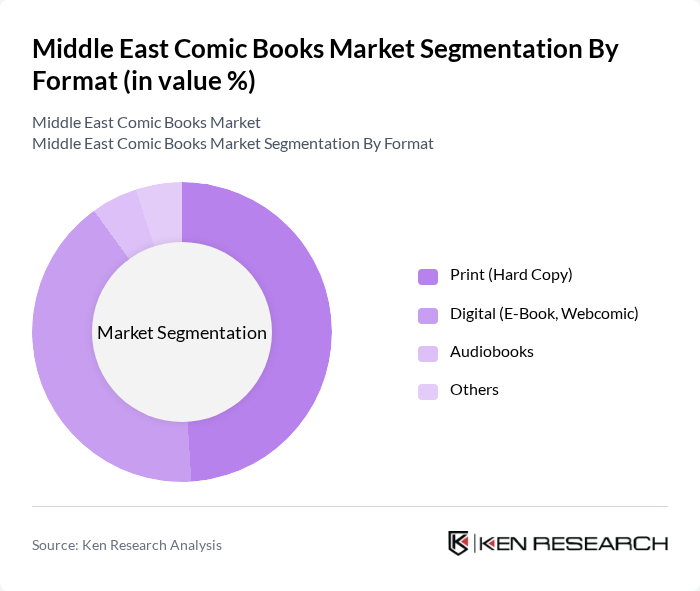
By Format:The format segmentation highlights the various ways comic books are consumed, with Print (Hard Copy) and Digital (E-Book, Webcomic) being the most prominent. The Print format remains popular due to the tactile experience it offers, especially among collectors, while Digital formats are rapidly gaining traction, particularly among younger audiences who prefer the convenience of accessing comics on their devices. Audiobooks are also emerging as a niche segment, appealing to those who enjoy storytelling in audio format. Digital is the fastest-growing segment, driven by mobile-first consumption patterns and high internet penetration .
Middle East Comic Books Market Competitive Landscape
The Middle East Comic Books Market is characterized by a dynamic mix of regional and international players. Leading participants such as Manga Productions, Teshkeel Media Group, Majid Magazine, Kalimat Group, AK Comics, Sandstorm Comics, Kharabeesh, KSA Comics, Kairo Comics, Karamah Comics, Disney (Middle East operations), DC Comics (Middle East distribution), IDW Publishing (Middle East distribution), Archie Comics (Middle East distribution), DMG Entertainment contribute to innovation, geographic expansion, and service delivery in this space .
Middle East Comic Books Market Industry Analysis
Growth Drivers
- Increasing Popularity of Comic Conventions:The Middle East has seen a surge in comic conventions, with events like the Middle East Film and Comic Con attracting over 50,000 attendees in future. This growth reflects a burgeoning interest in comic culture, with ticket sales reaching approximately $2.5 million. The rise of these conventions fosters community engagement and provides a platform for local artists, enhancing visibility and sales for comic books in the region.
- Rise of Digital Comics and E-Readers:The digital comics market in the Middle East is projected to reach $200 million in future, driven by the increasing penetration of smartphones and e-readers. With over 99% of the population accessing the internet, digital platforms are becoming essential for comic distribution. This shift allows for greater accessibility and convenience, enabling readers to explore diverse genres and local narratives, thus expanding the audience base significantly.
- Growing Interest in Local and Regional Storytelling:There is a notable increase in demand for comics that reflect local cultures and narratives, with sales of regional titles rising by 35% in future. This trend is supported by initiatives from local publishers who are investing in homegrown talent. The emphasis on culturally relevant storytelling resonates with audiences, fostering a sense of identity and community, which is crucial for market growth in the region.
Market Challenges
- Limited Awareness of Comic Book Culture:Despite the growth in comic conventions, awareness of comic book culture remains limited in many Middle Eastern countries. For instance, surveys indicate that only 30% of the population actively engages with comic books. This lack of familiarity hinders market expansion, as potential readers may not recognize the value or entertainment offered by comics, limiting overall sales and readership growth.
- Competition from Other Entertainment Forms:The comic book market faces stiff competition from other entertainment sectors, particularly streaming services and video games, which are projected to generate $2 billion in revenue in the region in future. This competition diverts consumer attention and spending away from comic books, making it challenging for publishers to capture and retain a dedicated audience amidst a plethora of entertainment options.
Middle East Comic Books Market Future Outlook
The future of the Middle East comic book market appears promising, driven by increasing digital engagement and a growing appreciation for local narratives. As more readers turn to online platforms, the accessibility of comics will likely enhance readership. Additionally, the rise of graphic novels and webcomics is expected to attract younger audiences, further diversifying the market. Collaborations with local artists and educational initiatives will also play a crucial role in shaping the industry's trajectory, fostering a vibrant comic culture in the region.
Market Opportunities
- Collaborations with Local Artists:Partnering with local artists can significantly enhance the authenticity and appeal of comic books. By leveraging regional talent, publishers can create unique stories that resonate with local audiences, potentially increasing sales by 25% as consumers seek relatable content that reflects their experiences and culture.
- Development of Educational Comics:The creation of educational comics presents a unique opportunity to engage younger audiences while promoting literacy. With over 50% of the youth population in the region, educational comics can serve as effective tools for learning, potentially increasing readership and fostering a new generation of comic enthusiasts who value both entertainment and education.
Scope of the Report
| Segment | Sub-Segments |
|---|---|
| By Genre | Superhero Fantasy Horror Science Fiction Historical Educational Manga Non-fiction Others |
| By Format | Print (Hard Copy) Digital (E-Book, Webcomic) Audiobooks Others |
| By Distribution Channel | Online Retail Brick-and-Mortar Stores Comic Book Shops Events and Conventions Others |
| By Target Audience | Children Teenagers Adults Collectors Others |
| By Language | Arabic English French Others |
| By Price Range | Low-End Mid-Range High-End Others |
| By Publication Frequency | Monthly Bi-Monthly Quarterly Annual Others |
| By Country | Saudi Arabia United Arab Emirates Egypt Turkey Qatar Israel Others |
Key Target Audience
Investors and Venture Capitalist Firms
Government and Regulatory Bodies (e.g., Ministry of Culture and Knowledge Development, National Media Council)
Comic Book Publishers and Distributors
Retail Chains and Bookstores
Digital Content Platforms and Streaming Services
Advertising Agencies and Marketing Firms
Event Organizers and Comic Conventions
Art and Creative Agencies
Players Mentioned in the Report:
Manga Productions
Teshkeel Media Group
Majid Magazine
Kalimat Group
AK Comics
Sandstorm Comics
Kharabeesh
KSA Comics
Kairo Comics
Karamah Comics
Disney (Middle East operations)
DC Comics (Middle East distribution)
IDW Publishing (Middle East distribution)
Archie Comics (Middle East distribution)
DMG Entertainment
Table of Contents
Market Assessment Phase
1. Executive Summary and Approach
2. Middle East Comic Books Market Overview
2.1 Key Insights and Strategic Recommendations
2.2 Middle East Comic Books Market Overview
2.3 Definition and Scope
2.4 Evolution of Market Ecosystem
2.5 Timeline of Key Regulatory Milestones
2.6 Value Chain & Stakeholder Mapping
2.7 Business Cycle Analysis
2.8 Policy & Incentive Landscape
3. Middle East Comic Books Market Analysis
3.1 Growth Drivers
3.1.1 Increasing Popularity of Comic Conventions
3.1.2 Rise of Digital Comics and E-Readers
3.1.3 Growing Interest in Local and Regional Storytelling
3.1.4 Expansion of Distribution Channels
3.2 Market Challenges
3.2.1 Limited Awareness of Comic Book Culture
3.2.2 Competition from Other Entertainment Forms
3.2.3 Regulatory Restrictions on Content
3.2.4 Distribution and Logistics Issues
3.3 Market Opportunities
3.3.1 Collaborations with Local Artists
3.3.2 Development of Educational Comics
3.3.3 Growth of Online Retail Platforms
3.3.4 Expansion into Untapped Markets
3.4 Market Trends
3.4.1 Increasing Popularity of Graphic Novels
3.4.2 Emergence of Webcomics
3.4.3 Integration of Comics into Multimedia Platforms
3.4.4 Focus on Diverse Representation in Storytelling
3.5 Government Regulation
3.5.1 Content Censorship Policies
3.5.2 Copyright and Intellectual Property Laws
3.5.3 Import Regulations for Foreign Comics
3.5.4 Support for Local Creators and Publishers
4. SWOT Analysis
5. Stakeholder Analysis
6. Porter's Five Forces Analysis
7. Middle East Comic Books Market Market Size, 2019-2024
7.1 By Value
7.2 By Volume
7.3 By Average Selling Price
8. Middle East Comic Books Market Segmentation
8.1 By Genre
8.1.1 Superhero
8.1.2 Fantasy
8.1.3 Horror
8.1.4 Science Fiction
8.1.5 Historical
8.1.6 Educational
8.1.7 Manga
8.1.8 Non-fiction
8.1.9 Others
8.2 By Format
8.2.1 Print (Hard Copy)
8.2.2 Digital (E-Book, Webcomic)
8.2.3 Audiobooks
8.2.4 Others
8.3 By Distribution Channel
8.3.1 Online Retail
8.3.2 Brick-and-Mortar Stores
8.3.3 Comic Book Shops
8.3.4 Events and Conventions
8.3.5 Others
8.4 By Target Audience
8.4.1 Children
8.4.2 Teenagers
8.4.3 Adults
8.4.4 Collectors
8.4.5 Others
8.5 By Language
8.5.1 Arabic
8.5.2 English
8.5.3 French
8.5.4 Others
8.6 By Price Range
8.6.1 Low-End
8.6.2 Mid-Range
8.6.3 High-End
8.6.4 Others
8.7 By Publication Frequency
8.7.1 Monthly
8.7.2 Bi-Monthly
8.7.3 Quarterly
8.7.4 Annual
8.7.5 Others
8.8 By Country
8.8.1 Saudi Arabia
8.8.2 United Arab Emirates
8.8.3 Egypt
8.8.4 Turkey
8.8.5 Qatar
8.8.6 Israel
8.8.7 Others
9. Middle East Comic Books Market Competitive Analysis
9.1 Market Share of Key Players
9.2 Cross Comparison of Key Players
9.2.1 Company Name
9.2.2 Group Size (Large, Medium, or Small as per industry convention)
9.2.3 Revenue Growth Rate (YoY %)
9.2.4 Market Penetration Rate (by country/region)
9.2.5 Customer Retention Rate (%)
9.2.6 Average Revenue Per User (ARPU)
9.2.7 Product Diversification Index (number of genres/formats)
9.2.8 Distribution Channel Coverage (number of channels/regions)
9.2.9 Brand Recognition Score (survey-based or digital reach)
9.2.10 Digital Engagement Metrics (website/app traffic, social media followers, etc.)
9.3 SWOT Analysis of Top Players
9.4 Pricing Analysis
9.5 Detailed Profile of Major Companies
9.5.1 Manga Productions
9.5.2 Teshkeel Media Group
9.5.3 Majid Magazine
9.5.4 Kalimat Group
9.5.5 AK Comics
9.5.6 Sandstorm Comics
9.5.7 Kharabeesh
9.5.8 KSA Comics
9.5.9 Kairo Comics
9.5.10 Karamah Comics
9.5.11 Disney (Middle East operations)
9.5.12 DC Comics (Middle East distribution)
9.5.13 IDW Publishing (Middle East distribution)
9.5.14 Archie Comics (Middle East distribution)
9.5.15 DMG Entertainment
10. Middle East Comic Books Market End-User Analysis
10.1 Procurement Behavior of Key Ministries
10.1.1 Ministry of Culture
10.1.2 Ministry of Education
10.1.3 Ministry of Youth Affairs
10.1.4 Others
10.2 Corporate Spend on Infrastructure & Energy
10.2.1 Investment in Local Comic Book Stores
10.2.2 Sponsorship of Comic Events
10.2.3 Collaborations with Educational Institutions
10.2.4 Others
10.3 Pain Point Analysis by End-User Category
10.3.1 Accessibility of Comics
10.3.2 Quality of Content
10.3.3 Pricing Concerns
10.3.4 Others
10.4 User Readiness for Adoption
10.4.1 Awareness of Comic Culture
10.4.2 Availability of Digital Platforms
10.4.3 Interest in Local Content
10.4.4 Others
10.5 Post-Deployment ROI and Use Case Expansion
10.5.1 Increased Sales from Local Authors
10.5.2 Expansion into New Markets
10.5.3 Enhanced Brand Loyalty
10.5.4 Others
11. Middle East Comic Books Market Future Size, 2025-2030
11.1 By Value
11.2 By Volume
11.3 By Average Selling Price
Go-To-Market Strategy Phase
1. Whitespace Analysis + Business Model Canvas
1.1 Market Gaps Identification
1.2 Business Model Development
2. Marketing and Positioning Recommendations
2.1 Branding Strategies
2.2 Product USPs
3. Distribution Plan
3.1 Urban Retail vs Rural NGO Tie-Ups
4. Channel & Pricing Gaps
4.1 Underserved Routes
4.2 Pricing Bands
5. Unmet Demand & Latent Needs
5.1 Category Gaps
5.2 Consumer Segments
6. Customer Relationship
6.1 Loyalty Programs
6.2 After-Sales Service
7. Value Proposition
7.1 Sustainability
7.2 Integrated Supply Chains
8. Key Activities
8.1 Regulatory Compliance
8.2 Branding
8.3 Distribution Setup
9. Entry Strategy Evaluation
9.1 Domestic Market Entry Strategy
9.1.1 Product Mix
9.1.2 Pricing Band
9.1.3 Packaging
9.2 Export Entry Strategy
9.2.1 Target Countries
9.2.2 Compliance Roadmap
10. Entry Mode Assessment
10.1 JV
10.2 Greenfield
10.3 M&A
10.4 Distributor Model
11. Capital and Timeline Estimation
11.1 Capital Requirements
11.2 Timelines
12. Control vs Risk Trade-Off
12.1 Ownership vs Partnerships
13. Profitability Outlook
13.1 Breakeven Analysis
13.2 Long-Term Sustainability
14. Potential Partner List
14.1 Distributors
14.2 JVs
14.3 Acquisition Targets
15. Execution Roadmap
15.1 Phased Plan for Market Entry
15.1.1 Market Setup
15.1.2 Market Entry
15.1.3 Growth Acceleration
15.1.4 Scale & Stabilize
15.2 Key Activities and Milestones
15.2.1 Milestone Planning
15.2.2 Activity Tracking
Research Methodology
Phase 1: Approach1
Desk Research
- Analysis of market reports from regional comic book publishers and distributors
- Review of demographic and cultural studies related to comic book readership in the Middle East
- Examination of online platforms and sales data from e-commerce sites specializing in comic books
Primary Research
- Interviews with comic book store owners and managers across major cities in the Middle East
- Surveys targeting comic book readers to understand preferences and purchasing behavior
- Focus groups with artists and writers in the comic book industry to gather insights on trends and challenges
Validation & Triangulation
- Cross-validation of findings through multiple sources, including sales data and reader surveys
- Triangulation of insights from industry experts, retailers, and consumer feedback
- Sanity checks through expert panel discussions to ensure data reliability
Phase 2: Market Size Estimation1
Top-down Assessment
- Estimation of total market size based on regional entertainment spending and cultural consumption patterns
- Segmentation of the market by genre, format (digital vs. print), and target demographics
- Incorporation of growth trends in related sectors such as animation and gaming
Bottom-up Modeling
- Collection of sales data from leading comic book retailers and distributors
- Estimation of average price points for various comic book formats and genres
- Volume estimates based on historical sales trends and emerging market dynamics
Forecasting & Scenario Analysis
- Multi-factor regression analysis incorporating factors such as digital adoption rates and cultural shifts
- Scenario planning based on potential changes in consumer preferences and economic conditions
- Development of baseline, optimistic, and pessimistic market projections through 2030
Phase 3: CATI Sample Composition1
| Scope Item/Segment | Sample Size | Target Respondent Profiles |
|---|---|---|
| Comic Book Retailers | 100 | Store Owners, Retail Managers |
| Comic Book Readers | 120 | Regular Readers, Casual Buyers |
| Comic Book Creators | 40 | Writers, Illustrators, Publishers |
| Industry Experts | 40 | Market Analysts, Cultural Commentators |
| Digital Comic Platforms | 60 | Platform Managers, Content Curators |
Frequently Asked Questions
What is the current value of the Middle East Comic Books Market?
The Middle East Comic Books Market is valued at approximately USD 360 million, reflecting a significant growth trend driven by the popularity of comic adaptations in films and television, as well as the rising interest in graphic novels and manga among younger audiences.
Which countries are key players in the Middle East Comic Books Market?
What are the main genres in the Middle East Comic Books Market?
How is the Middle East Comic Books Market adapting to digital trends?
Other Regional/Country Reports
Indonesia Comic Books Market Report Size, Share, Growth Drivers, Trends, Opportunities & Forecast 2025–2030
Malaysia Comic Books Market Report Size, Share, Growth Drivers, Trends, Opportunities & Forecast 2025–2030
KSA Comic Books Market Report Size, Share, Growth Drivers, Trends, Opportunities & Forecast 2025–2030
APAC Comic Books Market Report Size, Share, Growth Drivers, Trends, Opportunities & Forecast 2025–2030
SEA Comic Books Market Report Size, Share, Growth Drivers, Trends, Opportunities & Forecast 2025–2030
Vietnam Comic Books Market Report Size, Share, Growth Drivers, Trends, Opportunities & Forecast 2025–2030
Other Adjacent Reports
Bahrain Graphic Novels Market
APAC Manga Market Report Size Share Growth Drivers Trends Opportunities & Forecast 2025–2030Brazil Digital Publishing Market
Germany Comic Conventions Market
India Animation Market Outlook to 2030Indonesia Film Production Market
UAE Book Publishing Market
South Africa E-books Market
South Korea Educational Content Market
Kuwait Merchandise Collectibles Market
Why Buy From Us?

What makes us stand out is that our consultants follow Robust, Refine and Result (RRR) methodology. Robust for clear definitions, approaches and sanity checking, Refine for differentiating respondents' facts and opinions, and Result for presenting data with story.

We have set a benchmark in the industry by offering our clients with syndicated and customized market research reports featuring coverage of entire market as well as meticulous research and analyst insights.

While we don't replace traditional research, we flip the method upside down. Our dual approach of Top Bottom & Bottom Top ensures quality deliverable by not just verifying company fundamentals but also looking at the sector and macroeconomic factors.

With one step in the future, our research team constantly tries to show you the bigger picture. We help with some of the tough questions you may encounter along the way: How is the industry positioned? Best marketing channel? KPI's of competitors? By aligning every element, we help maximize success.

Our report gives you instant access to the answers and sources that other companies might choose to hide. We elaborate each steps of research methodology we have used and showcase you the sample size to earn your trust.

If you need any support, we are here! We pride ourselves on universe strength, data quality, and quick, friendly, and professional service.