Region:Middle East
Author(s):Shubham
Product Code:KRAD3666
Pages:85
Published On:November 2025
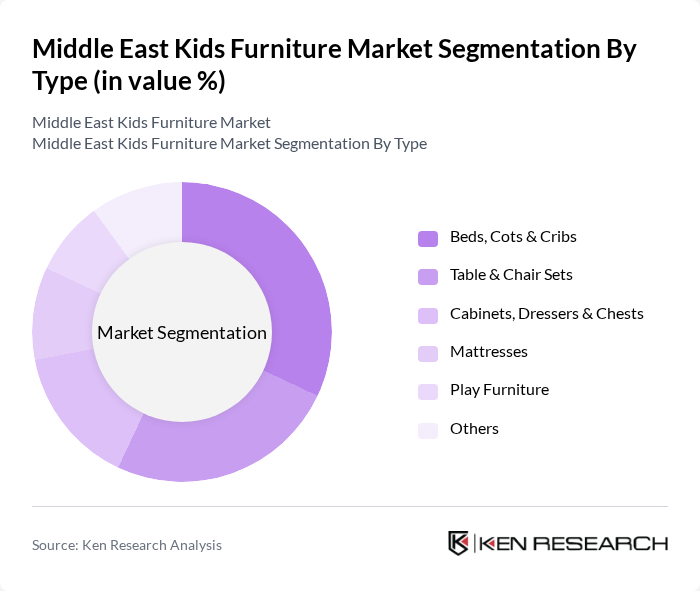
By Type:The market is segmented into various types of kids' furniture, including Beds, Cots & Cribs, Table & Chair Sets, Cabinets, Dressers & Chests, Mattresses, Play Furniture, and Others. Among these, Beds, Cots & Cribs are the most popular due to their essential role in child safety and comfort. The increasing trend of co-sleeping and the demand for space-saving designs have further boosted this segment's growth. Table & Chair Sets also see significant demand as they cater to both educational and recreational needs. The market is also witnessing a rise in demand for multi-functional and convertible furniture, such as high chairs that transform into study desks, and dressers with integrated storage solutions, reflecting the evolving needs of modern families .
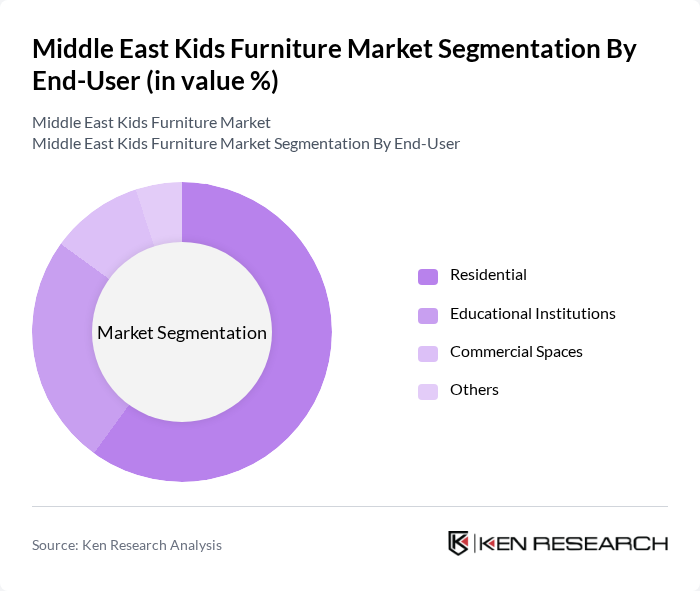
By End-User:The market is segmented by end-user into Residential, Educational Institutions, Commercial Spaces, and Others. The Residential segment dominates the market, driven by the increasing number of families and the growing trend of personalized children's spaces in homes. Educational institutions also contribute significantly, as schools and daycare centers invest in quality furniture to enhance learning environments. The demand from commercial spaces is rising as well, with more businesses catering to family-oriented services. The expansion of early childhood education centers and the development of child-friendly commercial venues are further boosting demand in non-residential segments .
The Middle East Kids Furniture Market is characterized by a dynamic mix of regional and international players. Leading participants such as IKEA, Home Centre, Pan Emirates, KidKraft, Little Tikes, Delta Children, Dream On Me, Çilek, Totsy, Room & Board, Pottery Barn Kids, Crate & Barrel Kids, Melissa & Doug, Kid's Concept, Oeuf, Wayfair, Williams-Sonoma, FirstCry, Blu Dot, Billion Dollar Boy contribute to innovation, geographic expansion, and service delivery in this space .
The Middle East kids' furniture market is poised for significant transformation, driven by evolving consumer preferences and technological advancements. As families increasingly prioritize sustainability, manufacturers are likely to innovate with eco-friendly materials and designs. Additionally, the rise of e-commerce platforms will facilitate greater access to diverse product offerings, enhancing consumer choice. The focus on ergonomic designs will also gain momentum, ensuring that children's health and comfort are prioritized in furniture development, ultimately shaping a more dynamic market landscape.
| Segment | Sub-Segments |
|---|---|
| By Type | Beds, Cots & Cribs Table & Chair Sets Cabinets, Dressers & Chests Mattresses Play Furniture Others |
| By End-User | Residential Educational Institutions Commercial Spaces Others |
| By Age Group | Infants (0-2 years) Toddlers (3-5 years) Children (6-12 years) Teenagers (13-18 years) Others |
| By Material | Wood Metal Plastic Fabric Others |
| By Design Style | Modern Traditional Themed Minimalist Others |
| By Distribution Channel | Online Retail Offline Retail Direct Sales Others |
| By Price Range | Budget Mid-Range Premium Others |
| Scope Item/Segment | Sample Size | Target Respondent Profiles |
|---|---|---|
| Retail Sector Insights | 150 | Store Managers, Sales Representatives |
| Consumer Preferences Survey | 120 | Parents, Guardians, Caregivers |
| Manufacturer Feedback | 100 | Product Development Managers, Operations Directors |
| Interior Design Trends | 80 | Interior Designers, Child Development Experts |
| Online Retail Analysis | 90 | E-commerce Managers, Digital Marketing Specialists |
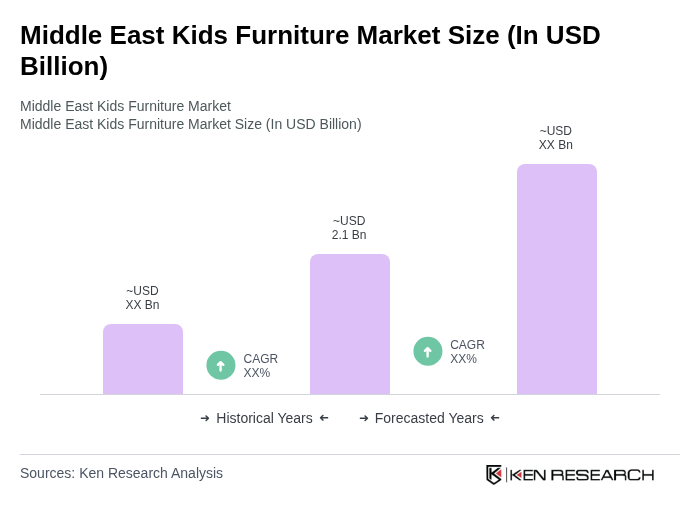
The Middle East Kids Furniture Market is valued at approximately USD 2.1 billion, driven by factors such as urbanization, rising disposable incomes, and a growing focus on child safety and ergonomics in furniture design.

What makes us stand out is that our consultants follow Robust, Refine and Result (RRR) methodology. Robust for clear definitions, approaches and sanity checking, Refine for differentiating respondents' facts and opinions, and Result for presenting data with story.

We have set a benchmark in the industry by offering our clients with syndicated and customized market research reports featuring coverage of entire market as well as meticulous research and analyst insights.

While we don't replace traditional research, we flip the method upside down. Our dual approach of Top Bottom & Bottom Top ensures quality deliverable by not just verifying company fundamentals but also looking at the sector and macroeconomic factors.

With one step in the future, our research team constantly tries to show you the bigger picture. We help with some of the tough questions you may encounter along the way: How is the industry positioned? Best marketing channel? KPI's of competitors? By aligning every element, we help maximize success.

Our report gives you instant access to the answers and sources that other companies might choose to hide. We elaborate each steps of research methodology we have used and showcase you the sample size to earn your trust.

If you need any support, we are here! We pride ourselves on universe strength, data quality, and quick, friendly, and professional service.













