Region:Middle East
Author(s):Rebecca
Product Code:KRAD1442
Pages:86
Published On:November 2025
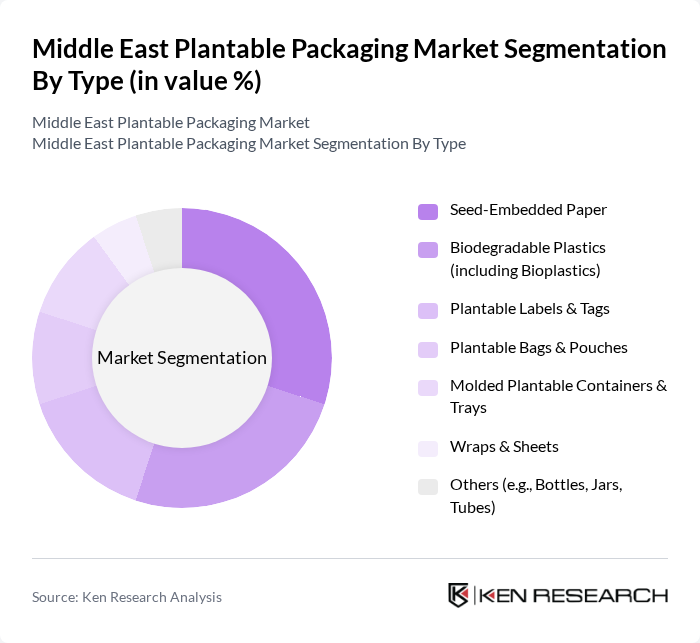
By Type:The plantable packaging market can be segmented into various types, including Seed-Embedded Paper, Biodegradable Plastics (including Bioplastics), Plantable Labels & Tags, Plantable Bags & Pouches, Molded Plantable Containers & Trays, Wraps & Sheets, and Others (e.g., Bottles, Jars, Tubes). Among these, Seed-Embedded Paper is gaining traction due to its unique selling proposition of allowing consumers to plant the packaging after use, thus contributing to environmental sustainability. Bioplastics are also experiencing rapid growth, driven by their compatibility with manufacturing lines and strong biodegradability, especially in high-volume applications for FMCG and personal care.
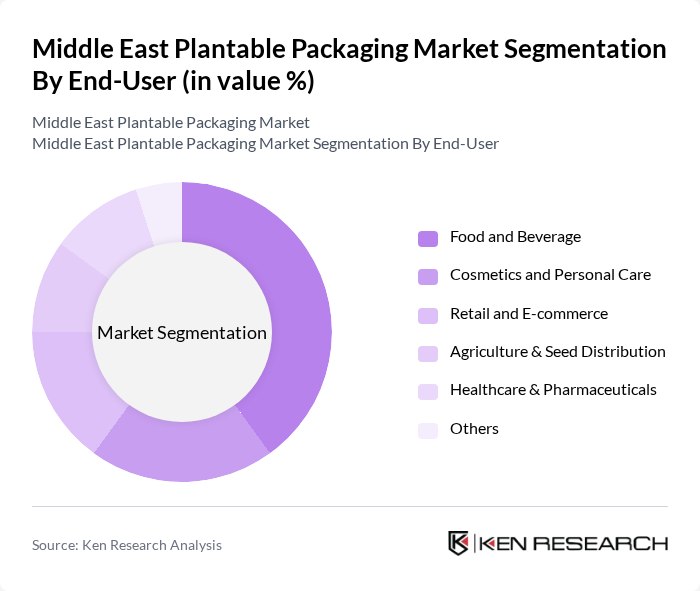
By End-User:The end-user segmentation includes Food and Beverage, Cosmetics and Personal Care, Retail and E-commerce, Agriculture & Seed Distribution, Healthcare & Pharmaceuticals, and Others. The Food and Beverage sector is the leading end-user, driven by the increasing demand for sustainable packaging solutions that align with consumer preferences for eco-friendly products. Cosmetics and personal care are also significant, with organic brands and retailers adopting plantable packaging to meet sustainability targets and regulatory requirements.
The Middle East Plantable Packaging Market is characterized by a dynamic mix of regional and international players. Leading participants such as BioPak, PulpWorks, Botanical PaperWorks, The Better Packaging Co., EcoEnclose, Biome Bioplastics, GreenBox (UAE), Eco-Plant Packaging (Turkey), Seed Paper ME (UAE), NaturePack, Green Seed Packaging, Plantable Packaging Co., Earth-Friendly Packaging, Releaf Paper (Egypt), Plantable Paper Co. contribute to innovation, geographic expansion, and service delivery in this space.
The future of the plantable packaging market in the Middle East appears promising, driven by increasing environmental regulations and consumer demand for sustainable solutions. As governments continue to implement stricter regulations on plastic use, companies are likely to invest more in innovative packaging technologies. Additionally, the rise of e-commerce is expected to further propel the demand for eco-friendly packaging solutions, as online retailers seek to enhance their sustainability profiles and attract eco-conscious consumers.
| Segment | Sub-Segments |
|---|---|
| By Type | Seed-Embedded Paper Biodegradable Plastics (including Bioplastics) Plantable Labels & Tags Plantable Bags & Pouches Molded Plantable Containers & Trays Wraps & Sheets Others (e.g., Bottles, Jars, Tubes) |
| By End-User | Food and Beverage Cosmetics and Personal Care Retail and E-commerce Agriculture & Seed Distribution Healthcare & Pharmaceuticals Others |
| By Material | Recycled Paper Plant-Based Plastics (Bioplastics) Organic Cotton & Natural Fibers Seaweed-Based Materials Others |
| By Distribution Channel | Online Retail Supermarkets and Hypermarkets Specialty Stores Direct Sales (B2B) Others |
| By Region | GCC Countries (Saudi Arabia, UAE, Qatar, etc.) Levant Region (Jordan, Lebanon, etc.) North Africa (Egypt, Morocco, etc.) Turkey Israel Rest of Middle East & Africa |
| By Application | Packaging for Events & Gifting Retail Packaging Shipping and Logistics Promotional Packaging Others |
| By Policy Support | Government Subsidies Tax Incentives Grants for Sustainable Practices Regulatory Mandates (e.g., Plastic Bans) Others |
| Scope Item/Segment | Sample Size | Target Respondent Profiles |
|---|---|---|
| Food and Beverage Packaging | 120 | Packaging Managers, Sustainability Coordinators |
| Cosmetics and Personal Care Packaging | 90 | Product Managers, Brand Strategists |
| E-commerce Plantable Packaging Usage | 75 | Logistics Managers, E-commerce Directors |
| Agricultural Sector Insights | 60 | Agronomists, Supply Chain Analysts |
| Retail Sector Sustainability Practices | 80 | Store Managers, Environmental Compliance Officers |
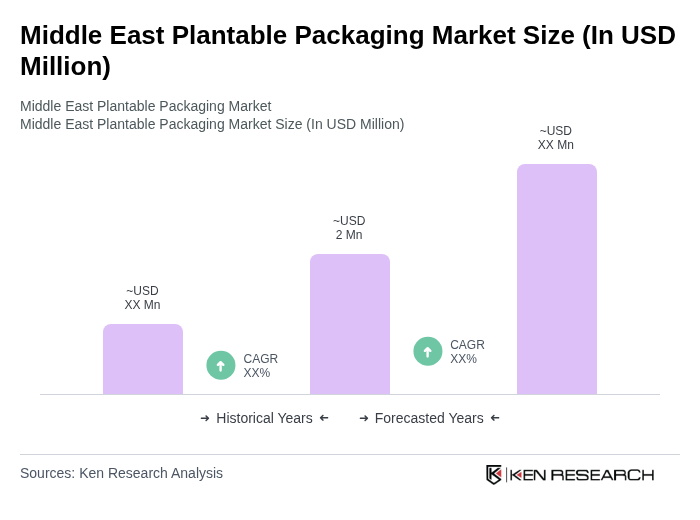
The Middle East Plantable Packaging Market is valued at approximately USD 2 million, reflecting a growing trend towards sustainable and eco-friendly packaging solutions driven by consumer awareness and government initiatives aimed at reducing plastic waste.

What makes us stand out is that our consultants follow Robust, Refine and Result (RRR) methodology. Robust for clear definitions, approaches and sanity checking, Refine for differentiating respondents' facts and opinions, and Result for presenting data with story.

We have set a benchmark in the industry by offering our clients with syndicated and customized market research reports featuring coverage of entire market as well as meticulous research and analyst insights.

While we don't replace traditional research, we flip the method upside down. Our dual approach of Top Bottom & Bottom Top ensures quality deliverable by not just verifying company fundamentals but also looking at the sector and macroeconomic factors.

With one step in the future, our research team constantly tries to show you the bigger picture. We help with some of the tough questions you may encounter along the way: How is the industry positioned? Best marketing channel? KPI's of competitors? By aligning every element, we help maximize success.

Our report gives you instant access to the answers and sources that other companies might choose to hide. We elaborate each steps of research methodology we have used and showcase you the sample size to earn your trust.

If you need any support, we are here! We pride ourselves on universe strength, data quality, and quick, friendly, and professional service.













