Region:Middle East
Author(s):Rebecca
Product Code:KRAD2353
Pages:81
Published On:January 2026
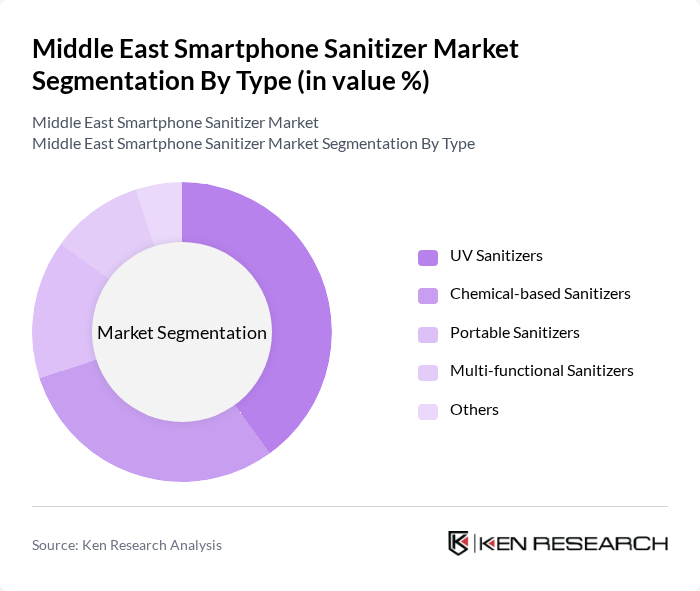
By Type:The market is segmented into various types of sanitizers, including UV sanitizers, chemical-based sanitizers, portable sanitizers, multi-functional sanitizers, and others. Among these, UV sanitizers are gaining traction due to their effectiveness in killing germs without the use of chemicals, appealing to health-conscious consumers. Chemical-based sanitizers remain popular for their convenience and immediate effectiveness. Portable sanitizers are favored for their ease of use, especially among individuals on the go. Multi-functional sanitizers are also emerging as a preferred choice for consumers looking for versatile products. Overall, the UV sanitizers segment is expected to lead the market due to increasing consumer preference for chemical-free solutions.
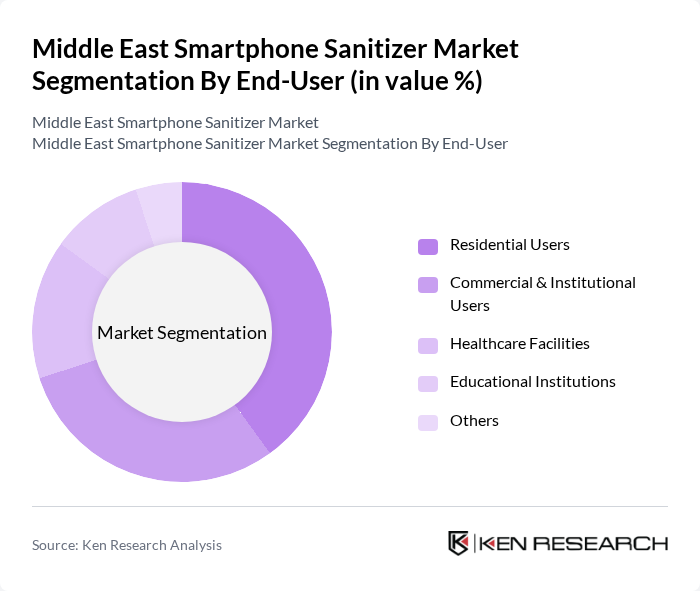
By End-User:The end-user segmentation includes individual consumers, healthcare facilities, educational institutions, corporate offices, and others. Individual consumers dominate the market as they increasingly prioritize personal hygiene, especially in light of recent health concerns. Healthcare facilities are also significant users due to stringent hygiene protocols. Educational institutions are adopting sanitization measures to ensure student safety, while corporate offices are implementing sanitization practices to protect employees. The individual consumers segment is expected to lead the market, driven by heightened awareness of personal hygiene.
The Middle East Smartphone Sanitizer Market is characterized by a dynamic mix of regional and international players. Leading participants such as CleanSmart, PhoneSoap, Purell, HoMedics, ZAGG, Casetify, SteriPEN, iCloth, UV-Clean, GermGuardian, PhoneSoap, CleanCase, SmartSanitizer, SanitizerPro, SafeGuard contribute to innovation, geographic expansion, and service delivery in this space.
The future of the smartphone sanitizer market in the Middle East appears promising, driven by ongoing health concerns and technological advancements. As consumers increasingly prioritize hygiene, the demand for effective sanitization solutions is expected to rise. Additionally, the integration of smart technology into sanitization devices will likely enhance user experience and effectiveness. Companies that adapt to these trends and invest in consumer education will be well-positioned to capture market share in this evolving landscape.
| Segment | Sub-Segments |
|---|---|
| By Type | UV Sanitizers Chemical-based Sanitizers Portable Sanitizers Multi-functional Sanitizers Others |
| By End-User | Individual Consumers Healthcare Facilities Educational Institutions Corporate Offices Others |
| By Distribution Channel | Online Retail Offline Retail Direct Sales B2B Sales Others |
| By Region | GCC Countries Levant Region North Africa Others |
| By Product Features | Size and Portability Battery Life Ease of Use Safety Features Others |
| By Price Range | Budget Mid-range Premium Others |
| By Brand Loyalty | Brand-loyal Customers Price-sensitive Customers First-time Buyers Others |
| Scope Item/Segment | Sample Size | Target Respondent Profiles |
|---|---|---|
| Consumer Electronics Retailers | 100 | Store Managers, Sales Representatives |
| Smartphone Accessory Manufacturers | 80 | Product Development Managers, Marketing Directors |
| Health and Hygiene Product Distributors | 70 | Distribution Managers, Supply Chain Analysts |
| Consumer Focus Groups | 60 | General Consumers, Tech Enthusiasts |
| Retail Market Analysts | 50 | Market Research Analysts, Business Development Managers |
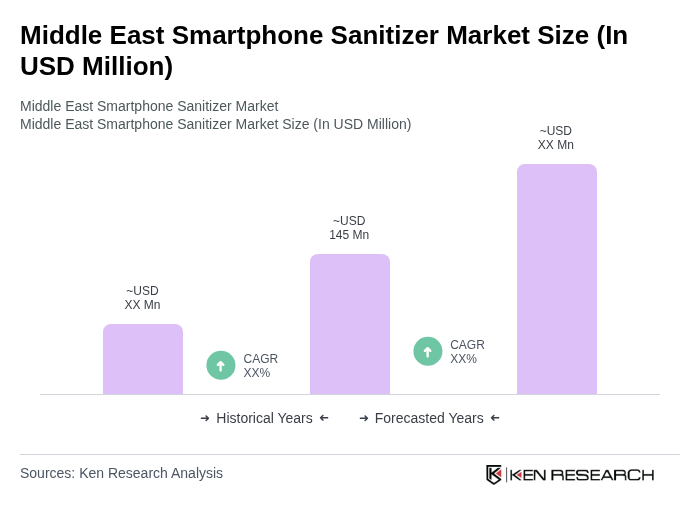
The Middle East Smartphone Sanitizer Market is valued at approximately USD 20 million, reflecting a significant increase in consumer spending on hygiene products, particularly in response to health crises and rising smartphone usage across the region.

What makes us stand out is that our consultants follow Robust, Refine and Result (RRR) methodology. Robust for clear definitions, approaches and sanity checking, Refine for differentiating respondents' facts and opinions, and Result for presenting data with story.

We have set a benchmark in the industry by offering our clients with syndicated and customized market research reports featuring coverage of entire market as well as meticulous research and analyst insights.

While we don't replace traditional research, we flip the method upside down. Our dual approach of Top Bottom & Bottom Top ensures quality deliverable by not just verifying company fundamentals but also looking at the sector and macroeconomic factors.

With one step in the future, our research team constantly tries to show you the bigger picture. We help with some of the tough questions you may encounter along the way: How is the industry positioned? Best marketing channel? KPI's of competitors? By aligning every element, we help maximize success.

Our report gives you instant access to the answers and sources that other companies might choose to hide. We elaborate each steps of research methodology we have used and showcase you the sample size to earn your trust.

If you need any support, we are here! We pride ourselves on universe strength, data quality, and quick, friendly, and professional service.













