














Region:Middle East
Author(s):Geetanshi
Product Code:KRAD5887
Pages:81
Published On:December 2025
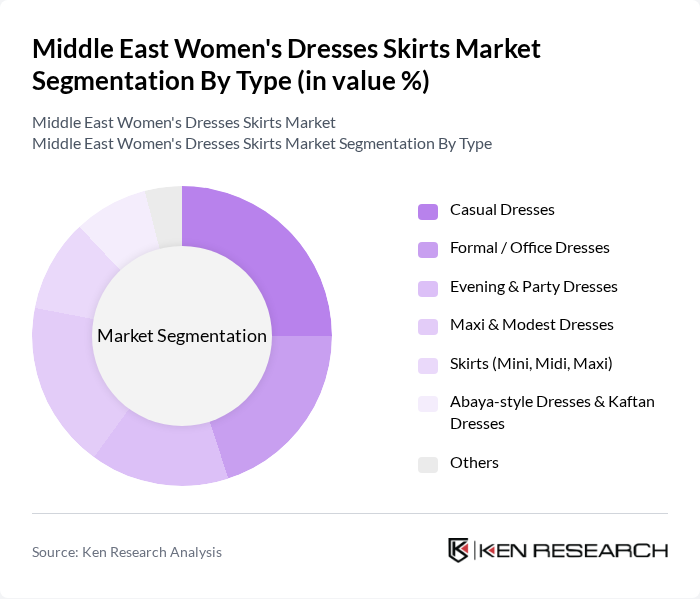
By Type:The market can be segmented into various types of dresses and skirts, including Casual Dresses, Formal / Office Dresses, Evening & Party Dresses, Maxi & Modest Dresses, Skirts (Mini, Midi, Maxi), Abaya-style Dresses & Kaftan Dresses, and Others. Each of these segments caters to different consumer preferences and occasions, reflecting the diverse fashion landscape in the Middle East, where demand for modest, occasion-wear, and contemporary Western-style apparel coexists.
By Fabric Type:The market is also segmented by fabric type, including Cotton, Polyester, Silk, Linen, Blends (Cotton-Poly, Viscose, Rayon), Performance & Stretch Fabrics, and Others. The choice of fabric significantly influences consumer purchasing decisions, with preferences shifting towards sustainable and comfortable materials such as breathable cottons, linen, and eco-friendly blends, alongside performance fabrics that offer stretch and durability for everyday wear.

The Middle East Women's Dresses Skirts Market is characterized by a dynamic mix of regional and international players. Leading participants such as Max Fashion (Landmark Group), Splash (Landmark Group), Centrepoint (Landmark Group), Redtag, Ounass, Namshi, Nisnass, Zara (Inditex), H&M, Mango, Stradivarius, Bershka, Forever 21, Marks & Spencer, BCBGMAXAZRIA, Ted Baker, Riva Fashion, Splash Fashions (Saudi & GCC Franchises) contribute to innovation, geographic expansion, and service delivery in this space, with many brands strengthening omnichannel offerings and localized modest collections.
The future of the Middle East women's dresses and skirts market appears promising, driven by evolving consumer preferences and technological advancements. As women increasingly prioritize sustainability, brands that adopt eco-friendly practices are likely to gain a competitive edge. Additionally, the integration of augmented reality in online shopping experiences is expected to enhance customer engagement, allowing for virtual try-ons and personalized shopping experiences, further driving market growth in future.
| Segment | Sub-Segments |
|---|---|
| By Type | Casual Dresses Formal / Office Dresses Evening & Party Dresses Maxi & Modest Dresses Skirts (Mini, Midi, Maxi) Abaya?style Dresses & Kaftan Dresses Others |
| By Fabric Type | Cotton Polyester Silk Linen Blends (Cotton?Poly, Viscose, Rayon) Performance & Stretch Fabrics Others |
| By Occasion | Casual / Everyday Wear Work / Office Wear Party & Evening Wear Wedding & Special Occasion Wear Religious & Festive Wear (Eid, Ramadan, etc.) Others |
| By Age Group | Teens Young Adults Middle-aged Women Seniors Others |
| By Price Range | Budget / Value Mid-range Premium Luxury / Designer Others |
| By Distribution Channel | Online Retail (E?Commerce & Marketplaces) Supermarkets / Hypermarkets Department Stores Mono?brand Stores & Boutiques Multi?brand Fashion Retailers Others |
| By Region | GCC Countries (Saudi Arabia, UAE, Qatar, Kuwait, Oman, Bahrain) Levant Region (Jordan, Lebanon, etc.) Egypt Rest of Middle East |
| Scope Item/Segment | Sample Size | Target Respondent Profiles |
|---|---|---|
| Retail Fashion Outlets | 120 | Store Managers, Fashion Buyers |
| Online Fashion Retailers | 80 | E-commerce Managers, Digital Marketing Specialists |
| Consumer Fashion Preferences | 150 | Female Consumers aged 18-45 |
| Manufacturers of Women's Apparel | 60 | Production Managers, Design Leads |
| Fashion Industry Experts | 40 | Fashion Consultants, Trend Analysts |
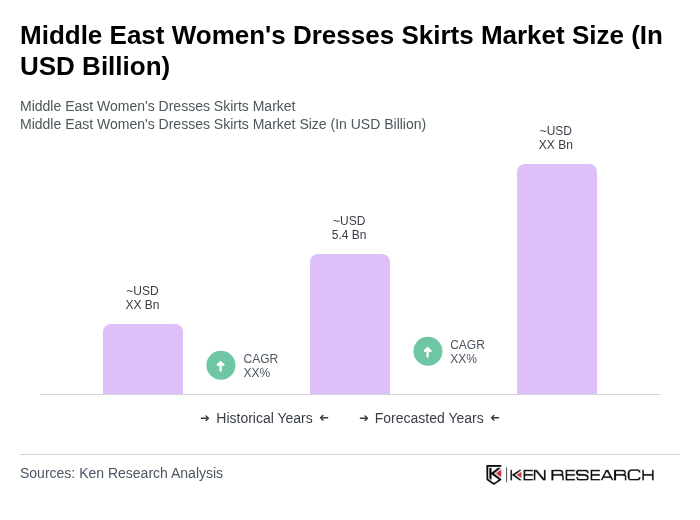
The Middle East Women's Dresses Skirts Market is valued at approximately USD 5.4 billion, reflecting a significant growth driven by increasing disposable incomes and evolving fashion trends among women in the region.

What makes us stand out is that our consultants follow Robust, Refine and Result (RRR) methodology. Robust for clear definitions, approaches and sanity checking, Refine for differentiating respondents' facts and opinions, and Result for presenting data with story.

We have set a benchmark in the industry by offering our clients with syndicated and customized market research reports featuring coverage of entire market as well as meticulous research and analyst insights.

While we don't replace traditional research, we flip the method upside down. Our dual approach of Top Bottom & Bottom Top ensures quality deliverable by not just verifying company fundamentals but also looking at the sector and macroeconomic factors.

With one step in the future, our research team constantly tries to show you the bigger picture. We help with some of the tough questions you may encounter along the way: How is the industry positioned? Best marketing channel? KPI's of competitors? By aligning every element, we help maximize success.

Our report gives you instant access to the answers and sources that other companies might choose to hide. We elaborate each steps of research methodology we have used and showcase you the sample size to earn your trust.

If you need any support, we are here! We pride ourselves on universe strength, data quality, and quick, friendly, and professional service.