About the Report
Base Year 2024New Zealand Digital Marketing Software Market Overview
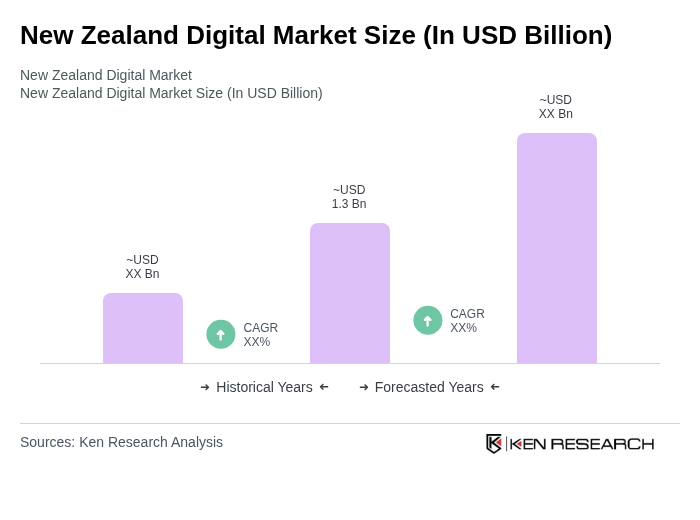
- The New Zealand Digital Marketing Software Market is valued at USD 1.3 billion, based on a five-year historical analysis of the broader enterprise software and digital solutions landscape in the country.(source)This growth is primarily driven by the increasing adoption of digital marketing strategies by businesses, the rapid expansion of digital marketplaces and e-commerce, and the growing importance of data analytics and artificial intelligence in marketing decision-making.(source)Companies are investing in software solutions to enhance customer engagement, orchestrate omnichannel campaigns, and optimize marketing performance measurement.(source)
- Auckland, Wellington, and Christchurch are the dominant cities in the New Zealand Digital Marketing Software Market. Auckland, being the largest city and main commercial hub, hosts a significant number of tech startups, SaaS vendors, and digital agencies, driving innovation and competition in marketing technology adoption.(source)Wellington, as the political capital, has a strong presence of government and public sector digital transformation initiatives, including open data, digital services, and online citizen engagement, which support the use of digital marketing and analytics tools.Christchurch is rapidly growing in the tech sector, supported by regional innovation ecosystems and ICT investment, attracting talent and fostering adoption of cloud-based and performance marketing solutions among local enterprises.
- The New Zealand government has been advancing national digital and small-business programmes, such as the Digital Boost initiative led by the Ministry of Business, Innovation and Employment (MBIE), which aims to enhance the digital capabilities of local businesses by providing training, tools, and support to adopt online and digital marketing channels.(source)These initiatives include funding-backed education resources and capability-building for small and medium enterprises to use websites, social media, e‑commerce, and analytics platforms more effectively, thereby fostering a more competitive and innovative digital marketing landscape.
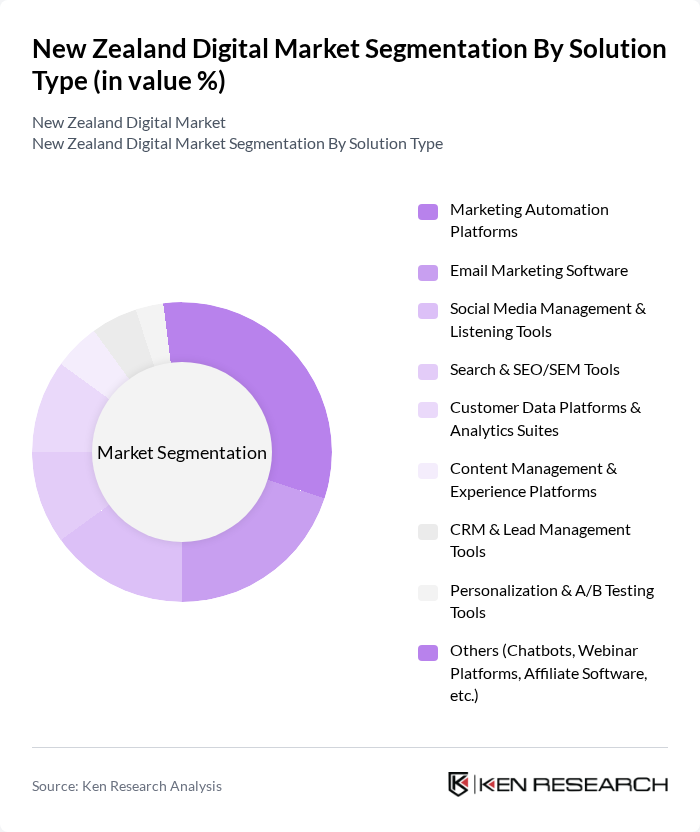
New Zealand Digital Marketing Software Market Segmentation
By Solution Type:The solution type segmentation includes various subsegments that cater to different marketing needs, aligned with the typical structure of global and New Zealand marketing technology stacks.(source)The dominant subsegment is Marketing Automation Platforms, which are widely adopted for their ability to streamline campaign workflows, lead scoring, and omnichannel orchestration to improve efficiency and personalization at scale.(source)Email Marketing Software and Social Media Management & Listening Tools also hold significant market shares due to the increasing reliance on always-on digital communication, influencer and creator collaboration, and social media engagement as primary brand touchpoints.Other subsegments like Customer Data Platforms & Analytics Suites are gaining traction as businesses focus on data-driven marketing strategies, advanced attribution, and AI-powered insights to optimize spend across search, social, and e-commerce channels.(source)
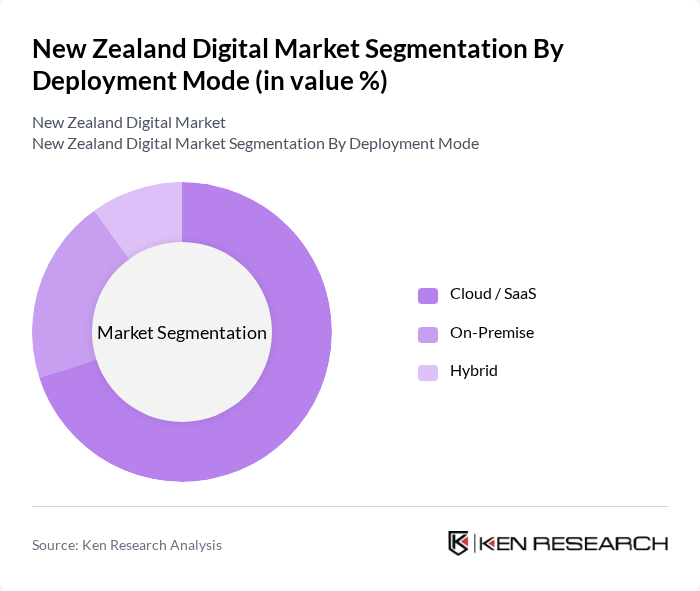
By Deployment Mode:The deployment mode segmentation includes Cloud/SaaS, On-Premise, and Hybrid solutions.(source)Cloud/SaaS is the leading deployment mode due to its flexibility, scalability, and subscription-based cost-effectiveness, making it the preferred choice for many businesses, particularly small and medium enterprises seeking rapid implementation and easy integration with CRM, e-commerce, and analytics systems.(source)On-Premise solutions are less common but are still utilized by organizations with stringent data residency, security, or compliance requirements, including some public sector and regulated industries.Hybrid solutions are emerging as a viable option for businesses looking to balance cloud agility with local control over sensitive customer data and legacy system integrations.(source)
New Zealand Digital Marketing Software Market Competitive Landscape
The New Zealand Digital Marketing Software Market is characterized by a dynamic mix of regional and international players.(source)Leading participants such as HubSpot, Salesforce Marketing Cloud, Adobe Experience Cloud, Mailchimp, ActiveCampaign, Klaviyo, Hootsuite, Sprout Social, SEMrush, Google Marketing Platform (including Google Ads & Analytics), Meta Ads (Facebook & Instagram), LinkedIn Marketing Solutions, Canva, Local NZ SaaS Providers (e.g., Xero Ecosystem Apps, Vend by Lightspeed, Timely), Other Specialized Niche & Vertical Solutions contribute to innovation, geographic expansion, and service delivery in this space, serving a highly digitised user base where social networks, video platforms, and mobile apps reach a large share of the population.(source)
New Zealand Digital Market Industry Analysis
Growth Drivers
- Increasing Internet Penetration:As of future, New Zealand's internet penetration rate is projected to reach93%, with approximately4.5 millionusers accessing the web. This growth is driven by improved infrastructure and increased accessibility, particularly in rural areas. The government’s investment of aroundNZD 1.5 billionin broadband initiatives has significantly enhanced connectivity, enabling more businesses to engage in digital marketing. This surge in internet access is a crucial driver for the digital market, facilitating e-commerce and online advertising growth.
- Rise of E-commerce:E-commerce sales in New Zealand are expected to exceedNZD 6 billionin future, reflecting a robust growth trajectory. The COVID-19 pandemic accelerated the shift towards online shopping, with80%of consumers now preferring digital channels for purchases. This trend is supported by the increasing number of online retailers, which has grown by25%since 2020. The rise of e-commerce is a significant growth driver, as businesses invest in digital marketing strategies to capture this expanding consumer base.
- Demand for Data Analytics:The demand for data analytics solutions in New Zealand is projected to reachNZD 1.2 billionby future, driven by businesses seeking to enhance customer engagement and optimize marketing strategies. Companies are increasingly leveraging data to understand consumer behavior, with70%of marketers prioritizing data-driven decision-making. This trend is further supported by the growth of cloud computing, which allows for scalable data solutions, making analytics more accessible to small and medium enterprises in the digital market.
Market Challenges
- Data Privacy Concerns:With the implementation of the Privacy Act 2020, New Zealand businesses face stringent regulations regarding data handling. Approximately60%of consumers express concerns about how their data is used, leading to hesitance in sharing personal information online. This challenge complicates digital marketing efforts, as companies must navigate compliance while trying to build trust with consumers. The potential for hefty fines for non-compliance further exacerbates this issue, impacting marketing strategies.
- High Competition:The New Zealand digital market is characterized by intense competition, with over5,000digital marketing agencies operating nationwide. This saturation leads to price wars and reduced profit margins, making it challenging for new entrants to establish themselves. Additionally, established players are continuously innovating, which raises the bar for service quality. As a result, companies must invest significantly in differentiation strategies to remain competitive in this crowded marketplace.
New Zealand Digital Market Future Outlook
The New Zealand digital market is poised for continued evolution, driven by technological advancements and changing consumer preferences. As businesses increasingly adopt artificial intelligence and machine learning, marketing strategies will become more personalized and efficient. Furthermore, the integration of augmented reality in advertising is expected to enhance customer engagement. With a growing emphasis on sustainability, brands that align their marketing efforts with eco-friendly practices will likely resonate more with consumers, shaping the future landscape of digital marketing in New Zealand.
Market Opportunities
- Expansion of Social Media Marketing:With over4.0 millionactive social media users in New Zealand, brands have a significant opportunity to engage consumers through targeted campaigns. The average user spends1.5 to 2 hoursdaily on social platforms, making it an ideal channel for marketing. Companies can leverage this trend to enhance brand visibility and foster community engagement, driving sales and customer loyalty.
- Growth of Influencer Marketing:The influencer marketing sector in New Zealand is projected to reachNZD 300 millionin future, as brands increasingly collaborate with social media influencers to reach niche audiences. This approach allows for authentic engagement and can significantly boost brand credibility. As consumers seek genuine connections, leveraging influencers can be a powerful strategy for businesses aiming to enhance their digital presence.
Scope of the Report
| Segment | Sub-Segments |
|---|---|
| By Solution Type | Marketing Automation Platforms Email Marketing Software Social Media Management & Listening Tools Search & SEO/SEM Tools Customer Data Platforms & Analytics Suites Content Management & Experience Platforms CRM & Lead Management Tools Personalization & A/B Testing Tools Others (Chatbots, Webinar Platforms, Affiliate Software, etc.) |
| By Deployment Mode | Cloud / SaaS On-Premise Hybrid |
| By Application | Campaign Management Lead Generation & Nurturing Customer Acquisition & Onboarding Customer Engagement & Retention Analytics, Reporting & Attribution E-commerce & Performance Marketing Others |
| By End-User Enterprise Size | Micro and Small Businesses Medium Enterprises Large Enterprises |
| By Industry Vertical | Retail & E-commerce Banking, Financial Services & Insurance (BFSI) IT & Telecom Healthcare & Life Sciences Education Travel, Tourism & Hospitality Government & Public Sector Media, Entertainment & Gaming Others |
| By Channel / Touchpoint | Search (SEO & Paid Search) Social Media Display & Programmatic Mobile & In-App Marketplaces & Affiliate Networks Others (SMS, Direct Messaging, etc.) |
| By Buyer Type | Agencies Brands / Advertisers In-house Marketing Teams System Integrators & IT Service Providers Others |
Key Target Audience
Investors and Venture Capitalist Firms
Government and Regulatory Bodies (e.g., New Zealand Commerce Commission, Department of Internal Affairs)
Digital Marketing Agencies
Advertising Technology Providers
Media and Publishing Companies
Telecommunications Companies
Retail Chains and E-commerce Platforms
Marketing and Sales Departments of Corporations
Players Mentioned in the Report:
HubSpot
Salesforce Marketing Cloud
Adobe Experience Cloud
Mailchimp
ActiveCampaign
Klaviyo
Hootsuite
Sprout Social
SEMrush
Google Marketing Platform (including Google Ads & Analytics)
Meta Ads (Facebook & Instagram)
LinkedIn Marketing Solutions
Canva
Local NZ SaaS Providers (e.g., Xero Ecosystem Apps, Vend by Lightspeed, Timely)
Other Specialized Niche & Vertical Solutions
Table of Contents
Market Assessment Phase
1. Executive Summary and Approach
2. New Zealand Digital Market Overview
2.1 Key Insights and Strategic Recommendations
2.2 New Zealand Digital Market Overview
2.3 Definition and Scope
2.4 Evolution of Market Ecosystem
2.5 Timeline of Key Regulatory Milestones
2.6 Value Chain & Stakeholder Mapping
2.7 Business Cycle Analysis
2.8 Policy & Incentive Landscape
3. New Zealand Digital Market Analysis
3.1 Growth Drivers
3.1.1 Increasing Internet Penetration
3.1.2 Rise of E-commerce
3.1.3 Demand for Data Analytics
3.1.4 Growth in Mobile Marketing
3.2 Market Challenges
3.2.1 Data Privacy Concerns
3.2.2 High Competition
3.2.3 Rapid Technological Changes
3.2.4 Limited Digital Literacy
3.3 Market Opportunities
3.3.1 Expansion of Social Media Marketing
3.3.2 Increased Investment in Digital Infrastructure
3.3.3 Growth of Influencer Marketing
3.3.4 Adoption of AI in Marketing
3.4 Market Trends
3.4.1 Personalization of Marketing Campaigns
3.4.2 Integration of Augmented Reality
3.4.3 Shift Towards Subscription Models
3.4.4 Emphasis on Sustainability in Marketing
3.5 Government Regulation
3.5.1 Privacy Act Compliance
3.5.2 Advertising Standards Authority Guidelines
3.5.3 Digital Services Tax Considerations
3.5.4 Consumer Protection Regulations
4. SWOT Analysis
5. Stakeholder Analysis
6. Porter's Five Forces Analysis
7. New Zealand Digital Market Market Size, 2019-2024
7.1 By Value
7.2 By Volume
7.3 By Average Selling Price
8. New Zealand Digital Marketing Software Market Segmentation
8.1 By Solution Type
8.1.1 Marketing Automation Platforms
8.1.2 Email Marketing Software
8.1.3 Social Media Management & Listening Tools
8.1.4 Search & SEO/SEM Tools
8.1.5 Customer Data Platforms & Analytics Suites
8.1.6 Content Management & Experience Platforms
8.1.7 CRM & Lead Management Tools
8.1.8 Personalization & A/B Testing Tools
8.1.9 Others (Chatbots, Webinar Platforms, Affiliate Software, etc.)
8.2 By Deployment Mode
8.2.1 Cloud / SaaS
8.2.2 On-Premise
8.2.3 Hybrid
8.3 By Application
8.3.1 Campaign Management
8.3.2 Lead Generation & Nurturing
8.3.3 Customer Acquisition & Onboarding
8.3.4 Customer Engagement & Retention
8.3.5 Analytics, Reporting & Attribution
8.3.6 E-commerce & Performance Marketing
8.3.7 Others
8.4 By End-User Enterprise Size
8.4.1 Micro and Small Businesses
8.4.2 Medium Enterprises
8.4.3 Large Enterprises
8.5 By Industry Vertical
8.5.1 Retail & E-commerce
8.5.2 Banking, Financial Services & Insurance (BFSI)
8.5.3 IT & Telecom
8.5.4 Healthcare & Life Sciences
8.5.5 Education
8.5.6 Travel, Tourism & Hospitality
8.5.7 Government & Public Sector
8.5.8 Media, Entertainment & Gaming
8.5.9 Others
8.6 By Channel / Touchpoint
8.6.1 Search (SEO & Paid Search)
8.6.2 Social Media
8.6.3 Display & Programmatic
8.6.4 Mobile & In-App
8.6.5 Marketplaces & Affiliate Networks
8.6.6 Others (SMS, Direct Messaging, etc.)
8.7 By Buyer Type
8.7.1 Agencies
8.7.2 Brands / Advertisers
8.7.3 In-house Marketing Teams
8.7.4 System Integrators & IT Service Providers
8.7.5 Others
9. New Zealand Digital Market Competitive Analysis
9.1 Market Share of Key Players
9.2 Cross Comparison of Key Players
9.2.1 Company Name
9.2.2 Group Size (Large, Medium, or Small as per industry convention)
9.2.3 Annual Recurring Revenue (ARR)
9.2.4 Year-on-Year Revenue Growth Rate
9.2.5 Customer Acquisition Cost (CAC)
9.2.6 Customer Lifetime Value (CLV)
9.2.7 CAC Payback Period
9.2.8 Gross Margin
9.2.9 Net Revenue Retention (NRR)
9.2.10 Churn Rate
9.2.11 Average Revenue per Account (ARPA)
9.2.12 Marketing Spend as % of Revenue
9.2.13 Return on Marketing Investment (ROMI)
9.2.14 Market Penetration Rate in New Zealand
9.2.15 Brand Awareness / Share of Voice Index
9.3 SWOT Analysis of Top Players
9.4 Pricing Analysis
9.5 Detailed Profile of Major Companies
9.5.1 HubSpot
9.5.2 Salesforce Marketing Cloud
9.5.3 Adobe Experience Cloud
9.5.4 Mailchimp
9.5.5 ActiveCampaign
9.5.6 Klaviyo
9.5.7 Hootsuite
9.5.8 Sprout Social
9.5.9 SEMrush
9.5.10 Google Marketing Platform (including Google Ads & Analytics)
9.5.11 Meta Ads (Facebook & Instagram)
9.5.12 LinkedIn Marketing Solutions
9.5.13 Canva
9.5.14 Local NZ SaaS Providers (e.g., Xero Ecosystem Apps, Vend by Lightspeed, Timely)
9.5.15 Other Specialized Niche & Vertical Solutions
10. New Zealand Digital Market End-User Analysis
10.1 Procurement Behavior of Key Ministries
10.1.1 Digital Marketing Budget Allocation
10.1.2 Preferred Digital Marketing Channels
10.1.3 Decision-Making Process
10.1.4 Vendor Selection Criteria
10.2 Corporate Spend on Infrastructure & Energy
10.2.1 Investment in Digital Tools
10.2.2 Budget Trends Over Time
10.2.3 Impact of Economic Factors
10.3 Pain Point Analysis by End-User Category
10.3.1 Challenges in Digital Adoption
10.3.2 Resource Limitations
10.3.3 Need for Training and Support
10.4 User Readiness for Adoption
10.4.1 Awareness of Digital Marketing Benefits
10.4.2 Willingness to Invest in Digital Solutions
10.5 Post-Deployment ROI and Use Case Expansion
10.5.1 Measurement of Marketing Effectiveness
10.5.2 Case Studies of Successful Implementations
11. New Zealand Digital Market Future Size, 2025-2030
11.1 By Value
11.2 By Volume
11.3 By Average Selling Price
Go-To-Market Strategy Phase
1. Whitespace Analysis + Business Model Canvas
1.1 Market Gaps Identification
1.2 Business Model Development
2. Marketing and Positioning Recommendations
2.1 Branding Strategies
2.2 Product USPs
3. Distribution Plan
3.1 Urban Retail vs Rural NGO Tie-ups
4. Channel & Pricing Gaps
4.1 Underserved Routes
4.2 Pricing Bands
5. Unmet Demand & Latent Needs
5.1 Category Gaps
5.2 Consumer Segments
6. Customer Relationship
6.1 Loyalty Programs
6.2 After-sales Service
7. Value Proposition
7.1 Sustainability
7.2 Integrated Supply Chains
8. Key Activities
8.1 Regulatory Compliance
8.2 Branding
8.3 Distribution Setup
9. Entry Strategy Evaluation
9.1 Domestic Market Entry Strategy
9.1.1 Product Mix
9.1.2 Pricing Band
9.1.3 Packaging
9.2 Export Entry Strategy
9.2.1 Target Countries
9.2.2 Compliance Roadmap
10. Entry Mode Assessment
10.1 JV
10.2 Greenfield
10.3 M&A
10.4 Distributor Model
11. Capital and Timeline Estimation
11.1 Capital Requirements
11.2 Timelines
12. Control vs Risk Trade-Off
12.1 Ownership vs Partnerships
13. Profitability Outlook
13.1 Breakeven Analysis
13.2 Long-term Sustainability
14. Potential Partner List
14.1 Distributors
14.2 JVs
14.3 Acquisition Targets
15. Execution Roadmap
15.1 Phased Plan for Market Entry
15.1.1 Market Setup
15.1.2 Market Entry
15.1.3 Growth Acceleration
15.1.4 Scale & Stabilize
15.2 Key Activities and Milestones
15.2.1 Milestone Planning
15.2.2 Activity Tracking
Research Methodology
Phase 1: Approach1
Desk Research
- Analysis of government reports on digital market trends and regulations in New Zealand
- Review of industry publications and white papers from digital marketing associations
- Examination of statistical data from Statistics New Zealand regarding internet usage and e-commerce growth
Primary Research
- Interviews with digital marketing experts and consultants specializing in the New Zealand market
- Surveys targeting small to medium-sized enterprises (SMEs) engaged in online sales
- Focus groups with consumers to understand digital purchasing behaviors and preferences
Validation & Triangulation
- Cross-validation of findings through comparison with international digital market trends
- Triangulation of data from government sources, industry reports, and primary interviews
- Sanity checks conducted through expert panel discussions to validate assumptions and findings
Phase 2: Market Size Estimation1
Top-down Assessment
- Estimation of total digital market size based on national e-commerce revenue reports
- Segmentation of the market by industry verticals such as retail, travel, and services
- Incorporation of growth rates from historical data and projected trends in digital adoption
Bottom-up Modeling
- Collection of sales data from leading e-commerce platforms operating in New Zealand
- Estimation of average transaction values and frequency of online purchases
- Analysis of customer acquisition costs and marketing spend across various digital channels
Forecasting & Scenario Analysis
- Multi-variable forecasting using factors such as internet penetration and mobile commerce growth
- Scenario analysis based on potential regulatory changes affecting digital marketing practices
- Development of baseline, optimistic, and pessimistic growth projections through 2030
Phase 3: CATI Sample Composition1
| Scope Item/Segment | Sample Size | Target Respondent Profiles |
|---|---|---|
| Retail E-commerce Insights | 120 | Marketing Managers, E-commerce Directors |
| Digital Advertising Effectiveness | 90 | Digital Marketing Specialists, Brand Managers |
| Consumer Behavior in Online Shopping | 110 | End Consumers, Online Shoppers |
| SME Digital Transformation | 80 | Business Owners, IT Managers |
| Trends in Mobile Commerce | 70 | Mobile App Developers, UX/UI Designers |
Frequently Asked Questions
What is the current value of the New Zealand Digital Marketing Software Market?
The New Zealand Digital Marketing Software Market is valued at approximately USD 1.3 billion, reflecting significant growth driven by the adoption of digital marketing strategies, e-commerce expansion, and the increasing importance of data analytics and artificial intelligence in marketing.
Which cities are the main hubs for digital marketing in New Zealand?
What initiatives has the New Zealand government implemented to support digital marketing?
What are the primary solution types in the New Zealand Digital Marketing Software Market?
Other Regional/Country Reports
Other Adjacent Reports
South Korea E-Commerce Platform Market
Thailand Marketing Analytics Market
Mexico Cloud Computing Services Market
South Africa Artificial Intelligence Software MarketApac Social Media Management Market Report Size, Share, Growth Drivers, Trends, Opportunities & Forecast 2025–2030UAE Digital Advertising Market Size, Share & Forecast, By Ad Format, Platform & End-Use Industry, 2026-2032Japan Content Management System Market
Egypt Search Engine Optimization Market
Philippines Email Marketing Software Market
Why Buy From Us?

What makes us stand out is that our consultants follow Robust, Refine and Result (RRR) methodology. Robust for clear definitions, approaches and sanity checking, Refine for differentiating respondents' facts and opinions, and Result for presenting data with story.

We have set a benchmark in the industry by offering our clients with syndicated and customized market research reports featuring coverage of entire market as well as meticulous research and analyst insights.

While we don't replace traditional research, we flip the method upside down. Our dual approach of Top Bottom & Bottom Top ensures quality deliverable by not just verifying company fundamentals but also looking at the sector and macroeconomic factors.

With one step in the future, our research team constantly tries to show you the bigger picture. We help with some of the tough questions you may encounter along the way: How is the industry positioned? Best marketing channel? KPI's of competitors? By aligning every element, we help maximize success.

Our report gives you instant access to the answers and sources that other companies might choose to hide. We elaborate each steps of research methodology we have used and showcase you the sample size to earn your trust.

If you need any support, we are here! We pride ourselves on universe strength, data quality, and quick, friendly, and professional service.