Region:North America
Author(s):Dev
Product Code:KRAD0516
Pages:97
Published On:August 2025
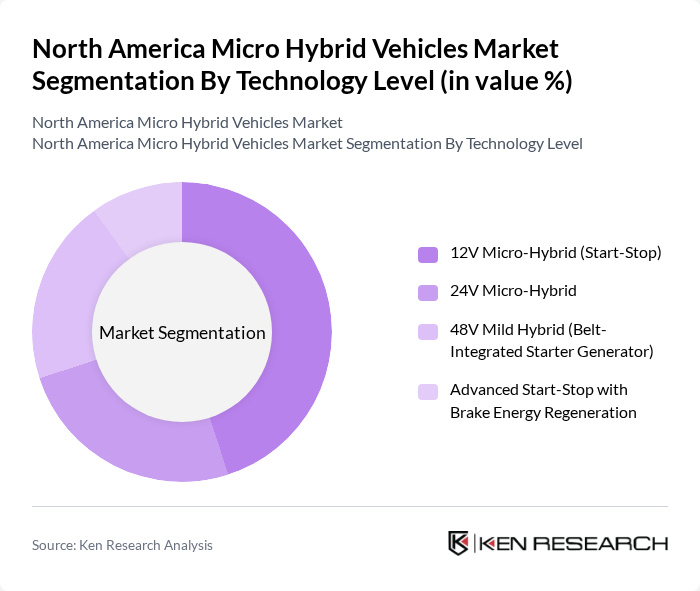
By Technology Level:The technology level segmentation includes various micro hybrid technologies that cater to different consumer needs and preferences. The subsegments are 12V Micro-Hybrid (Start-Stop), 24V Micro-Hybrid, 48V Mild Hybrid (Belt-Integrated Starter Generator), and Advanced Start-Stop with Brake Energy Regeneration. The 12V Micro-Hybrid (Start-Stop) technology is currently dominating the market due to its cost-effectiveness and ease of integration into existing vehicle platforms. This technology is widely adopted in passenger cars and light commercial vehicles, appealing to consumers looking for affordable fuel-saving solutions.
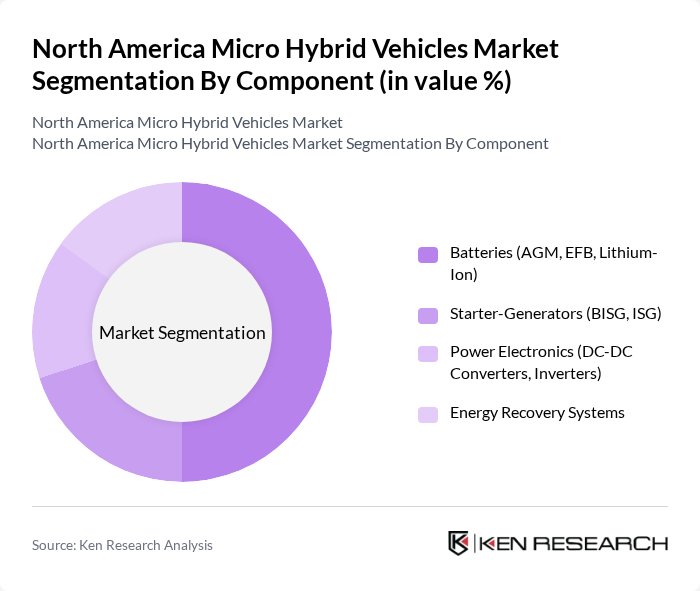
By Component:The component segmentation encompasses various essential parts that contribute to the functionality of micro hybrid vehicles. This includes Batteries (AGM, EFB, Lithium-Ion), Starter-Generators (BISG, ISG), Power Electronics (DC-DC Converters, Inverters), and Energy Recovery Systems. Among these, Batteries, particularly Lithium-Ion, are leading the market due to their high energy density and efficiency, making them the preferred choice for modern micro hybrid systems. The increasing demand for longer battery life and performance in electric and hybrid vehicles is driving this trend.
The North America Micro Hybrid Vehicles Market is characterized by a dynamic mix of regional and international players. Leading participants such as Toyota Motor Corporation, Ford Motor Company, General Motors Company, Stellantis N.V., BMW Group (BMW AG), Mercedes-Benz Group AG, Hyundai Motor Company, Kia Corporation, Volkswagen Group, Audi AG, Nissan Motor Co., Ltd., Honda Motor Co., Ltd., Subaru Corporation, Volvo Car Corporation, Johnson Controls International plc (Varta/Clarios) contribute to innovation, geographic expansion, and service delivery in this space.
The North America micro hybrid vehicles market is poised for significant growth, driven by increasing fuel efficiency demands and supportive government policies. As consumer awareness of environmental impacts rises, manufacturers are likely to innovate further, integrating advanced technologies into micro hybrids. The expansion of charging infrastructure and partnerships with tech providers will enhance vehicle performance and consumer confidence. Additionally, urban mobility solutions will create new avenues for micro hybrid adoption, positioning the market favorably for the coming years.
| Segment | Sub-Segments |
|---|---|
| By Technology Level | V Micro-Hybrid (Start-Stop) V Micro-Hybrid V Mild Hybrid (Belt-Integrated Starter Generator) Advanced Start-Stop with Brake Energy Regeneration |
| By Component | Batteries (AGM, EFB, Lithium-Ion) Starter-Generators (BISG, ISG) Power Electronics (DC-DC Converters, Inverters) Energy Recovery Systems |
| By Vehicle Type | Passenger Cars Light Commercial Vehicles Medium & Heavy Commercial Vehicles SUVs & Crossovers |
| By OEM Type | OEM-Installed Aftermarket/Retrofit Kits |
| By Country | United States Canada Mexico Rest of North America |
| By Price Band | Entry/Budget Mid-Range Premium/Luxury Performance/Enthusiast |
| By Battery Voltage & Chemistry | V AGM/EFB V AGM/EFB V Lithium-Ion Others |
| Scope Item/Segment | Sample Size | Target Respondent Profiles |
|---|---|---|
| Automotive Manufacturers | 100 | Product Development Managers, R&D Engineers |
| Fleet Management Companies | 80 | Fleet Operations Managers, Procurement Specialists |
| Consumer Insights | 150 | Car Owners, Potential Buyers of Hybrid Vehicles |
| Regulatory Bodies | 40 | Policy Makers, Environmental Analysts |
| Automotive Aftermarket Suppliers | 70 | Supply Chain Managers, Sales Directors |
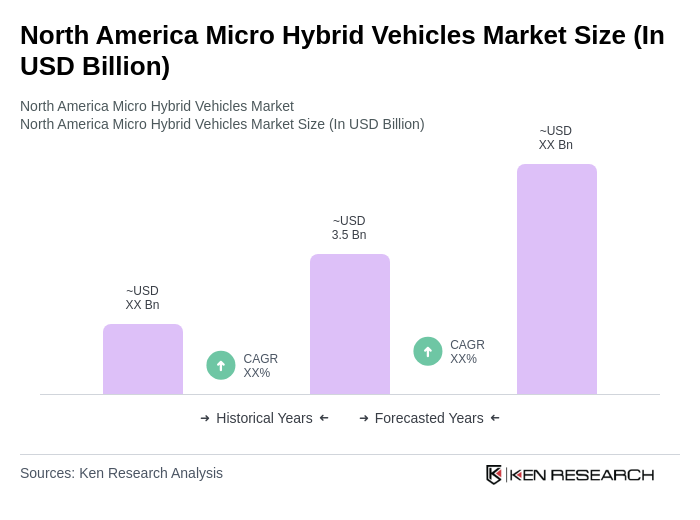
The North America Micro Hybrid Vehicles Market is valued at approximately USD 3.5 billion, driven by increasing consumer demand for fuel-efficient vehicles and compliance with stringent emissions and fuel-economy standards.

What makes us stand out is that our consultants follow Robust, Refine and Result (RRR) methodology. Robust for clear definitions, approaches and sanity checking, Refine for differentiating respondents' facts and opinions, and Result for presenting data with story.

We have set a benchmark in the industry by offering our clients with syndicated and customized market research reports featuring coverage of entire market as well as meticulous research and analyst insights.

While we don't replace traditional research, we flip the method upside down. Our dual approach of Top Bottom & Bottom Top ensures quality deliverable by not just verifying company fundamentals but also looking at the sector and macroeconomic factors.

With one step in the future, our research team constantly tries to show you the bigger picture. We help with some of the tough questions you may encounter along the way: How is the industry positioned? Best marketing channel? KPI's of competitors? By aligning every element, we help maximize success.

Our report gives you instant access to the answers and sources that other companies might choose to hide. We elaborate each steps of research methodology we have used and showcase you the sample size to earn your trust.

If you need any support, we are here! We pride ourselves on universe strength, data quality, and quick, friendly, and professional service.













