Region:Middle East
Author(s):Shubham
Product Code:KRAA8807
Pages:95
Published On:November 2025
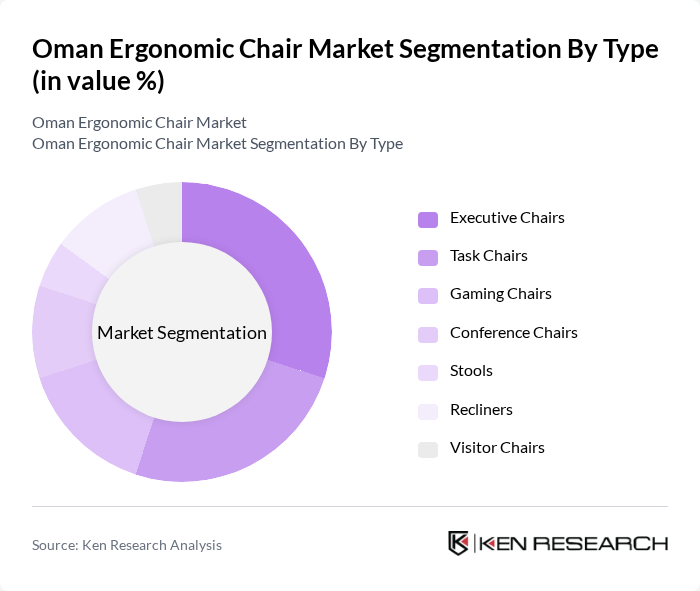
By Type:The ergonomic chair market is segmented into Executive Chairs, Task Chairs, Gaming Chairs, Conference Chairs, Stools, Recliners, and Visitor Chairs. Each type serves distinct purposes and caters to specific consumer needs, with varying levels of comfort, design, and functionality. Executive Chairs are favored in corporate offices for their premium features and support, while Gaming Chairs have gained traction among younger consumers and gamers due to their specialized ergonomic design and customization options. Task Chairs and Conference Chairs are widely adopted in business and educational settings for their versatility and adjustability. Stools, Recliners, and Visitor Chairs address niche requirements in healthcare, hospitality, and reception areas .
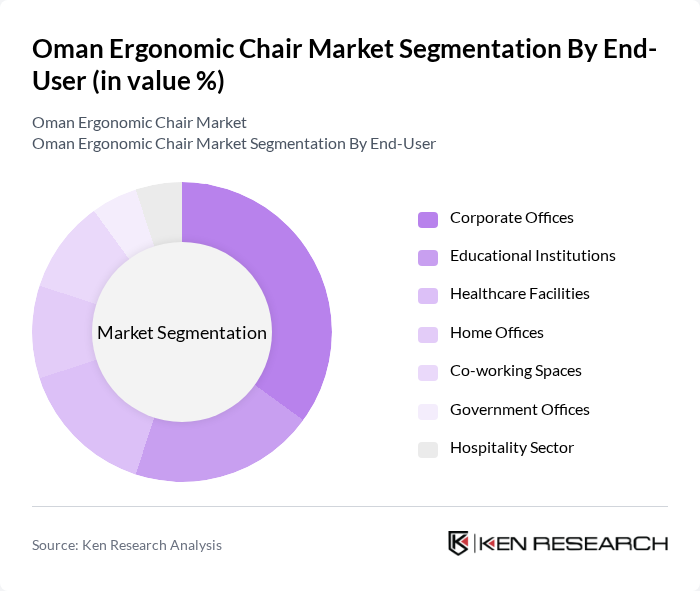
By End-User:The ergonomic chair market is segmented by end-users, including Corporate Offices, Educational Institutions, Healthcare Facilities, Home Offices, Co-working Spaces, Government Offices, and the Hospitality Sector. Each end-user category has unique requirements and preferences, influencing the types of ergonomic chairs purchased. Corporate Offices and Educational Institutions are the largest consumers, driven by the need for comfortable seating solutions that enhance productivity and learning. Healthcare Facilities prioritize chairs with advanced support features to reduce health risks for staff and patients, while Home Offices and Co-working Spaces are seeing increased adoption due to remote work trends and flexible work environments .
The Oman Ergonomic Chair Market is characterized by a dynamic mix of regional and international players. Leading participants such as Herman Miller, Steelcase, Haworth, Humanscale, IKEA, Secretlab, Autonomous, FlexiSpot, Ergohuman, Interstuhl, Alera, OFIS (Khimji Ramdas), Mahmayi Office Furniture, OFM, HON, La-Z-Boy, Serta, Al Jazeera Modern Furnishing, Mohsin Haider Darwish LLC (MHD Furnishing Division), Royal Furniture contribute to innovation, geographic expansion, and service delivery in this space.
The future of the Oman ergonomic chair market appears promising, driven by increasing health consciousness and evolving workplace dynamics. As remote work becomes more entrenched, the demand for ergonomic solutions is expected to rise. Additionally, technological advancements in chair design, such as smart features, will likely attract consumers. Companies are anticipated to invest more in employee wellness programs, further boosting the market for ergonomic chairs as they seek to enhance productivity and reduce health-related costs.
| Segment | Sub-Segments |
|---|---|
| By Type | Executive Chairs Task Chairs Gaming Chairs Conference Chairs Stools Recliners Visitor Chairs |
| By End-User | Corporate Offices Educational Institutions Healthcare Facilities Home Offices Co-working Spaces Government Offices Hospitality Sector |
| By Material | Fabric Leather Mesh Plastic Metal Wood |
| By Design | Ergonomic Design Traditional Design Modern Design Custom Design Modular Design |
| By Price Range | Budget Mid-Range Premium Luxury |
| By Distribution Channel | Online Retail Offline Retail Direct Sales B2B Sales Dealer/Distributor Network |
| By Region | Muscat Salalah Sohar Nizwa Sur |
| Scope Item/Segment | Sample Size | Target Respondent Profiles |
|---|---|---|
| Corporate Office Ergonomics | 100 | Office Managers, Facility Coordinators |
| Educational Institutions Ergonomic Needs | 60 | School Administrators, IT Managers |
| Healthcare Sector Ergonomic Solutions | 50 | Healthcare Administrators, Occupational Therapists |
| Home Office Ergonomic Preferences | 70 | Remote Workers, Freelancers |
| Retail Sector Ergonomic Chair Sales | 40 | Retail Managers, Sales Representatives |
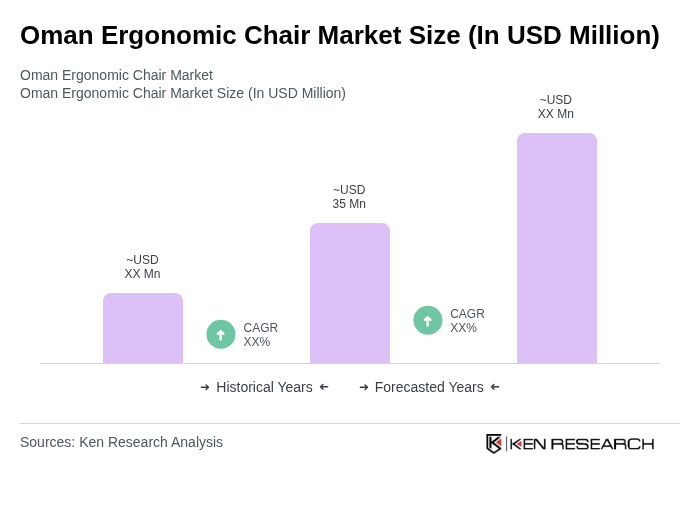
The Oman Ergonomic Chair Market is valued at approximately USD 35 million, reflecting a growing awareness of workplace ergonomics and the increasing demand for ergonomic solutions in various sectors, including corporate and educational institutions.

What makes us stand out is that our consultants follow Robust, Refine and Result (RRR) methodology. Robust for clear definitions, approaches and sanity checking, Refine for differentiating respondents' facts and opinions, and Result for presenting data with story.

We have set a benchmark in the industry by offering our clients with syndicated and customized market research reports featuring coverage of entire market as well as meticulous research and analyst insights.

While we don't replace traditional research, we flip the method upside down. Our dual approach of Top Bottom & Bottom Top ensures quality deliverable by not just verifying company fundamentals but also looking at the sector and macroeconomic factors.

With one step in the future, our research team constantly tries to show you the bigger picture. We help with some of the tough questions you may encounter along the way: How is the industry positioned? Best marketing channel? KPI's of competitors? By aligning every element, we help maximize success.

Our report gives you instant access to the answers and sources that other companies might choose to hide. We elaborate each steps of research methodology we have used and showcase you the sample size to earn your trust.

If you need any support, we are here! We pride ourselves on universe strength, data quality, and quick, friendly, and professional service.













