Region:Middle East
Author(s):Rebecca
Product Code:KRAC9855
Pages:94
Published On:November 2025
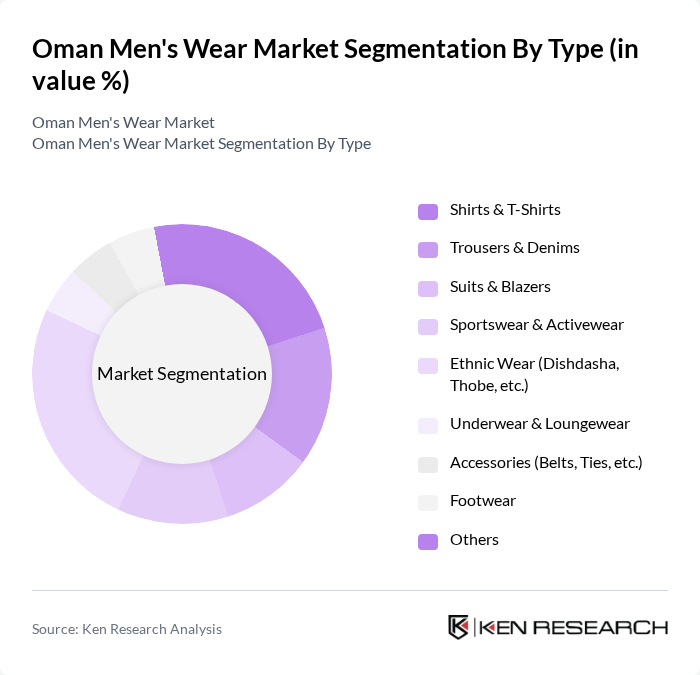
By Type:The market is segmented into various types of men's wear, including shirts & t-shirts, trousers & denims, suits & blazers, sportswear & activewear, ethnic wear (Dishdasha, Thobe, etc.), underwear & loungewear, accessories (belts, ties, etc.), footwear, and others. Among these, ethnic wear remains particularly significant due to strong cultural preferences, especially for traditional garments like the dishdasha. At the same time, casual wear such as shirts and t-shirts is gaining popularity among younger, urban consumers who are influenced by global fashion trends and the convenience of online shopping .
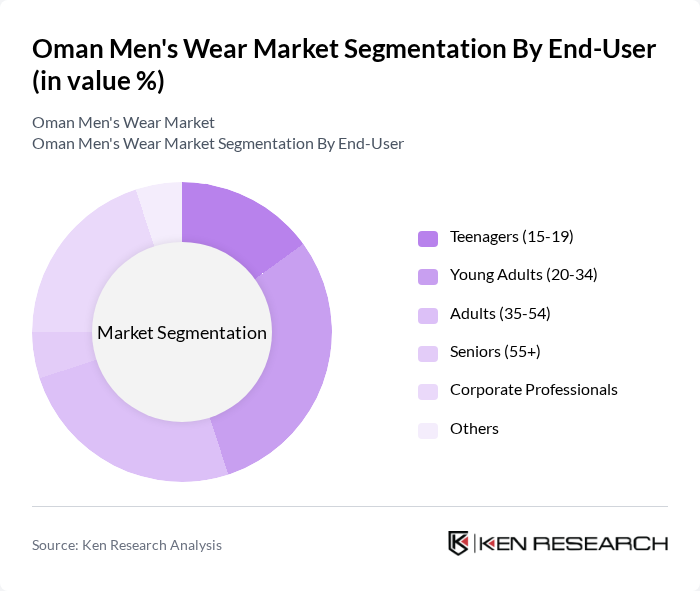
By End-User:The end-user segmentation includes teenagers (15-19), young adults (20-34), adults (35-54), seniors (55+), corporate professionals, and others. Young adults represent the largest segment due to their fashion-forward mindset, increased purchasing power, and willingness to spend on trendy clothing. Corporate professionals continue to drive demand for formal wear, while the youth segment is increasingly influenced by social media and global fashion trends .
The Oman Men's Wear Market is characterized by a dynamic mix of regional and international players. Leading participants such as Landmark Group (Max, Splash), Apparel Group (Brands: R&B, Levi’s, Tommy Hilfiger, Calvin Klein), Lulu Group International, Al Futtaim Group (Brands: Marks & Spencer, Zara, Massimo Dutti), Al Shamsi Holdings (Brands: Okaïdi, Parfois, Vincci), Centrepoint (Lifestyle, Splash, Shoemart, Max), H&M (Hennes & Mauritz AB), Zara (Inditex Group), Redtag, Brands For Less Group, Matalan, Giordano, Bossini, Splash Fashions, R&B Fashion contribute to innovation, geographic expansion, and service delivery in this space .
The Oman men's wear market is poised for significant transformation, driven by evolving consumer preferences and technological advancements. As disposable incomes rise and fashion consciousness increases, brands that adapt to these trends will thrive. The integration of sustainable practices and eco-friendly materials is expected to gain traction, aligning with global shifts towards responsible consumption. Additionally, the expansion of online retail channels will further enhance accessibility, allowing brands to reach a broader audience and cater to diverse consumer needs.
| Segment | Sub-Segments |
|---|---|
| By Type | Shirts & T-Shirts Trousers & Denims Suits & Blazers Sportswear & Activewear Ethnic Wear (Dishdasha, Thobe, etc.) Underwear & Loungewear Accessories (Belts, Ties, etc.) Footwear Others |
| By End-User | Teenagers (15-19) Young Adults (20-34) Adults (35-54) Seniors (55+) Corporate Professionals Others |
| By Distribution Channel | Online Retail (E-commerce) Supermarkets & Hypermarkets Department Stores Exclusive Brand Outlets Multi-brand Retail Outlets Specialty Stores Others |
| By Price Range | Value/Budget Mid-range Premium Luxury Others |
| By Fabric Type | Cotton Polyester Wool Linen Blends Others |
| By Occasion | Work/Business Casual Outings Formal Events Sports & Fitness Traditional/Cultural Others |
| By Region | Muscat Salalah Sohar Nizwa Others |
| Scope Item/Segment | Sample Size | Target Respondent Profiles |
|---|---|---|
| Retail Men's Wear Outlets | 60 | Store Managers, Sales Executives |
| Online Men's Fashion Retailers | 80 | E-commerce Managers, Digital Marketing Specialists |
| Local Tailoring Services | 40 | Tailors, Business Owners |
| Consumer Preferences in Men's Wear | 100 | Male Consumers, Fashion Enthusiasts |
| Fashion Influencers and Stylists | 50 | Fashion Bloggers, Style Consultants |
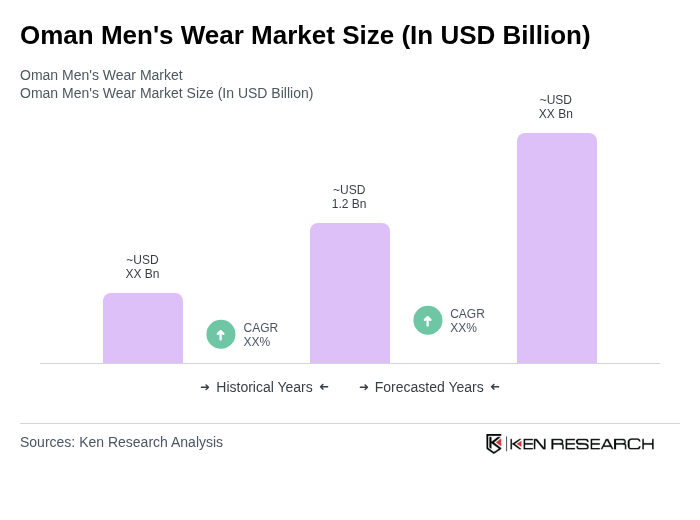
The Oman Men's Wear Market is valued at approximately USD 1.2 billion, reflecting growth driven by increasing disposable incomes, a growing population, and heightened fashion consciousness, particularly among younger demographics.

What makes us stand out is that our consultants follow Robust, Refine and Result (RRR) methodology. Robust for clear definitions, approaches and sanity checking, Refine for differentiating respondents' facts and opinions, and Result for presenting data with story.

We have set a benchmark in the industry by offering our clients with syndicated and customized market research reports featuring coverage of entire market as well as meticulous research and analyst insights.

While we don't replace traditional research, we flip the method upside down. Our dual approach of Top Bottom & Bottom Top ensures quality deliverable by not just verifying company fundamentals but also looking at the sector and macroeconomic factors.

With one step in the future, our research team constantly tries to show you the bigger picture. We help with some of the tough questions you may encounter along the way: How is the industry positioned? Best marketing channel? KPI's of competitors? By aligning every element, we help maximize success.

Our report gives you instant access to the answers and sources that other companies might choose to hide. We elaborate each steps of research methodology we have used and showcase you the sample size to earn your trust.

If you need any support, we are here! We pride ourselves on universe strength, data quality, and quick, friendly, and professional service.













