Region:Middle East
Author(s):Geetanshi
Product Code:KRAD1077
Pages:88
Published On:November 2025
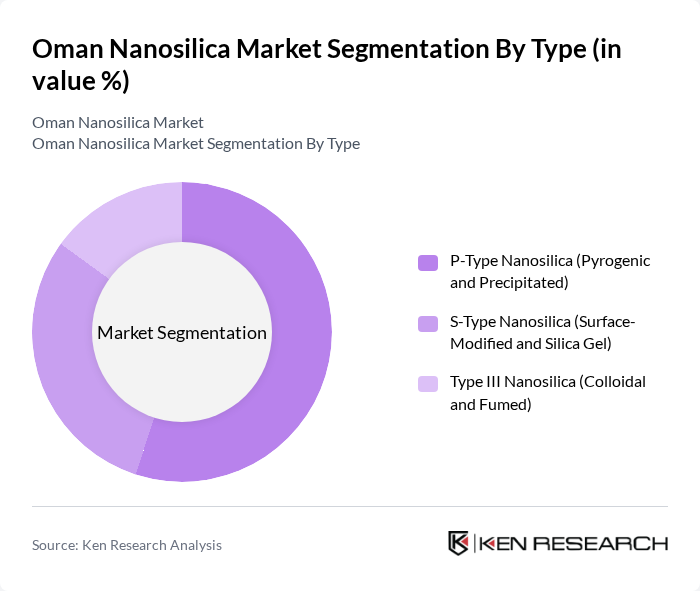
By Type:The market is segmented into three main types of nanosilica: P-Type Nanosilica (Pyrogenic and Precipitated), S-Type Nanosilica (Surface-Modified and Silica Gel), and Type III Nanosilica (Colloidal and Fumed). Among these, P-Type Nanosilica is currently leading the market due to its widespread application in construction materials, where it enhances the strength and durability of concrete. The increasing focus on high-performance construction materials and the integration of nanotechnology in infrastructure projects are driving the demand for P-Type Nanosilica, making it a preferred choice among manufacturers .
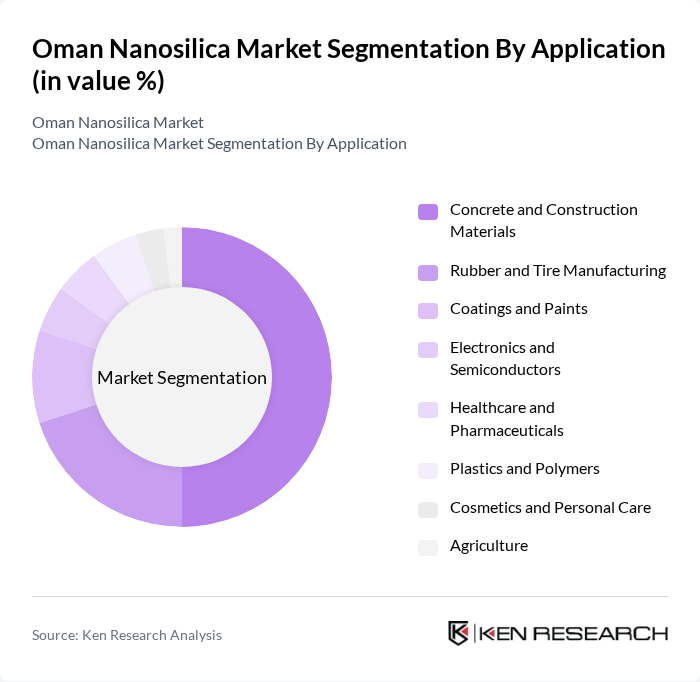
By Application:The applications of nanosilica are diverse, including Concrete and Construction Materials, Rubber and Tire Manufacturing, Coatings and Paints, Electronics and Semiconductors, Healthcare and Pharmaceuticals, Plastics and Polymers, Cosmetics and Personal Care, and Agriculture. The Concrete and Construction Materials segment is the most significant, driven by the robust construction sector in Oman. The demand for high-strength, durable, and sustainable concrete is propelling the use of nanosilica, especially as government initiatives and green building standards encourage advanced material adoption in public and private projects .
The Oman Nanosilica Market is characterized by a dynamic mix of regional and international players. Leading participants such as Cabot Corporation, Evonik Industries AG, Wacker Chemie AG, Fuso Chemical Co., Ltd., DuPont Inc., Tokuyama Corporation, AkzoNobel N.V., NanoPore Incorporated, Hubei Xingfa Chemicals Group Co., Ltd., Hoshine Silicon Industry Co., Ltd., NanoAmor (Advanced Materials Manufacturer), and Solvay S.A. contribute to innovation, geographic expansion, and service delivery in this space.
The Oman nanosilica market is poised for significant growth, driven by increasing investments in construction and electronics, alongside advancements in nanotechnology. As awareness of the benefits of nanosilica rises, particularly in sustainable building practices and high-performance materials, demand is expected to surge. Additionally, government initiatives promoting research and development will likely foster innovation, leading to new applications and product developments that cater to emerging market needs, enhancing the overall market landscape.
| Segment | Sub-Segments |
|---|---|
| By Type | P-Type Nanosilica (Pyrogenic and Precipitated) S-Type Nanosilica (Surface-Modified and Silica Gel) Type III Nanosilica (Colloidal and Fumed) |
| By Application | Concrete and Construction Materials Rubber and Tire Manufacturing Coatings and Paints Electronics and Semiconductors Healthcare and Pharmaceuticals Plastics and Polymers Cosmetics and Personal Care Agriculture |
| By End-User Industry | Construction and Infrastructure Automotive Electronics Manufacturing Pharmaceutical and Healthcare Chemical and Materials Processing |
| By Distribution Channel | Direct Sales to Large Manufacturers Authorized Distributors and Resellers Online B2B Platforms Regional Trading Companies |
| By Region within Oman | Muscat (Capital Region) Salalah (Dhofar Region) Sohar (Batinah Region) Nizwa and Interior Regions |
| By Raw Material Source | Rice Husk-Based Nanosilica Olivine-Based Nanosilica Bagasse-Based Nanosilica Other Mineral Sources |
| Scope Item/Segment | Sample Size | Target Respondent Profiles |
|---|---|---|
| Construction Industry Applications | 100 | Project Managers, Materials Engineers |
| Automotive Sector Utilization | 80 | Product Development Engineers, Quality Assurance Managers |
| Electronics Manufacturing Insights | 70 | Manufacturing Managers, R&D Specialists |
| Pharmaceutical Industry Usage | 60 | Regulatory Affairs Managers, Production Supervisors |
| Research Institutions and Academia | 40 | Research Scientists, Professors of Materials Science |
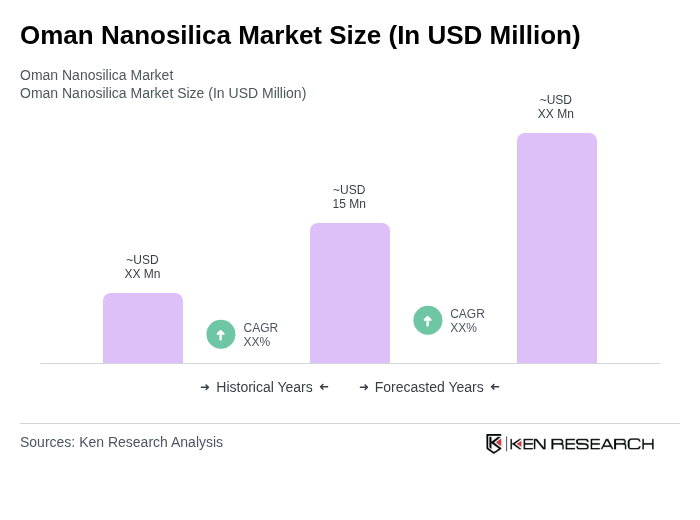
The Oman Nanosilica Market is valued at approximately USD 15 million, reflecting a five-year historical analysis. This valuation is driven by the increasing demand for high-performance materials across various industries, including construction, automotive, and electronics.

What makes us stand out is that our consultants follow Robust, Refine and Result (RRR) methodology. Robust for clear definitions, approaches and sanity checking, Refine for differentiating respondents' facts and opinions, and Result for presenting data with story.

We have set a benchmark in the industry by offering our clients with syndicated and customized market research reports featuring coverage of entire market as well as meticulous research and analyst insights.

While we don't replace traditional research, we flip the method upside down. Our dual approach of Top Bottom & Bottom Top ensures quality deliverable by not just verifying company fundamentals but also looking at the sector and macroeconomic factors.

With one step in the future, our research team constantly tries to show you the bigger picture. We help with some of the tough questions you may encounter along the way: How is the industry positioned? Best marketing channel? KPI's of competitors? By aligning every element, we help maximize success.

Our report gives you instant access to the answers and sources that other companies might choose to hide. We elaborate each steps of research methodology we have used and showcase you the sample size to earn your trust.

If you need any support, we are here! We pride ourselves on universe strength, data quality, and quick, friendly, and professional service.













