Region:Middle East
Author(s):Geetanshi
Product Code:KRAC8174
Pages:93
Published On:November 2025
By Type:
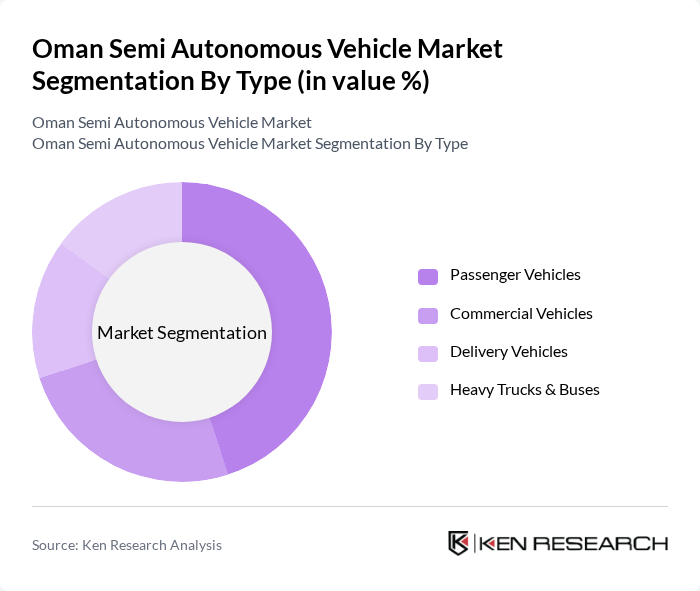
The segmentation by type includes Passenger Vehicles, Commercial Vehicles, Delivery Vehicles, and Heavy Trucks & Buses. Among these, Passenger Vehicles dominate the market due to the increasing consumer preference for personal mobility solutions, the growing trend of urbanization, and the rising adoption of ADAS features for enhanced safety and convenience. Commercial Vehicles are also gaining traction as businesses seek to improve operational efficiency and reduce costs through automation. The expanding logistics sector further supports the demand for Delivery Vehicles, while Heavy Trucks & Buses are increasingly being integrated with semi-autonomous technologies to enhance safety and efficiency in public transport and freight operations .
By End-User:
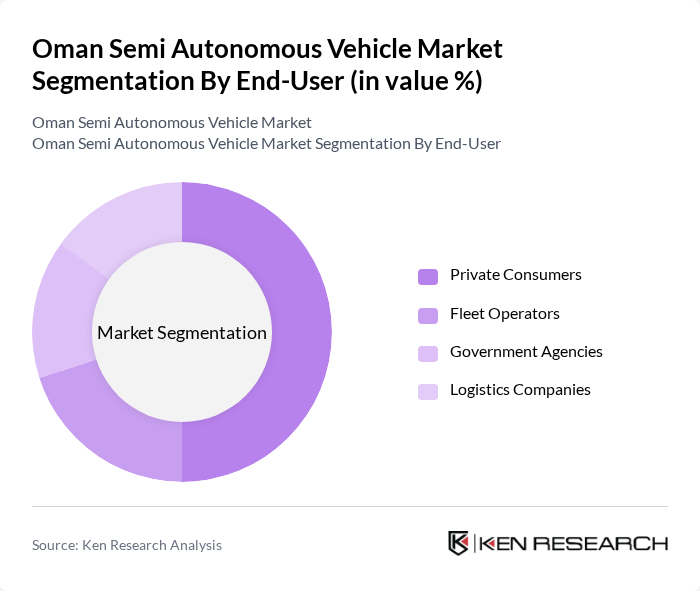
This segmentation includes Private Consumers, Fleet Operators, Government Agencies, and Logistics Companies. Private Consumers lead the market, driven by the increasing adoption of semi-autonomous features for personal safety and convenience. Fleet Operators are also significant players, as they seek to optimize their operations and reduce costs through automation. Government Agencies are investing in semi-autonomous technologies to enhance public safety and improve transportation infrastructure. Logistics Companies are increasingly adopting these vehicles to streamline their operations and improve delivery efficiency, further contributing to the market's growth .
The Oman Semi Autonomous Vehicle Market is characterized by a dynamic mix of regional and international players. Leading participants such as Tesla, Inc., Waymo LLC, Ford Motor Company, General Motors, BMW AG, Audi AG, Nissan Motor Corporation, Toyota Motor Corporation, Hyundai Motor Company, Mercedes-Benz AG, Volvo Cars, Baidu Inc., ZF Friedrichshafen AG, Continental AG, Denso Corporation, OTE Group (Oman Trading Establishment LLC), Saud Bahwan Group, Suhail Bahwan Automobiles LLC, Wadi Kabir Automotive, Oman National Engineering & Investment Co. (ONEIC) contribute to innovation, geographic expansion, and service delivery in this space.
The future of the semi-autonomous vehicle market in Oman appears promising, driven by technological advancements and supportive government policies. As infrastructure for smart transportation develops, the integration of AI and connectivity features will enhance vehicle capabilities. Additionally, the growing focus on sustainability will likely lead to increased investments in electric and hybrid semi-autonomous vehicles. Overall, the market is poised for significant growth, provided that challenges related to costs and public acceptance are effectively addressed.
| Segment | Sub-Segments |
|---|---|
| By Type | Passenger Vehicles Commercial Vehicles Delivery Vehicles Heavy Trucks & Buses |
| By End-User | Private Consumers Fleet Operators Government Agencies Logistics Companies |
| By Vehicle Class | Economy Class Luxury Class SUV Class Commercial Class |
| By Technology | Advanced Driver Assistance Systems (ADAS) Sensor Technology (LiDAR, Radar, Cameras) Connectivity Solutions (V2X, Telematics) Software Algorithms & AI |
| By Application | Personal Use Commercial Use Public Transport Industrial/Mining Operations |
| By Distribution Channel | Direct Sales Online Sales Dealerships Fleet Sales |
| By Policy Support | Government Subsidies Tax Incentives Research Grants Regulatory Sandboxes |
| Scope Item/Segment | Sample Size | Target Respondent Profiles |
|---|---|---|
| Passenger Vehicle Owners | 120 | Car Owners, Technology Enthusiasts |
| Commercial Fleet Operators | 60 | Fleet Managers, Logistics Coordinators |
| Public Transport Authorities | 40 | Transport Planners, Policy Makers |
| Automotive Technology Developers | 40 | R&D Managers, Product Development Engineers |
| Consumers Interested in Autonomous Vehicles | 80 | General Public, Early Adopters |
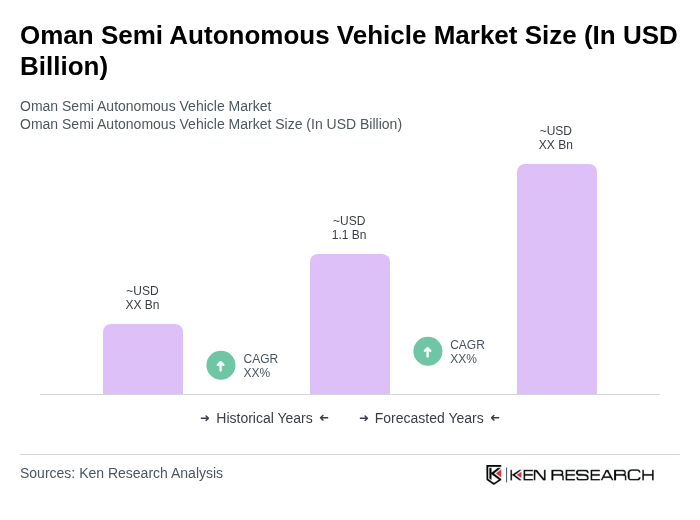
The Oman Semi Autonomous Vehicle Market is valued at approximately USD 1.1 billion, driven by investments in smart transportation infrastructure, consumer demand for advanced vehicle technologies, and government initiatives aimed at enhancing road safety and reducing traffic congestion.

What makes us stand out is that our consultants follow Robust, Refine and Result (RRR) methodology. Robust for clear definitions, approaches and sanity checking, Refine for differentiating respondents' facts and opinions, and Result for presenting data with story.

We have set a benchmark in the industry by offering our clients with syndicated and customized market research reports featuring coverage of entire market as well as meticulous research and analyst insights.

While we don't replace traditional research, we flip the method upside down. Our dual approach of Top Bottom & Bottom Top ensures quality deliverable by not just verifying company fundamentals but also looking at the sector and macroeconomic factors.

With one step in the future, our research team constantly tries to show you the bigger picture. We help with some of the tough questions you may encounter along the way: How is the industry positioned? Best marketing channel? KPI's of competitors? By aligning every element, we help maximize success.

Our report gives you instant access to the answers and sources that other companies might choose to hide. We elaborate each steps of research methodology we have used and showcase you the sample size to earn your trust.

If you need any support, we are here! We pride ourselves on universe strength, data quality, and quick, friendly, and professional service.













