Region:Asia
Author(s):Geetanshi
Product Code:KRAB5114
Pages:80
Published On:October 2025
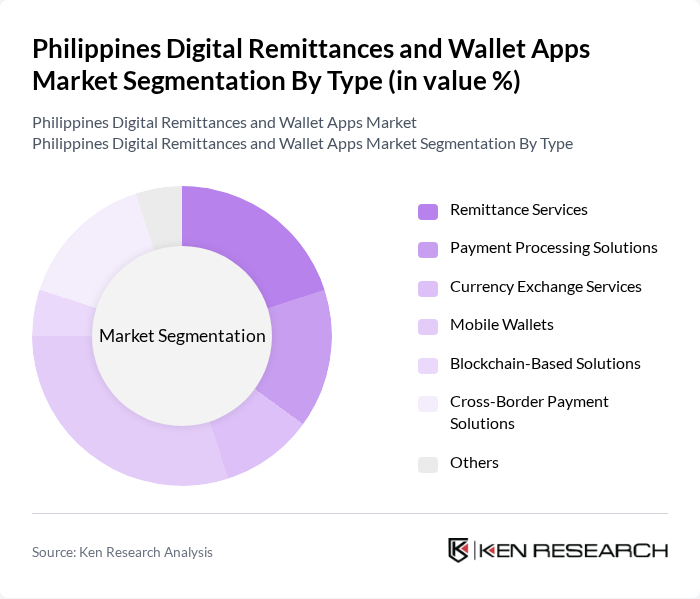
By Type:The market is segmented into various types, including Remittance Services, Payment Processing Solutions, Currency Exchange Services, Mobile Wallets, Blockchain-Based Solutions, Cross-Border Payment Solutions, and Others. Among these, Mobile Wallets have gained significant traction due to their convenience and user-friendly interfaces, appealing to both tech-savvy users and the unbanked population. The increasing smartphone penetration and internet accessibility have further fueled the growth of mobile wallets, making them a preferred choice for digital transactions .
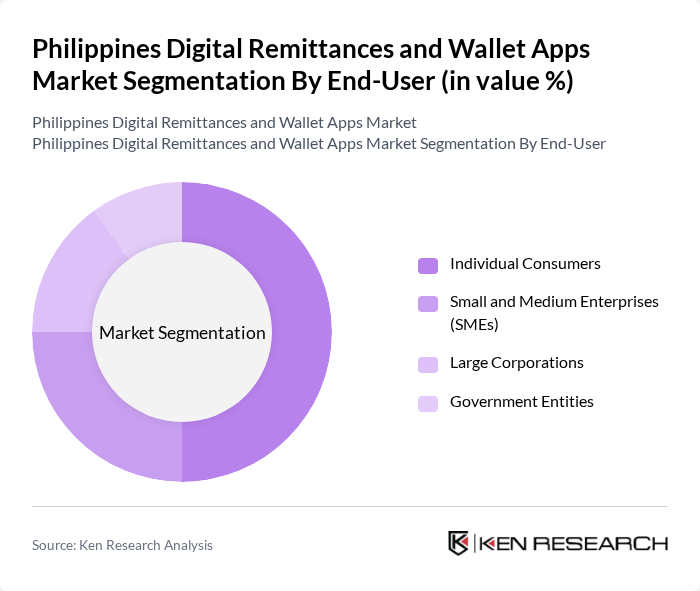
By End-User:The end-user segmentation includes Individual Consumers, Small and Medium Enterprises (SMEs), Large Corporations, and Government Entities. Individual Consumers dominate the market, driven by the need for personal remittances and everyday transactions. The rise of e-commerce and online services has also led to increased usage among SMEs, while large corporations and government entities are gradually adopting digital solutions for efficiency and cost-effectiveness .
The Philippines Digital Remittances and Wallet Apps Market is characterized by a dynamic mix of regional and international players. Leading participants such as GCash, Maya (formerly PayMaya), Western Union, MoneyGram, Remitly, Xoom, Coins.ph, LBC Express, Cebuana Lhuillier, Smart Padala by PayMaya, UnionBank of the Philippines, BDO Unibank, RCBC (Rizal Commercial Banking Corporation), EastWest Bank, Philippine National Bank (PNB), Metrobank (Metropolitan Bank & Trust Company), GrabPay, and PeraHub contribute to innovation, geographic expansion, and service delivery in this space.
The Philippines digital remittances and wallet apps market is poised for significant evolution, driven by technological advancements and changing consumer behaviors. As more Filipinos embrace cashless transactions, the integration of innovative technologies like blockchain is expected to enhance transaction security and efficiency. Additionally, the growing demand for cross-border transactions will likely spur the development of tailored financial products, catering to the unique needs of OFWs and their families, thereby fostering a more inclusive financial ecosystem.
| Segment | Sub-Segments |
|---|---|
| By Type | Remittance Services Payment Processing Solutions Currency Exchange Services Mobile Wallets Blockchain-Based Solutions Cross-Border Payment Solutions Others |
| By End-User | Individual Consumers Small and Medium Enterprises (SMEs) Large Corporations Government Entities |
| By Payment Method | Bank Transfers Mobile Wallets Cash Payments Credit/Debit Cards Digital Currencies |
| By Application | Personal Remittances Business Payments E-commerce Transactions Bill Payments |
| By Distribution Channel | Direct Online Platforms Mobile Applications Agent Networks Retail Outlets |
| By Customer Segment | Unbanked Population Tech-Savvy Users Expatriates Local Businesses |
| By Pricing Model | Transaction Fees Subscription Models Freemium Models Others |
| Scope Item/Segment | Sample Size | Target Respondent Profiles |
|---|---|---|
| Overseas Filipino Workers (OFWs) Remittance Patterns | 100 | OFWs, Family Members Receiving Remittances |
| Digital Wallet User Experience | 80 | Active Users of Digital Wallet Apps |
| Financial Literacy and Adoption | 60 | Young Adults, First-time Users of Financial Apps |
| Impact of Fees on Remittance Choices | 50 | Frequent Remitters, Financial Consultants |
| Trends in Mobile Payment Adoption | 40 | Small Business Owners, Retailers |
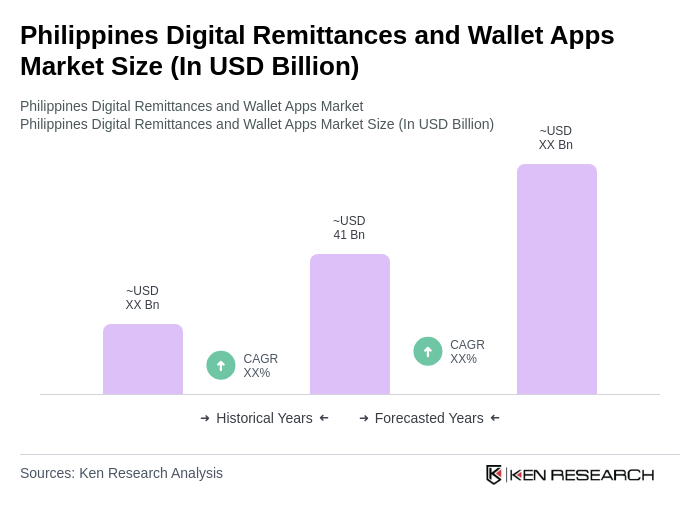
The Philippines Digital Remittances and Wallet Apps Market is valued at approximately USD 41 billion, driven by the increasing number of Overseas Filipino Workers (OFWs) and the rapid adoption of mobile wallet platforms.

What makes us stand out is that our consultants follow Robust, Refine and Result (RRR) methodology. Robust for clear definitions, approaches and sanity checking, Refine for differentiating respondents' facts and opinions, and Result for presenting data with story.

We have set a benchmark in the industry by offering our clients with syndicated and customized market research reports featuring coverage of entire market as well as meticulous research and analyst insights.

While we don't replace traditional research, we flip the method upside down. Our dual approach of Top Bottom & Bottom Top ensures quality deliverable by not just verifying company fundamentals but also looking at the sector and macroeconomic factors.

With one step in the future, our research team constantly tries to show you the bigger picture. We help with some of the tough questions you may encounter along the way: How is the industry positioned? Best marketing channel? KPI's of competitors? By aligning every element, we help maximize success.

Our report gives you instant access to the answers and sources that other companies might choose to hide. We elaborate each steps of research methodology we have used and showcase you the sample size to earn your trust.

If you need any support, we are here! We pride ourselves on universe strength, data quality, and quick, friendly, and professional service.













