Region:Asia
Author(s):Shubham
Product Code:KRAA8880
Pages:96
Published On:November 2025
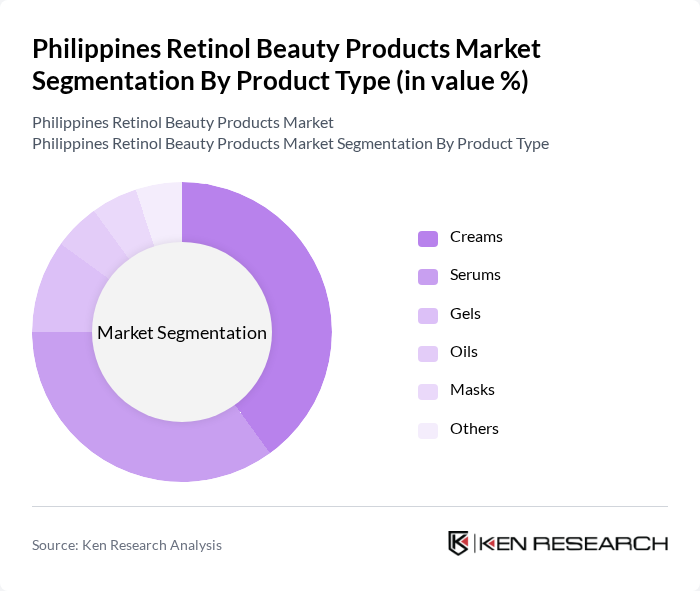
By Product Type:The product type segmentation includes various forms of retinol beauty products such as creams, serums, gels, oils, masks, and others. Among these, creams and serums are the most popular due to their ease of application and effectiveness in delivering retinol to the skin. The demand for serums has particularly surged as consumers seek concentrated formulations that provide targeted results. The market is witnessing a trend towards multifunctional products that combine retinol with other beneficial ingredients, further driving the growth of this segment.
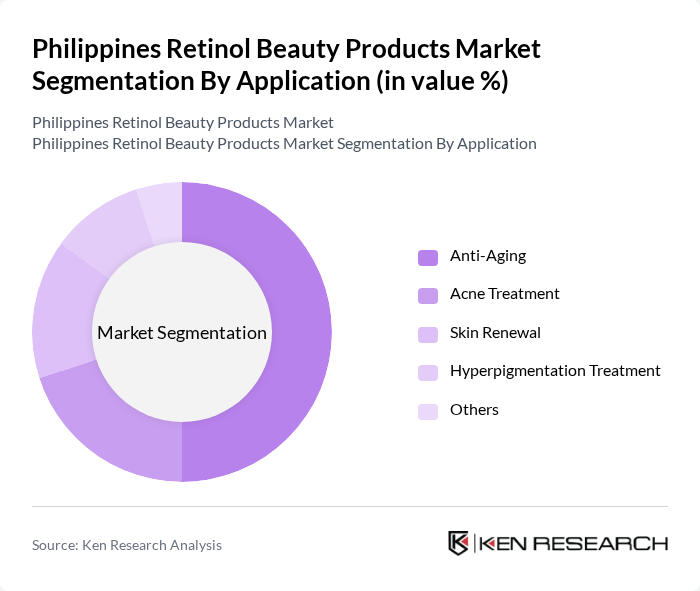
By Application:The application segmentation includes anti-aging, acne treatment, skin renewal, hyperpigmentation treatment, and others. The anti-aging segment is the most dominant, driven by a growing aging population and increasing awareness of skincare among younger consumers. Products targeting skin renewal and hyperpigmentation are also gaining traction as consumers seek solutions for common skin concerns. The trend towards natural and organic ingredients is influencing product formulations, leading to a rise in demand for products that combine retinol with botanical extracts.
The Philippines Retinol Beauty Products Market is characterized by a dynamic mix of regional and international players. Leading participants such as L'Oréal Philippines, Unilever Philippines, Procter & Gamble Philippines, Johnson & Johnson Philippines (Neutrogena), Belo Medical Group, Happy Skin, Celeteque, Pond's, Nivea Philippines, Mary Kay Philippines, Avon Philippines, Estée Lauder Philippines, Shiseido Philippines, Skin Inc., The Ordinary contribute to innovation, geographic expansion, and service delivery in this space.
The future of the retinol beauty products market in the Philippines appears promising, driven by increasing consumer demand for effective skincare solutions. As the market evolves, brands are likely to focus on innovative formulations that cater to specific skin types and concerns. Additionally, the rise of digital marketing and influencer partnerships will enhance brand visibility, allowing companies to reach a broader audience. The trend towards sustainability will also shape product development, with eco-friendly packaging becoming a priority for consumers.
| Segment | Sub-Segments |
|---|---|
| By Product Type | Creams Serums Gels Oils Masks Others |
| By Application | Anti-Aging Acne Treatment Skin Renewal Hyperpigmentation Treatment Others |
| By End-User | Individual Consumers Salons and Spas Dermatology Clinics Others |
| By Distribution Channel | Online Retail Offline Retail (Supermarkets, Beauty Parlors, Multi-Branded Stores) Direct Sales Others |
| By Price Range | Premium Mid-range Budget Others |
| By Brand Type | Local Brands International Brands Private Labels Others |
| By Packaging Type | Tubes Bottles Jars Pumps & Dispensers Others |
| By Target Demographic | Age Group (18-25, 26-35, 36-50, 50+) Gender (Male, Female, Unisex) Skin Type (Oily, Dry, Combination, Sensitive) Others |
| Scope Item/Segment | Sample Size | Target Respondent Profiles |
|---|---|---|
| Consumer Awareness of Retinol Products | 120 | Skincare Enthusiasts, General Consumers |
| Retail Sales Insights | 80 | Store Managers, Beauty Advisors |
| Dermatologist Recommendations | 40 | Dermatologists, Skincare Specialists |
| Online Purchase Behavior | 100 | Online Shoppers, E-commerce Managers |
| Product Satisfaction and Feedback | 60 | Regular Users of Retinol Products |
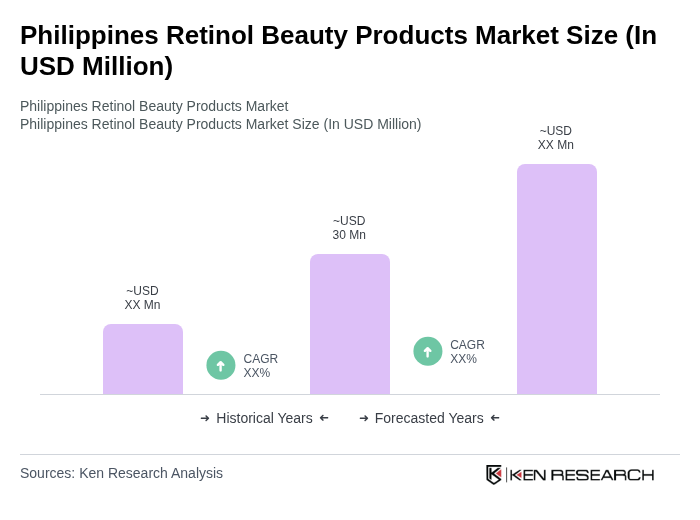
The Philippines Retinol Beauty Products Market is valued at approximately USD 30 million, reflecting a significant growth trend driven by increasing consumer awareness of skincare benefits and the rising demand for anti-aging products.

What makes us stand out is that our consultants follow Robust, Refine and Result (RRR) methodology. Robust for clear definitions, approaches and sanity checking, Refine for differentiating respondents' facts and opinions, and Result for presenting data with story.

We have set a benchmark in the industry by offering our clients with syndicated and customized market research reports featuring coverage of entire market as well as meticulous research and analyst insights.

While we don't replace traditional research, we flip the method upside down. Our dual approach of Top Bottom & Bottom Top ensures quality deliverable by not just verifying company fundamentals but also looking at the sector and macroeconomic factors.

With one step in the future, our research team constantly tries to show you the bigger picture. We help with some of the tough questions you may encounter along the way: How is the industry positioned? Best marketing channel? KPI's of competitors? By aligning every element, we help maximize success.

Our report gives you instant access to the answers and sources that other companies might choose to hide. We elaborate each steps of research methodology we have used and showcase you the sample size to earn your trust.

If you need any support, we are here! We pride ourselves on universe strength, data quality, and quick, friendly, and professional service.













