Region:Europe
Author(s):Dev
Product Code:KRAB6119
Pages:81
Published On:October 2025
By Type:The market is segmented into various types of baby food products, including Infant Formula, Baby Cereals, Baby Snacks, Baby Purees, Organic Baby Food, Functional Baby Food, and Others. Each of these subsegments caters to different consumer preferences and nutritional needs.
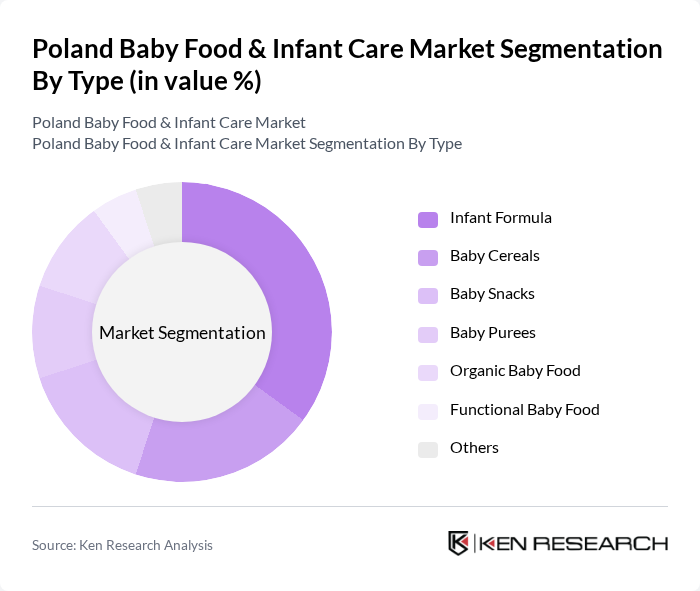
The Infant Formula subsegment is currently dominating the market due to its essential role in infant nutrition, especially for working parents who may not be able to breastfeed. The increasing trend towards premium and organic formulas is also contributing to its growth. Consumers are becoming more discerning about the nutritional content and sourcing of ingredients, leading to a rise in demand for high-quality infant formulas. This trend is further supported by marketing strategies that emphasize the health benefits of these products.
By Age Group:The market is also segmented by age group, including 0-6 Months, 6-12 Months, and 1-3 Years. Each age group has specific nutritional requirements that influence purchasing decisions.
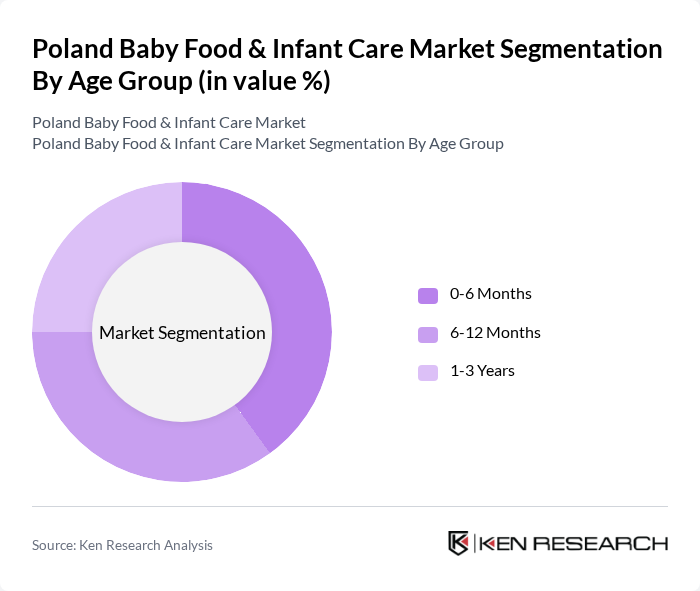
The 0-6 Months age group is the largest segment, primarily due to the critical nutritional needs of infants during their early months. Parents are increasingly opting for specialized infant formulas and baby cereals that cater to this age group, focusing on essential vitamins and minerals. The growing awareness of the importance of early nutrition is driving this trend, as parents seek products that support healthy growth and development.
The Poland Baby Food & Infant Care Market is characterized by a dynamic mix of regional and international players. Leading participants such as Nestlé S.A., Danone S.A., Hero Group, Hain Celestial Group, Inc., Mead Johnson Nutrition Company, Abbott Laboratories, FrieslandCampina, Beech-Nut Nutrition Company, Plum Organics, Organix Brands, HiPP GmbH & Co. Vertrieb KG, Ella's Kitchen, Baby Gourmet Foods Inc., Little Spoon, Yumi contribute to innovation, geographic expansion, and service delivery in this space.
The future of the Poland baby food and infant care market appears promising, driven by evolving consumer preferences and technological advancements. As health awareness continues to rise, companies are likely to innovate with organic and plant-based products. Additionally, the increasing penetration of e-commerce will facilitate broader access to diverse product offerings. Collaborations with healthcare providers may also enhance product credibility, further influencing purchasing decisions among parents seeking quality and safety in baby food options.
| Segment | Sub-Segments |
|---|---|
| By Type | Infant Formula Baby Cereals Baby Snacks Baby Purees Organic Baby Food Functional Baby Food Others |
| By Age Group | 6 Months 12 Months 3 Years |
| By Distribution Channel | Supermarkets/Hypermarkets Online Retail Pharmacies Specialty Stores |
| By Packaging Type | Jars Pouches Tins |
| By Nutritional Content | Standard Nutritional Fortified Nutritional Organic Nutritional |
| By Brand Type | National Brands Private Labels |
| By Price Range | Economy Mid-Range Premium |
| Scope Item/Segment | Sample Size | Target Respondent Profiles |
|---|---|---|
| Parent Purchasing Behavior | 150 | Parents of infants aged 0-12 months |
| Pediatrician Insights | 50 | Pediatricians and child health specialists |
| Retailer Perspectives | 100 | Store managers and category buyers from baby product retailers |
| Market Trends Analysis | 75 | Market analysts and industry experts in infant care |
| Consumer Satisfaction Surveys | 200 | Caregivers and parents who have purchased baby food products |
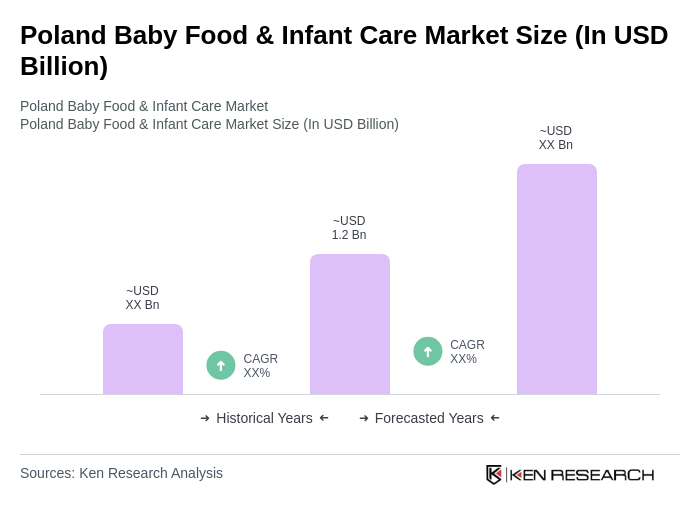
The Poland Baby Food & Infant Care Market is valued at approximately USD 1.2 billion, reflecting a significant growth driven by increasing birth rates, rising disposable incomes, and heightened awareness of infant nutrition among parents.

What makes us stand out is that our consultants follow Robust, Refine and Result (RRR) methodology. Robust for clear definitions, approaches and sanity checking, Refine for differentiating respondents' facts and opinions, and Result for presenting data with story.

We have set a benchmark in the industry by offering our clients with syndicated and customized market research reports featuring coverage of entire market as well as meticulous research and analyst insights.

While we don't replace traditional research, we flip the method upside down. Our dual approach of Top Bottom & Bottom Top ensures quality deliverable by not just verifying company fundamentals but also looking at the sector and macroeconomic factors.

With one step in the future, our research team constantly tries to show you the bigger picture. We help with some of the tough questions you may encounter along the way: How is the industry positioned? Best marketing channel? KPI's of competitors? By aligning every element, we help maximize success.

Our report gives you instant access to the answers and sources that other companies might choose to hide. We elaborate each steps of research methodology we have used and showcase you the sample size to earn your trust.

If you need any support, we are here! We pride ourselves on universe strength, data quality, and quick, friendly, and professional service.













