CPaaS Market in APAC – Strategic Outlook, Sector Trends & Growth Pathways (2024–2031)
This POV reveals how APAC’s CPaaS market is turning communications from a cost center into a growth engine, with forecasts and insights.


Built for Leaders Across
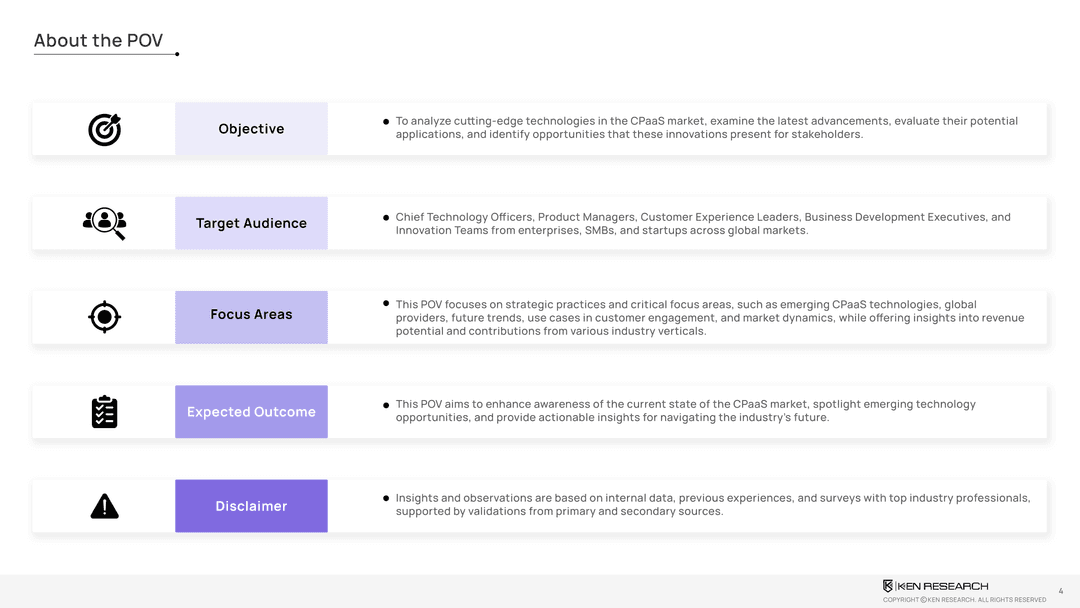
This strategic POV is built for:
- CXOs, CDOs, and Digital Strategy Heads at high-volume B2C and platform-first organizations
- Heads of Product and Customer Experience in BFSI, Retail, Healthcare, and Logistics
- Growth-stage and late-stage investors seeking programmable SaaS and infra-tech opportunities
- Telecom & Tech policy architects shaping real-time communications infrastructure
Explore Strategic Roadmaps and Sector Priorities Tailored for APAC Decision-Makers
Executive Summary
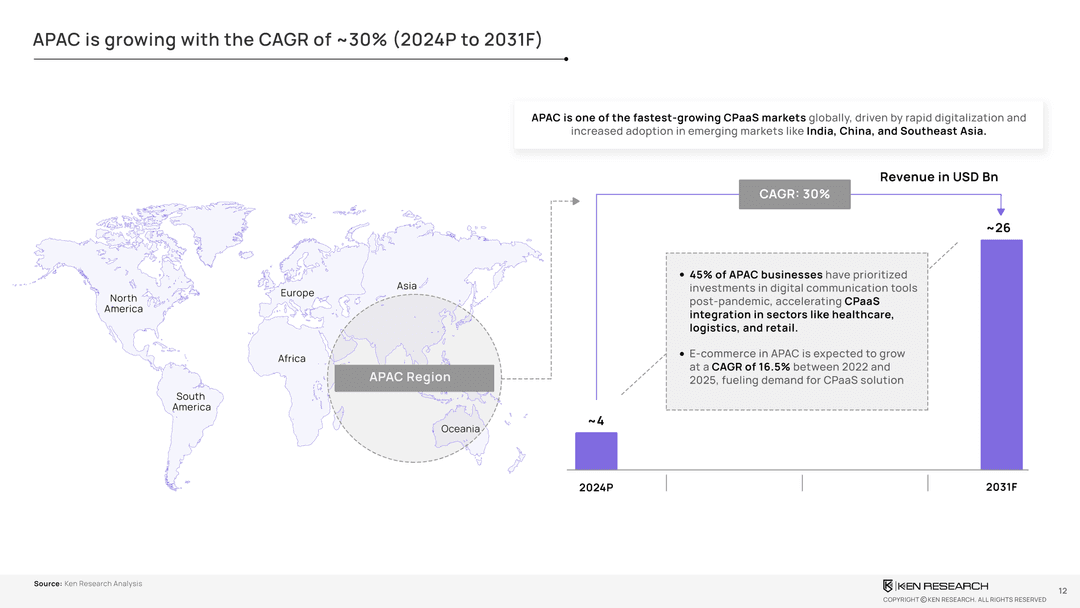
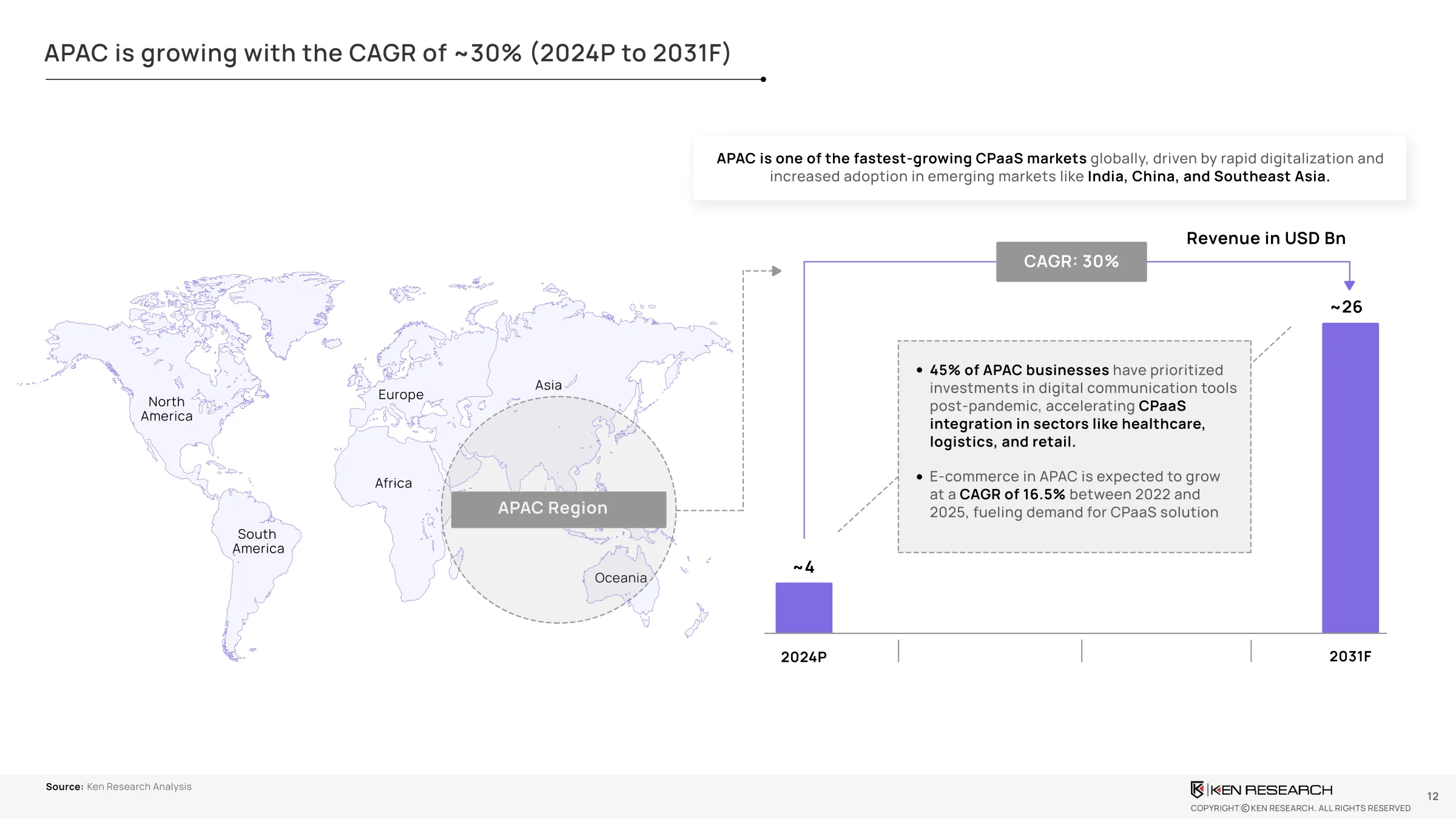
TheCPaaS market in APACis forecasted to grow from USD ~ 4 Bn in 2024 toUSD 26 Bn by 2031, expanding at a CAGR of~30%, outpacing North America and Europe.
This growth is driven by:
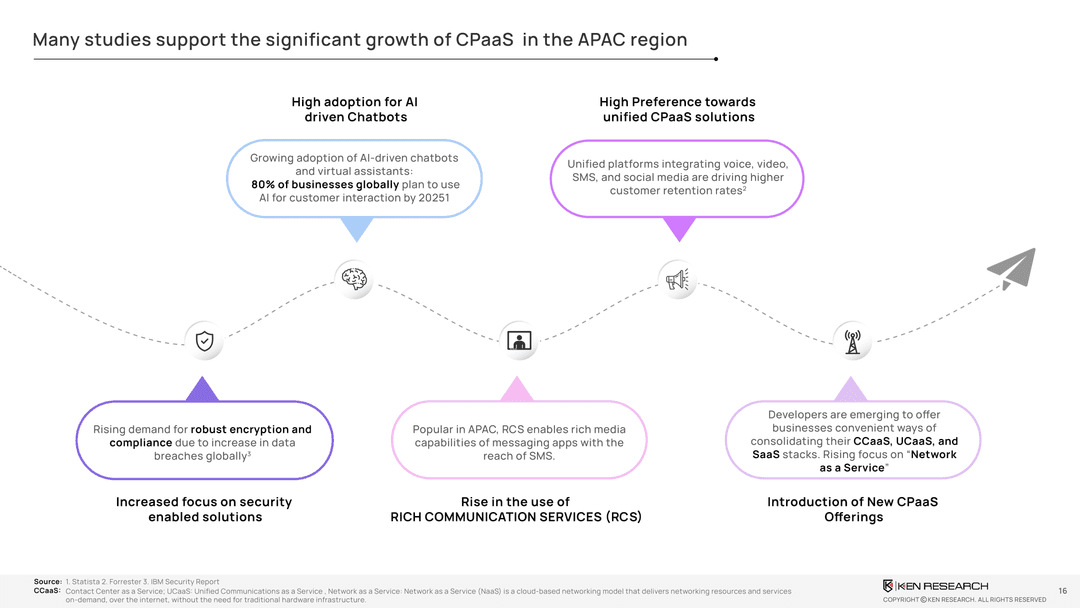
- Mobile-first consumer behavior across APAC’s digital-native economies
- Cloud-led enterprise modernization, requiring integrated CX and security
- Policy tailwinds including real-time digital identity, digital payments, and localization
As digital-first sectors like BFSI, e-commerce, and logistics adopt CPaaS, organizations must shift from legacy communication stacks to API-first infrastructure. This POV distills regional patterns, sectoral triggers, and monetization models shaping the next chapter of CPaaS growth.
Download the Strategic Snapshot on APAC CPaaS Growth and Sector Shifts
CPaaS Overview – Why It Matters in APAC Now
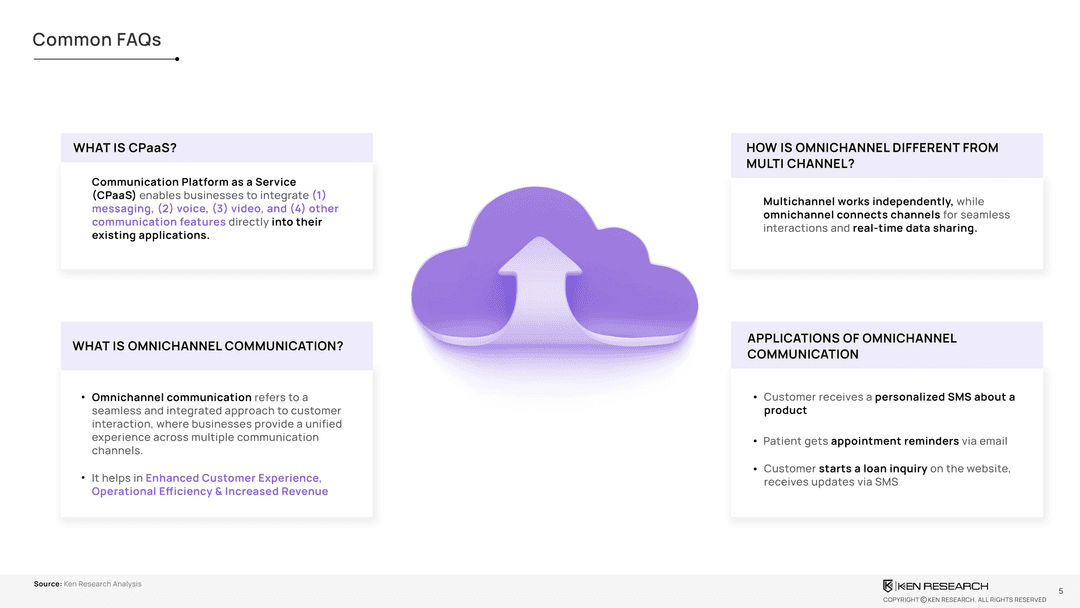
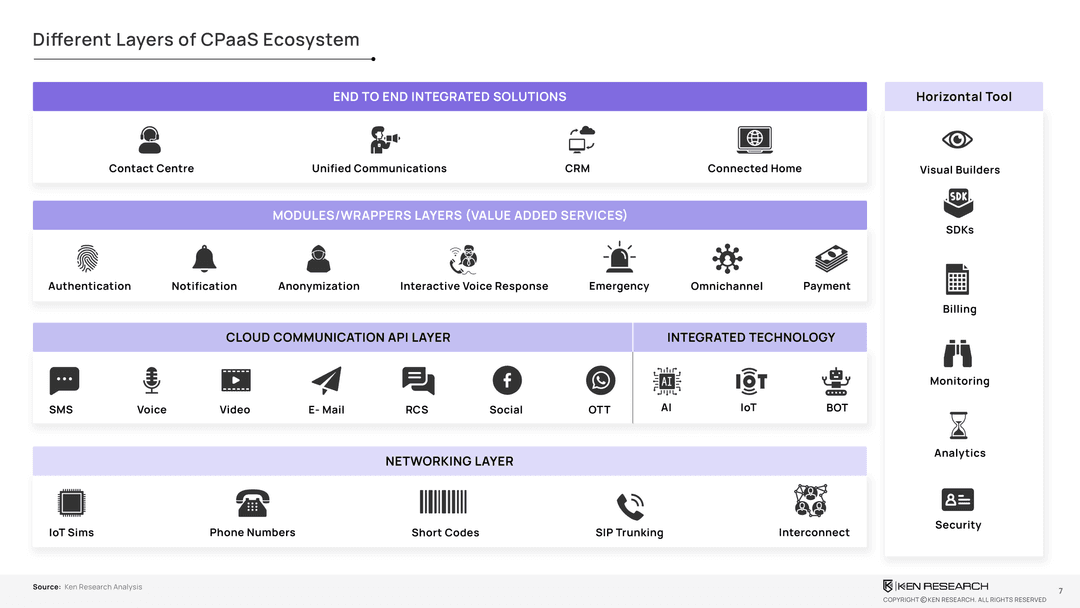
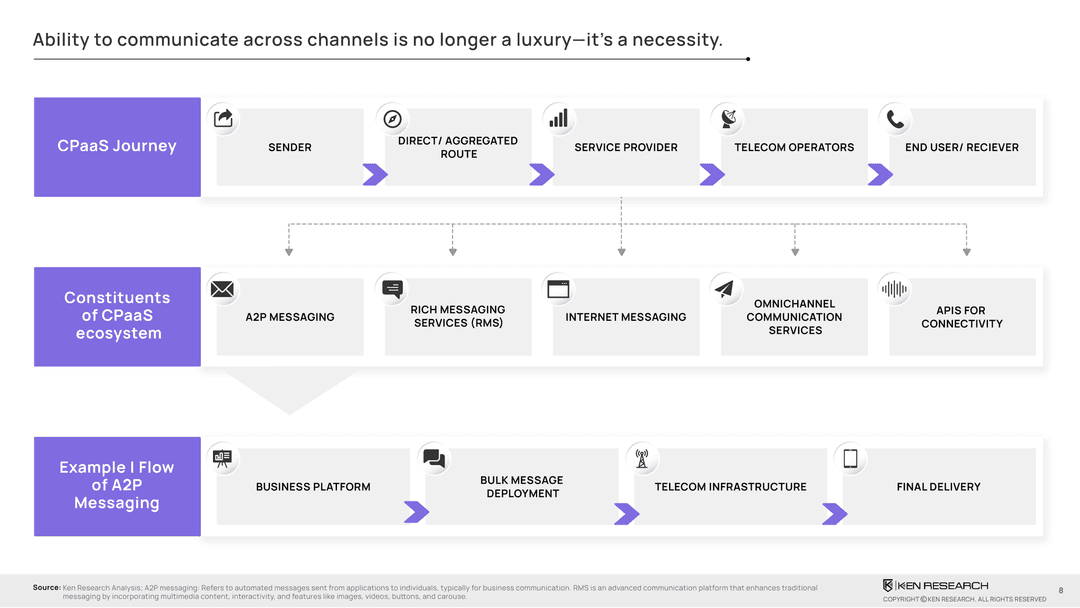
CPaaS enables organizations to embed communication features—voice, SMS, video, WhatsApp, authentication—into applications and workflows via APIs.
Why CPaaS adoption is scaling rapidly:
- Transactional messaging at scale: OTPs, fraud alerts, payment status, etc.
- Personalized multichannel engagement: Retail promos, banking alerts, e-health reminders
- Programmable infrastructure: Reduces friction and improves speed-to-market
Understand CPaaS as the Infrastructure Layer for Real-Time Customer Experience in Asia
CPaaS Value Chain – Who Powers the Ecosystem
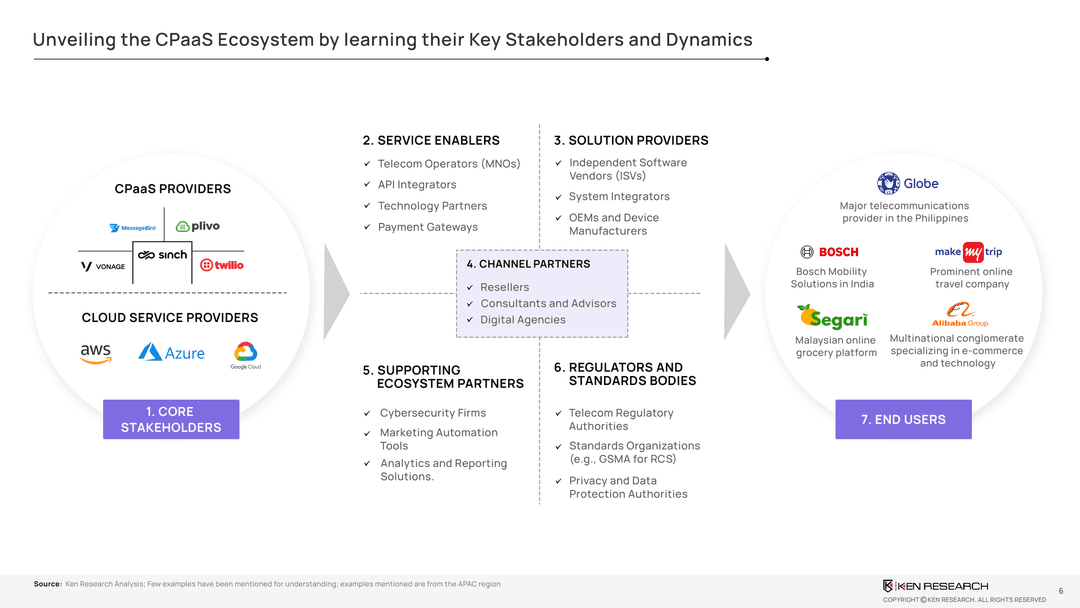
The APAC CPaaS stack includes:
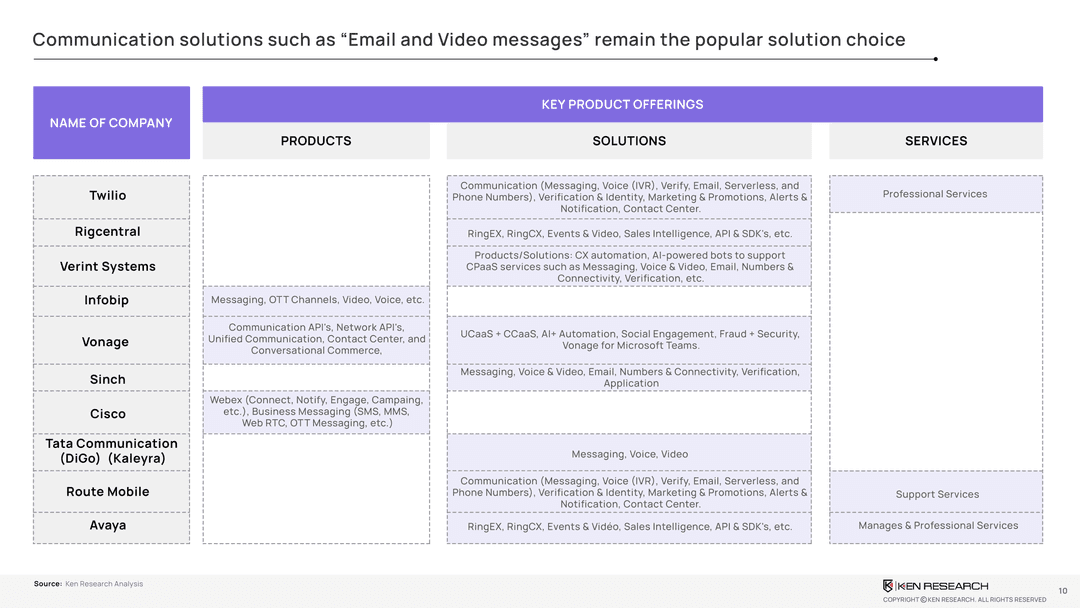
- Core Infrastructure Providers: Twilio, Sinch, Infobip, Vonage
- Telco Enablers: MNOs, SMS/voice carriers, regional aggregators
- Software Integrators & ISVs: Route Mobile, Comviva, Tanla, Kaleyra
- Channel & Implementation Partners: System integrators, marketing cloud partners, CPaaS marketplaces
- AI/Analytics Providers: Integrating bots, personalization engines, compliance dashboards
Download the CPaaS Ecosystem Stack and Provider Integration Models
Compare Monetization Paths Across Leading CPaaS Providers in APAC
CPaaS Business Models – From APIs to Monetization
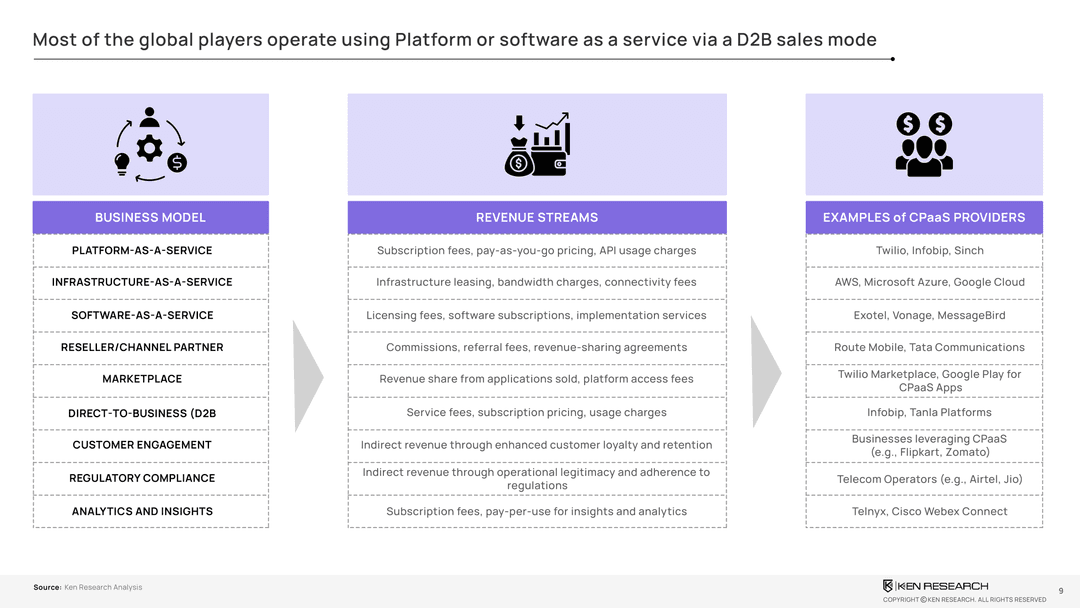
Revenue models across APAC CPaaS players include:
- Usage-Based APIs (Twilio Model): Pay-per-message, pay-per-minute
- Platform License (Vonage/Infobip): CX suite for enterprise campaigns
- Telco Aggregation (Route Mobile): Partner APIs + regulatory enablement
- AI-Led CPaaS (Sinch/Infobip): Context-aware conversational flows + analytics
Growth Trend: Shift from raw messaging APIs toCX Intelligence Suitesthat combine communication, data, and insights.
Compare Monetization Paths Across Leading CPaaS Providers in APAC
APAC Market Forecast to 2031 – Where Growth is Concentrated
- Total APAC CPaaS Market: USD ~4B (2024P) → USD ~26 Bn (2031F) | CAGR: ~30%
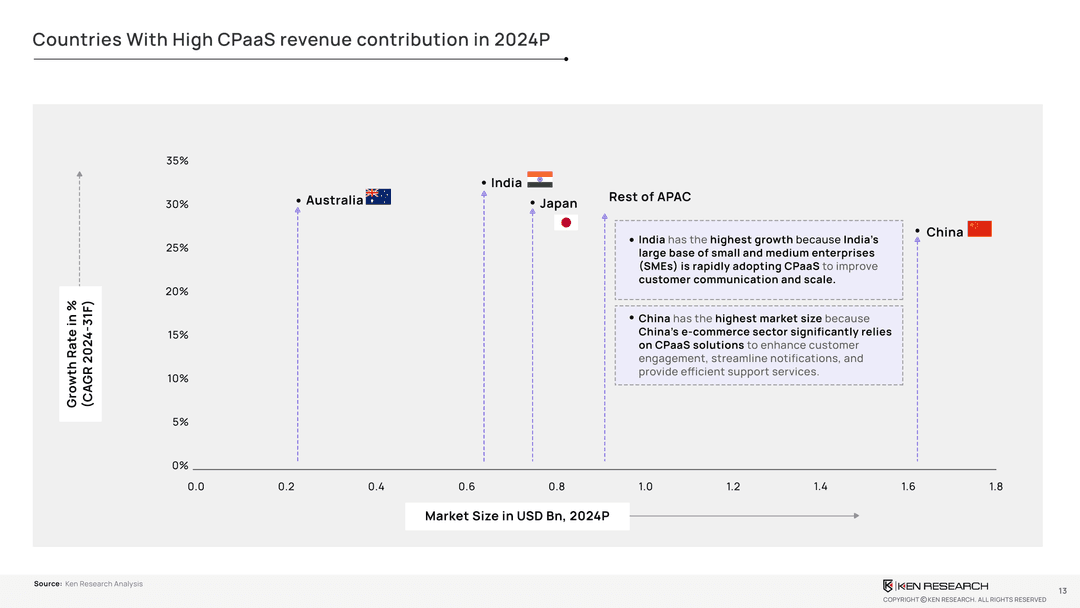
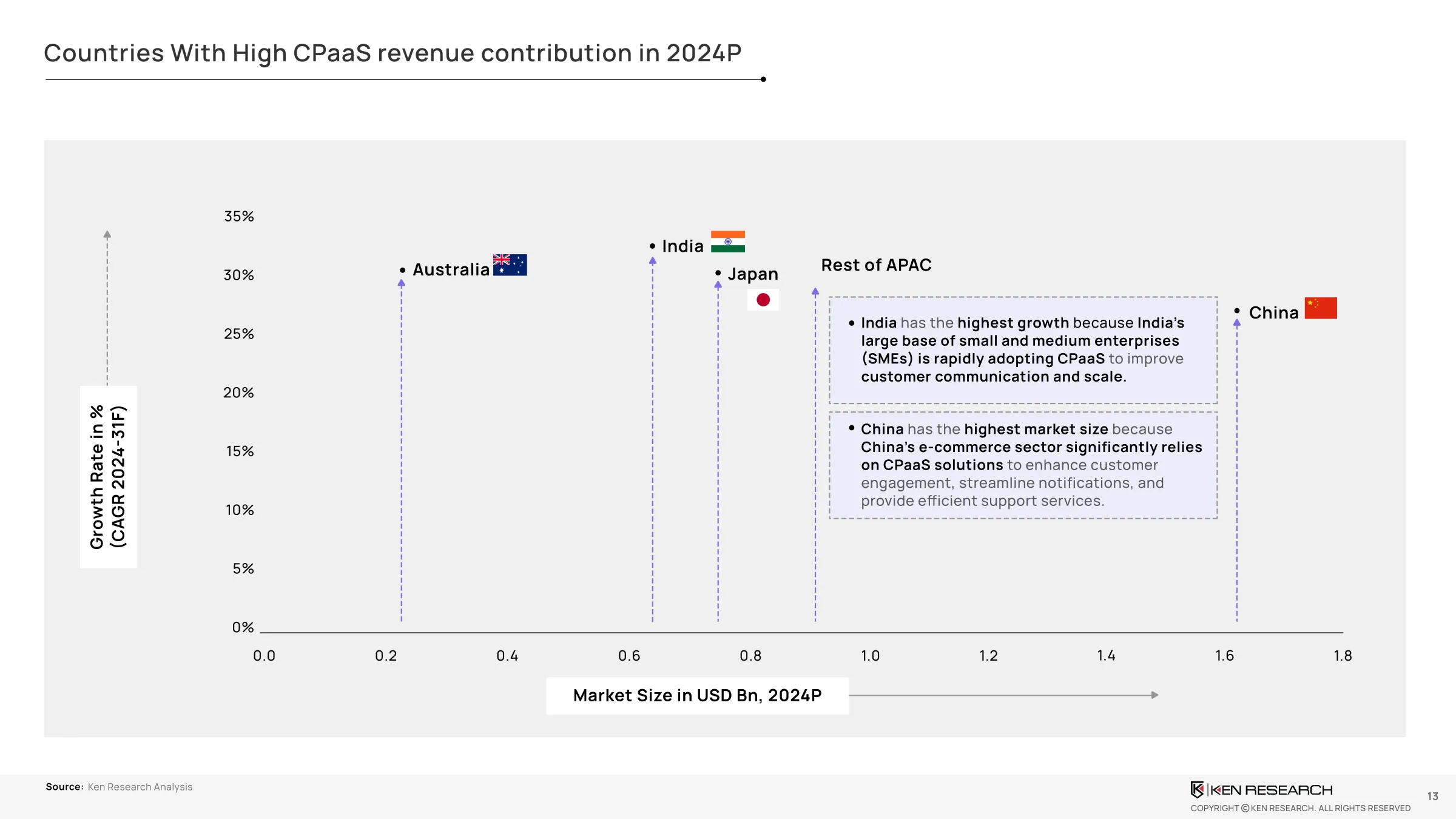
- Indiais the fastest-growing, with ~38% CAGR, driven by fintech and SME SaaS adoption
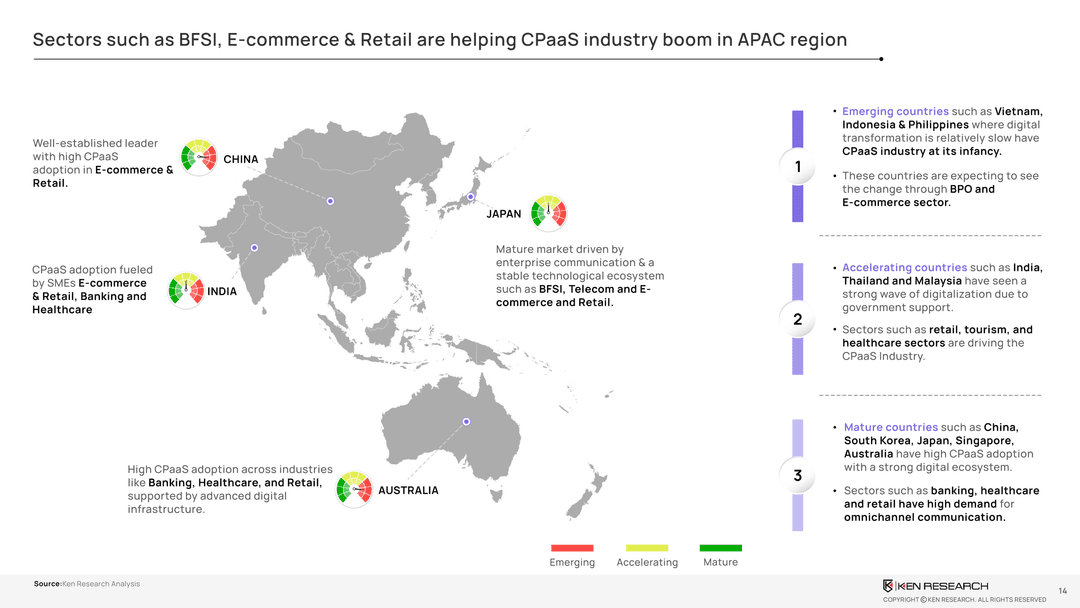
- Southeast Asiahas latent demand due to high mobile penetration and low CX tech maturity
Access Market Sizing by Country, Vertical, and Use Case for 2024–2031
Country Highlights – CPaaS Landscape by Region
Download Country Benchmark Deck with Regulatory Maps & Growth Indicators
Top CPaaS Use Cases in APAC
Access Use Case Sheets with KPIs and Sample Architectures
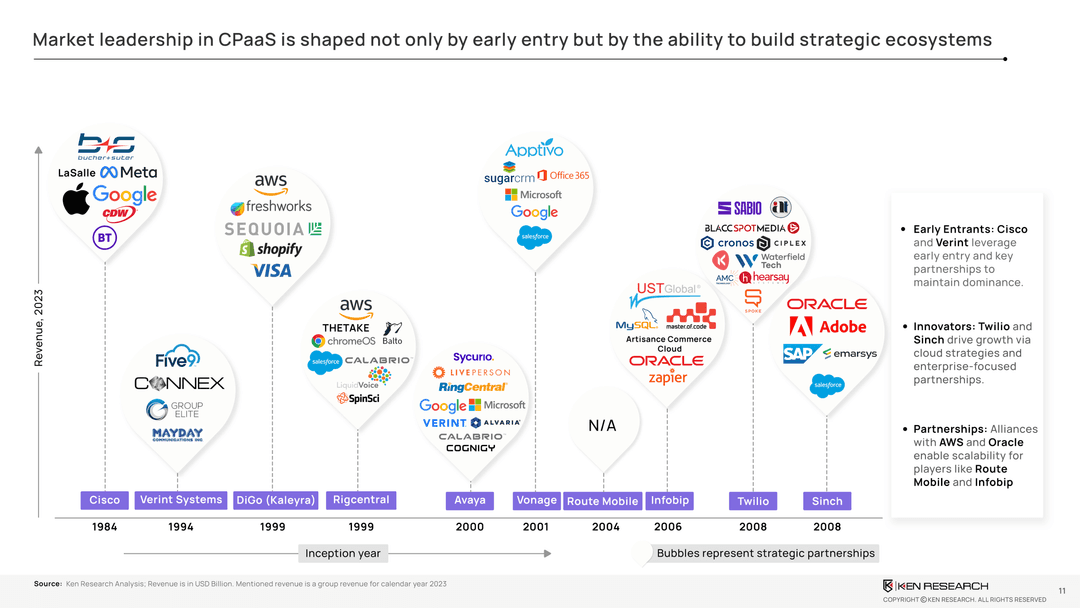
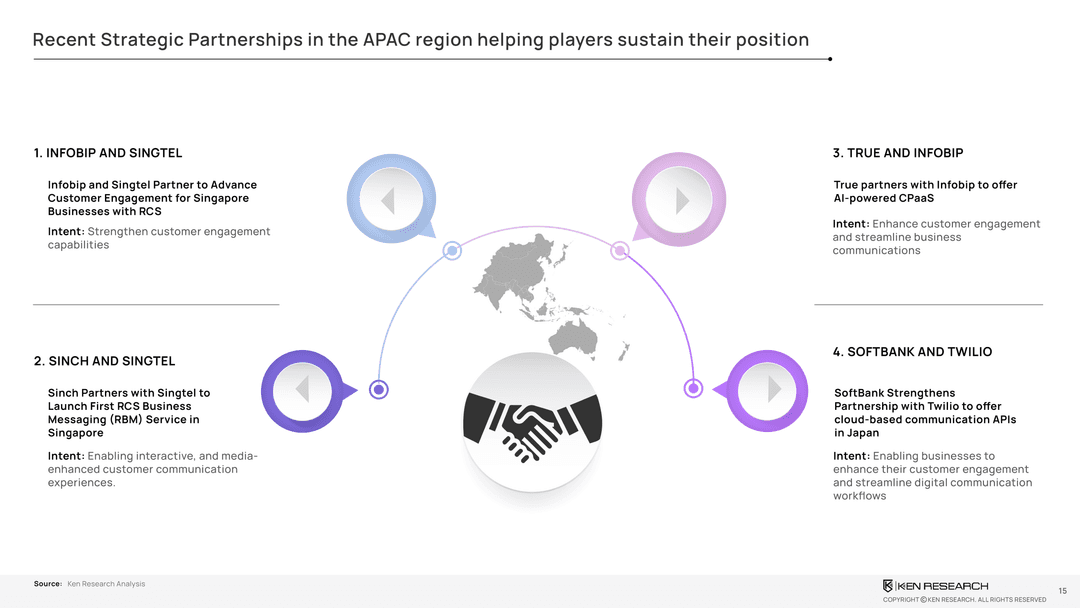
Partnership Strategies That Unlock CPaaS Scale
- Sinch + Singtel: CPaaS on 5G, rolled out RCS and WhatsApp for enterprise
- Infobip + Globe Telecom: CPaaS for Filipino SMEs with AI voice bots
- Twilio + SoftBank: Telco-led CPaaS for compliance-first enterprises
- True + Route Mobile: Layered CPaaS + CCaaS stack for BFSI in Thailand
Review Strategic Partnership Tracker and Deployment Impact by Region
Competitive Landscape – Player Comparison & Positioning
Download APAC CPaaS Market Map and Strategic Comparison Grid
CPaaS AS AN INFRASTRUCTURE PILLAR FOR 2024–2031
CPaaS is more than a messaging API—it is the programmable interface of enterprise-customer interaction. In APAC, where real-time, secure, mobile communication defines the customer journey, CPaaS adoption will define who leads digital CX over the next decade.
Download the Full Strategic CPaaS POV for 2024–2031 Planning & Execution
FAQ's
Still Got Questions? Connect Via Mail
What is the size of the APAC CPaaS market by 2031?
Estimated at USD 26B, growing ~6x from 2024.
What differentiates CPaaS from CCaaS or UCaaS?
CPaaS embeds programmable comms into apps. CCaaS/UCaaS are managed platforms for agent-based contact.
What is the ROI timeline for CPaaS deployment?
9–15 months for measurable ROI via churn reduction, CSAT improvement, and automation.
How do I prioritize CPaaS use cases?
Start with high-volume flows (e.g., SMS, IVR), then integrate AI chat, analytics, and loyalty triggers.