














APAC Clinical Labs: Capturing the $53 Billion Diagnostics Boom
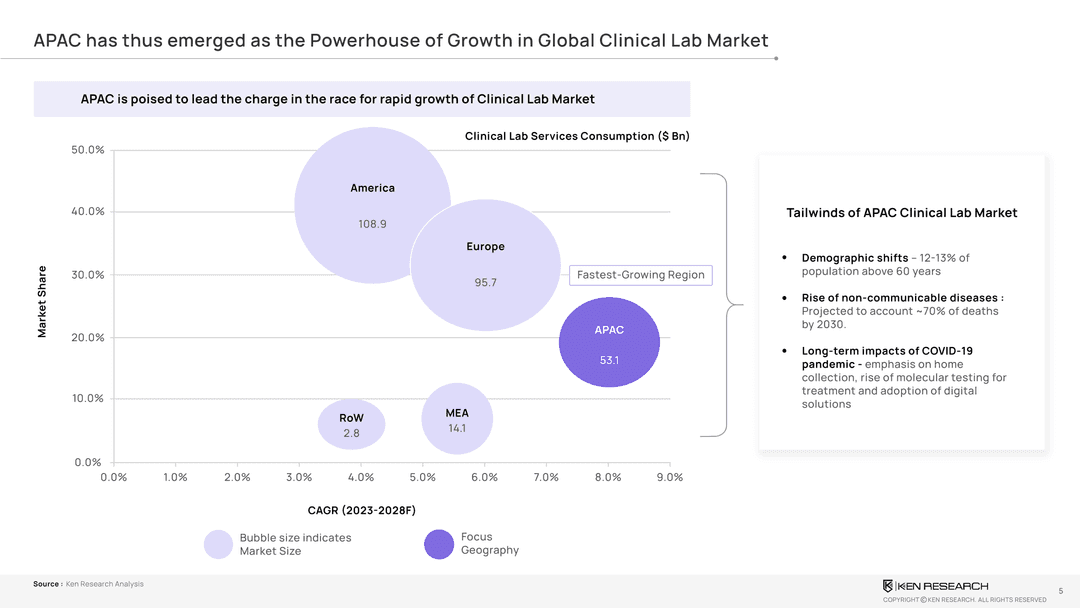
The Asia-Pacific clinical lab diagnostics market is transforming into the global growth hub, driven by affordability, and rising NCD burdens.



Built For Leaders Across
- CXOs and strategists in diagnostic chains, hospital systems, and health platforms
- Investors and PE/VC funds evaluating lab-based healthcare, AI pathology, and M&A plays
- Policy leaders and public health planners building national diagnostics infrastructure
- Healthtech and diagnostics innovators targeting underserved and emerging markets
Access Growth Forecast Tools, Segment Prioritization Models, and Regional Heatmaps
EXECUTIVE SUMMARY
APAC’s diagnostics infrastructure is underpenetrated but highly agile. With aging populations, chronic disease burdens, and increasing self-diagnostics, the region is leapfrogging into tech-integrated lab systems. While APAC records far lower test volumes per capita than developed markets, its acceleration is exponential.
Key Statistics:
- Market expected to grow from current size toUSD 53.1 billion by 2028
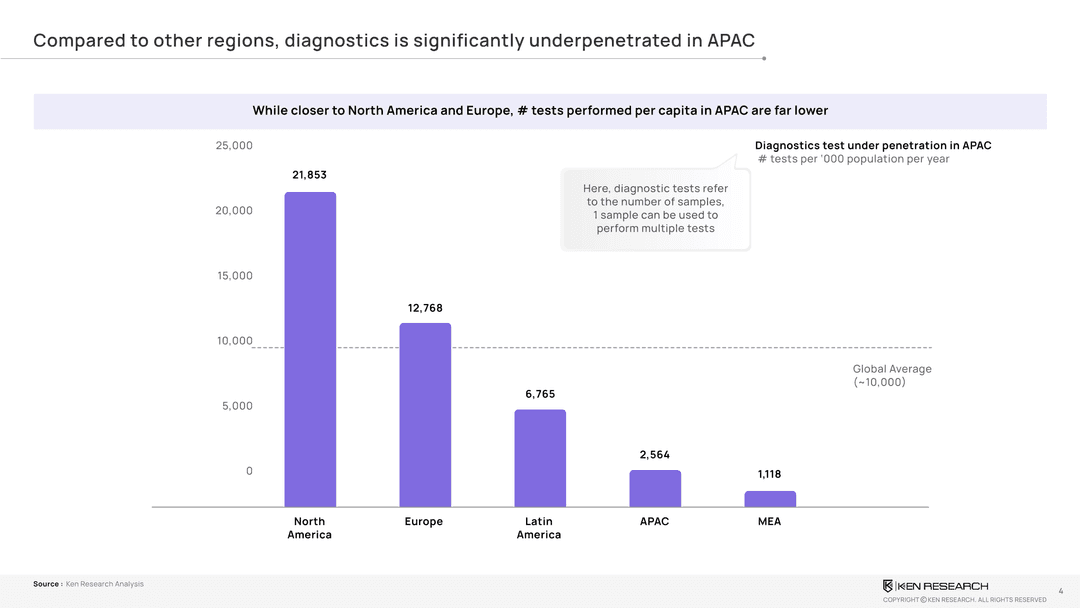
- Test penetrationremains at ~2564 per 1,000 people (vs. 21,853 in North America)
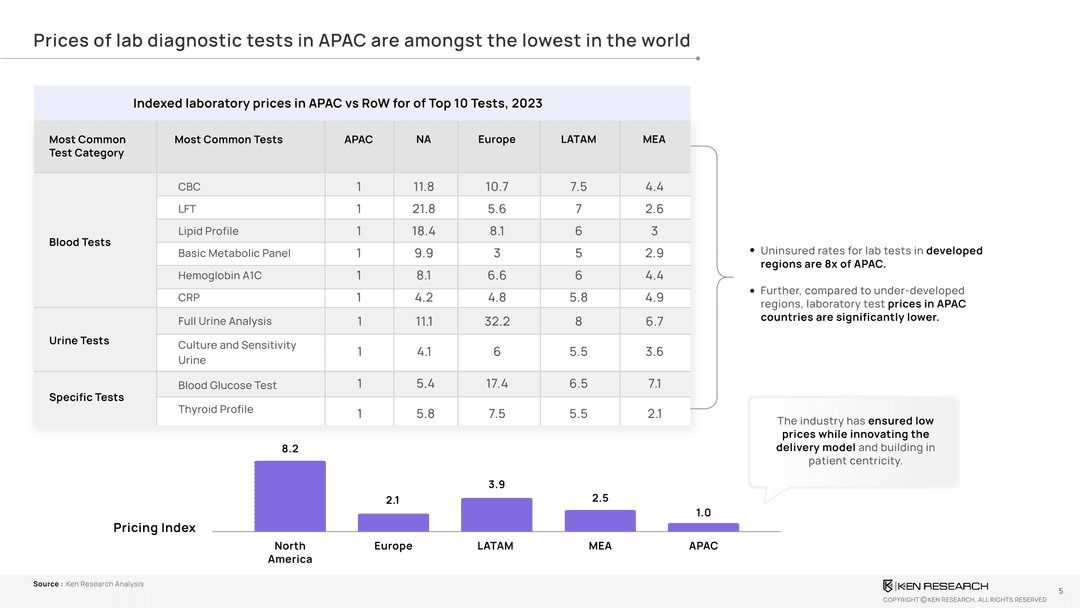
- Diagnostics in APAC cost40–60% lessthan global averages
- Uninsured test rates in developed countries are8x higherthan in APAC
- By 2030,~70% of deathsin the region are projected to be due to NCDs
- 12–13%of the population in APAC is now aged 60+, demanding more frequent longitudinal diagnostics
Explore Full Market Size Sheets and Regional Age Index Overlays
MARKET SNAPSHOT – DEMAND AND DELIVERY GAPS
The average number of lab tests per 1,000 people is:
- North America:21,853
- Europe:12,768
- APAC: 2564(among the lowest globally)
However, this under penetration reveals immense upside potential, driven by:
- Affordability: Indexed pricing in APAC is significantly lower
- Rising chronic disease diagnostics demand (diabetes, cardiovascular, cancer)
- Self-initiated and preventive diagnostics growing post-COVID
This latent demand has created a landscape where even mid-tier cities are seeing double-digit test volume growth, particularly where digital and franchise-based models exist.
Download Indexed Test Price Tracker + Volume Gap Matrix by Country
DELIVERY MODELS – NATIONAL CHAINS, HOSPITAL LABS, INDEPENDENTS
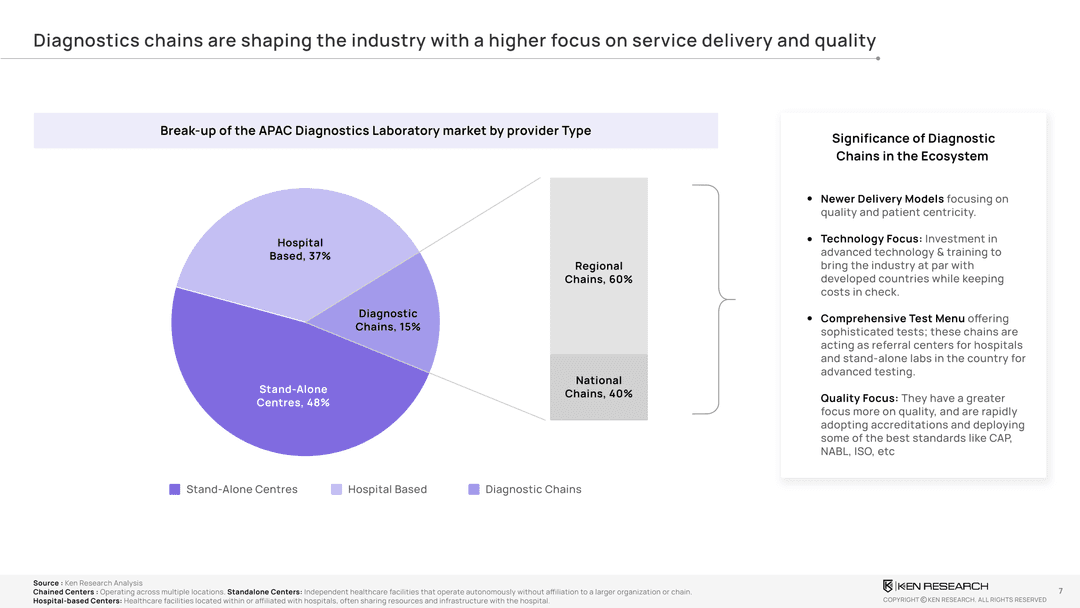
APAC’s lab providers fall under three broad categories:
- National Chains– Invested in tech, branding, and logistics integration
- Hospital Labs– Strong in standardization, trust, and shared infra models
- Standalone Independents– Flexible, hyperlocal, often franchise-run
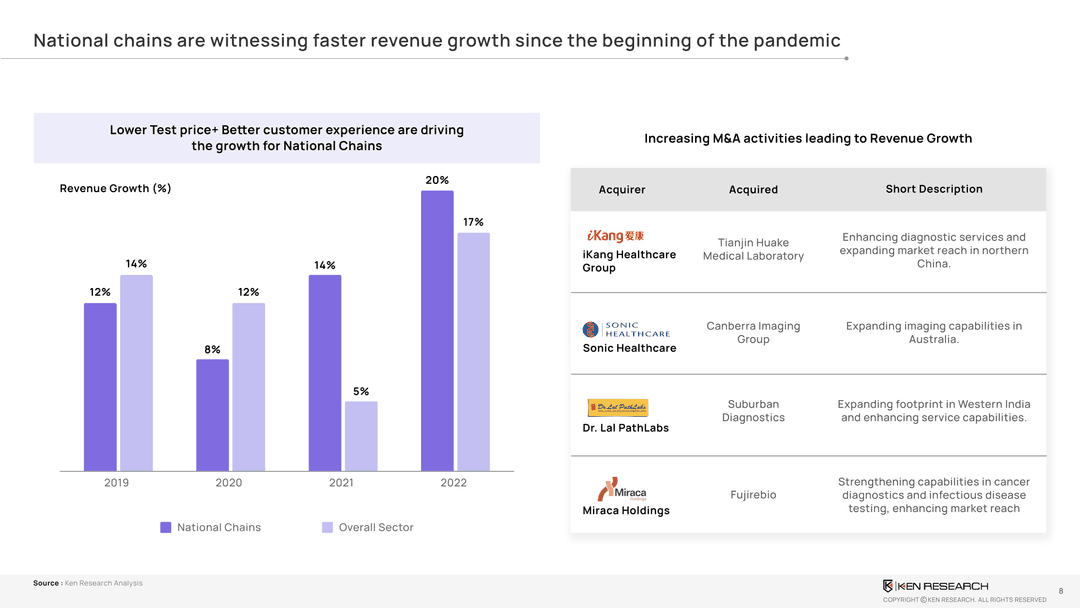
Chains are gaining share due to:
- Wider test menus (including genetics, panels, and wellness bundling)
- Customer experience leadership (WhatsApp reporting, real-time updates)
- Accreditations like NABL, CAP, ISO, which boost confidence and B2B uptake
Access Lab Format Comparison + Accreditations Penetration Table
PATIENT EXPERIENCE & DIGITAL TRANSFORMATION
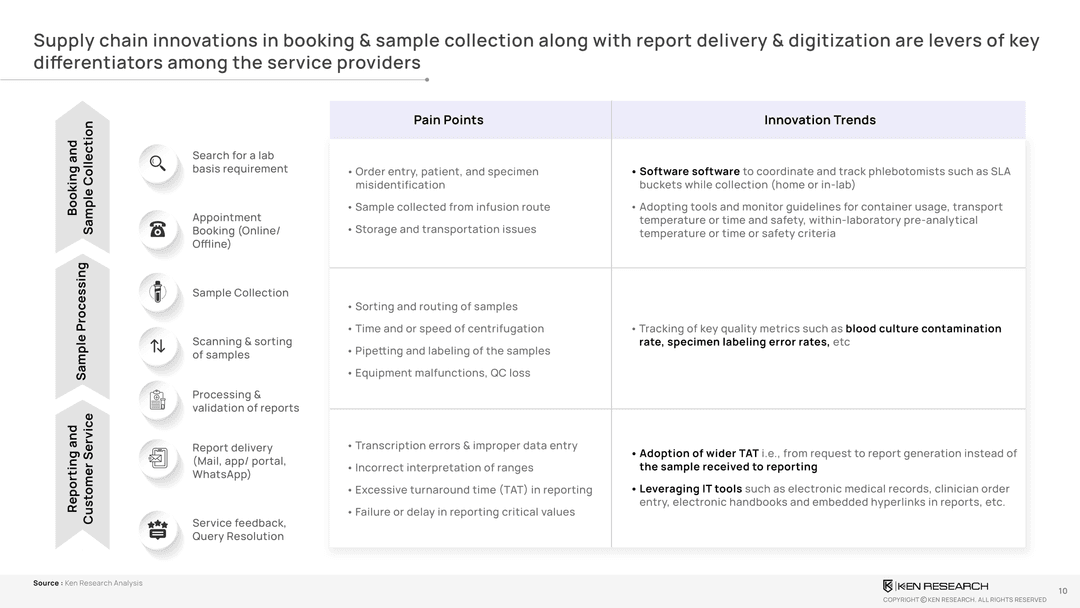
Post-pandemic trends have revolutionized service expectations:
- Online test booking with time-slot based collection
- Home sample collection—now a norm, not a premium
- Digital reporting via email, apps, and WhatsApp—reducing TAT perception gaps
- Delivery management software for logistics routing and phlebo performance
- Integrated CRM & patient communication tools that improve retention
Patient engagement models in APAC now rival Western standards—at a fraction of cost.
Download Patient Journey Mapping Toolkit + CX Adoption Benchmarks
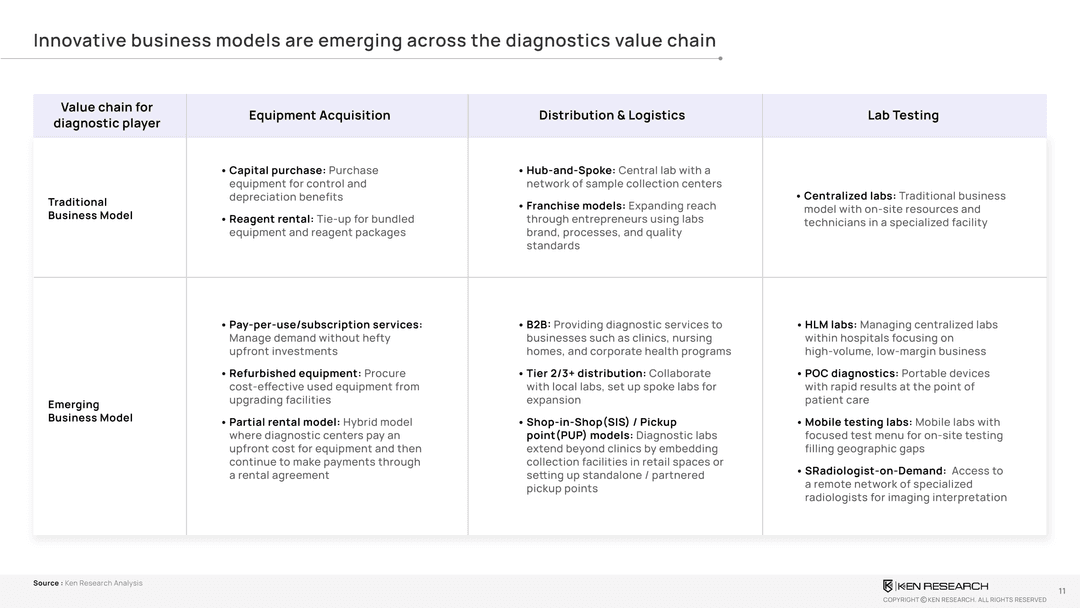
BUSINESS MODELS – TRANSFORMING THE DIAGNOSTIC VALUE CHAIN
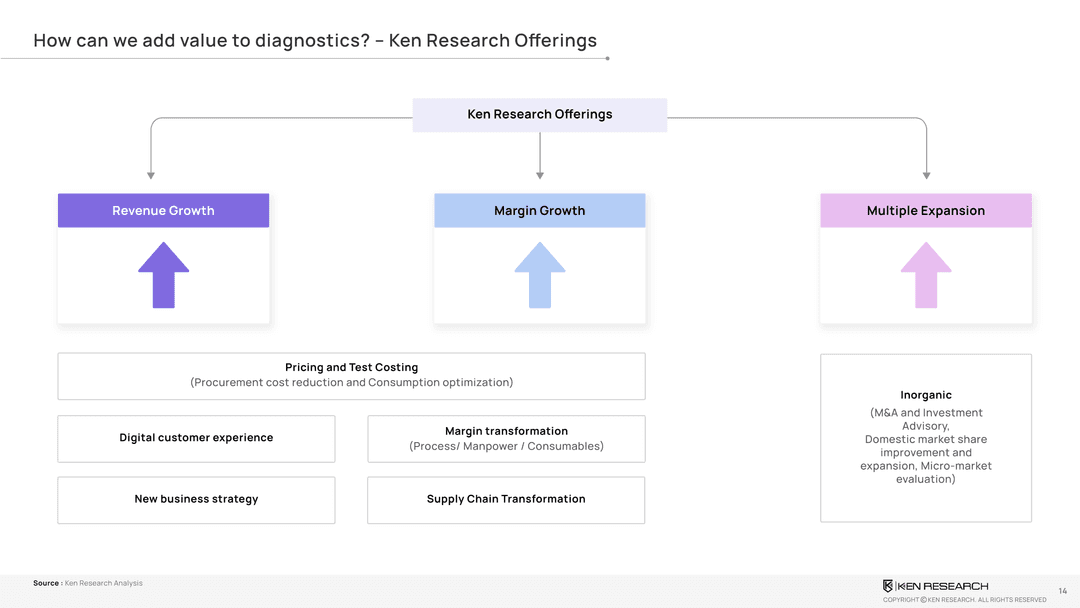
Levers being deployed by market leaders:
- Franchise and asset-light models to expand in Tier 2/3 cities
- Network optimization using AI and routing algorithms to reduce sample loss
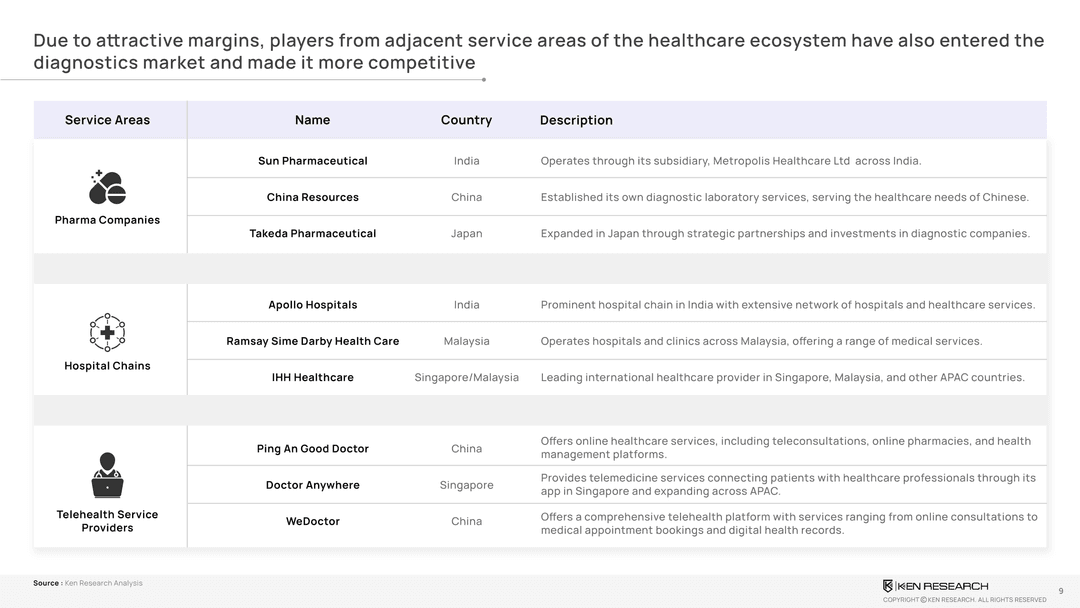
- Adjacency expansion: teleconsultation, teleradiology, telepathology
- Inorganic expansion: chains acquiring regional brands or digital labs
- Wellness bundling: diagnostic packages combined with chronic care programs
Operational excellence is becoming a differentiator, not just market presence.
Access Growth Playbook by Format + M&A Opportunity Grid
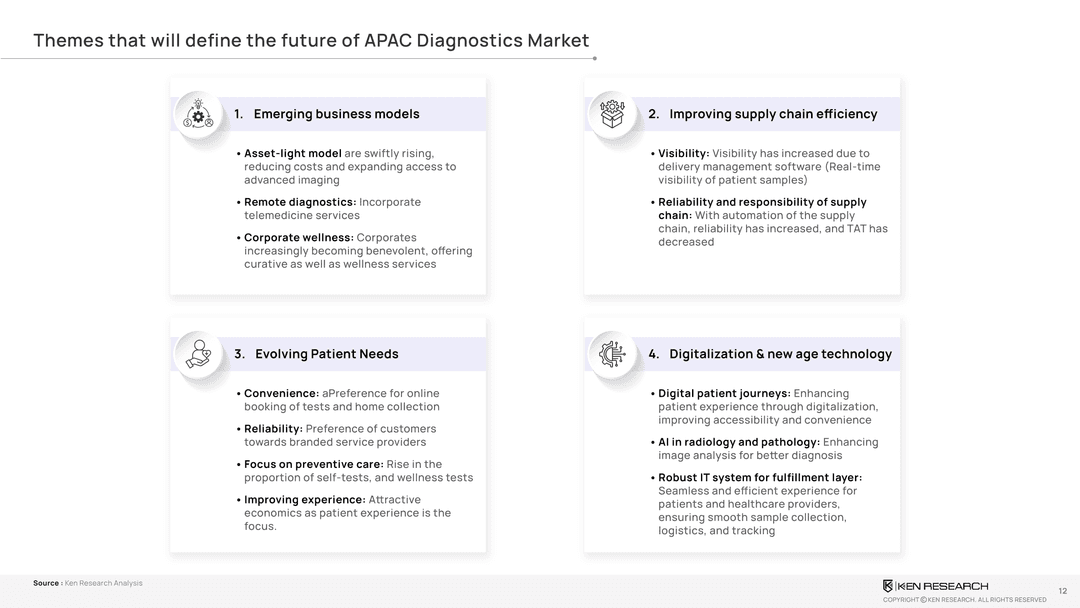
TECHNOLOGY ADOPTION – ENABLING SCALABLE DIAGNOSTICS
From back-end processing to front-end UX, technology is transforming diagnostics:
- AI in radiology and histopathology: accelerating interpretation and accuracy
- Real-time visibility of sample collection, transit, processing, and reporting
- Integrated lab IT infrastructure: managing bookings, payments, inventory, and data
- Patient engagement tools: reminders, feedback, loyalty programs
- Operational dashboards: enabling lab heads to track TAT, QC, and SLA performance daily
Explore LabTech Use Case Sheets + Deployment Maturity Models
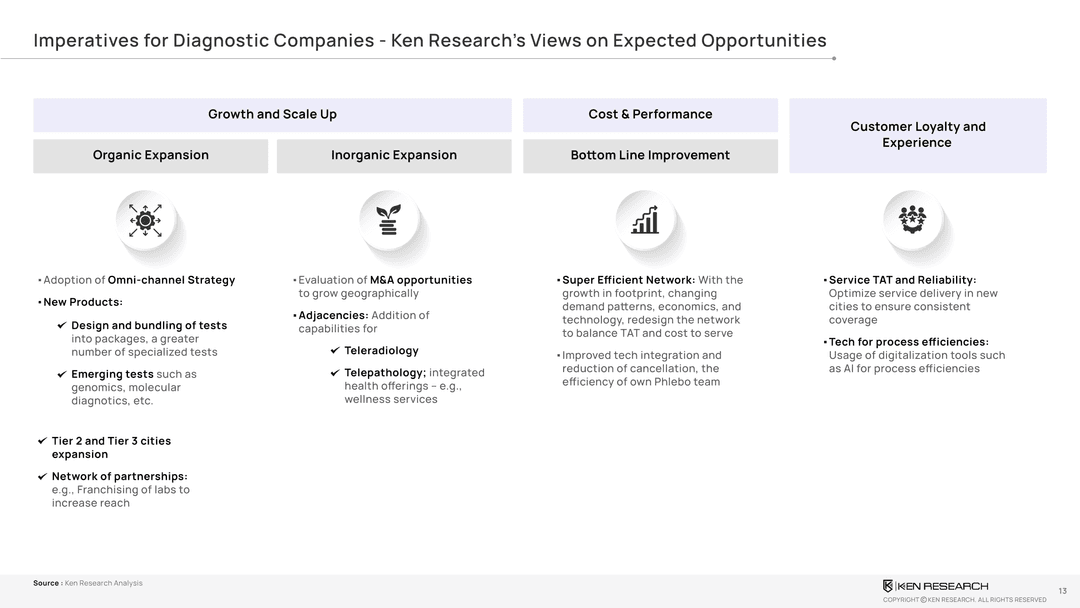
STRATEGIC IMPERATIVES – WHAT LABS AND INVESTORS MUST DO
- Prioritize patient-centricity through digital experience layers
- Scale multi-location networks using asset-light partnerships
- Deploy tech infrastructure across entire value chain (phlebo to report)
- Invest in chronic disease bundling (NCDs to drive >70% diagnostic load)
- Adopt real-time logistics & performance tracking for cost-efficiency
Access Strategic Action Grid + KPI Dashboard for Lab Operations
FAQ's
Still Got Questions? Connect Via Mail
Why is APAC the most attractive diagnostics market in 2024–2028?
Because of affordability, low test penetration, chronic disease surge, aging population, and digitally maturing customer base
What’s the test volume gap between APAC and the West?
APAC: ~6,765 per 1,000; North America: ~21,853 per 1,000
Which provider format is scaling fastest?
National chains due to integrated IT, logistics, and quality standardization
What’s the role of technology in this transformation?
End-to-end digitization across booking, sample collection, logistics, and reporting
How should stakeholders approach Tier 2/3 cities?
Franchise + hub-and-spoke + digital-first models with mobile phlebo capacity