What Is Driving the Market?
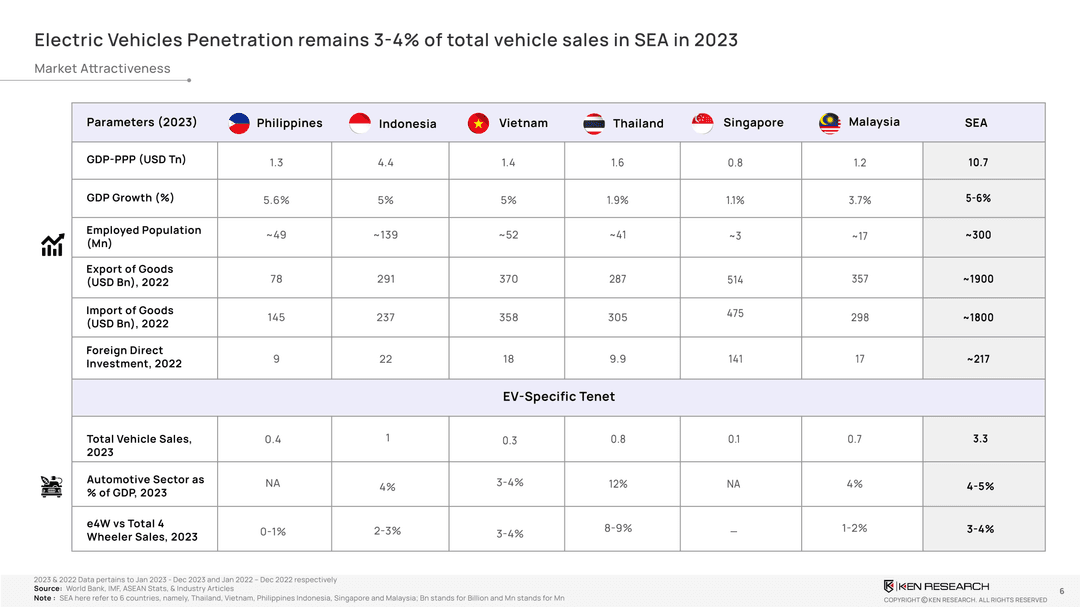
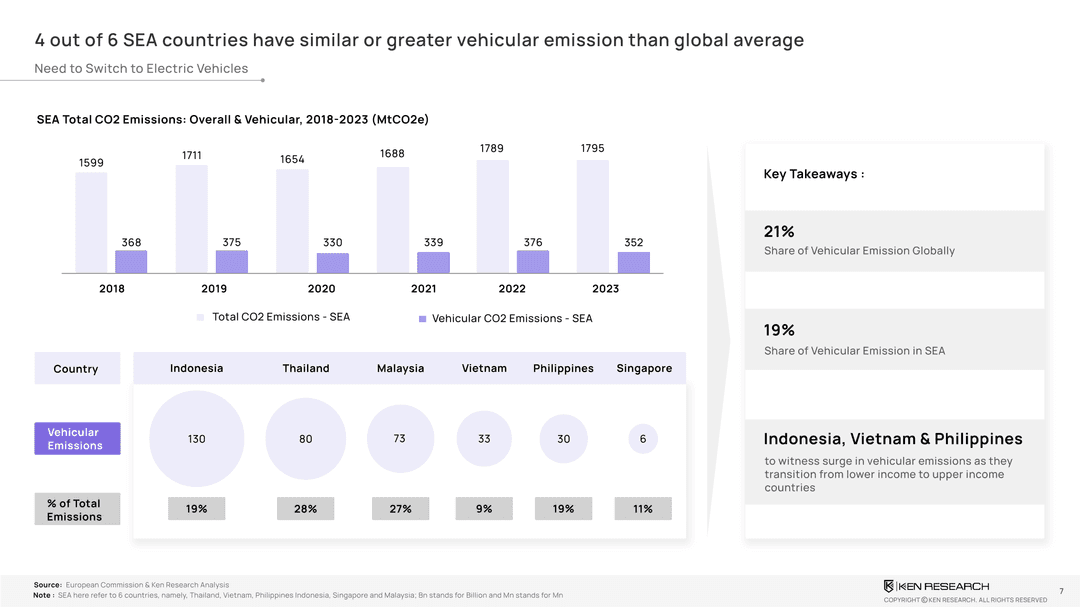
- Demand-Side Trends:Rising vehicular emissions, 19% of total emissions in SEA, are propelling regulatory urgency and consumer awareness. A growing middle class is demanding cost-efficient, eco-friendly alternatives. Price sensitivity is high, but EV demand continues to rise with increased awareness and subsidies.
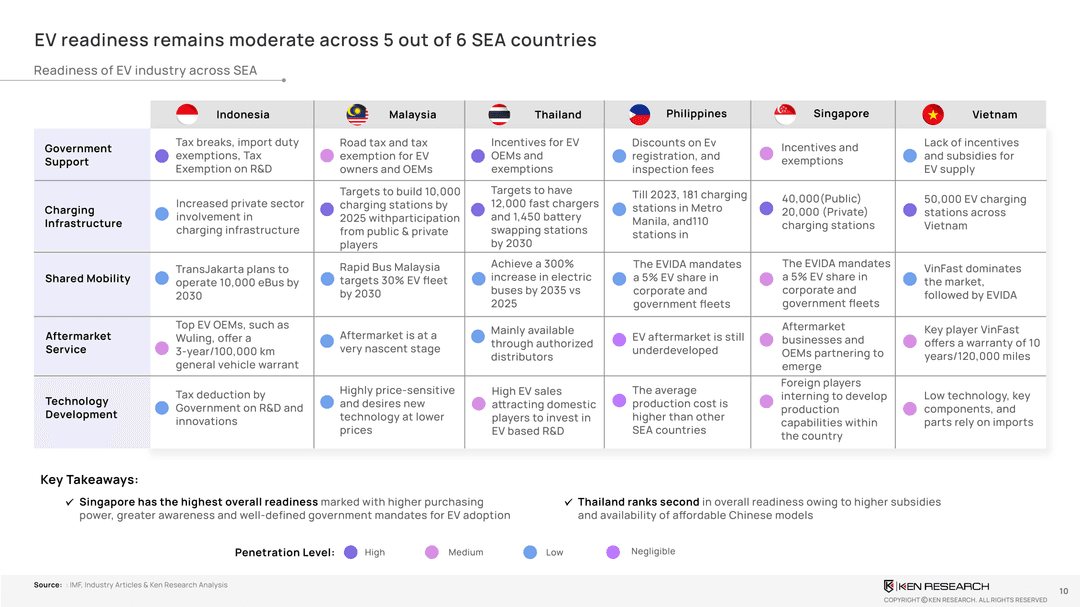
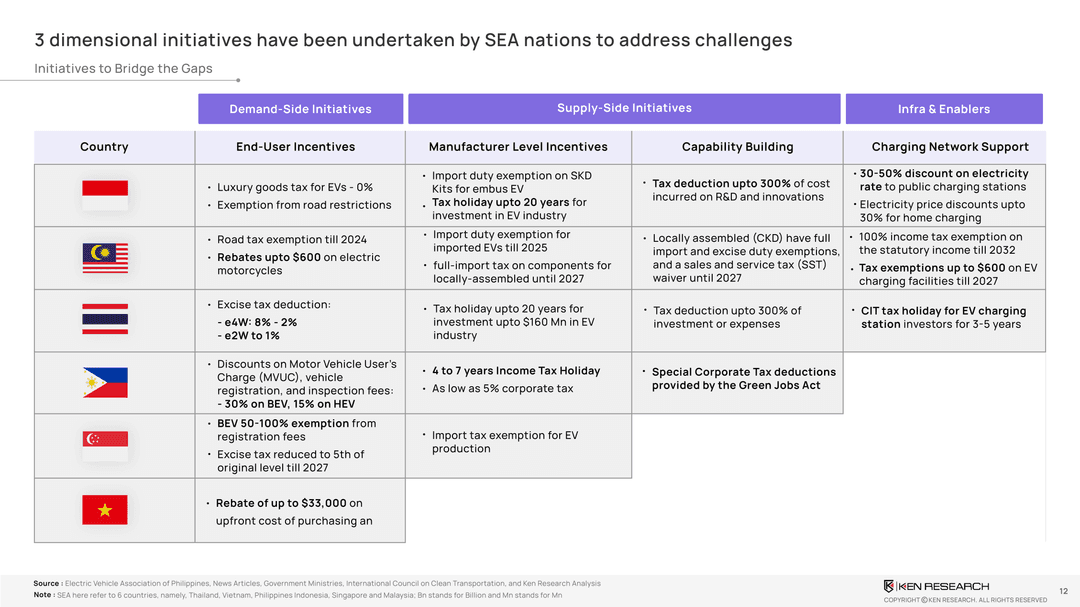
- Governmental Support:National governments are implementing aggressive policies.Thailand offers subsidies and tax breaks, while Singapore provides road tax exemptions and mandates for EV adoption in public fleets. Vietnam and the Philippines are investing in localized incentives and EV fleet requirements.
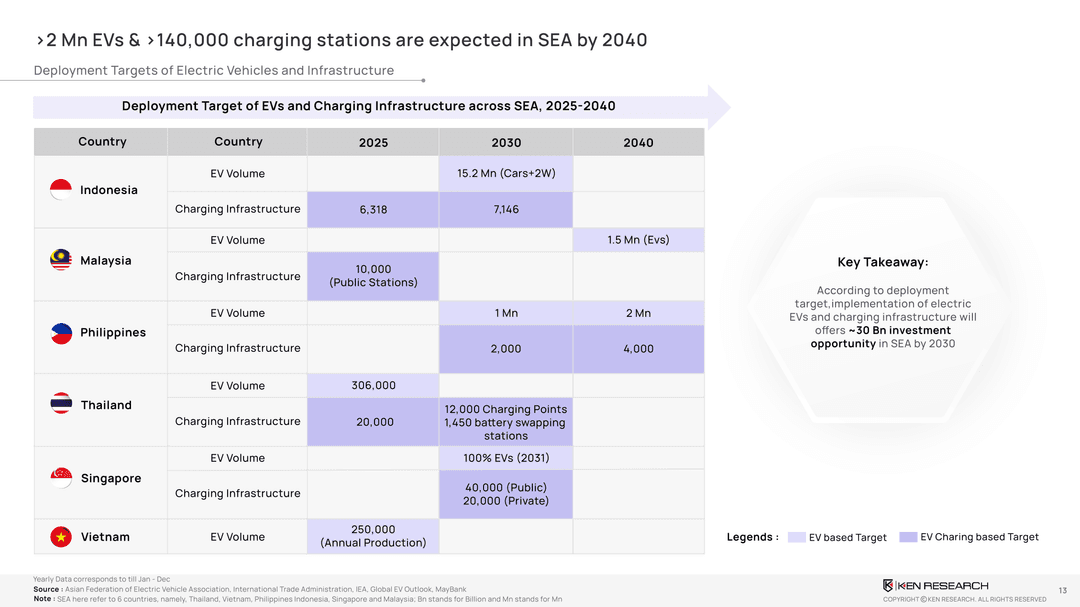
- Private Sector Involvement:Major OEMs (Wuling, Mitsubishi, VinFast, Honda) are expanding their footprint, and Chinese firms dominate the 2W segment. Battery and charging station providers are gaining traction, with over 40,000 public and private charging stations projected across SEA by 2030.
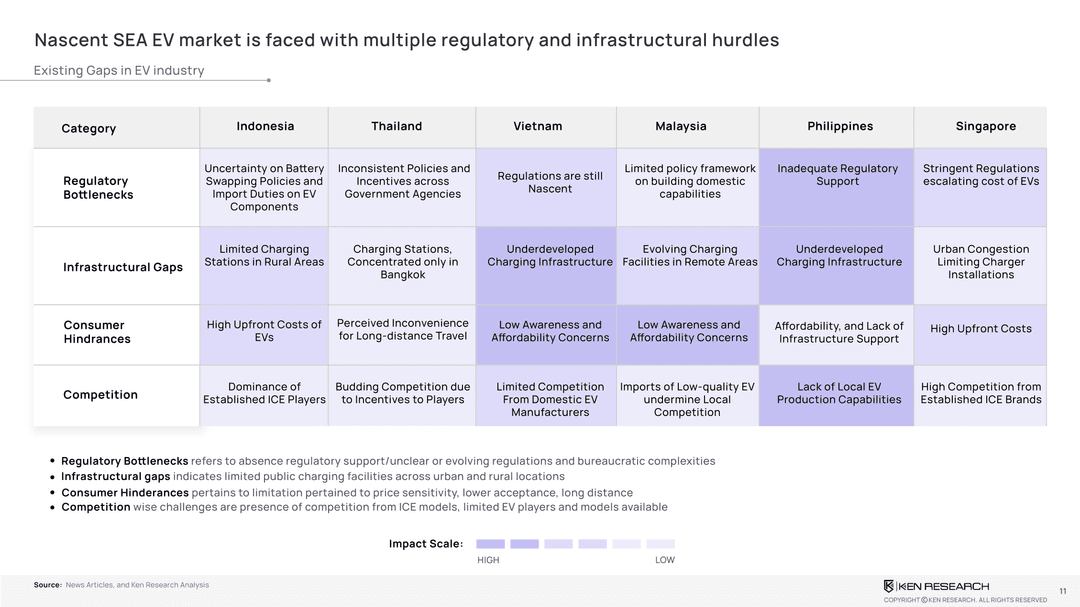
EV Adoption Barriers Across SEA Markets
- Infrastructural Deficiencies:Most SEA countries face limited public charging infrastructure, especially in semi-urban and rural regions. Battery swapping systems and fast-charging stations are in the early development stages.
- Regulatory Complexity:Some nations have unclear or evolving EV frameworks, causing delays in private sector rollout. Standardization of regulations across the region is a key challenge.
- Aftermarket & Service Ecosystem:The aftermarket for EVs remains underdeveloped. There is a shortage of trained technicians, spare parts access, and organized service networks, critical to long-term user adoption.
- Consumer Barriers:EVs are often priced at a premium value. In several countries, ICE vehicles remain more affordable and readily available, limiting mass adoption despite environmental consciousness.
Current Ecosystem Composition
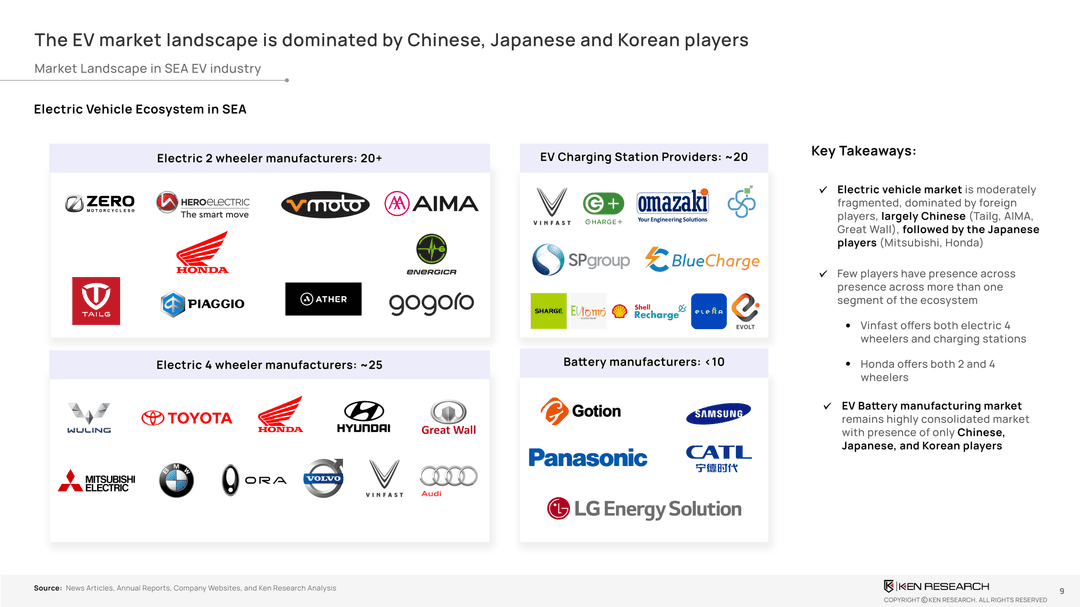
- Fragmented but Foreign-Led:The market is moderately fragmented, with over 25 EV OEMs and ~20 charging infrastructure providers. Chinese, Japanese, and Korean firms dominate, particularly in battery technology and vehicle supply chains.
- Multi-Segment Leaders:Players like VinFast and Honda operate across vehicle and charging verticals,while Wuling’s price-competitive EVs are expanding their reach. Few SEA-based players have achieved scale, opening white space for domestic OEM growth.

- Emerging Local Players:Rising domestic production interest is seen in Indonesia and Vietnam,driven by government-linked incentives. Production-linked schemes are encouraging local EV manufacturing capabilities.
Where to Invest in Market?
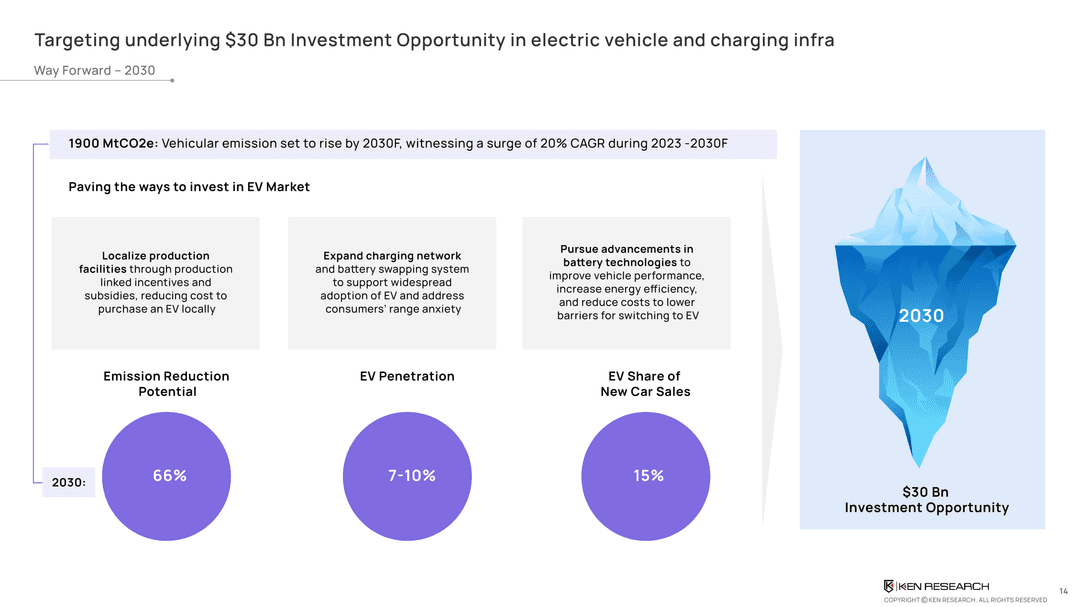
SEA electric vehicle marketrepresents a rare confluence of policy backing, market demand, and green investment appetite. With a projected USD 30 billion opportunity by 2030 across vehicles and infrastructure, early movers stand to benefit from shaping both ecosystem standards and consumer behavior.
Key investment hotspots include:
- Charging infrastructure and battery swapping solutions
- Localized EV manufacturing and assembly plants
- EV aftermarket service networks and technician skilling
- B2B and shared EV fleet deployment for delivery/logistics
Risk mitigation involves aligning with national EV roadmaps, partnering with government-licensed OEMs, and designing for region-specific pricing, climate, and road conditions.
What are the Strategic Recommendations?
For OEMs and Suppliers
- Localize assembly to qualify for import duty relief and reduce consumer prices
- Integrate verticals (vehicle + charging) to ensure ecosystem reliability
- Build price-sensitive product lines for 2W and commercial EV markets
For Investors
- Focus on EV infra: charging stations, battery leasing/swapping, and maintenance hubs
- Explore JV models with domestic automakers for market penetration
- Back R&D for affordable, high-performance battery alternatives
For Policymakers
- Standardize EV regulations across ASEAN to promote regional trade and manufacturing
- Invest in upskilling workforce for EV repair, diagnostics, and maintenance
- Incentivize start-ups focused on aftermarket, analytics, and last-mile delivery
What is Road Ahead for SEA’s EV Transition
SEA’s EV landscape is rapidly evolving from “nascent” to “emerging,” backed by demographic momentum, policy stimulus, and technological enablers. With the region’s vehicle emissions set to surge 20% by 2030 if unchecked, the shift to electric mobility is not just a market trend—it’s a climate imperative.
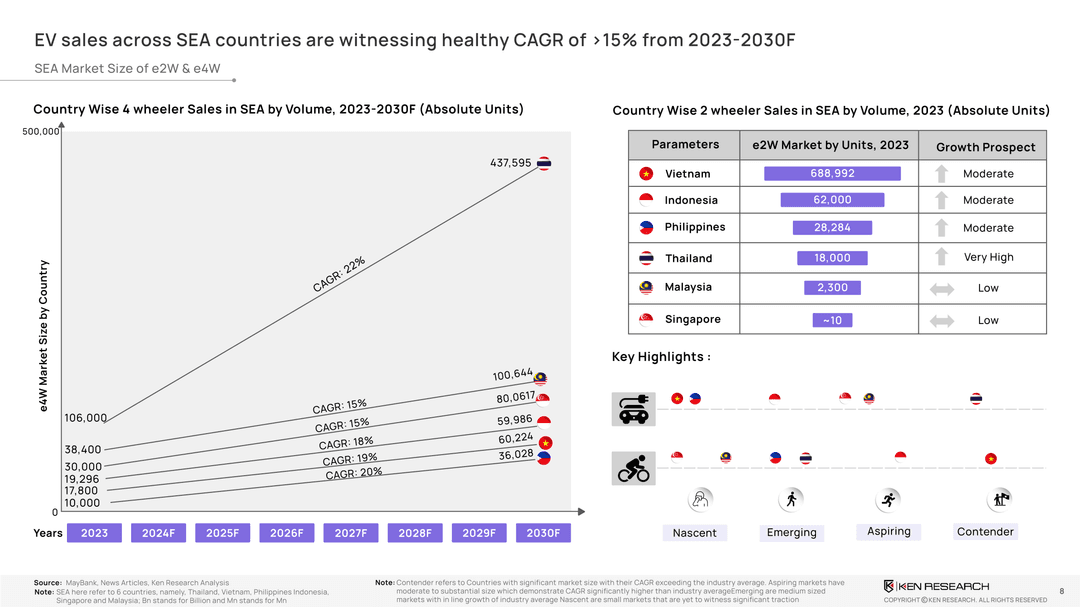
Stakeholders must act collaboratively to bridge infrastructure gaps, encourage affordability, and build localized value chains. With a clear path to 2 million EVs on the road and a 300% rise in electric buses by 2035, Southeast Asia is poised to become a vibrant hub for clean mobility innovation.