HR Tech Opportunities for Enterprises Shaping the Future of Work
What Are the Key Opportunities in HR Tech for Enterprises Globally?
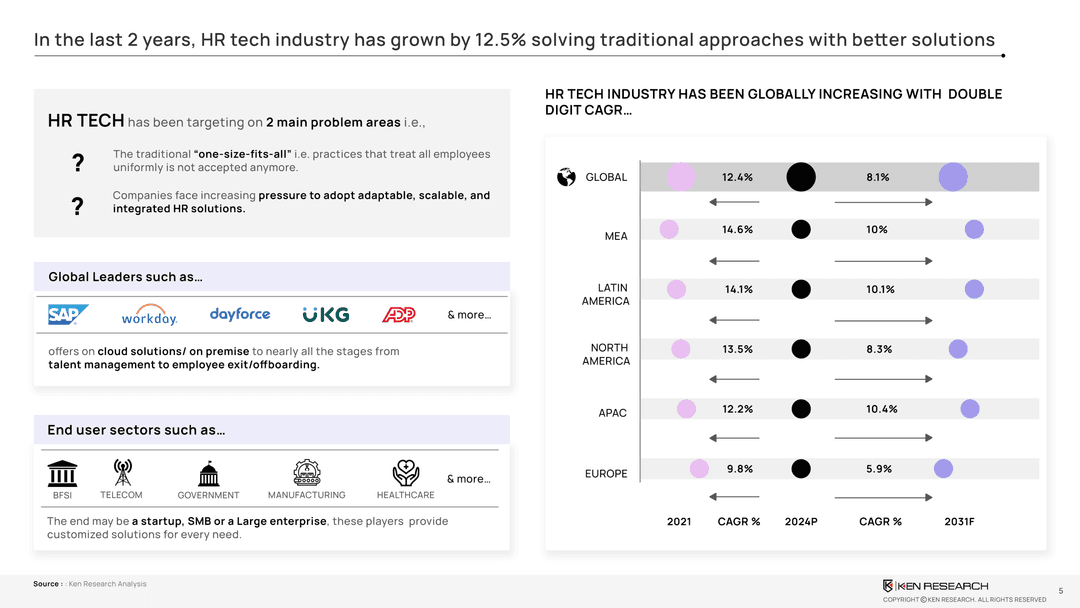
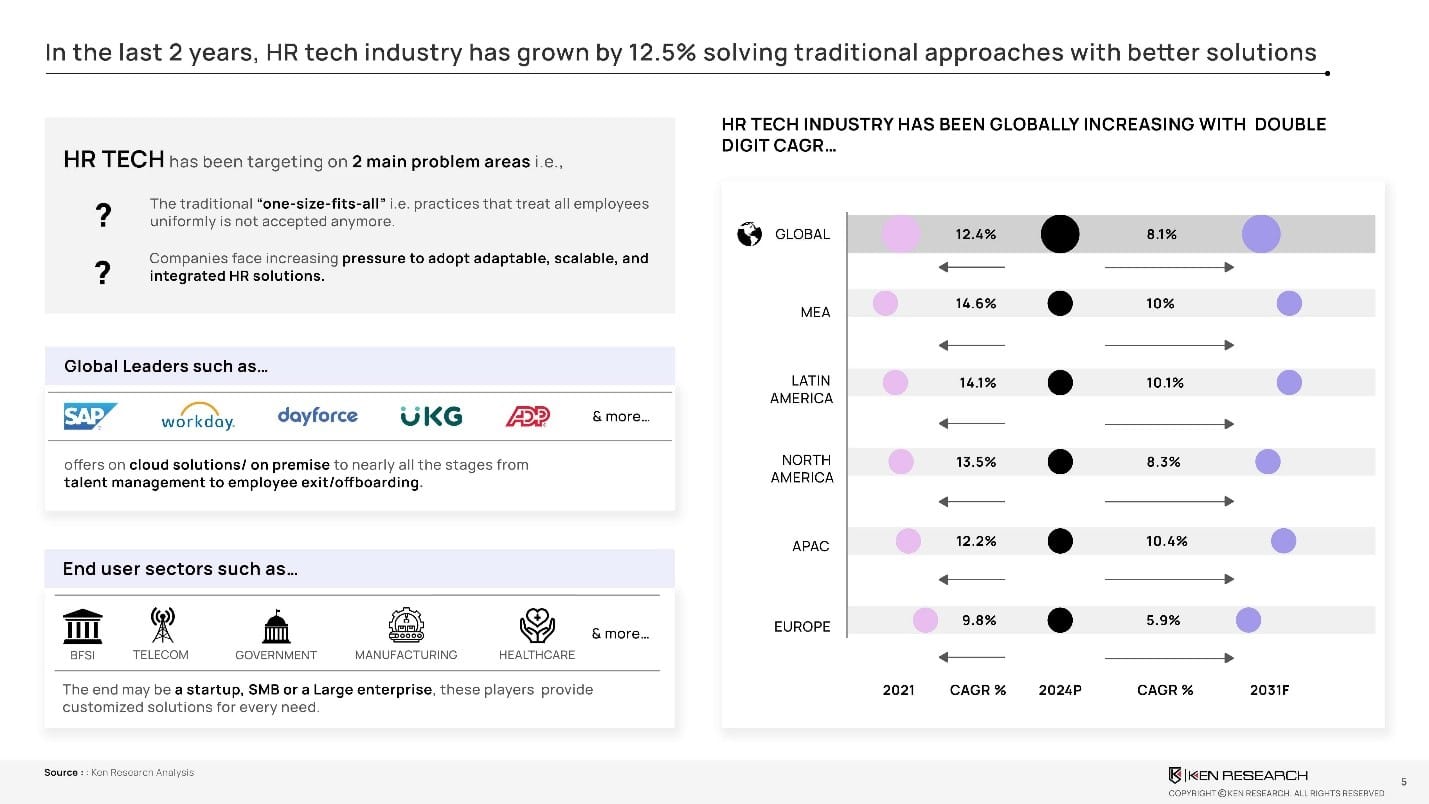
Theglobal HR Tech industryhas seen a 12.5% growth over the last two years, transitioning from legacy systems to scalable and integrated platforms that cover the entire employee lifecycle from hiring to exit. This shift is driven by the rise of hybrid work models, AI in recruitment, and growing emphasis on employee wellness and data security. As companies digitize HR operations, HR Tech is no longer a tactical upgrade but a strategic imperative to manage, inspire, and retain global talent.
Theglobal HR Tech industryhas seen a 12.5% growth over the last two years, transitioning from legacy systems to scalable and integrated platforms that cover the entire employee lifecycle from hiring to exit. This shift is driven by the rise of hybrid work models, AI in recruitment, and growing emphasis on employee wellness and data security. As companies digitize HR operations, HR Tech is no longer a tactical upgrade but a strategic imperative to manage, inspire, and retain global talent.
In the last 2 years, HR tech industry has grown by 12.5% solving traditional approaches with better solutions
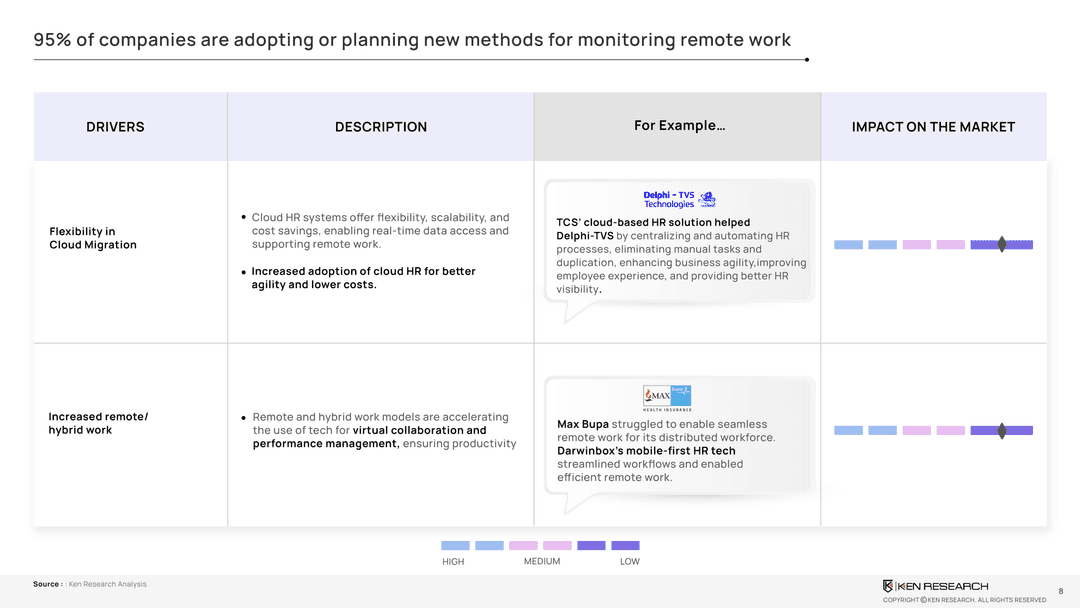
Demand-Side Trends:Companies worldwide are prioritizing remote work enablement, digital onboarding, and AI-led hiring processes.95% of firms have adopted hybrid models, requiring robust, real-time HR infrastructure to sustain productivity and engagement.
Enabling Technologies:Cloud-based HR suites, AI-powered applicant tracking, blockchain for secure payroll, and analytics for DEI insights are powering smarter, data-driven HR functions.
Regulatory Enablers:Heightened focus on data protection and compliance is pushing HR teams to adopt secure, integrated solutions that meet evolving legal standards.
Barriers and Blind Spots in Enterprise AI Readiness
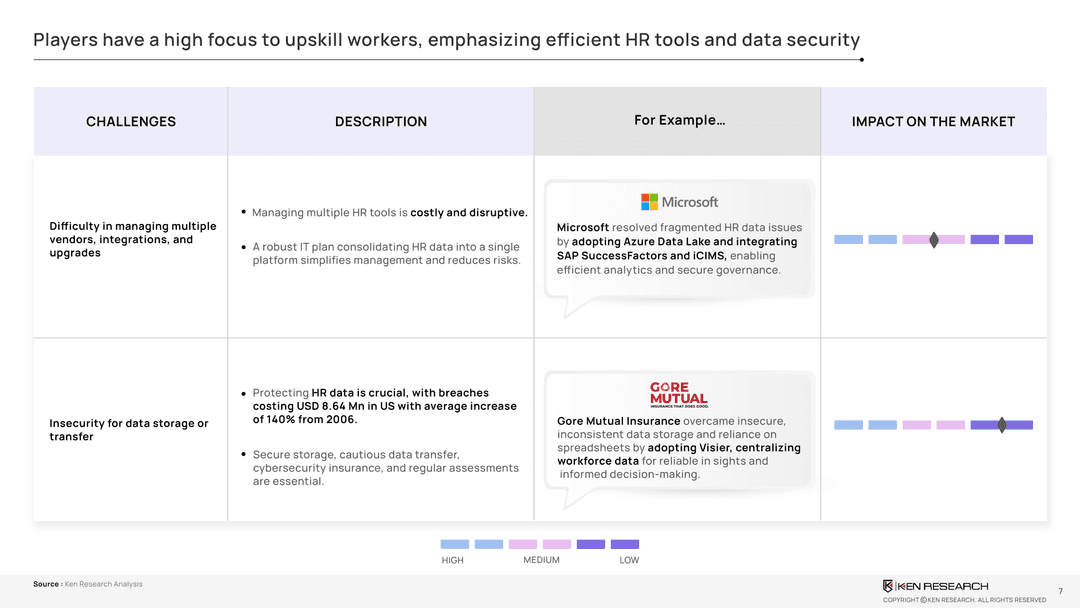
Tool Fragmentation Leads to Data Silos and Inefficiency:Many enterprises operate with isolated automation tools that do not communicate with each other, resulting in inconsistent data flows, duplicated efforts, and disjointed workflows. This fragmentation undermines the efficiency and coordination necessary for agentic systems to function effectively across departments.
Skill Readiness Is a Major Limiting Factor:Organizations often lack structured upskilling pathways to prepare their workforce for AI-integrated roles. Without continuous learning programs focused on digital literacy and agentic process design, employees struggle to manage or collaborate with intelligent systems.
Security Vulnerabilities Undermine Trust and Adoption:In the absence of robust governance, agentic platforms face heightened risks of data breaches and misuse.With average breach-related losses amounting to USD 8.64 million, enterprises need to enforce stricter access controls, audit trails, and cybersecurity protocols before scaling deployment.
Awareness Gap Prevents Full Utilization of Available Tools:Although comprehensive platforms like Workday and SuccessFactors offer end-to-end automation capabilities, many organizations still rely on legacy or manual systems. A lack of internal awareness and change management hinders the adoption of more integrated, modern solutions that can support agentic workflows.
Evolving Competitive Landscape in Agentic AI Adoption
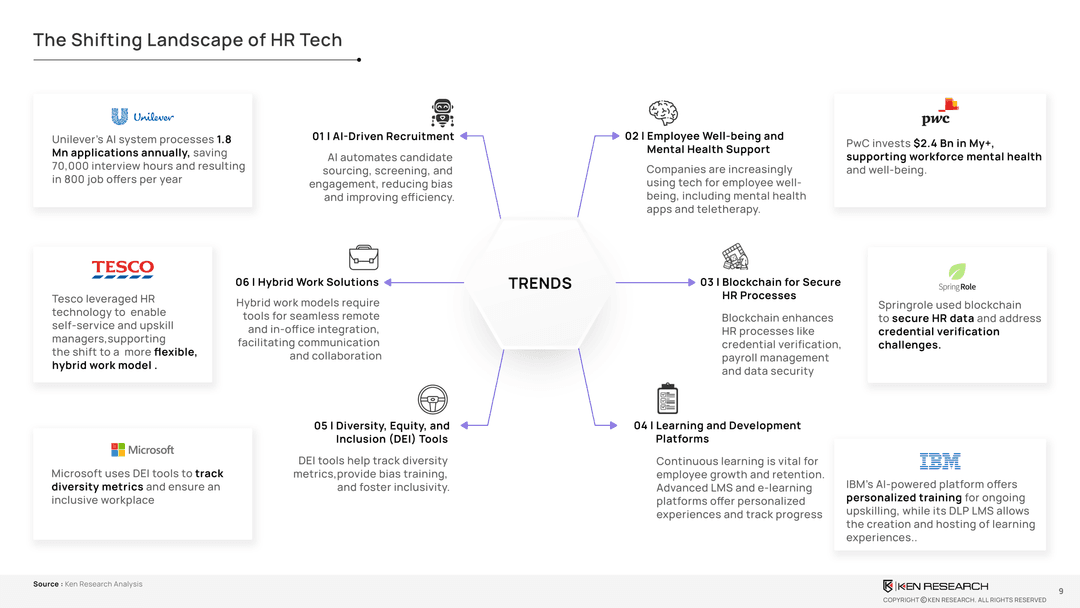
Innovative Players & Emerging Tech Patterns: Forward-looking platforms are leveraging emerging technologies to redefine enterprise workflows.Spring Role integrates blockchain to create tamper-proof payroll systems, while IBM deploys AI for personalized learning and development. Darwin box has gained traction with its mobile-first HR tech stack, successfully adopted by firms like Max Bupa, highlighting the growing demand for user-centric and intelligent HR systems.
Strategic Collaboration and Scaled Adoption:Large enterprises are embracing AI-led hiring to improve efficiency and experience.A prime example is Unilever, which screens over 1.8 million job applications annually using AI, resulting in a savings of 70,000 interview hours.This demonstrates how agentic tools are now central to achieving scalable and time-efficient talent acquisition.
Tailored Entry Models and Localization Strategies: Global HR tech platforms are increasingly adopting localized approaches to boost relevance and adoption.Solutions are being adapted to address region-specific needs such as DEI compliance, mental wellness, and language diversity. By aligning with local regulatory and cultural frameworks, providers are enhancing trust and usability across varied workforce demographics.
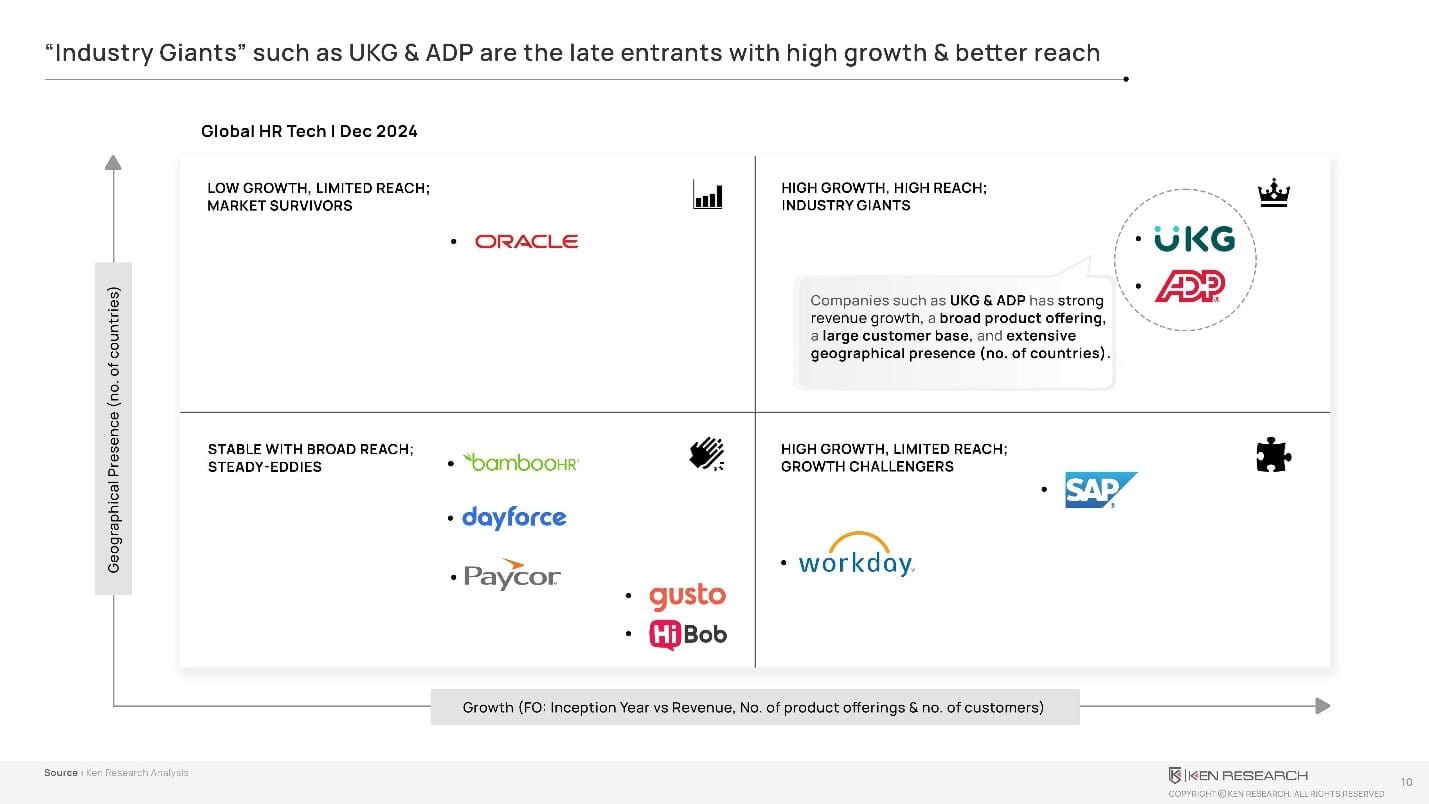
Industry Giants such as UKG & ADP are the late entraints with high growth & better reach
Strategic Investments Powering the Future of HR Technology
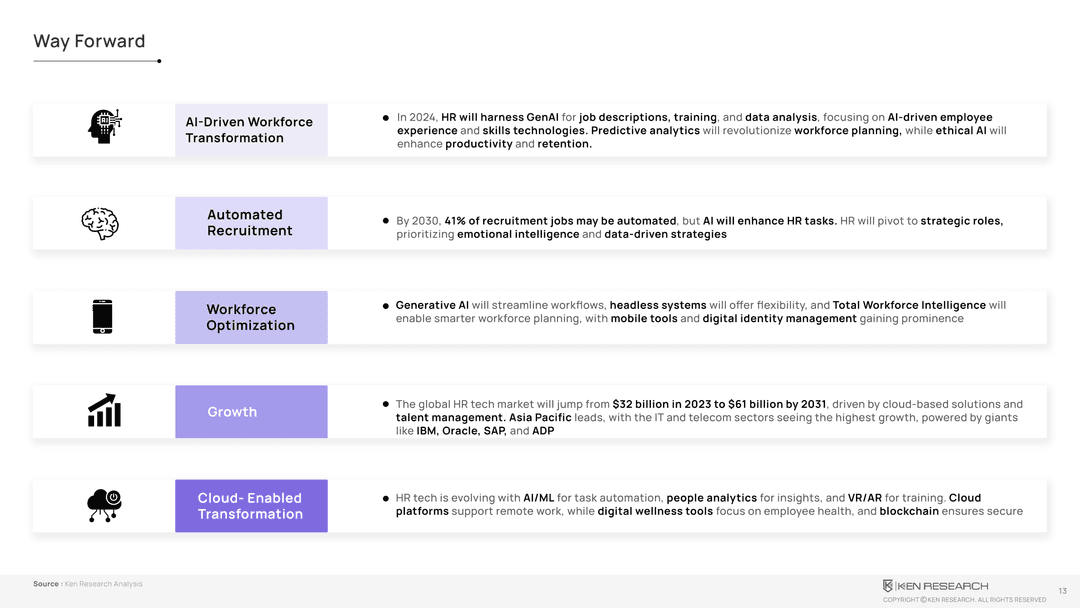
As HR Tech becomes core to enterprise transformation, early investments in AI-driven platforms offer long-term value. From intelligent onboarding to predictive analytics, digital-first strategies are enhancing agility, compliance, and employee experience. By integrating AI, cloud, and DEI principles, businesses are building scalable HR ecosystems suited for hybrid and diverse workforces. Companies that view HR Tech as a strategic asset rather than a support function will be best positioned to lead in talent retention, workforce intelligence, and operational resilience in the future of work.