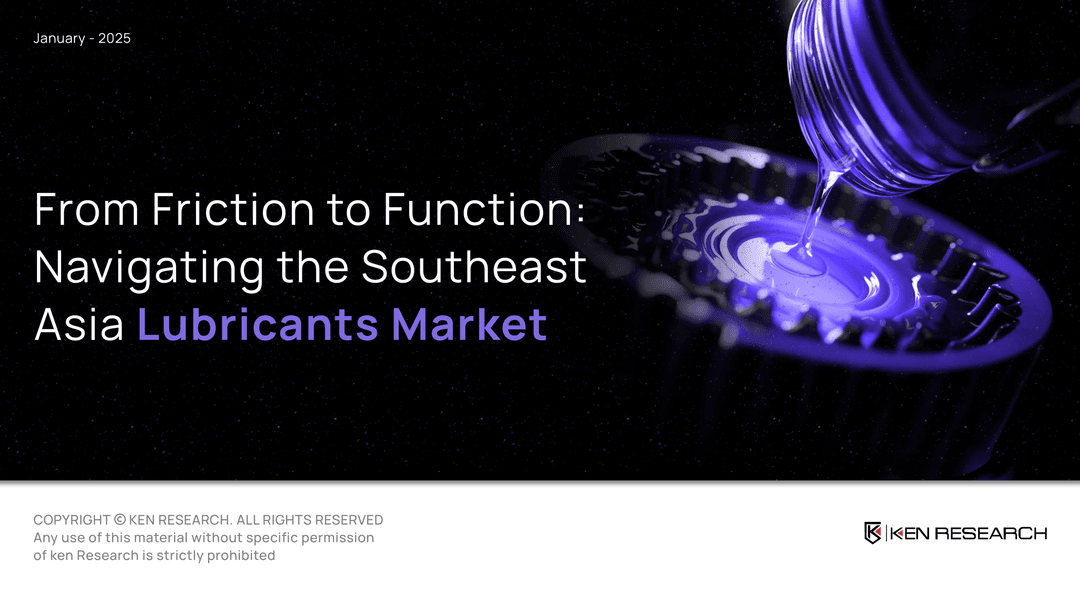
Southeast Asia Lubricants Market: Strategic Roadmap for a $17 Bn Market Opportunity

Southeast Asia’s $15B lubricants market is set to hit $17B by 2029, fueled by fleets, construction, and shifting mobility trends.

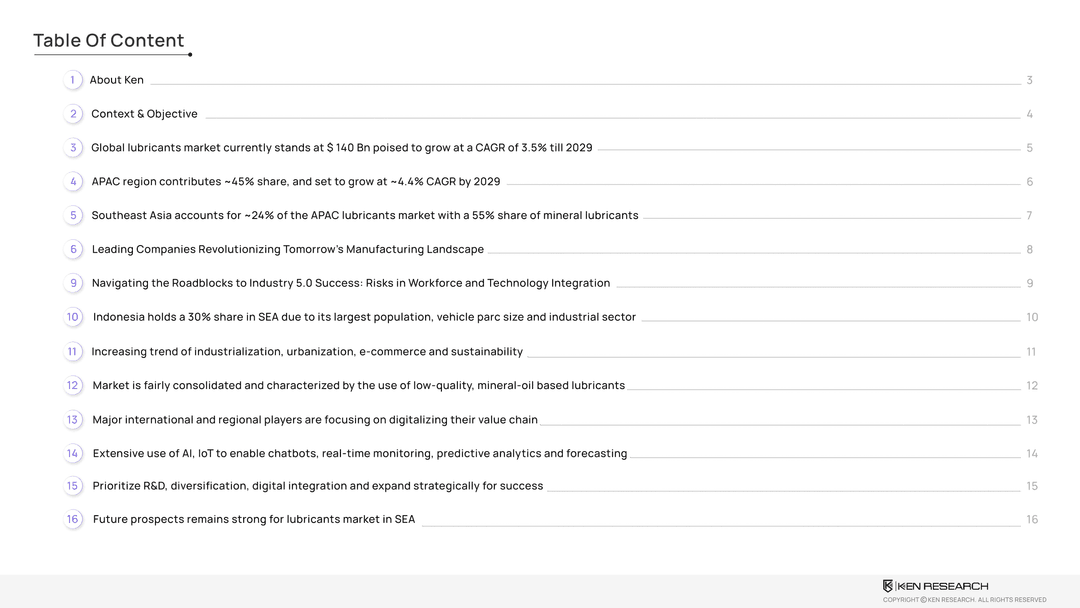
17 Slide DeckMarket Forecast & Regional Share AnalysisHigh-Growth Country AnalysisTechnology & Product Evolution
Download the Full Consulting POV Now
PlaceholderSlide 1
Slide 2
Slide 3
Slide 4
Slide 5
Slide 6
Slide 7
Slide 8
Slide 9
Slide 10
Slide 11
Slide 12
Slide 13
Slide 14
Slide 15
Slide 16
Slide 17

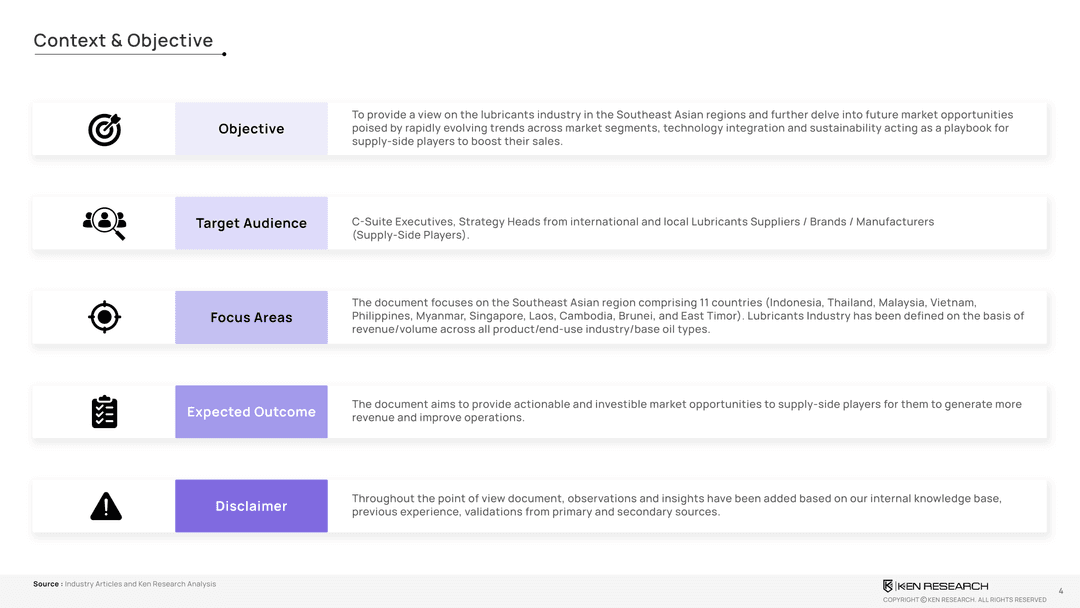
Built for Leaders Across

  • Strategy Heads, Country Leads & Lubricants Division Managers (B2B/B2C)
  • Regional CXOs at Oil & Gas Majors entering SEA or launching synthetic lines
  • OEM Partnership Leaders seeking EV or commercial fleet lubricant tie-ins
  • Distribution/Channel Managers planning e-commerce or logistics expansion

Schedule a 1:1 Strategic Deep-Dive with Our SEA Market Consultants

Executive Summary

Lubricants In Transition – From Friction To Function

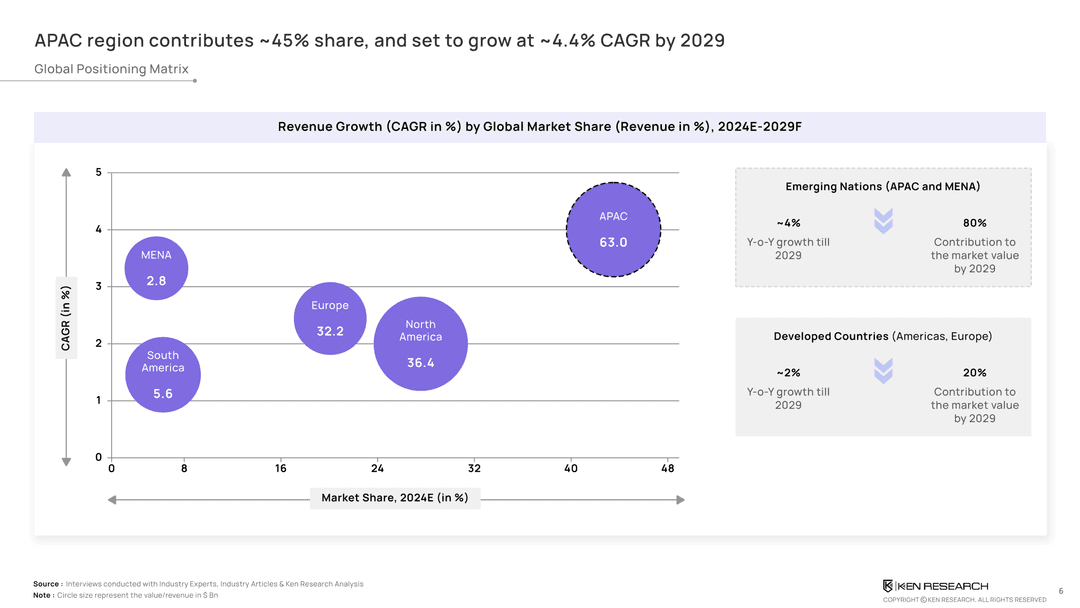
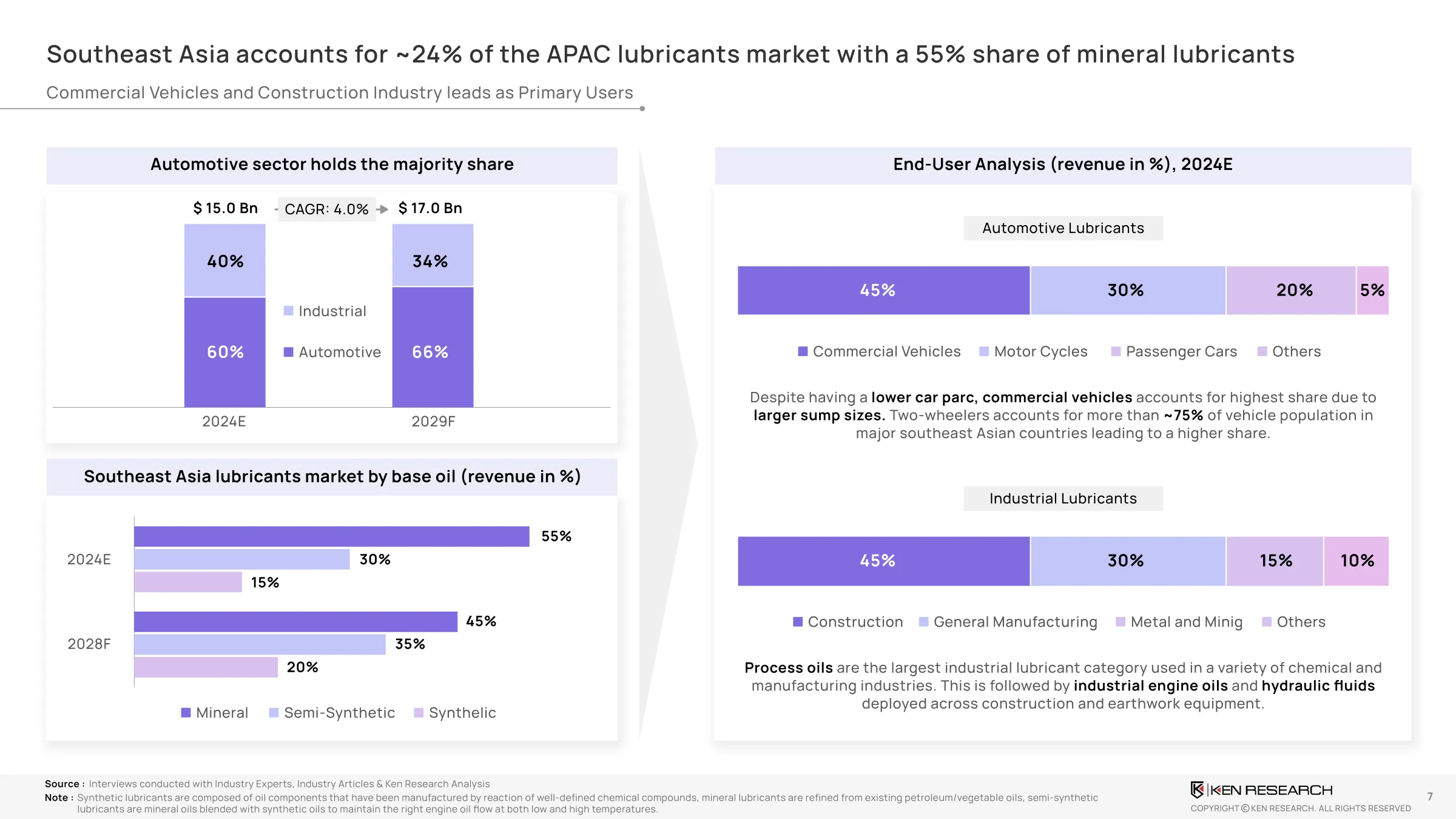
Southeast Asia accounts for approximately 24% of APAC’s $63 Bn lubricants market and is projected to reach $17 Bn by 2029, growing at a 4% CAGR. This growth is underpinned by:

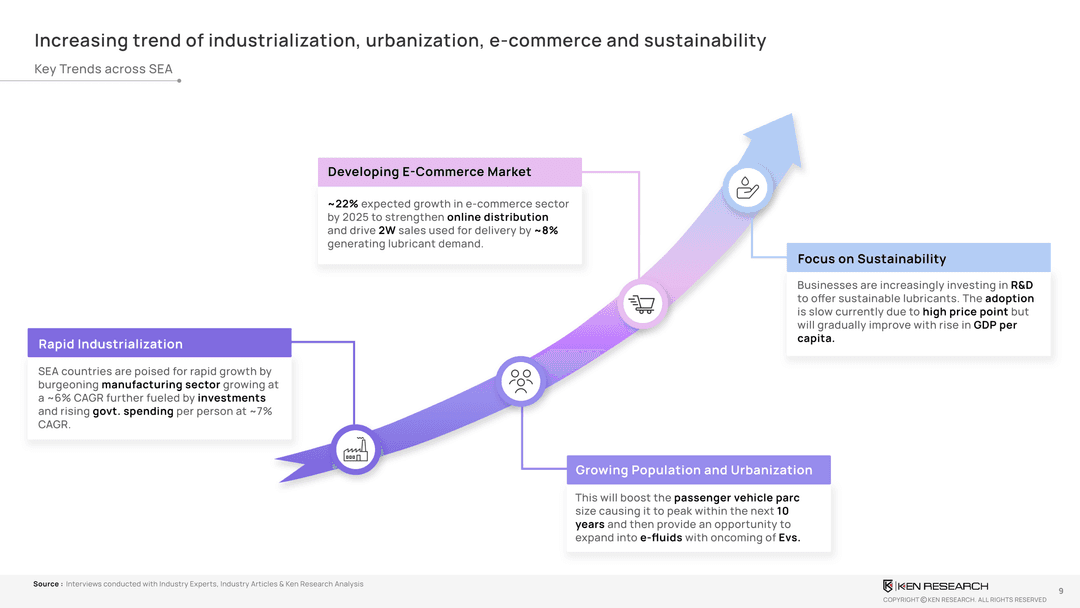
  • Industrial output scaling at 11–12%, increasing demand for high-performance fluids
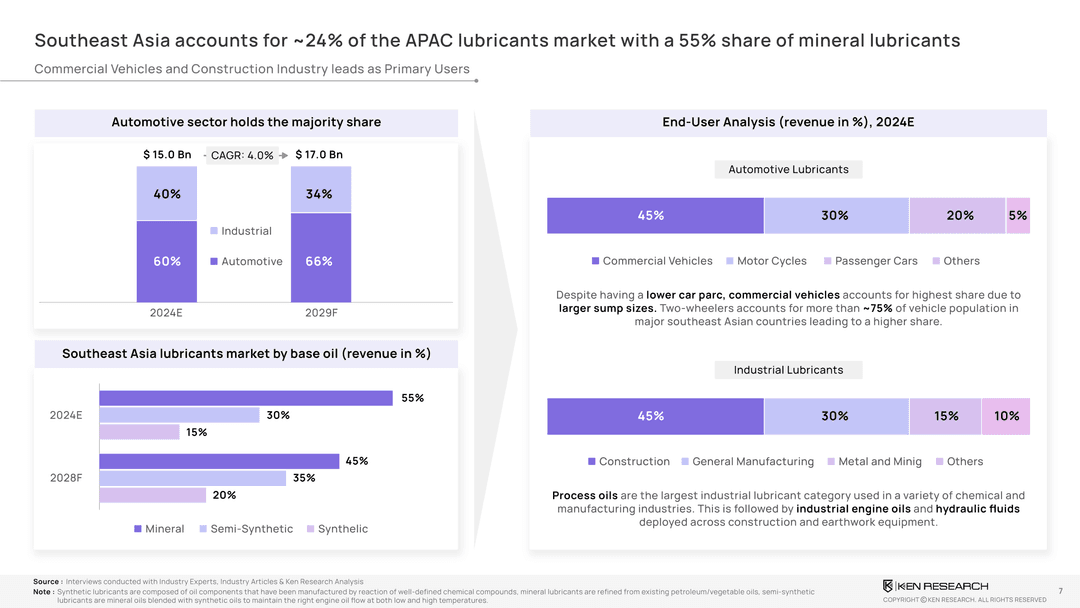
  • Commercial vehicle dominance in lubricant consumption due to large sump sizes
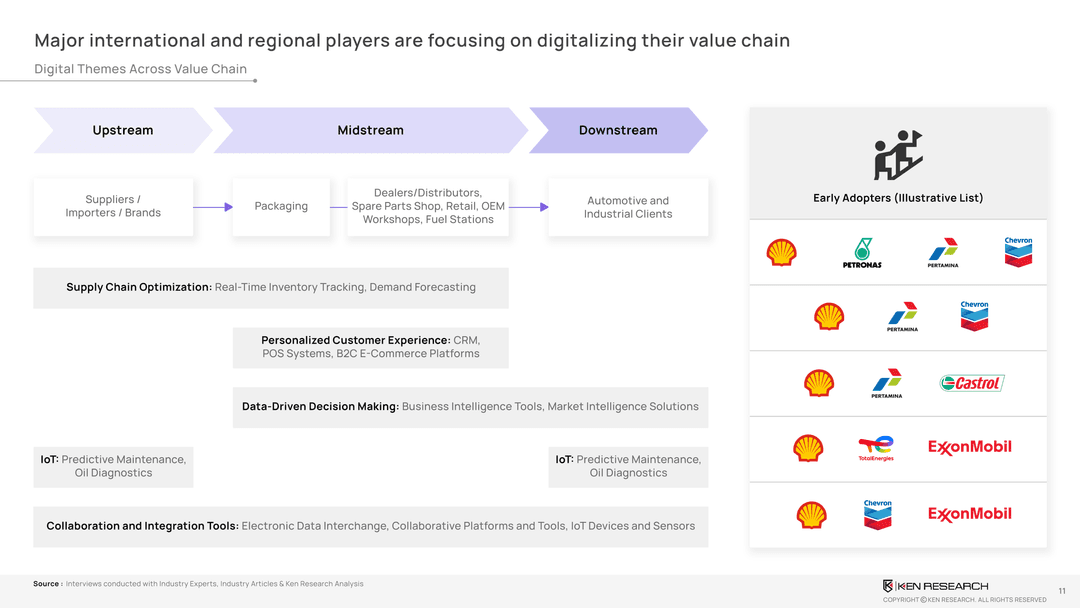
  • Digital transformation led by oil diagnostics, POS retail systems, and predictive tools
  • Shift toward synthetic blends across Indonesia, Thailand, and Vietnam
  • First-fill and service-fill e-fluid markets emerging with EV adoption (currently ~1%)
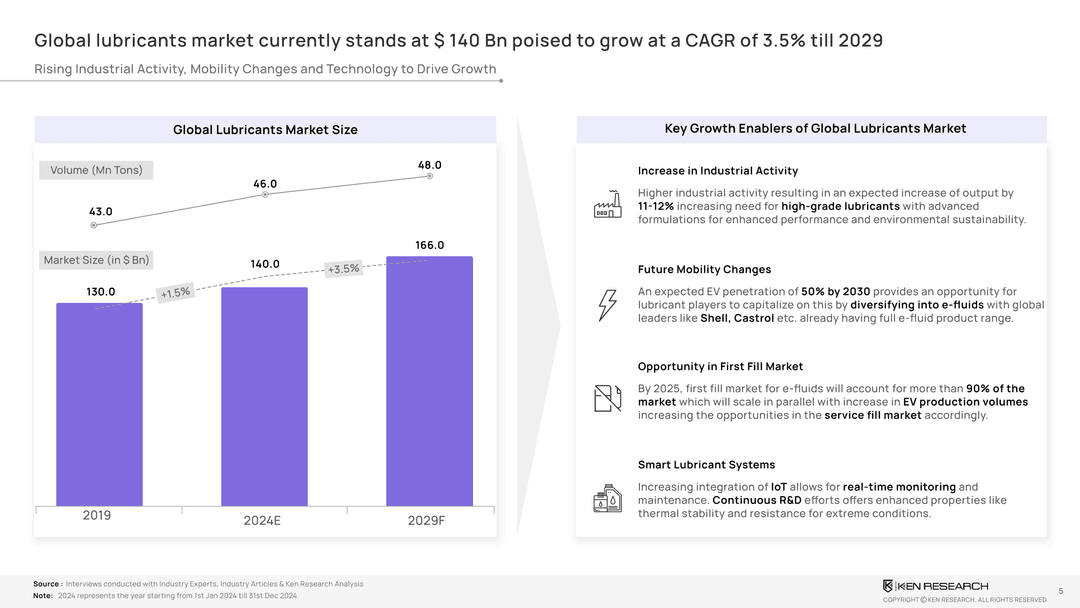
Global Lubricant Market Share

Use This Deck to Benchmark Growth Levers & Plan Market Prioritization

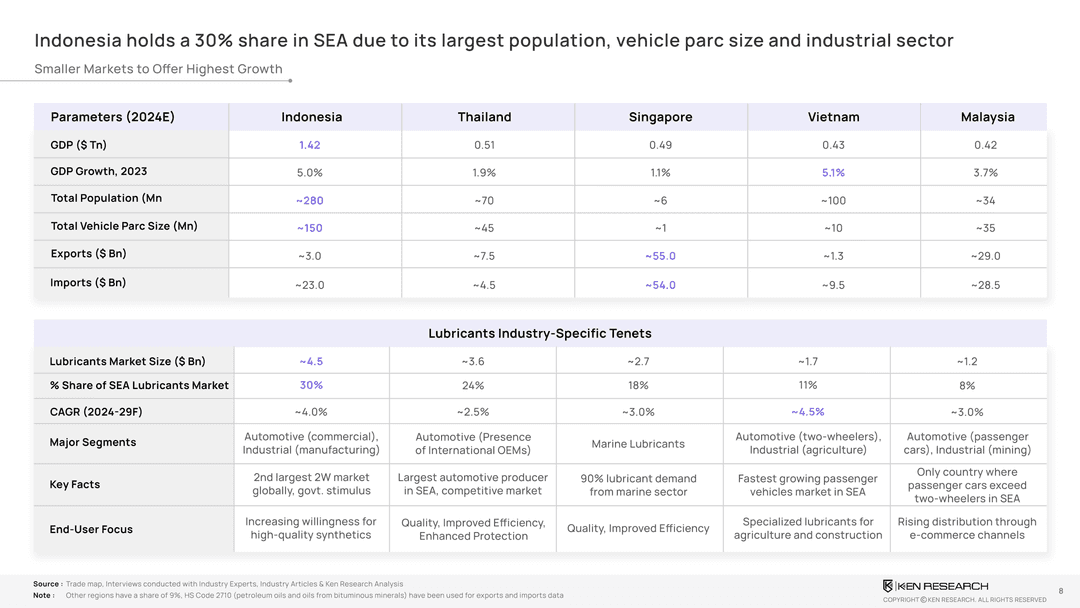
Country-Wise Snapshot: Demand & Attributes

Get Our Full Country-Wise Demand Heatmap & Sump Size Analysis

Competition Landscape: Players, Share & Strategy

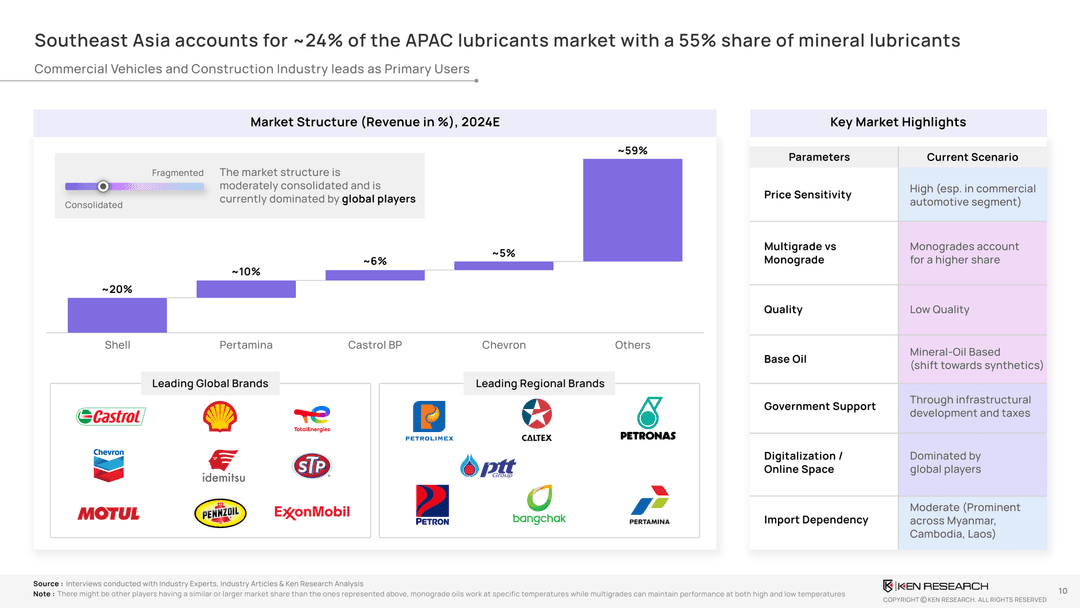
  • Top 6 players (Shell, Pertamina, Castrol, BP, Chevron, ExxonMobil) control ~59% of SEA’s revenue
  • SEA market remains price sensitive, especially in commercial automotive
  • Monograde oils still dominate; shift toward multigrades in urban segments is slow

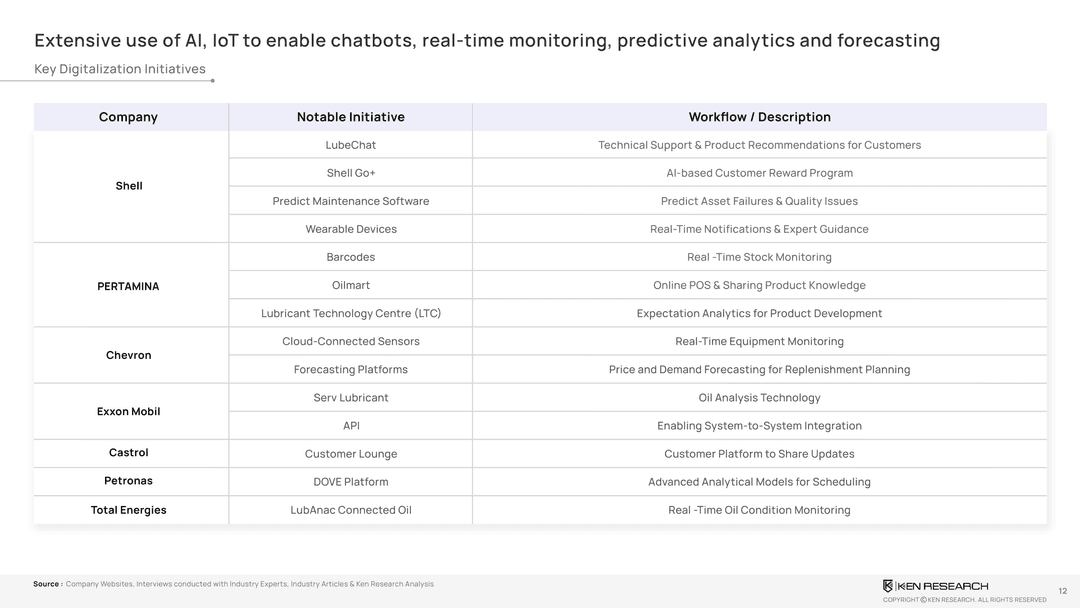
Digital Investments by Leaders: -

Shell LubeChat & Predict AI-based support - Chevron’s forecasting tools & IoT sensors - Pertamina Oilmart POS platform & LTC analytics - ExxonMobil’s API integration & oil analysis

Compare Tech Readiness Scores of 15 Lubricant Majors – Ask for the Matrix

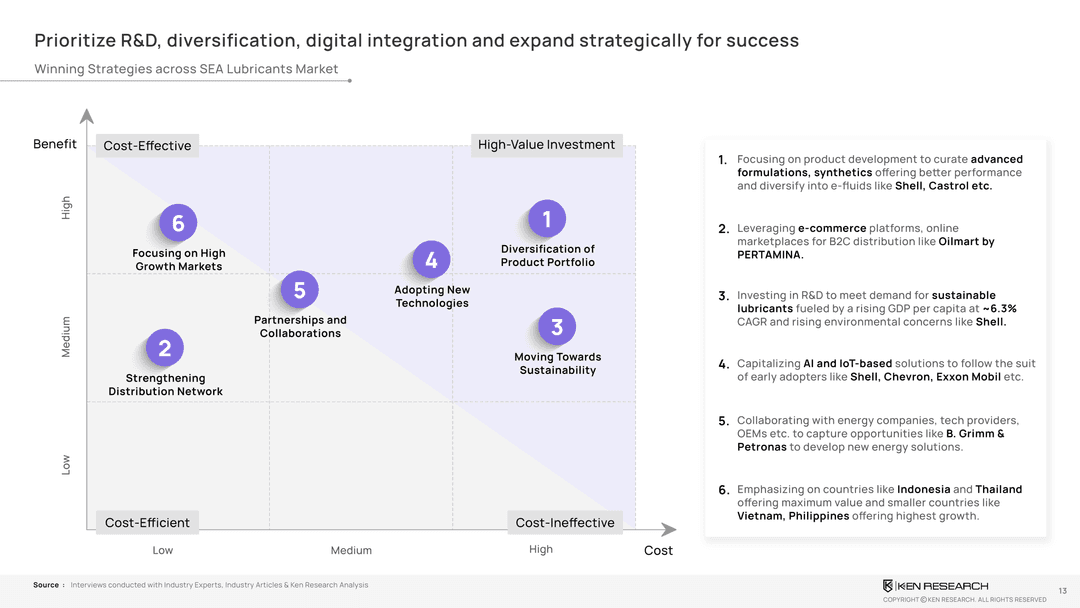
Strategic Priorities For 2025–2029

  • Expand Synthetic Portfolio: Prioritize entry into semi-synthetic, full synthetic, and e-fluid categories
  • Digitally Enable Distribution: Integrate POS, analytics & last-mile e-retailing
  • Localize Formulations: Tailor to hot, humid conditions and commercial loads
  • Form OEM Alliances: Secure first-fill partnerships in 2W, 4W and commercial vehicle channels
  • Tap Underserved Growth Zones: Invest in Vietnam, Malaysia, and the Philippines
  • Bundle Predictive Tools: Offer diagnostics + refill alerts to increase aftermarket lock-in

Book an Innovation Roadmap Session for Your Next 5 Product Lines

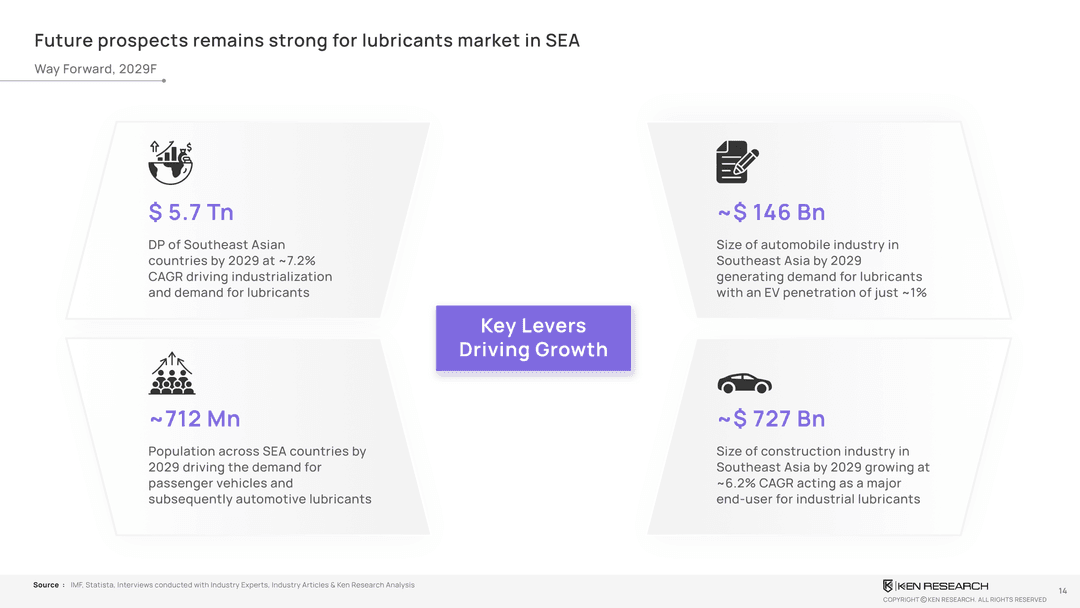
Outlook: Sea Lubricants By 2029 – Growth Enablers

  • $5.7 Tn: SEA GDP projection by 2029 (7.2% CAGR)
  • 712 Mn: Total population – growing urbanization, mobility needs
  • $727 Bn: Construction market (industrial oil demand boom)
  • $146 Bn: Auto sector size; EV penetration at just 1% → room for 50x e-fluid growth

Use This Outlook to Build a 3-Country Business Case for Investment

FAQ's

Still Got Questions? Connect Via Mail

What is the current size of the Southeast Asia Lubricants Market?

SEA’s lubricants market is valued at $15 Bn in 2024 and expected to grow to $17 Bn by 2029, driven by commercial and industrial demand.


Which countries are driving demand for lubricants in SEA?

Indonesia, Thailand, and Singapore account for over 70% of the region’s consumption, led by automotive and marine lubricants.


What role does EV penetration play in SEA’s lubricant growth?

With EV penetration currently at ~1%, the future market for e-fluids and diagnostics-enabled lubricants is just beginning to scale.


How are global lubricant players digitizing operations in SEA?

Shell, Chevron, and Pertamina are deploying AI, IoT, and real-time oil diagnostics, enabling smarter asset management and customer support.


Is the SEA market moving toward synthetic lubricants?

Yes. While mineral oils still hold 55% share, the adoption of synthetic and semi-synthetic oils is increasing rapidly in urban and OEM-backed segments.