Region:Middle East
Author(s):Shubham
Product Code:KRAD0926
Pages:84
Published On:November 2025
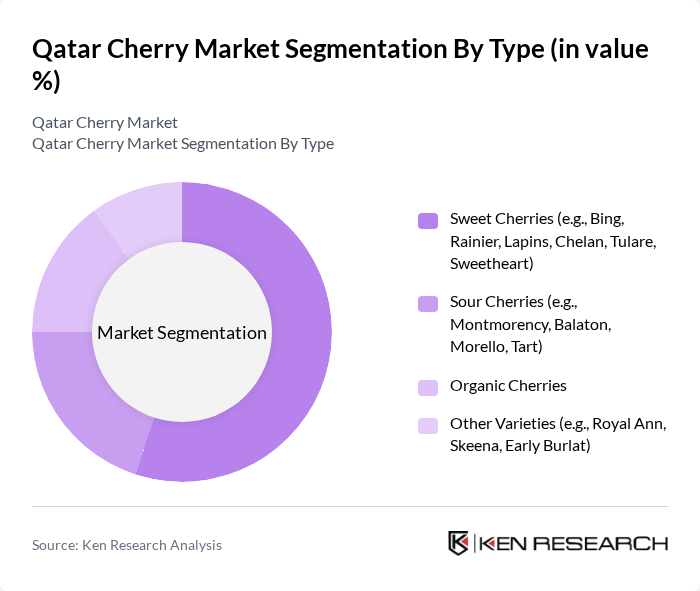
By Type:The cherry market can be segmented into various types, including sweet cherries, sour cherries, organic cherries, and other varieties. Among these, sweet cherries are the most popular due to their appealing taste and versatility in culinary uses. Demand for organic cherries is gradually increasing as health-conscious consumers seek organic produce, though their market share remains limited due to higher prices and limited availability. Sour cherries are less popular in the retail segment but are primarily used in food processing, especially for jams, bakery fillings, and desserts .
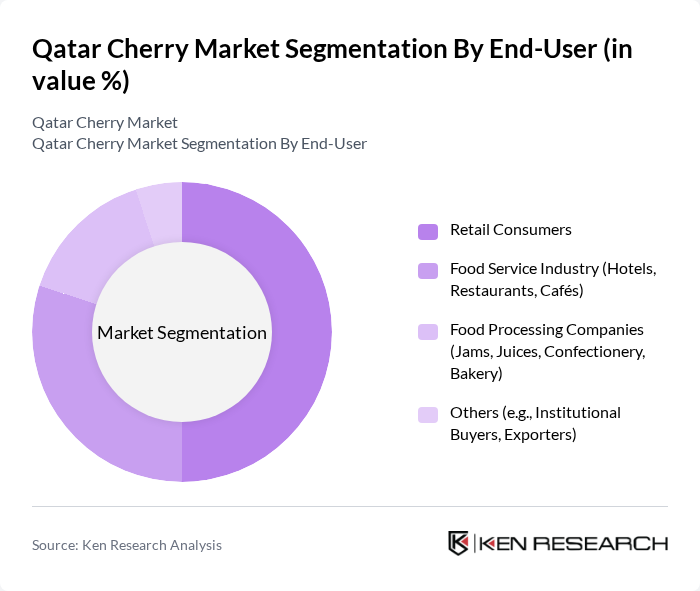
By End-User:The cherry market is segmented by end-users, including retail consumers, the food service industry, food processing companies, and others. Retail consumers constitute the largest segment, driven by the increasing popularity of cherries as a premium, healthy snack. The food service industry, including hotels and restaurants, also plays a significant role in driving demand, as cherries are commonly used in desserts, beverages, and specialty dishes. Food processing companies utilize cherries for jams, juices, and bakery products, contributing to the market's overall growth .
The Qatar Cherry Market is characterized by a dynamic mix of regional and international players. Leading participants such as Baladna Food Industries, Al Meera Consumer Goods Company, Widam Food Company, Agrico Qatar, Fresh Fruits Company, Dandy Company Limited, Al Jazeera Agricultural Company, Mahaseel for Marketing and Agri Services, Gulf Fruits Company, Qatar Agricultural Development Company, Al Rayyan Agricultural, Qatar Organic Farms, Doha Fresh Produce, Al Khor Agricultural Company, and Qatar Greenhouse Company contribute to innovation, geographic expansion, and service delivery in this space.
The future of the Qatar cherry market appears promising, driven by increasing health awareness and a growing preference for fresh produce. As local farmers gain expertise and government support for agricultural initiatives strengthens, the potential for local cherry cultivation will rise. Additionally, the expansion of retail channels and the integration of technology in agriculture will enhance distribution efficiency, ensuring that fresh cherries are accessible to consumers. This evolving landscape is likely to foster a more resilient market in the coming years.
| Segment | Sub-Segments |
|---|---|
| By Type | Sweet Cherries (e.g., Bing, Rainier, Lapins, Chelan, Tulare, Sweetheart) Sour Cherries (e.g., Montmorency, Balaton, Morello, Tart) Organic Cherries Other Varieties (e.g., Royal Ann, Skeena, Early Burlat) |
| By End-User | Retail Consumers Food Service Industry (Hotels, Restaurants, Cafés) Food Processing Companies (Jams, Juices, Confectionery, Bakery) Others (e.g., Institutional Buyers, Exporters) |
| By Distribution Channel | Supermarkets/Hypermarkets Online Retail Local Markets Specialty Stores |
| By Packaging Type | Bulk Packaging Retail Packaging (Clamshells, Punnets) Eco-friendly Packaging (Biodegradable, Recyclable) Others |
| By Seasonality | Peak Season (May–August, import-driven) Off-Season (reliance on cold storage/imports) Year-Round Availability (via imports/greenhouse) Others |
| By Price Range | Premium (imported, organic, specialty) Mid-range (mainstream retail) Budget (bulk, promotions) Others |
| By Geographic Distribution | Urban Areas (Doha, Al Rayyan, Al Wakrah) Rural Areas Export Markets (GCC neighbors) Others |
| Scope Item/Segment | Sample Size | Target Respondent Profiles |
|---|---|---|
| Retail Market Insights | 100 | Store Managers, Category Buyers |
| Import and Distribution Channels | 60 | Import Managers, Logistics Coordinators |
| Consumer Preferences and Trends | 120 | End Consumers, Market Researchers |
| Cherry Cultivation Practices | 40 | Farm Owners, Agricultural Experts |
| Market Regulation and Policy Impact | 40 | Policy Makers, Agricultural Economists |
The Qatar Cherry Market is valued at approximately USD 240 thousand, reflecting modest cherry consumption driven by increasing consumer interest in fresh fruits and evolving dietary preferences among urban populations.

What makes us stand out is that our consultants follow Robust, Refine and Result (RRR) methodology. Robust for clear definitions, approaches and sanity checking, Refine for differentiating respondents' facts and opinions, and Result for presenting data with story.

We have set a benchmark in the industry by offering our clients with syndicated and customized market research reports featuring coverage of entire market as well as meticulous research and analyst insights.

While we don't replace traditional research, we flip the method upside down. Our dual approach of Top Bottom & Bottom Top ensures quality deliverable by not just verifying company fundamentals but also looking at the sector and macroeconomic factors.

With one step in the future, our research team constantly tries to show you the bigger picture. We help with some of the tough questions you may encounter along the way: How is the industry positioned? Best marketing channel? KPI's of competitors? By aligning every element, we help maximize success.

Our report gives you instant access to the answers and sources that other companies might choose to hide. We elaborate each steps of research methodology we have used and showcase you the sample size to earn your trust.

If you need any support, we are here! We pride ourselves on universe strength, data quality, and quick, friendly, and professional service.













