Region:Middle East
Author(s):Geetanshi
Product Code:KRAC9479
Pages:95
Published On:November 2025
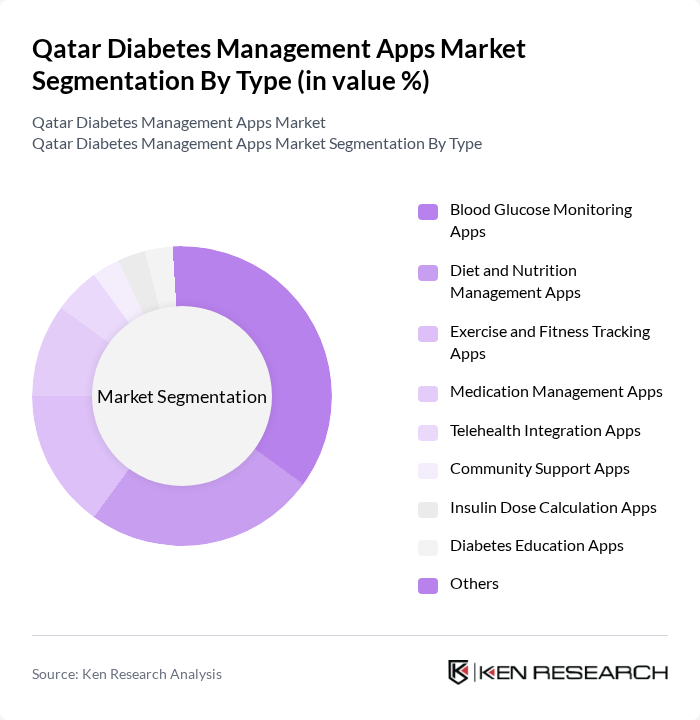
By Type:The market is segmented into various types of diabetes management applications, each catering to specific user needs. The dominant sub-segment is Blood Glucose Monitoring Apps, which are widely used by individuals to track their glucose levels and receive actionable feedback. Diet and Nutrition Management Apps follow closely, helping users maintain a balanced diet tailored to their health requirements. The increasing focus on personalized health management and the adoption of digital tools for remote monitoring are driving the growth of these applications.
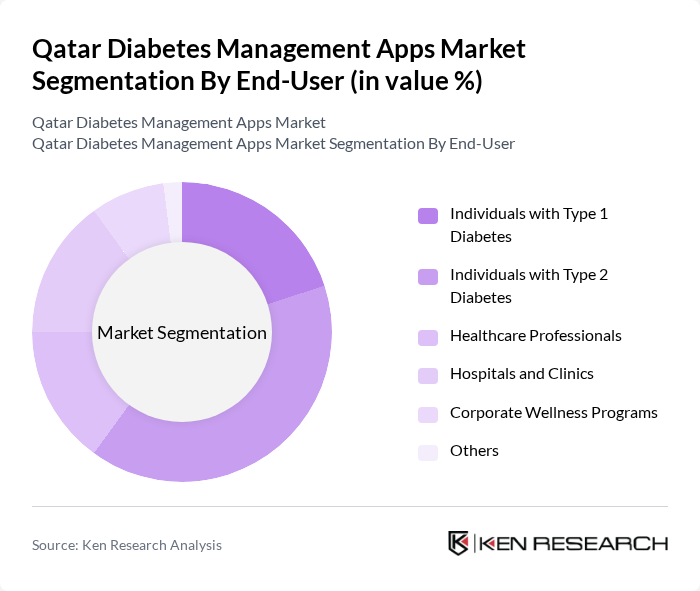
By End-User:The end-user segmentation includes categories such as individuals with Type 1 and Type 2 diabetes, healthcare professionals, hospitals, and corporate wellness programs. The leading sub-segment is Individuals with Type 2 Diabetes, as this group constitutes the majority of the diabetic population in Qatar. The increasing adoption of technology for self-management among patients is driving demand for tailored applications that address their specific needs.
The Qatar Diabetes Management Apps Market is characterized by a dynamic mix of regional and international players. Leading participants such as Health2Sync, mySugr, Glucose Buddy, One Drop, BlueLoop, Glooko, Livongo (Teladoc Health), Diabetes:M (Sirma Medical Systems), WellDoc (BlueStar), DarioHealth, Sugar Sense, MyDiabetesHome, CareLink (Medtronic), iHealth Gluco-Smart (iHealth Labs), GluCare.Health, Altibbi, Medisafe, Roche Diabetes Care (mySugr, Accu-Chek) contribute to innovation, geographic expansion, and service delivery in this space.
The future of the Qatar diabetes management apps market appears promising, driven by technological advancements and increasing health consciousness among the population. As the integration of artificial intelligence and machine learning becomes more prevalent, apps will offer personalized solutions that enhance user engagement. Additionally, the growing trend towards telehealth services will likely create new avenues for app developers, enabling them to provide comprehensive care solutions that cater to the evolving needs of diabetic patients in Qatar.
| Segment | Sub-Segments |
|---|---|
| By Type | Blood Glucose Monitoring Apps Diet and Nutrition Management Apps Exercise and Fitness Tracking Apps Medication Management Apps Telehealth Integration Apps Community Support Apps Insulin Dose Calculation Apps Diabetes Education Apps Others |
| By End-User | Individuals with Type 1 Diabetes Individuals with Type 2 Diabetes Healthcare Professionals Hospitals and Clinics Corporate Wellness Programs Others |
| By User Demographics | Age Groups (Children, Adults, Seniors) Gender Socioeconomic Status Language Preference (Arabic, English, Others) Others |
| By Features | Data Tracking and Analytics Social Sharing and Community Features Personalized Health Insights Integration with Wearable Devices AI-Based Predictive Alerts Multi-Language Support Others |
| By Distribution Channel | App Stores (iOS, Android) Direct Downloads from Websites Partnerships with Healthcare Providers Integration with Insurance Providers Others |
| By Pricing Model | Free Apps with In-App Purchases Subscription-Based Apps One-Time Purchase Apps Freemium Model Others |
| By Geographic Reach | Qatar-Only Apps GCC Regional Apps International Market Penetration Others |
| Scope Item/Segment | Sample Size | Target Respondent Profiles |
|---|---|---|
| Healthcare Professionals | 60 | Endocrinologists, Diabetes Educators |
| Diabetes App Users | 100 | Patients with Type 1 and Type 2 Diabetes |
| App Developers | 40 | Product Managers, UX Designers |
| Health Policy Makers | 40 | Government Health Officials, Public Health Analysts |
| Insurance Providers | 40 | Health Insurance Underwriters, Claims Analysts |
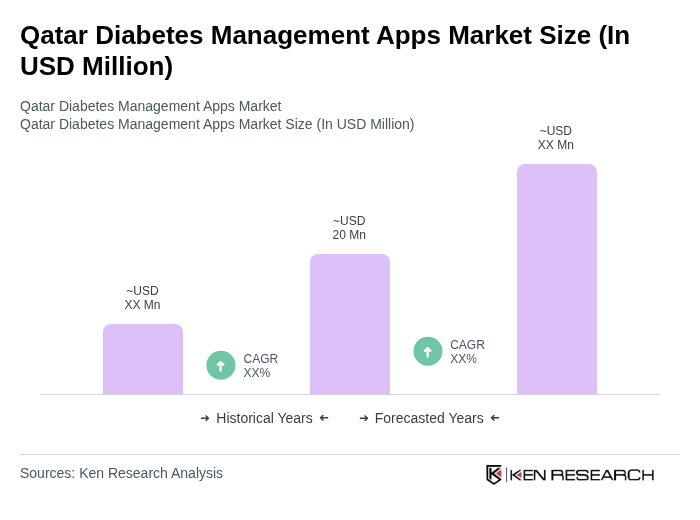
The Qatar Diabetes Management Apps Market is valued at approximately USD 20 million, reflecting a significant growth driven by the rising prevalence of diabetes, increasing healthcare costs, and heightened awareness of health management through technology.

What makes us stand out is that our consultants follow Robust, Refine and Result (RRR) methodology. Robust for clear definitions, approaches and sanity checking, Refine for differentiating respondents' facts and opinions, and Result for presenting data with story.

We have set a benchmark in the industry by offering our clients with syndicated and customized market research reports featuring coverage of entire market as well as meticulous research and analyst insights.

While we don't replace traditional research, we flip the method upside down. Our dual approach of Top Bottom & Bottom Top ensures quality deliverable by not just verifying company fundamentals but also looking at the sector and macroeconomic factors.

With one step in the future, our research team constantly tries to show you the bigger picture. We help with some of the tough questions you may encounter along the way: How is the industry positioned? Best marketing channel? KPI's of competitors? By aligning every element, we help maximize success.

Our report gives you instant access to the answers and sources that other companies might choose to hide. We elaborate each steps of research methodology we have used and showcase you the sample size to earn your trust.

If you need any support, we are here! We pride ourselves on universe strength, data quality, and quick, friendly, and professional service.













