About the Report
Base Year 2024Qatar Glass Curtain Wall Market Overview
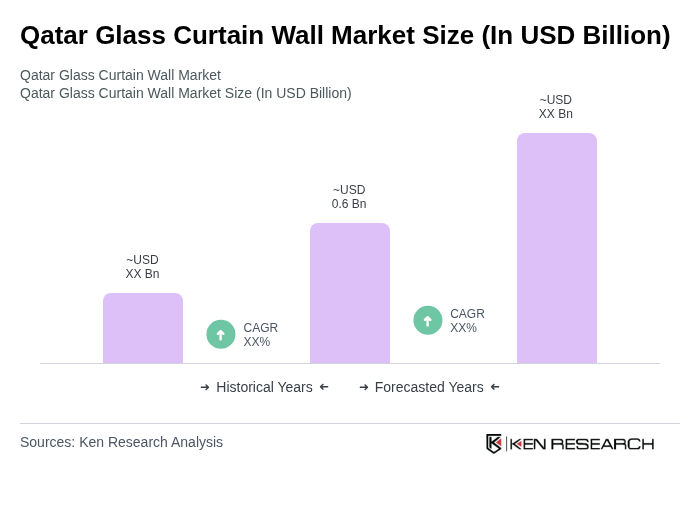
- The Qatar Glass Curtain Wall Market is valued at USD 0.6 billion, based on a five-year historical analysis and benchmarking against the Qatar curtain wall and façade markets. This growth is primarily driven by the rapid urbanization and infrastructural development in the region, particularly in the construction of high-rise buildings and commercial spaces, supported by sustained real estate and non?residential construction activity. The increasing demand for energy-efficient and aesthetically pleasing building facades has further propelled the market, as developers seek to enhance the visual appeal and sustainability of their projects through advanced glazing, double?glazed units, and high?performance façades.
- Doha is the dominant city in the Qatar Glass Curtain Wall Market, primarily due to its status as the capital and the center of economic activity, as most large commercial, hospitality, mixed?use, and high?rise developments are concentrated there. The city has witnessed significant investments in infrastructure and real estate, driven by government initiatives related to transport networks, commercial districts, and post?World Cup legacy projects. Other notable areas include Al Rayyan and Lusail, which are also experiencing rapid development and urbanization through large master?planned communities, stadium surroundings, and waterfront projects, contributing to the overall market growth.
- In 2023, the Qatari government strengthened building energy performance requirements for façades through instruments aligned with the Qatar Construction Specifications (QCS) and the Gulf Organization for Research and Development’s Global Sustainability Assessment System (GSAS), which promote the use of energy?efficient glass curtain wall systems in new commercial and mixed?use buildings. The GSAS Technical Guide and related GSAS Design & Build certification framework, issued under the authority of the Gulf Organization for Research and Development and adopted by many public and quasi?public clients in Qatar, set operational requirements on envelope thermal performance, solar heat gain coefficients, and daylighting that directly influence glazing and curtain wall specification. This policy orientation toward green buildings, in line with Qatar National Vision 2030, is expected to significantly impact the demand for advanced glazing technologies, double?glazed and low?emissivity glass, and high?performance framing systems in the construction sector.
Qatar Glass Curtain Wall Market Segmentation
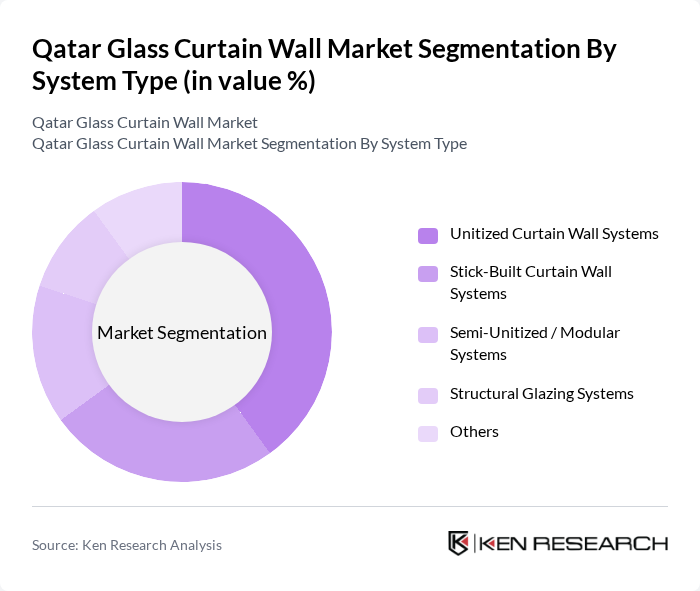
By System Type:The market is segmented into various system types, including Unitized Curtain Wall Systems, Stick-Built Curtain Wall Systems, Semi-Unitized / Modular Systems, Structural Glazing Systems, and Others. Among these, Unitized Curtain Wall Systems are gaining traction due to their ease of installation, better quality control through factory prefabrication, and reduced on-site labor and installation time, making them a preferred choice for large-scale and high-rise projects in the Middle East.
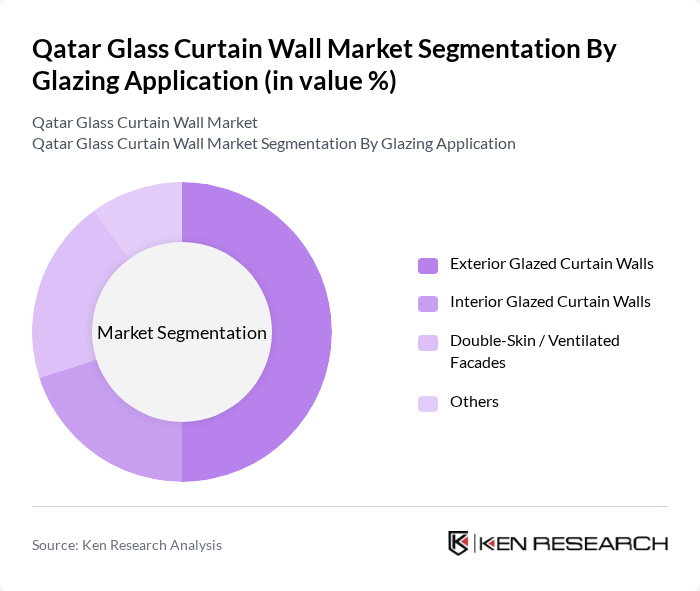
By Glazing Application:The market is further segmented by glazing application into Exterior Glazed Curtain Walls, Interior Glazed Curtain Walls, Double-Skin / Ventilated Facades, and Others. Exterior Glazed Curtain Walls dominate the market due to their ability to enhance the aesthetic appeal of buildings while providing thermal insulation, solar control, and energy efficiency, particularly when combined with double-glazed, low?emissivity, or solar?control glass solutions widely adopted in Qatar’s commercial and high?rise segments.
Qatar Glass Curtain Wall Market Competitive Landscape
The Qatar Glass Curtain Wall Market is characterized by a dynamic mix of regional and international players. Leading participants such as Qatar National Aluminum Panel Company (QNAP), Gulf Glass Industries, Al Jaber Aluminium & Glass, Qatar National Glass, Al Jazeera Glass Company, Qatar Industrial Manufacturing Company, Qatari Investors Group, Qatar Building Company, Qatar Engineering & Construction Company (QCON), Qatar Technical Aluminium (Q-Tec), Al Mana Group, Al Asmakh Real Estate / Facade Contracting Arms, Doha Glass & Aluminum, Qatar Architectural Glass, Other Regional Facade & Curtain Wall Specialists contribute to innovation, geographic expansion, and service delivery in this space.
Qatar Glass Curtain Wall Market Industry Analysis
Growth Drivers
- Increasing Urbanization:Qatar's urban population is projected to reach approximately 2.7 million in the future, up from 2.5 million in the past, according to the World Bank. This rapid urbanization drives the demand for modern infrastructure, including glass curtain walls, as developers seek to create aesthetically pleasing and functional buildings. The urbanization trend is supported by significant investments in urban development projects, which are expected to exceed QAR 100 billion in the next few years, further fueling market growth.
- Rising Demand for Energy-Efficient Buildings:The Qatar National Vision 2030 emphasizes sustainability, aiming for a 30% reduction in energy consumption in buildings in the future. This initiative has led to a surge in demand for energy-efficient glass curtain walls, which can significantly reduce heating and cooling costs. The market for energy-efficient building materials is expected to grow, with energy-efficient glass accounting for over QAR 1.5 billion in investments in the future, reflecting a strong commitment to sustainable construction practices.
- Government Initiatives for Infrastructure Development:The Qatari government has allocated QAR 200 billion for infrastructure projects as part of its National Development Strategy. This funding is directed towards enhancing public facilities, including commercial and residential buildings that utilize glass curtain walls. The government's focus on modernizing infrastructure is expected to create a robust demand for high-quality glass products, with an estimated 15% increase in construction projects in the future, further driving market growth.
Market Challenges
- High Initial Investment Costs:The installation of glass curtain walls involves significant upfront costs, often exceeding QAR 1,000 per square meter. This high initial investment can deter smaller developers and contractors from adopting glass solutions, especially in a competitive market. Additionally, the financial burden of sourcing high-quality materials and skilled labor can further complicate project feasibility, limiting market penetration and growth opportunities for glass curtain wall manufacturers.
- Stringent Regulatory Compliance:The construction industry in Qatar is subject to strict regulations, including building codes and safety standards. Compliance with these regulations often requires additional investments in design and materials, which can increase project timelines and costs. For instance, adherence to the Qatar Construction Specifications (QCS) can add up to 20% to project costs, posing a challenge for companies looking to maintain competitive pricing while ensuring compliance with local laws.
Qatar Glass Curtain Wall Market Future Outlook
The Qatar glass curtain wall market is poised for significant growth, driven by urbanization and sustainability initiatives. As the government continues to invest in infrastructure, the demand for innovative building solutions will rise. The integration of smart technologies and energy-efficient designs will become increasingly important, aligning with global trends towards sustainable construction. Additionally, the hospitality sector's expansion will further stimulate demand for aesthetically pleasing glass facades, creating a dynamic environment for market players to innovate and thrive.
Market Opportunities
- Expansion of Green Building Initiatives:With Qatar's commitment to sustainable development, the market for green building materials is expected to grow significantly. The government aims for 50% of new buildings to meet green certification standards in the future, creating opportunities for glass curtain wall manufacturers to provide eco-friendly solutions that align with these initiatives.
- Potential for Smart Glass Technology Integration:The increasing focus on smart building technologies presents a lucrative opportunity for the glass curtain wall market. Smart glass solutions, which can adjust transparency based on environmental conditions, are projected to gain traction, with an estimated market value of QAR 500 million in the future, enhancing energy efficiency and user comfort in commercial spaces.
Scope of the Report
| Segment | Sub-Segments |
|---|---|
| By System Type | Unitized Curtain Wall Systems Stick-Built Curtain Wall Systems Semi-Unitized / Modular Systems Structural Glazing Systems Others |
| By Glazing Application | Exterior Glazed Curtain Walls Interior Glazed Curtain Walls Double-Skin / Ventilated Facades Others |
| By Construction Type | New Construction Refurbishment / Retrofits Renovation of Existing Facades Others |
| By Material Combination | Glass–Aluminum Systems Glass–Steel Systems Glass–Composite / Hybrid Systems Others |
| By End-Use Sector | Commercial & Office Buildings Retail, Hotels & Mixed-Use Developments Residential (High-Rise & Premium) Public Infrastructure & Institutional Buildings Industrial & Specialized Facilities Others |
| By Performance Characteristics | Thermal & Energy Performance Solar Control & Daylighting Performance Acoustic & Sound Insulation Performance Wind Load & Structural Performance Fire & Safety Performance Others |
| By Region | Doha Al Rayyan Al Wakrah Al Khor & Al Thakhira Al Daayen & Lusail Others |
Key Target Audience
Investors and Venture Capitalist Firms
Government and Regulatory Bodies (e.g., Qatar Ministry of Municipality and Environment)
Manufacturers and Producers
Construction Companies
Architectural Firms
Real Estate Developers
Building Material Suppliers
Financial Institutions
Players Mentioned in the Report:
Qatar National Aluminum Panel Company (QNAP)
Gulf Glass Industries
Al Jaber Aluminium & Glass
Qatar National Glass
Al Jazeera Glass Company
Qatar Industrial Manufacturing Company
Qatari Investors Group
Qatar Building Company
Qatar Engineering & Construction Company (QCON)
Qatar Technical Aluminium (Q-Tec)
Al Mana Group
Al Asmakh Real Estate / Facade Contracting Arms
Doha Glass & Aluminum
Qatar Architectural Glass
Other Regional Facade & Curtain Wall Specialists
Table of Contents
Market Assessment Phase
1. Executive Summary and Approach
2. Qatar Glass Curtain Wall Market Overview
2.1 Key Insights and Strategic Recommendations
2.2 Qatar Glass Curtain Wall Market Overview
2.3 Definition and Scope
2.4 Evolution of Market Ecosystem
2.5 Timeline of Key Regulatory Milestones
2.6 Value Chain & Stakeholder Mapping
2.7 Business Cycle Analysis
2.8 Policy & Incentive Landscape
3. Qatar Glass Curtain Wall Market Analysis
3.1 Growth Drivers
3.1.1 Increasing Urbanization
3.1.2 Rising Demand for Energy-Efficient Buildings
3.1.3 Government Initiatives for Infrastructure Development
3.1.4 Technological Advancements in Glass Manufacturing
3.2 Market Challenges
3.2.1 High Initial Investment Costs
3.2.2 Stringent Regulatory Compliance
3.2.3 Competition from Alternative Building Materials
3.2.4 Fluctuating Raw Material Prices
3.3 Market Opportunities
3.3.1 Expansion of Green Building Initiatives
3.3.2 Increasing Focus on Aesthetic Building Designs
3.3.3 Growth in the Hospitality Sector
3.3.4 Potential for Smart Glass Technology Integration
3.4 Market Trends
3.4.1 Shift Towards Sustainable Construction Practices
3.4.2 Adoption of Modular Construction Techniques
3.4.3 Increasing Use of Prefabricated Glass Panels
3.4.4 Rise in Customization and Personalization of Glass Facades
3.5 Government Regulation
3.5.1 Building Code Compliance
3.5.2 Energy Efficiency Standards
3.5.3 Environmental Impact Assessments
3.5.4 Safety Regulations for High-Rise Buildings
4. SWOT Analysis
5. Stakeholder Analysis
6. Porter's Five Forces Analysis
7. Qatar Glass Curtain Wall Market Market Size, 2019-2024
7.1 By Value
7.2 By Volume
7.3 By Average Selling Price
8. Qatar Glass Curtain Wall Market Segmentation
8.1 By System Type
8.1.1 Unitized Curtain Wall Systems
8.1.2 Stick-Built Curtain Wall Systems
8.1.3 Semi-Unitized / Modular Systems
8.1.4 Structural Glazing Systems
8.1.5 Others
8.2 By Glazing Application
8.2.1 Exterior Glazed Curtain Walls
8.2.2 Interior Glazed Curtain Walls
8.2.3 Double-Skin / Ventilated Facades
8.2.4 Others
8.3 By Construction Type
8.3.1 New Construction
8.3.2 Refurbishment / Retrofits
8.3.3 Renovation of Existing Facades
8.3.4 Others
8.4 By Material Combination
8.4.1 Glass–Aluminum Systems
8.4.2 Glass–Steel Systems
8.4.3 Glass–Composite / Hybrid Systems
8.4.4 Others
8.5 By End-Use Sector
8.5.1 Commercial & Office Buildings
8.5.2 Retail, Hotels & Mixed-Use Developments
8.5.3 Residential (High-Rise & Premium)
8.5.4 Public Infrastructure & Institutional Buildings
8.5.5 Industrial & Specialized Facilities
8.5.6 Others
8.6 By Performance Characteristics
8.6.1 Thermal & Energy Performance
8.6.2 Solar Control & Daylighting Performance
8.6.3 Acoustic & Sound Insulation Performance
8.6.4 Wind Load & Structural Performance
8.6.5 Fire & Safety Performance
8.6.6 Others
8.7 By Region
8.7.1 Doha
8.7.2 Al Rayyan
8.7.3 Al Wakrah
8.7.4 Al Khor & Al Thakhira
8.7.5 Al Daayen & Lusail
8.7.6 Others
9. Qatar Glass Curtain Wall Market Competitive Analysis
9.1 Market Share of Key Players
9.2 Cross Comparison of Key Players
9.2.1 Company Name
9.2.2 Segment Revenue in Qatar (USD million)
9.2.3 Qatar Glass Curtain Wall Market Share (%)
9.2.4 3-Year CAGR in Curtain Wall Revenues (%)
9.2.5 Backlog / Order Book Value (USD million)
9.2.6 Number of Curtain Wall Projects Delivered in Qatar
9.2.7 Average Project Size (Facade Area, m²)
9.2.8 EBITDA Margin from Facade Operations (%)
9.2.9 Bid Win Rate in Major Tenders (%)
9.2.10 On-Time Project Delivery Rate (%)
9.2.11 Defect / Rework Rate (%)
9.2.12 R&D and Innovation Spend (% of Revenue)
9.2.13 Share of High-Performance / Energy-Efficient Systems (%)
9.2.14 Average Payment Cycle / DSO (Days)
9.2.15 Credit Rating / Financial Strength Indicator
9.3 SWOT Analysis of Top Players
9.4 Pricing Analysis
9.5 Detailed Profile of Major Companies
9.5.1 Qatar National Aluminum Panel Company (QNAP)
9.5.2 Gulf Glass Industries
9.5.3 Al Jaber Aluminium & Glass
9.5.4 Qatar National Glass
9.5.5 Al Jazeera Glass Company
9.5.6 Qatar Industrial Manufacturing Company
9.5.7 Qatari Investors Group
9.5.8 Qatar Building Company
9.5.9 Qatar Engineering & Construction Company (QCON)
9.5.10 Qatar Technical Aluminium (Q-Tec)
9.5.11 Al Mana Group
9.5.12 Al Asmakh Real Estate / Facade Contracting Arms
9.5.13 Doha Glass & Aluminum
9.5.14 Qatar Architectural Glass
9.5.15 Other Regional Facade & Curtain Wall Specialists
10. Qatar Glass Curtain Wall Market End-User Analysis
10.1 Procurement Behavior of Key Ministries
10.1.1 Ministry of Municipality and Environment
10.1.2 Ministry of Transport and Communications
10.1.3 Ministry of Education and Higher Education
10.1.4 Others
10.2 Corporate Spend on Infrastructure & Energy
10.2.1 Corporate Investments in Construction
10.2.2 Budget Allocations for Sustainable Projects
10.2.3 Spending Trends in the Hospitality Sector
10.2.4 Others
10.3 Pain Point Analysis by End-User Category
10.3.1 Residential Sector Challenges
10.3.2 Commercial Sector Challenges
10.3.3 Industrial Sector Challenges
10.3.4 Government Sector Challenges
10.4 User Readiness for Adoption
10.4.1 Awareness of Glass Curtain Wall Benefits
10.4.2 Readiness for Investment in Modern Facades
10.4.3 Training and Skill Development Needs
10.4.4 Others
10.5 Post-Deployment ROI and Use Case Expansion
10.5.1 ROI Measurement Techniques
10.5.2 Case Studies of Successful Implementations
10.5.3 Expansion Opportunities in New Projects
10.5.4 Others
11. Qatar Glass Curtain Wall Market Future Size, 2025-2030
11.1 By Value
11.2 By Volume
11.3 By Average Selling Price
Go-To-Market Strategy Phase
1. Whitespace Analysis + Business Model Canvas
1.1 Market Gaps Identification
1.2 Business Model Development
2. Marketing and Positioning Recommendations
2.1 Branding Strategies
2.2 Product USPs
3. Distribution Plan
3.1 Urban Retail Strategies
3.2 Rural NGO Tie-ups
4. Channel & Pricing Gaps
4.1 Underserved Routes
4.2 Pricing Bands Analysis
5. Unmet Demand & Latent Needs
5.1 Category Gaps
5.2 Consumer Segments Analysis
6. Customer Relationship
6.1 Loyalty Programs
6.2 After-sales Service Strategies
7. Value Proposition
7.1 Sustainability Initiatives
7.2 Integrated Supply Chains
8. Key Activities
8.1 Regulatory Compliance
8.2 Branding Efforts
8.3 Distribution Setup
9. Entry Strategy Evaluation
9.1 Domestic Market Entry Strategy
9.1.1 Product Mix Considerations
9.1.2 Pricing Band Strategy
9.1.3 Packaging Solutions
9.2 Export Entry Strategy
9.2.1 Target Countries Identification
9.2.2 Compliance Roadmap Development
10. Entry Mode Assessment
10.1 Joint Ventures
10.2 Greenfield Investments
10.3 Mergers & Acquisitions
10.4 Distributor Model Evaluation
11. Capital and Timeline Estimation
11.1 Capital Requirements Analysis
11.2 Timelines for Market Entry
12. Control vs Risk Trade-Off
12.1 Ownership Considerations
12.2 Partnerships Evaluation
13. Profitability Outlook
13.1 Breakeven Analysis
13.2 Long-term Sustainability Strategies
14. Potential Partner List
14.1 Distributors Identification
14.2 Joint Ventures Opportunities
14.3 Acquisition Targets
15. Execution Roadmap
15.1 Phased Plan for Market Entry
15.1.1 Market Setup
15.1.2 Market Entry
15.1.3 Growth Acceleration
15.1.4 Scale & Stabilize
15.2 Key Activities and Milestones
15.2.1 Milestone Planning
15.2.2 Activity Tracking
Research Methodology
Phase 1: Approach1
Desk Research
- Industry reports from local construction and architectural associations
- Market analysis publications focusing on glass and façade technologies
- Government publications on building regulations and infrastructure projects in Qatar
Primary Research
- Interviews with architects and designers specializing in curtain wall systems
- Surveys with project managers from leading construction firms in Qatar
- Field interviews with suppliers and manufacturers of glass products
Validation & Triangulation
- Cross-validation of data through multiple industry sources and expert opinions
- Triangulation of market trends with historical data and future projections
- Sanity checks through feedback from industry panels and focus groups
Phase 2: Market Size Estimation1
Top-down Assessment
- Analysis of national construction spending and its allocation to façade systems
- Segmentation of the market by building type (commercial, residential, institutional)
- Incorporation of government initiatives promoting sustainable building practices
Bottom-up Modeling
- Volume estimates based on project data from major construction contracts
- Cost analysis derived from supplier pricing and installation expenses
- Estimation of market share based on the number of active projects and their scale
Forecasting & Scenario Analysis
- Multi-variable regression analysis considering economic growth and urbanization rates
- Scenario planning based on potential changes in building codes and environmental regulations
- Development of baseline, optimistic, and pessimistic market forecasts through 2030
Phase 3: CATI Sample Composition1
| Scope Item/Segment | Sample Size | Target Respondent Profiles |
|---|---|---|
| Commercial Building Projects | 120 | Project Managers, Architects |
| Residential Developments | 100 | Developers, Construction Supervisors |
| Institutional Facilities | 90 | Facility Managers, Urban Planners |
| Facade System Suppliers | 80 | Sales Managers, Product Engineers |
| Regulatory Bodies and Associations | 60 | Policy Makers, Industry Experts |
Frequently Asked Questions
What is the current value of the Qatar Glass Curtain Wall Market?
The Qatar Glass Curtain Wall Market is valued at approximately USD 0.6 billion, driven by rapid urbanization and infrastructural development, particularly in high-rise buildings and commercial spaces.
What factors are driving the growth of the Qatar Glass Curtain Wall Market?
Which city is the primary hub for the Qatar Glass Curtain Wall Market?
What are the main types of curtain wall systems used in Qatar?
Other Regional/Country Reports
Other Adjacent Reports
Philippines Architectural Glass Market
Indonesia Building Facade Market
Vietnam Africa Aluminum Extrusion Market Size Share Growth Drivers Trends Opportunities & Forecast 2025–2030Qatar Energy-Efficient Building Materials Market Size, Share & Forecast 2025–2030Philippines Sustainable Construction Market
Oman High-Rise Building Market
UAE Commercial Real Estate MarketBelgium Smart Glass Technology Market
Belgium Glazing Systems Market
Philippines Curtain Wall Systems Market
Why Buy From Us?

What makes us stand out is that our consultants follow Robust, Refine and Result (RRR) methodology. Robust for clear definitions, approaches and sanity checking, Refine for differentiating respondents' facts and opinions, and Result for presenting data with story.

We have set a benchmark in the industry by offering our clients with syndicated and customized market research reports featuring coverage of entire market as well as meticulous research and analyst insights.

While we don't replace traditional research, we flip the method upside down. Our dual approach of Top Bottom & Bottom Top ensures quality deliverable by not just verifying company fundamentals but also looking at the sector and macroeconomic factors.

With one step in the future, our research team constantly tries to show you the bigger picture. We help with some of the tough questions you may encounter along the way: How is the industry positioned? Best marketing channel? KPI's of competitors? By aligning every element, we help maximize success.

Our report gives you instant access to the answers and sources that other companies might choose to hide. We elaborate each steps of research methodology we have used and showcase you the sample size to earn your trust.

If you need any support, we are here! We pride ourselves on universe strength, data quality, and quick, friendly, and professional service.