Region:Middle East
Author(s):Shubham
Product Code:KRAA8883
Pages:96
Published On:November 2025
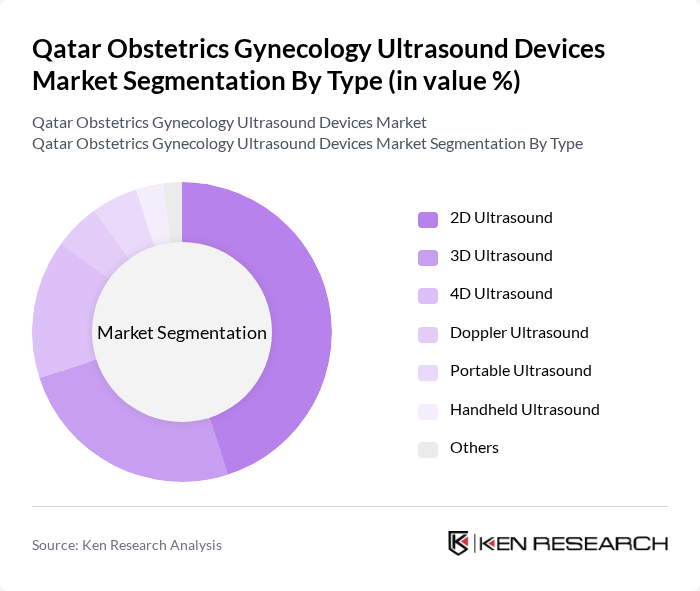
By Type:The market is segmented into various types of ultrasound devices, including 2D, 3D, 4D, Doppler, portable, handheld, and others. Among these, 2D ultrasound devices dominate the market due to their widespread use in routine obstetric examinations and their cost-effectiveness. The simplicity and reliability of 2D imaging make it the preferred choice for many healthcare providers, although 3D and 4D technologies are gaining traction for their enhanced imaging capabilities, especially in fetal anomaly detection and advanced prenatal screening .
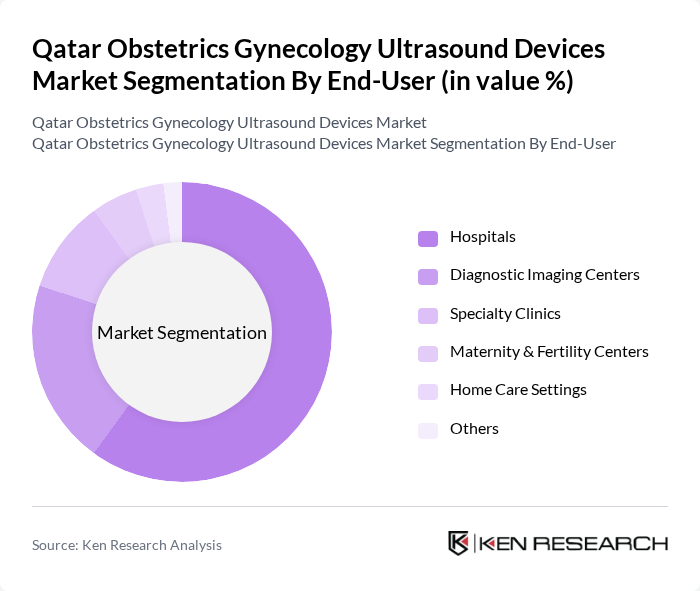
By End-User:The end-user segmentation includes hospitals, diagnostic imaging centers, specialty clinics, maternity and fertility centers, home care settings, and others. Hospitals are the leading end-users, primarily due to their comprehensive healthcare services and the high volume of obstetric and gynecological cases they handle. The increasing number of hospitals equipped with advanced ultrasound technology and stringent infection control protocols is a significant factor contributing to their dominance in the market. Diagnostic imaging centers are also expanding rapidly, driven by demand for specialized prenatal and gynecological imaging .
The Qatar Obstetrics Gynecology Ultrasound Devices Market is characterized by a dynamic mix of regional and international players. Leading participants such as Siemens Healthineers, GE HealthCare, Philips Healthcare, Canon Medical Systems Corporation, Fujifilm Healthcare, Mindray Medical International Limited, Samsung Medison Co., Ltd., Hitachi, Ltd. (Hitachi Healthcare), Esaote S.p.A., Hologic, Inc., Alpinion Medical Systems Co., Ltd., Bracco Imaging S.p.A., Carestream Health, Inc., B. Braun Melsungen AG, Terason (Teratech Corporation), Hisense Medical, Shenzhen Mindray Bio-Medical Electronics Co., Ltd. contribute to innovation, geographic expansion, and service delivery in this space.
The future of the obstetrics gynecology ultrasound devices market in Qatar appears promising, driven by technological advancements and increased healthcare investments. The government is expected to enhance healthcare infrastructure, facilitating better access to ultrasound services. Additionally, the integration of telemedicine is likely to expand the reach of ultrasound diagnostics, particularly in underserved areas. As healthcare providers adopt innovative solutions, the market is poised for significant growth, improving maternal and fetal health outcomes across the nation.
| Segment | Sub-Segments |
|---|---|
| By Type | D Ultrasound D Ultrasound D Ultrasound Doppler Ultrasound Portable Ultrasound Handheld Ultrasound Others |
| By End-User | Hospitals Diagnostic Imaging Centers Specialty Clinics Maternity & Fertility Centers Home Care Settings Others |
| By Application | Obstetrics Gynecology Fertility Treatments Emergency Care Fetal Monitoring Others |
| By Technology | Analog Ultrasound Digital Ultrasound Hybrid Ultrasound AI-Integrated Ultrasound Others |
| By Distribution Channel | Direct Sales Distributors Online Sales Others |
| By Region | Doha Al Rayyan Umm Salal Al Wakrah Al Khor Others |
| By Policy Support | Government Subsidies Tax Incentives Grants for Healthcare Facilities Others |
| Scope Item/Segment | Sample Size | Target Respondent Profiles |
|---|---|---|
| Obstetric Ultrasound Usage | 100 | Obstetricians, Midwives |
| Gynecological Ultrasound Applications | 80 | Gynecologists, Reproductive Health Specialists |
| Hospital Procurement Insights | 60 | Procurement Managers, Hospital Administrators |
| Medical Equipment Distributors | 40 | Sales Representatives, Product Managers |
| Healthcare Policy Impact | 40 | Health Economists, Policy Makers |
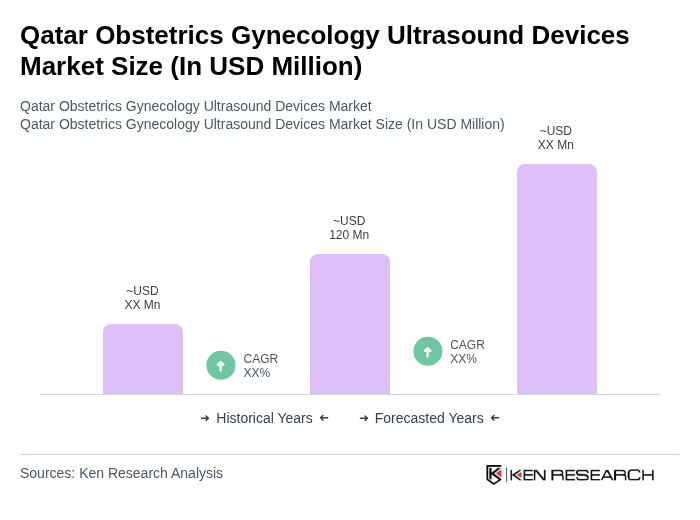
The Qatar Obstetrics Gynecology Ultrasound Devices Market is valued at approximately USD 120 million, reflecting a significant growth trend driven by increasing gynecological disorders, heightened awareness of prenatal care, and advancements in ultrasound technology.

What makes us stand out is that our consultants follow Robust, Refine and Result (RRR) methodology. Robust for clear definitions, approaches and sanity checking, Refine for differentiating respondents' facts and opinions, and Result for presenting data with story.

We have set a benchmark in the industry by offering our clients with syndicated and customized market research reports featuring coverage of entire market as well as meticulous research and analyst insights.

While we don't replace traditional research, we flip the method upside down. Our dual approach of Top Bottom & Bottom Top ensures quality deliverable by not just verifying company fundamentals but also looking at the sector and macroeconomic factors.

With one step in the future, our research team constantly tries to show you the bigger picture. We help with some of the tough questions you may encounter along the way: How is the industry positioned? Best marketing channel? KPI's of competitors? By aligning every element, we help maximize success.

Our report gives you instant access to the answers and sources that other companies might choose to hide. We elaborate each steps of research methodology we have used and showcase you the sample size to earn your trust.

If you need any support, we are here! We pride ourselves on universe strength, data quality, and quick, friendly, and professional service.













