Region:Middle East
Author(s):Rebecca
Product Code:KRAB8361
Pages:84
Published On:October 2025
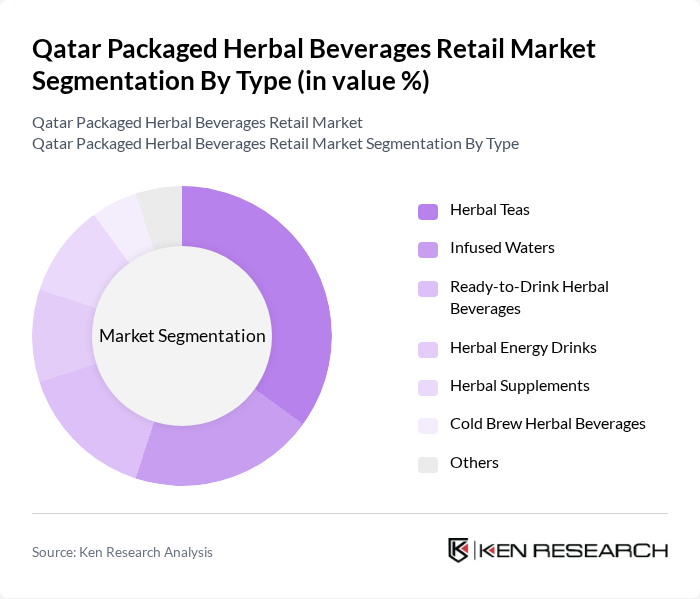
By Type:The market is segmented into various types of herbal beverages, including Herbal Teas, Infused Waters, Ready-to-Drink Herbal Beverages, Herbal Energy Drinks, Herbal Supplements, Cold Brew Herbal Beverages, and Others. Among these, Herbal Teas have emerged as the leading sub-segment due to their traditional appeal and perceived health benefits. Consumers are increasingly seeking natural remedies and wellness solutions, which has led to a growing preference for herbal teas over other beverage types.
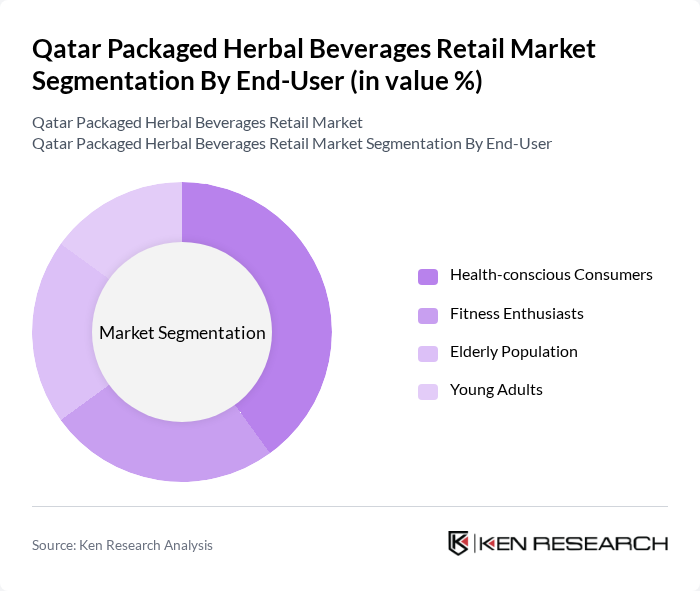
By End-User:The end-user segmentation includes Health-conscious Consumers, Fitness Enthusiasts, Elderly Population, and Young Adults. Health-conscious Consumers represent the largest segment, driven by a growing trend towards healthier lifestyles and dietary choices. This demographic is increasingly prioritizing wellness and preventive health measures, leading to a higher consumption of herbal beverages that are perceived as beneficial for health.
The Qatar Packaged Herbal Beverages Retail Market is characterized by a dynamic mix of regional and international players. Leading participants such as Al Ain Water, Qatar Beverage Company, Nespresso Qatar, Qatar National Beverage Company, Al Waha Beverages, Qatari Herbal Drinks, Al Jazeera Beverage Company, Qatar Pure Water, Al Rayyan Beverages, Qatar Green Tea Company, Herbalife Qatar, Al Fardan Beverages, Qatar Organic Beverages, Al Mufeed Herbal Drinks, Qatar Herbal Tea Co. contribute to innovation, geographic expansion, and service delivery in this space.
The future of the Qatar packaged herbal beverages market appears promising, driven by increasing health awareness and a shift towards natural products. As consumers continue to prioritize wellness, the demand for innovative herbal beverages is expected to rise. Additionally, the expansion of e-commerce platforms will facilitate greater access to these products, allowing brands to reach a broader audience. Companies that adapt to these trends and invest in product development will likely thrive in this evolving market landscape.
| Segment | Sub-Segments |
|---|---|
| By Type | Herbal Teas Infused Waters Ready-to-Drink Herbal Beverages Herbal Energy Drinks Herbal Supplements Cold Brew Herbal Beverages Others |
| By End-User | Health-conscious Consumers Fitness Enthusiasts Elderly Population Young Adults |
| By Sales Channel | Supermarkets/Hypermarkets Online Retail Health Food Stores Convenience Stores |
| By Packaging Type | Bottles Tetra Packs Cans Pouches |
| By Flavor Profile | Mint Ginger Chamomile Mixed Berry |
| By Price Range | Premium Mid-range Budget |
| By Distribution Mode | Direct Sales Indirect Sales Franchise Others |
| Scope Item/Segment | Sample Size | Target Respondent Profiles |
|---|---|---|
| Retail Herbal Beverage Sales | 150 | Store Managers, Category Buyers |
| Consumer Preferences for Herbal Products | 200 | Health-Conscious Consumers, Regular Herbal Beverage Drinkers |
| Distribution Channels for Herbal Beverages | 100 | Logistics Coordinators, Distribution Managers |
| Market Trends and Innovations | 80 | Product Development Managers, Marketing Executives |
| Regulatory Compliance Insights | 60 | Quality Assurance Officers, Regulatory Affairs Specialists |
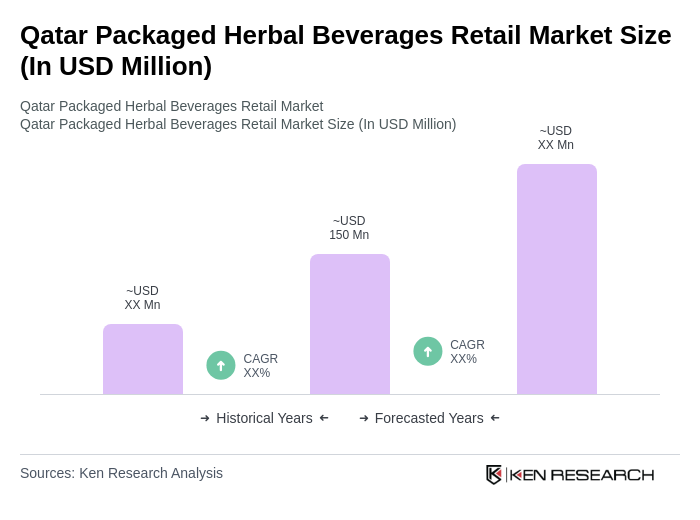
The Qatar Packaged Herbal Beverages Retail Market is valued at approximately USD 150 million, reflecting a significant growth trend driven by increasing consumer awareness of health benefits associated with herbal beverages and a shift towards natural and organic products.

What makes us stand out is that our consultants follow Robust, Refine and Result (RRR) methodology. Robust for clear definitions, approaches and sanity checking, Refine for differentiating respondents' facts and opinions, and Result for presenting data with story.

We have set a benchmark in the industry by offering our clients with syndicated and customized market research reports featuring coverage of entire market as well as meticulous research and analyst insights.

While we don't replace traditional research, we flip the method upside down. Our dual approach of Top Bottom & Bottom Top ensures quality deliverable by not just verifying company fundamentals but also looking at the sector and macroeconomic factors.

With one step in the future, our research team constantly tries to show you the bigger picture. We help with some of the tough questions you may encounter along the way: How is the industry positioned? Best marketing channel? KPI's of competitors? By aligning every element, we help maximize success.

Our report gives you instant access to the answers and sources that other companies might choose to hide. We elaborate each steps of research methodology we have used and showcase you the sample size to earn your trust.

If you need any support, we are here! We pride ourselves on universe strength, data quality, and quick, friendly, and professional service.













