Region:Middle East
Author(s):Shubham
Product Code:KRAD3630
Pages:86
Published On:November 2025
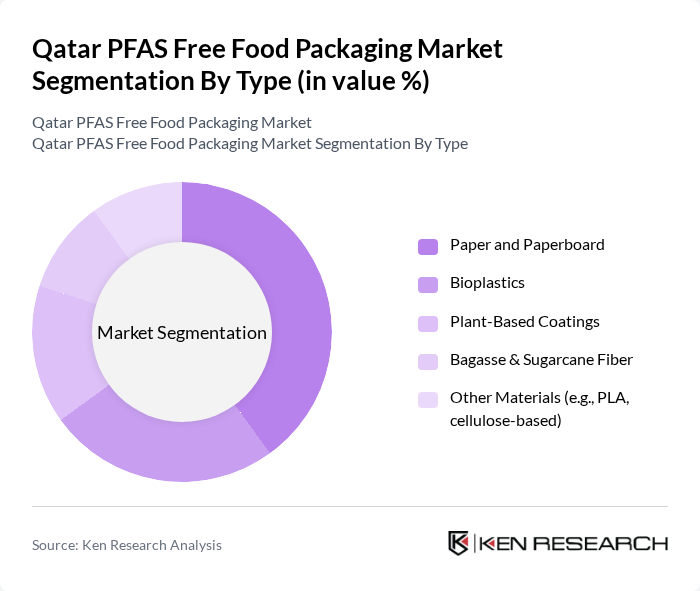
By Type:The market is segmented by packaging material, including Paper and Paperboard, Bioplastics, Plant-Based Coatings, Bagasse & Sugarcane Fiber, and Other Materials (such as PLA and cellulose-based options). Paper and Paperboard remain the leading segment due to their recyclability and widespread acceptance in food service. Bioplastics are gaining momentum as consumers and businesses increasingly prioritize compostable and renewable alternatives, while plant-based coatings and bagasse solutions are expanding their presence in response to sustainability mandates .
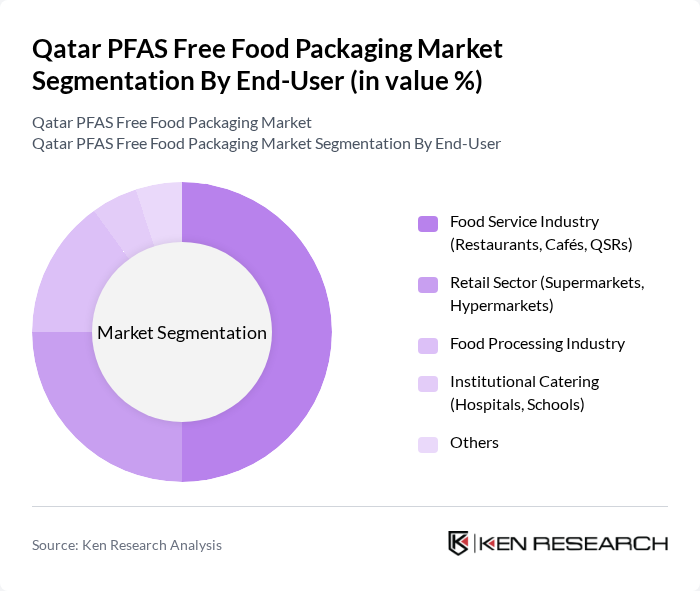
By End-User:End-user segmentation covers the Food Service Industry (including Restaurants, Cafés, QSRs), Retail Sector (Supermarkets, Hypermarkets), Food Processing Industry, Institutional Catering (Hospitals, Schools), and Others. The Food Service Industry is the dominant segment, reflecting the high volume of takeout, delivery, and quick-service restaurant operations, which are major users of PFAS-free packaging. Retail and supermarket adoption is also rising as consumer demand for safe and sustainable food packaging grows .
The Qatar PFAS Free Food Packaging Market is characterized by a dynamic mix of regional and international players. Leading participants such as talabat (Delivery Hero SE), First Pack Factory LLC, Liberty Packing Manufacturers, Papercut Factory, Ecoleaf Packaging & Printing, Detpak, Eco-Products, Inc., Biopak, Vegware, Genpak, Green Paper Products, BioBag International AS, Pactiv Evergreen Inc., Novolex, Huhtamaki, Stora Enso, Smurfit Kappa, International Paper, WestRock, Mondi Group, Tetra Pak, Berry Global Group, delfortgroup contribute to innovation, geographic expansion, and service delivery in this space.
The future of the PFAS-free food packaging market in Qatar appears promising, driven by increasing consumer demand for health-conscious and sustainable options. As regulatory frameworks tighten, manufacturers are likely to invest more in innovative packaging technologies that meet safety standards. Additionally, the rise of e-commerce is expected to further influence packaging design and materials, pushing companies to adapt quickly to changing consumer preferences. Overall, the market is poised for significant transformation as it aligns with global sustainability trends.
| Segment | Sub-Segments |
|---|---|
| By Type | Paper and Paperboard Bioplastics Plant-Based Coatings Bagasse & Sugarcane Fiber Other Materials (e.g., PLA, cellulose-based) |
| By End-User | Food Service Industry (Restaurants, Cafés, QSRs) Retail Sector (Supermarkets, Hypermarkets) Food Processing Industry Institutional Catering (Hospitals, Schools) Others |
| By Application | Takeaway Packaging Food Storage Solutions Catering Supplies Bakery & Confectionery Packaging Others |
| By Distribution Channel | Online Retail Supermarkets and Hypermarkets Specialty Stores B2B Direct Sales Others |
| By Region | Doha Al Rayyan Umm Salal Al Wakrah Other Regions |
| By Consumer Demographics | Age Groups Income Levels Lifestyle Preferences (Eco-conscious, Convenience Seekers) Other Demographics Others |
| By Sustainability Certification | FSC Certified Cradle to Cradle Certified Compostable/EN13432 Certified Others |
| Scope Item/Segment | Sample Size | Target Respondent Profiles |
|---|---|---|
| Food Packaging Manufacturers | 40 | Production Managers, Quality Assurance Officers |
| Food Service Operators | 40 | Restaurant Owners, Supply Chain Managers |
| Retail Sector Decision Makers | 40 | Category Managers, Procurement Specialists |
| Regulatory Bodies | 40 | Policy Makers, Environmental Compliance Officers |
| Consumer Focus Groups | 40 | General Consumers, Health-Conscious Shoppers |
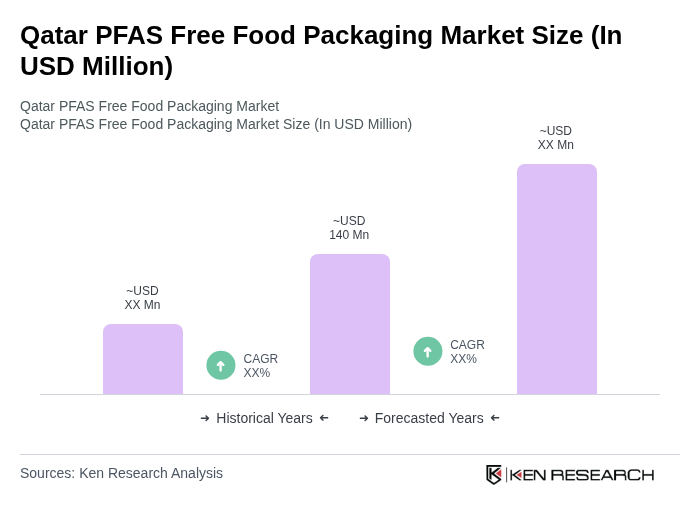
The Qatar PFAS Free Food Packaging Market is valued at approximately USD 140 million, reflecting a significant shift towards safer and sustainable packaging alternatives driven by consumer awareness and regulatory actions.

What makes us stand out is that our consultants follow Robust, Refine and Result (RRR) methodology. Robust for clear definitions, approaches and sanity checking, Refine for differentiating respondents' facts and opinions, and Result for presenting data with story.

We have set a benchmark in the industry by offering our clients with syndicated and customized market research reports featuring coverage of entire market as well as meticulous research and analyst insights.

While we don't replace traditional research, we flip the method upside down. Our dual approach of Top Bottom & Bottom Top ensures quality deliverable by not just verifying company fundamentals but also looking at the sector and macroeconomic factors.

With one step in the future, our research team constantly tries to show you the bigger picture. We help with some of the tough questions you may encounter along the way: How is the industry positioned? Best marketing channel? KPI's of competitors? By aligning every element, we help maximize success.

Our report gives you instant access to the answers and sources that other companies might choose to hide. We elaborate each steps of research methodology we have used and showcase you the sample size to earn your trust.

If you need any support, we are here! We pride ourselves on universe strength, data quality, and quick, friendly, and professional service.













