Region:Middle East
Author(s):Geetanshi
Product Code:KRAB8136
Pages:86
Published On:October 2025
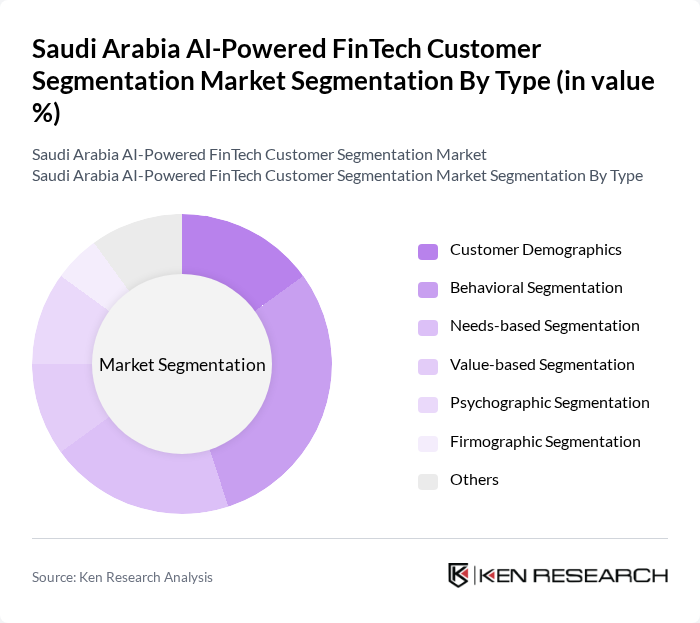
By Type:The market segmentation by type includes various approaches to customer segmentation, which are essential for tailoring financial services to meet diverse customer needs. The subsegments include Customer Demographics, Behavioral Segmentation, Needs-based Segmentation, Value-based Segmentation, Psychographic Segmentation, Firmographic Segmentation, and Others. Among these, Behavioral Segmentation is currently leading the market due to its ability to analyze customer interactions and preferences, allowing financial institutions to create personalized offerings that enhance customer satisfaction and loyalty.
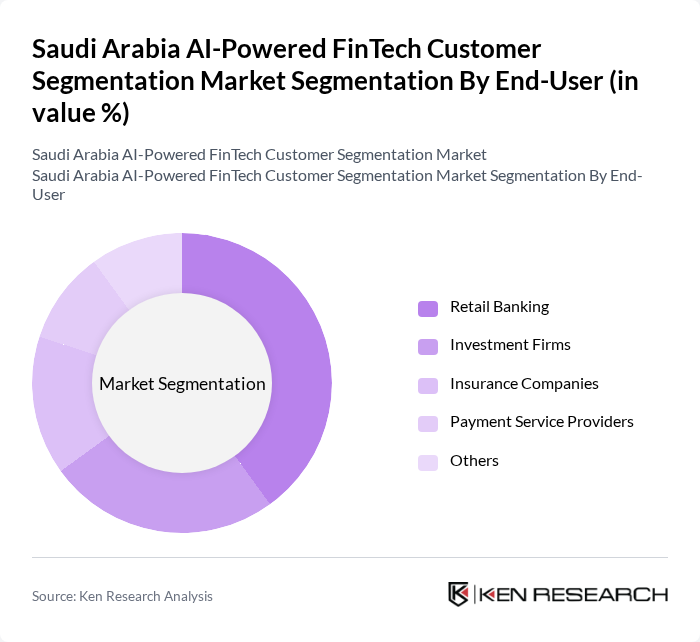
By End-User:The end-user segmentation encompasses various sectors utilizing AI-powered customer segmentation solutions. This includes Retail Banking, Investment Firms, Insurance Companies, Payment Service Providers, and Others. Retail Banking is the dominant segment, as banks increasingly leverage AI technologies to enhance customer engagement, streamline operations, and offer tailored financial products that meet the specific needs of their clientele.
The Saudi Arabia AI-Powered FinTech Customer Segmentation Market is characterized by a dynamic mix of regional and international players. Leading participants such as STC Pay, Tamam Financing, Fawry, PayTabs, NymCard, Raqamyah, Alinma Bank, Riyad Bank, Al Rajhi Bank, Bank Aljazira, Alinma Investment, SABB, Arab National Bank, Gulf International Bank, Saudi Investment Bank contribute to innovation, geographic expansion, and service delivery in this space.
The future of the AI-powered FinTech customer segmentation market in Saudi Arabia appears promising, driven by technological advancements and evolving consumer preferences. As digital banking continues to expand, the integration of AI technologies will enhance customer insights and service personalization. Additionally, the collaboration between FinTech firms and traditional banks is expected to foster innovation, leading to the development of more sophisticated financial products tailored to diverse customer needs, ultimately enhancing market competitiveness.
| Segment | Sub-Segments |
|---|---|
| By Type | Customer Demographics Behavioral Segmentation Needs-based Segmentation Value-based Segmentation Psychographic Segmentation Firmographic Segmentation Others |
| By End-User | Retail Banking Investment Firms Insurance Companies Payment Service Providers Others |
| By Application | Risk Assessment Customer Acquisition Fraud Detection Personalized Marketing Others |
| By Sales Channel | Direct Sales Online Platforms Partnerships with Financial Institutions Others |
| By Distribution Mode | Digital Distribution Physical Distribution Hybrid Distribution Others |
| By Customer Segment | Individual Customers Small and Medium Enterprises (SMEs) Large Corporations Government Entities Others |
| By Pricing Strategy | Subscription-based Pricing Pay-per-use Pricing Freemium Model Others |
| Scope Item/Segment | Sample Size | Target Respondent Profiles |
|---|---|---|
| Retail Banking Customer Segmentation | 150 | Banking Executives, Customer Experience Managers |
| Investment Services User Insights | 100 | Investment Advisors, Portfolio Managers |
| Insurance Product Preferences | 80 | Insurance Analysts, Product Development Teams |
| Digital Payment Adoption Trends | 120 | FinTech Innovators, Payment Solution Architects |
| Wealth Management Client Profiles | 90 | Wealth Managers, Financial Planners |
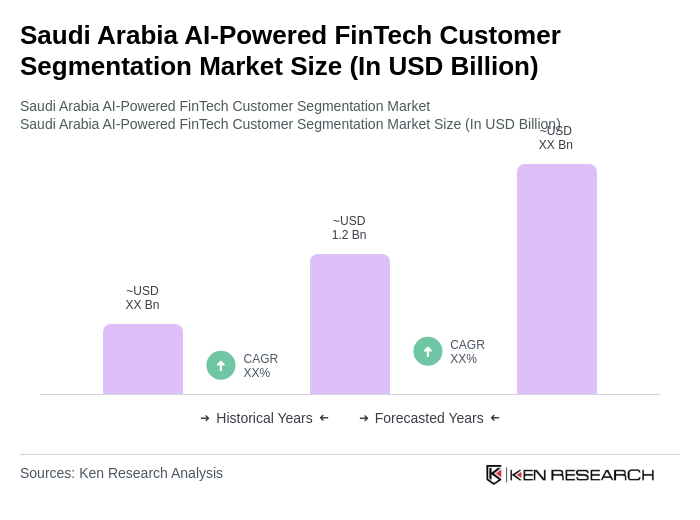
The Saudi Arabia AI-Powered FinTech Customer Segmentation Market is valued at approximately USD 1.2 billion, reflecting significant growth driven by the increasing adoption of digital banking solutions and personalized financial services.

What makes us stand out is that our consultants follow Robust, Refine and Result (RRR) methodology. Robust for clear definitions, approaches and sanity checking, Refine for differentiating respondents' facts and opinions, and Result for presenting data with story.

We have set a benchmark in the industry by offering our clients with syndicated and customized market research reports featuring coverage of entire market as well as meticulous research and analyst insights.

While we don't replace traditional research, we flip the method upside down. Our dual approach of Top Bottom & Bottom Top ensures quality deliverable by not just verifying company fundamentals but also looking at the sector and macroeconomic factors.

With one step in the future, our research team constantly tries to show you the bigger picture. We help with some of the tough questions you may encounter along the way: How is the industry positioned? Best marketing channel? KPI's of competitors? By aligning every element, we help maximize success.

Our report gives you instant access to the answers and sources that other companies might choose to hide. We elaborate each steps of research methodology we have used and showcase you the sample size to earn your trust.

If you need any support, we are here! We pride ourselves on universe strength, data quality, and quick, friendly, and professional service.













