Region:Middle East
Author(s):Dev
Product Code:KRAA9674
Pages:92
Published On:November 2025
By Type:The market is segmented into Manual Cleaning Equipment, Automatic Cleaning Equipment, Industrial Cleaning Equipment, Specialty Cleaning Equipment, and Others. Each segment addresses specific consumer needs, with automatic and industrial cleaning equipment gaining traction due to their efficiency, labor-saving benefits, and suitability for large-scale operations. The adoption of robotic and autonomous cleaning machines is particularly strong in commercial and industrial environments, reflecting a broader shift toward automation in facility management .
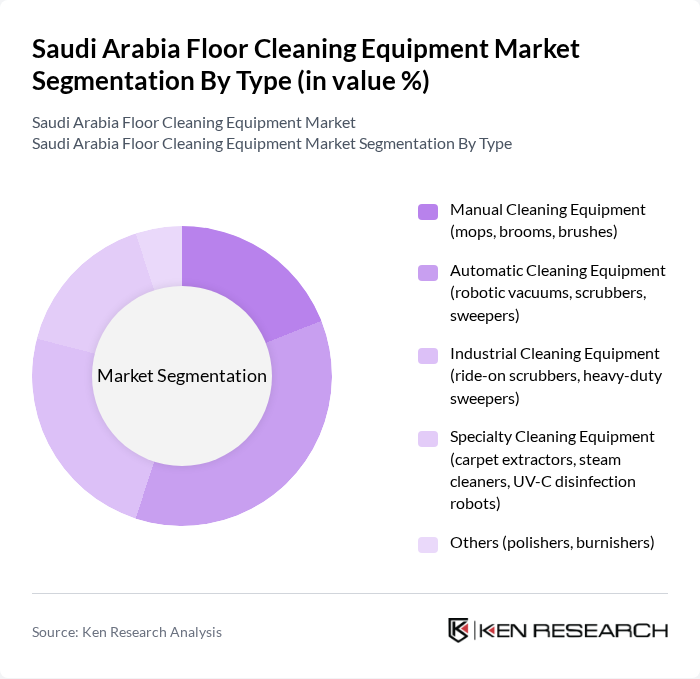
The Automatic Cleaning Equipment segment leads the market, driven by the adoption of robotic vacuums and scrubbers in commercial and industrial settings. These solutions offer consistent cleaning standards, reduce labor dependency, and enhance operational efficiency, making them the preferred choice for large facilities and high-traffic environments .
By End-User:The market is segmented into Residential, Commercial, Industrial, Government & Utilities, and Others. Commercial and industrial sectors are the largest users, driven by high cleaning demands, regulatory compliance, and the need for efficient facility management. The residential segment is also growing, supported by rising disposable incomes and the popularity of automated cleaning devices .
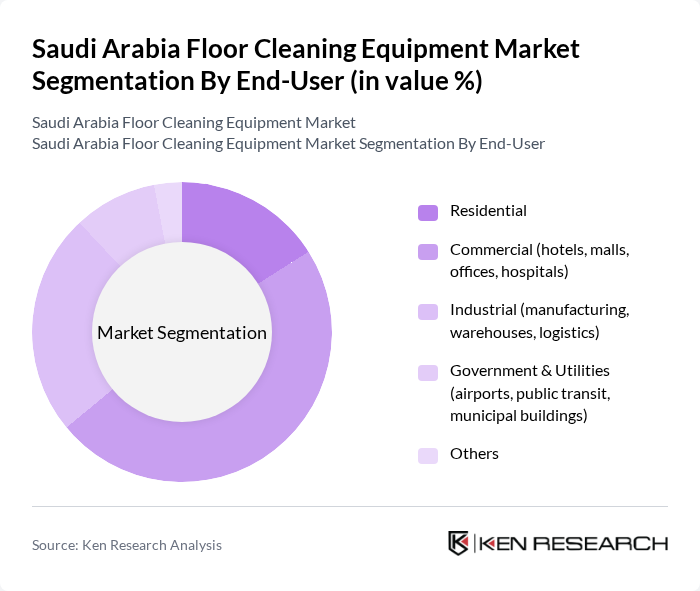
The Commercial segment remains the leading end-user, propelled by the expansion of hotels, shopping malls, and office complexes in urban centers. These facilities require regular, high-standard cleaning to maintain hygiene and aesthetics, especially in high-traffic areas. The post-pandemic emphasis on public health and safety continues to accelerate the adoption of advanced cleaning equipment in commercial environments .
The Saudi Arabia Floor Cleaning Equipment Market is characterized by a dynamic mix of regional and international players. Leading participants such as Kärcher, Nilfisk, Tennant Company, Diversey Holdings, Ecolab, Bissell, ProTeam, Hako, IPC Eagle, Viper Cleaning Equipment, Cleanfix, Numatic International, Avidbots, iRobot, Al-Jazira Equipment Company, Al-Falah Cleaning Equipment, Taski (Diversey), Fimap, Comac, Truvox International contribute to innovation, geographic expansion, and service delivery in this space.
The future of the Saudi Arabia floor cleaning equipment market appears promising, driven by technological advancements and a growing emphasis on sustainability. As businesses increasingly adopt automated solutions, the market is likely to witness a shift towards smart cleaning technologies integrated with IoT capabilities. Additionally, the rising demand for eco-friendly cleaning products will further shape the market landscape, encouraging manufacturers to innovate and align their offerings with environmental standards and consumer preferences.
| Segment | Sub-Segments |
|---|---|
| By Type | Manual Cleaning Equipment Automatic Cleaning Equipment Industrial Cleaning Equipment Specialty Cleaning Equipment Others |
| By End-User | Residential Commercial Industrial Government & Utilities Others |
| By Application | Floor Maintenance Carpet Cleaning Hard Surface Cleaning Others |
| By Distribution Channel | Online Retail Offline Retail Direct Sales Others |
| By Region | Central Region Eastern Region Western Region Southern Region |
| By Brand | Local Brands International Brands Private Labels Others |
| By Price Range | Budget Mid-Range Premium Others |
| Scope Item/Segment | Sample Size | Target Respondent Profiles |
|---|---|---|
| Commercial Cleaning Services | 100 | Operations Managers, Business Owners |
| Healthcare Facilities | 60 | Facility Managers, Infection Control Officers |
| Hospitality Sector | 50 | Housekeeping Managers, Procurement Officers |
| Retail Chains | 70 | Store Managers, Maintenance Supervisors |
| Educational Institutions | 40 | Facility Coordinators, Administrative Heads |
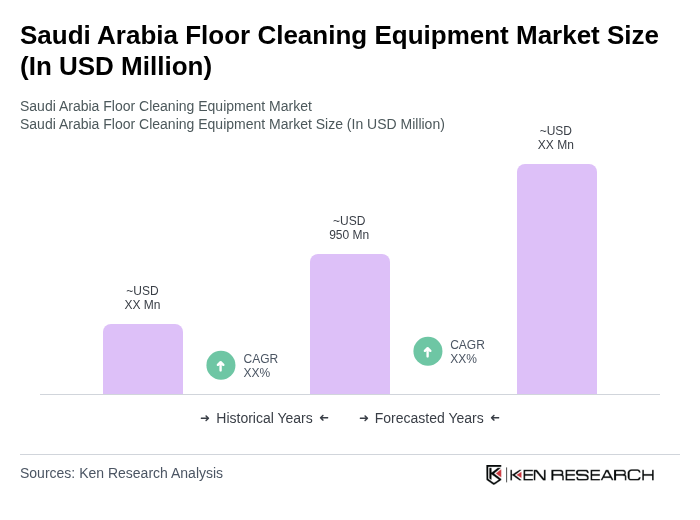
The Saudi Arabia Floor Cleaning Equipment Market is valued at approximately USD 950 million, reflecting growth driven by urbanization, infrastructure development, and increased hygiene awareness, particularly following the COVID-19 pandemic.

What makes us stand out is that our consultants follow Robust, Refine and Result (RRR) methodology. Robust for clear definitions, approaches and sanity checking, Refine for differentiating respondents' facts and opinions, and Result for presenting data with story.

We have set a benchmark in the industry by offering our clients with syndicated and customized market research reports featuring coverage of entire market as well as meticulous research and analyst insights.

While we don't replace traditional research, we flip the method upside down. Our dual approach of Top Bottom & Bottom Top ensures quality deliverable by not just verifying company fundamentals but also looking at the sector and macroeconomic factors.

With one step in the future, our research team constantly tries to show you the bigger picture. We help with some of the tough questions you may encounter along the way: How is the industry positioned? Best marketing channel? KPI's of competitors? By aligning every element, we help maximize success.

Our report gives you instant access to the answers and sources that other companies might choose to hide. We elaborate each steps of research methodology we have used and showcase you the sample size to earn your trust.

If you need any support, we are here! We pride ourselves on universe strength, data quality, and quick, friendly, and professional service.













