Region:Middle East
Author(s):Dev
Product Code:KRAC2998
Pages:85
Published On:January 2026
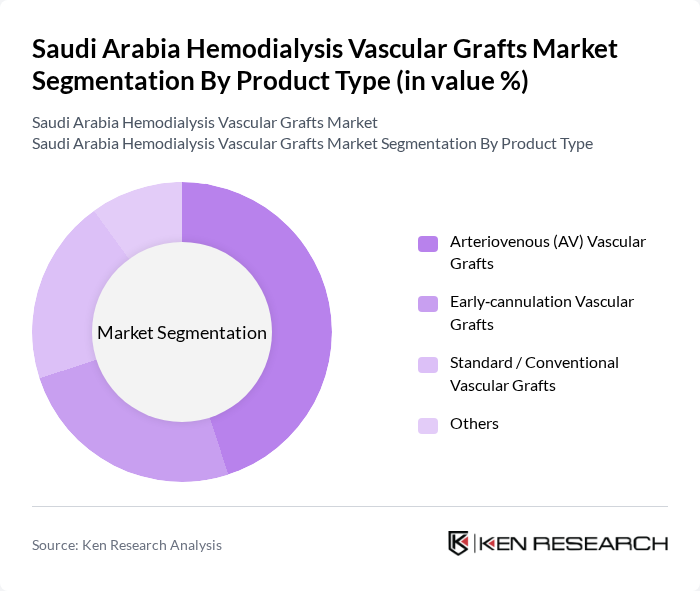
By Product Type:The product type segmentation includes various categories of vascular grafts used in hemodialysis procedures. The primary subsegments are Arteriovenous (AV) Vascular Grafts, Early-cannulation Vascular Grafts, Standard / Conventional Vascular Grafts, and Others. Arteriovenous (AV) Vascular Grafts are widely used in patients who are not suitable for AV fistulas or require faster access creation, and therefore represent the most frequently used graft type in hemodialysis access globally. The increasing number of patients requiring dialysis, the clinical preference for reliable and repeatable vascular access, and the need to reduce catheter dependence contribute to the leading position of AV grafts in the market.
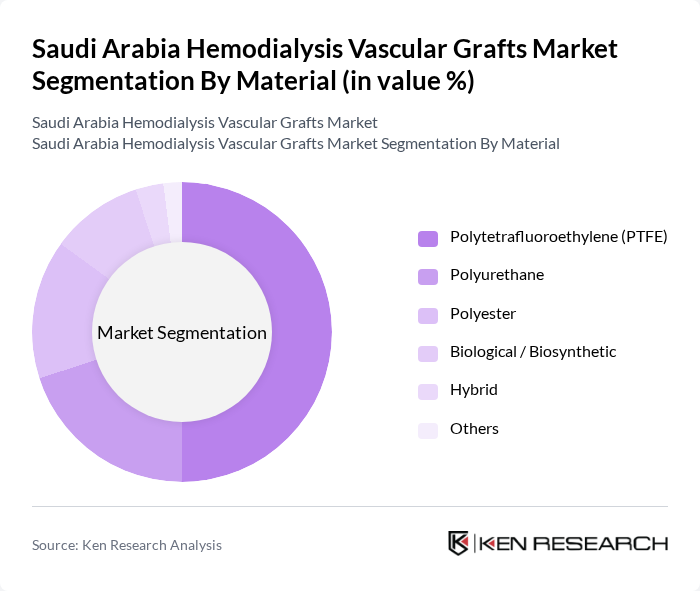
By Material:The material segmentation encompasses various types of materials used in the manufacturing of hemodialysis vascular grafts. The key subsegments include Polytetrafluoroethylene (PTFE), Polyurethane, Polyester, Biological / Biosynthetic, Hybrid, and Others. Polytetrafluoroethylene (PTFE), particularly expanded PTFE (ePTFE), is the leading material in this market due to its biocompatibility, favorable mechanical properties, and long-term patency, making it the preferred choice for synthetic hemodialysis grafts worldwide. The increasing demand for high-quality, infection-resistant, and durable grafts, along with the strong clinical evidence base for PTFE grafts in vascular access, further solidifies PTFE's dominance in the market.
The Saudi Arabia Hemodialysis Vascular Grafts Market is characterized by a dynamic mix of regional and international players. Leading participants such as Medtronic plc, Baxter International Inc., Fresenius Medical Care AG & Co. KGaA, B. Braun Melsungen AG, Terumo Corporation, Cook Medical LLC, W. L. Gore & Associates, Inc., LeMaitre Vascular, Inc., Getinge AB, C. R. Bard (Becton, Dickinson and Company), AngioDynamics, Inc., Merit Medical Systems, Inc., Teleflex Incorporated, Vascudyne, Inc., Other Emerging Regional Players contribute to innovation, geographic expansion, and service delivery in this space.
The future of the hemodialysis vascular grafts market in Saudi Arabia appears promising, driven by ongoing healthcare reforms and technological advancements. The government’s commitment to enhancing healthcare infrastructure is expected to facilitate better access to dialysis services. Additionally, the integration of telemedicine and personalized medicine approaches will likely improve patient engagement and treatment adherence, further propelling market growth. As the healthcare landscape evolves, the demand for innovative and effective vascular graft solutions will continue to rise.
| Segment | Sub-Segments |
|---|---|
| By Product Type | Arteriovenous (AV) Vascular Grafts Early?cannulation Vascular Grafts Standard / Conventional Vascular Grafts Others |
| By Material | Polytetrafluoroethylene (PTFE) Polyurethane Polyester Biological / Biosynthetic Hybrid Others |
| By Configuration | Straight Grafts Tapered Grafts Curved / Loop Grafts Others |
| By End-Use | Hospitals Ambulatory Surgical Centers Dialysis Centers Others |
| By Distribution Channel | Direct / Tender-based Sales Distributors Online / E-procurement Portals Others |
| By Region | Central Region Eastern Region Western Region Southern Region |
| By Patient Profile | Incident Hemodialysis Patients Prevalent Hemodialysis Patients Diabetic Nephropathy Patients Others |
| Scope Item/Segment | Sample Size | Target Respondent Profiles |
|---|---|---|
| Nephrology Clinics | 120 | Nephrologists, Clinic Managers |
| Dialysis Centers | 100 | Healthcare Administrators, Procurement Officers |
| Vascular Graft Manufacturers | 80 | Product Managers, Sales Directors |
| Patient Advocacy Groups | 60 | Patient Representatives, Healthcare Advocates |
| Regulatory Bodies | 40 | Regulatory Affairs Specialists, Policy Makers |
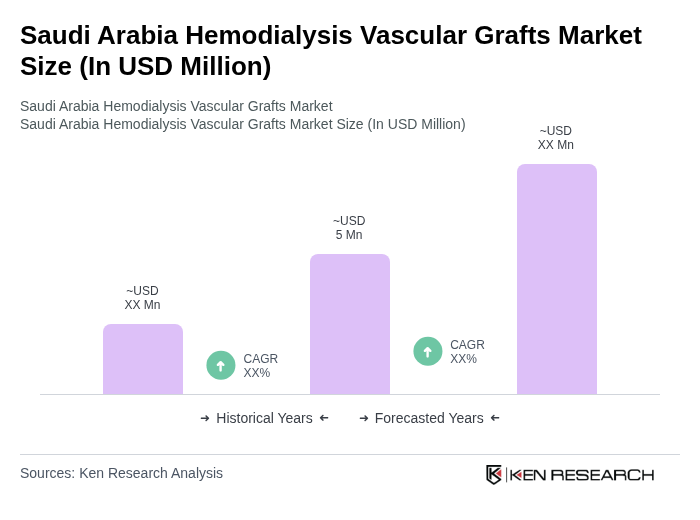
The Saudi Arabia Hemodialysis Vascular Grafts Market is valued at approximately USD 5 million, reflecting a significant demand driven by the increasing prevalence of chronic kidney diseases and advancements in medical technology.

What makes us stand out is that our consultants follow Robust, Refine and Result (RRR) methodology. Robust for clear definitions, approaches and sanity checking, Refine for differentiating respondents' facts and opinions, and Result for presenting data with story.

We have set a benchmark in the industry by offering our clients with syndicated and customized market research reports featuring coverage of entire market as well as meticulous research and analyst insights.

While we don't replace traditional research, we flip the method upside down. Our dual approach of Top Bottom & Bottom Top ensures quality deliverable by not just verifying company fundamentals but also looking at the sector and macroeconomic factors.

With one step in the future, our research team constantly tries to show you the bigger picture. We help with some of the tough questions you may encounter along the way: How is the industry positioned? Best marketing channel? KPI's of competitors? By aligning every element, we help maximize success.

Our report gives you instant access to the answers and sources that other companies might choose to hide. We elaborate each steps of research methodology we have used and showcase you the sample size to earn your trust.

If you need any support, we are here! We pride ourselves on universe strength, data quality, and quick, friendly, and professional service.













