Region:Middle East
Author(s):Rebecca
Product Code:KRAD5043
Pages:86
Published On:December 2025
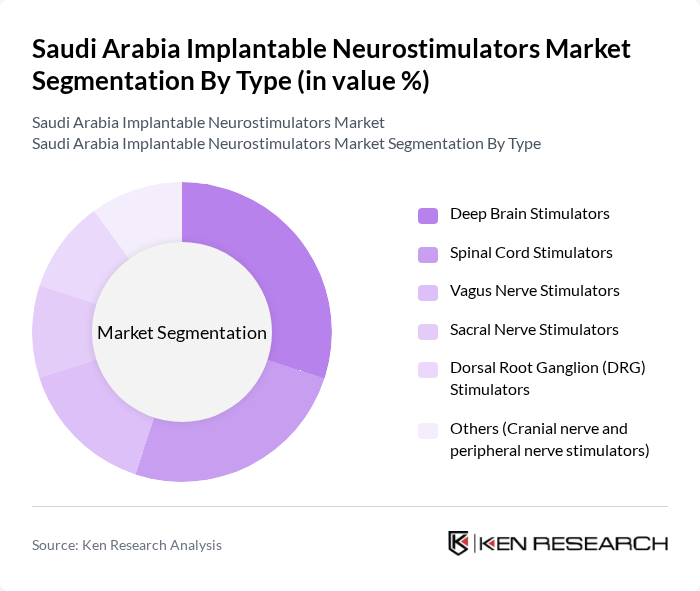
By Type:The market is segmented into various types of implantable neurostimulators, including Deep Brain Stimulators, Spinal Cord Stimulators, Vagus Nerve Stimulators, Sacral Nerve Stimulators, Dorsal Root Ganglion (DRG) Stimulators, and Others (Cranial nerve and peripheral nerve stimulators). Each type serves specific therapeutic needs, with varying levels of adoption based on clinical efficacy and patient outcomes.
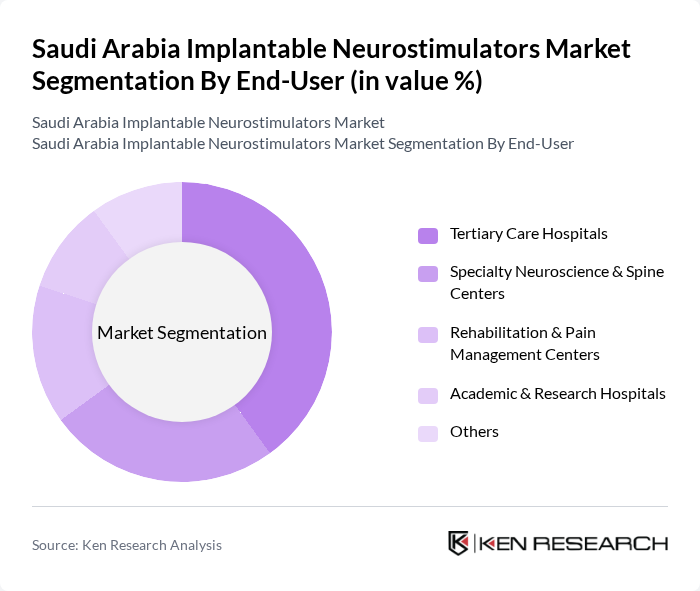
By End-User:The end-user segmentation includes Tertiary Care Hospitals, Specialty Neuroscience & Spine Centers, Rehabilitation & Pain Management Centers, Academic & Research Hospitals, and Others. Each end-user category plays a crucial role in the distribution and application of neurostimulators, with tertiary care hospitals being the primary users due to their advanced facilities and specialized staff.
The Saudi Arabia Implantable Neurostimulators Market is characterized by a dynamic mix of regional and international players. Leading participants such as Medtronic plc, Boston Scientific Corporation, Abbott Laboratories (including Abbott/St. Jude Medical neurostimulation portfolio), Nevro Corp, Axonics, Inc., NeuroPace, Inc., LivaNova PLC, Saluda Medical Pty Limited, Aleva Neurotherapeutics SA, Nalu Medical, Inc., MicroPort NeuroTech (part of MicroPort Scientific Corporation), Newronika S.p.A., Beijing PINS Medical Co., Ltd., SceneRay Co., Ltd., Integer Holdings Corporation (as an OEM/contract manufacturer for neurostimulators) contribute to innovation, geographic expansion, and service delivery in this space.
The future of the implantable neurostimulators market in Saudi Arabia appears promising, driven by technological advancements and an increasing focus on personalized medicine. As healthcare providers adopt more patient-centric approaches, the integration of artificial intelligence in neurostimulation devices is expected to enhance treatment outcomes. Additionally, the rise in outpatient procedures will likely facilitate quicker recovery times, making neurostimulation therapies more appealing to patients and healthcare systems alike.
| Segment | Sub-Segments |
|---|---|
| By Type | Deep Brain Stimulators Spinal Cord Stimulators Vagus Nerve Stimulators Sacral Nerve Stimulators Dorsal Root Ganglion (DRG) Stimulators Others (Cranial nerve and peripheral nerve stimulators) |
| By End-User | Tertiary Care Hospitals Specialty Neuroscience & Spine Centers Rehabilitation & Pain Management Centers Academic & Research Hospitals Others |
| By Application | Chronic Pain Management Movement Disorders (e.g., Parkinson’s disease, essential tremor, dystonia) Epilepsy Treatment Psychiatric Disorders (e.g., OCD, depression) Urinary & Fecal Incontinence Others (e.g., migraine, cluster headache) |
| By Distribution Channel | Direct Sales to Hospitals Local Medical Device Distributors Group Purchasing Organizations (GPOs) & Tenders Others |
| By Region | Central Region (including Riyadh) Eastern Region (including Dammam, Al Khobar) Western Region (including Jeddah, Makkah, Madinah) Southern Region Northern Region |
| By Patient Demographics | Age Group (Pediatric, Adult, Geriatric) Gender (Male, Female) Nationality (Saudi Nationals, Expatriates) Insurance Coverage Status (Public, Private, Self-pay) Others |
| By Technology | Rechargeable Neurostimulators Non-Rechargeable Neurostimulators Closed-Loop / Sensing-Enabled Systems MRI-Conditional & Advanced Imaging-Compatible Systems Others |
| Scope Item/Segment | Sample Size | Target Respondent Profiles |
|---|---|---|
| Neurosurgeons | 60 | Neurosurgeons, Medical Directors |
| Neurologists | 50 | Neurologists, Clinical Researchers |
| Hospital Administrators | 40 | Procurement Managers, Hospital CFOs |
| Patients with Neurostimulators | 50 | Patients, Caregivers |
| Healthcare Policy Makers | 40 | Health Policy Analysts, Regulatory Officials |
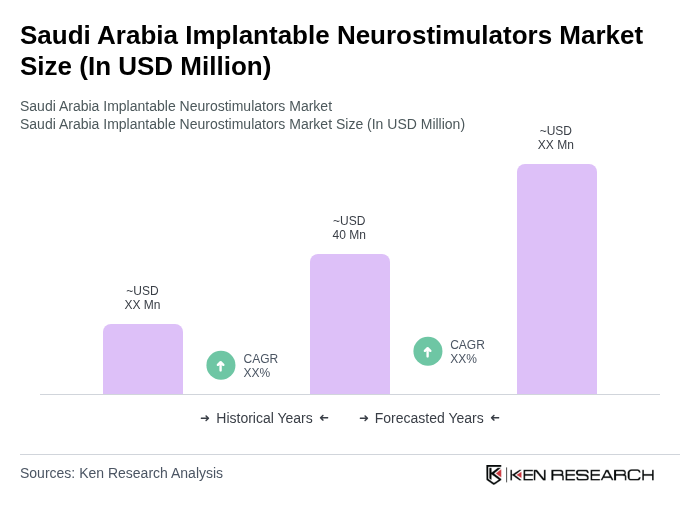
The Saudi Arabia Implantable Neurostimulators Market is valued at approximately USD 40 million, reflecting a five-year historical analysis. This growth is attributed to the rising prevalence of neurological disorders and advancements in neurostimulation technologies.

What makes us stand out is that our consultants follow Robust, Refine and Result (RRR) methodology. Robust for clear definitions, approaches and sanity checking, Refine for differentiating respondents' facts and opinions, and Result for presenting data with story.

We have set a benchmark in the industry by offering our clients with syndicated and customized market research reports featuring coverage of entire market as well as meticulous research and analyst insights.

While we don't replace traditional research, we flip the method upside down. Our dual approach of Top Bottom & Bottom Top ensures quality deliverable by not just verifying company fundamentals but also looking at the sector and macroeconomic factors.

With one step in the future, our research team constantly tries to show you the bigger picture. We help with some of the tough questions you may encounter along the way: How is the industry positioned? Best marketing channel? KPI's of competitors? By aligning every element, we help maximize success.

Our report gives you instant access to the answers and sources that other companies might choose to hide. We elaborate each steps of research methodology we have used and showcase you the sample size to earn your trust.

If you need any support, we are here! We pride ourselves on universe strength, data quality, and quick, friendly, and professional service.













