Region:Middle East
Author(s):Geetanshi
Product Code:KRAB6976
Pages:88
Published On:October 2025
 Market.png "Saudi Arabia Last-Mile Grocery Delivery EV (Two-Wheelers) Market Size")
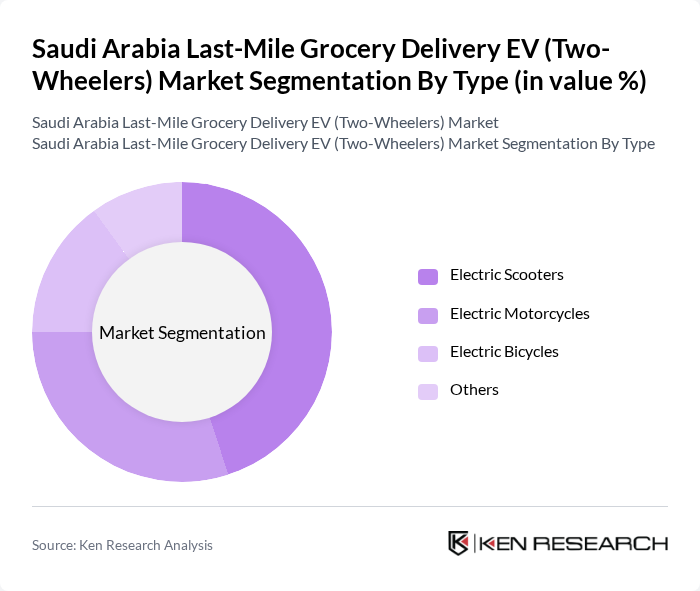
By Type:The market is segmented into various types of electric two-wheelers, including electric scooters, electric motorcycles, electric bicycles, and others. Among these, electric scooters are the most popular due to their affordability, ease of use, and suitability for urban environments. Electric motorcycles are gaining traction for longer delivery routes, while electric bicycles are favored for their eco-friendliness and health benefits. The "Others" category includes niche products that cater to specific delivery needs.
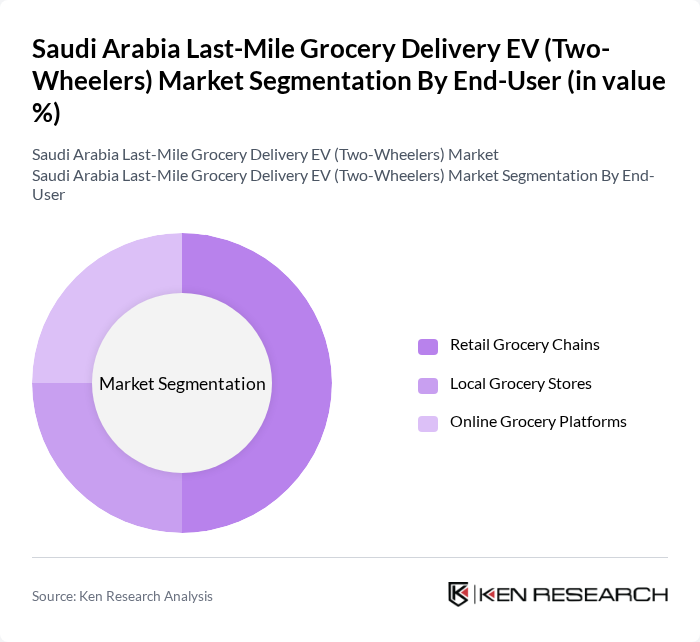
By End-User:The end-user segmentation includes retail grocery chains, local grocery stores, and online grocery platforms. Retail grocery chains dominate the market due to their extensive distribution networks and established customer bases. Local grocery stores are increasingly adopting electric two-wheelers to enhance their delivery capabilities. Online grocery platforms are rapidly growing, driven by the convenience they offer consumers, leading to a significant increase in demand for last-mile delivery solutions.
The Saudi Arabia Last-Mile Grocery Delivery EV (Two-Wheelers) Market is characterized by a dynamic mix of regional and international players. Leading participants such as Talabat, Nana, Carrefour, Lulu Hypermarket, Monsha'at, Zomato, Deliveroo, Fodex, Foodics, Jahez, Sary, Noon, Otlob, Fetchr, Careem NOW contribute to innovation, geographic expansion, and service delivery in this space.
The future of the last-mile grocery delivery EV market in Saudi Arabia appears promising, driven by increasing urbanization and consumer demand for convenience. As the government continues to support electric vehicle adoption through incentives and infrastructure development, businesses are likely to invest more in electric two-wheelers. Additionally, advancements in technology, such as AI-driven logistics, will enhance delivery efficiency. The market is expected to evolve, focusing on sustainable practices and innovative delivery solutions that cater to the growing environmental consciousness among consumers.
| Segment | Sub-Segments |
|---|---|
| By Type | Electric Scooters Electric Motorcycles Electric Bicycles Others |
| By End-User | Retail Grocery Chains Local Grocery Stores Online Grocery Platforms |
| By Distribution Mode | Direct Delivery Third-Party Logistics |
| By Price Range | Budget Segment Mid-Range Segment Premium Segment |
| By Application | Grocery Delivery Food Delivery Package Delivery |
| By Sales Channel | Online Sales Offline Sales |
| By Customer Segment | Individual Consumers Businesses Institutions |
| Scope Item/Segment | Sample Size | Target Respondent Profiles |
|---|---|---|
| Grocery Delivery Service Providers | 150 | Operations Managers, Logistics Coordinators |
| Consumers of Grocery Delivery Services | 200 | Urban Residents, E-commerce Shoppers |
| Government Regulatory Bodies | 50 | Policy Makers, Environmental Officers |
| Electric Vehicle Manufacturers | 75 | Sales Managers, Product Development Engineers |
| Logistics and Supply Chain Consultants | 60 | Consultants, Industry Analysts |
The Saudi Arabia Last-Mile Grocery Delivery EV (Two-Wheelers) Market is valued at approximately USD 1.2 billion, reflecting significant growth driven by the demand for efficient and eco-friendly delivery solutions in urban areas.

What makes us stand out is that our consultants follow Robust, Refine and Result (RRR) methodology. Robust for clear definitions, approaches and sanity checking, Refine for differentiating respondents' facts and opinions, and Result for presenting data with story.

We have set a benchmark in the industry by offering our clients with syndicated and customized market research reports featuring coverage of entire market as well as meticulous research and analyst insights.

While we don't replace traditional research, we flip the method upside down. Our dual approach of Top Bottom & Bottom Top ensures quality deliverable by not just verifying company fundamentals but also looking at the sector and macroeconomic factors.

With one step in the future, our research team constantly tries to show you the bigger picture. We help with some of the tough questions you may encounter along the way: How is the industry positioned? Best marketing channel? KPI's of competitors? By aligning every element, we help maximize success.

Our report gives you instant access to the answers and sources that other companies might choose to hide. We elaborate each steps of research methodology we have used and showcase you the sample size to earn your trust.

If you need any support, we are here! We pride ourselves on universe strength, data quality, and quick, friendly, and professional service.













