Region:Middle East
Author(s):Dev
Product Code:KRAD1599
Pages:86
Published On:November 2025
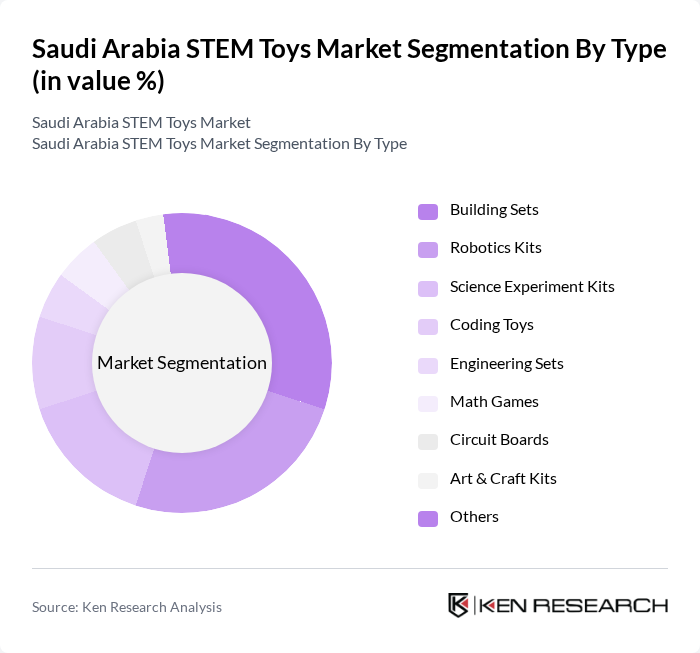
By Type:The market is segmented into various types of STEM toys, including Building Sets, Robotics Kits, Science Experiment Kits, Coding Toys, Engineering Sets, Math Games, Circuit Boards, Art & Craft Kits, and Others. Among these, Building Sets and Robotics Kits are particularly popular due to their ability to engage children in hands-on learning experiences. Building Sets allow for creativity and problem-solving, while Robotics Kits introduce children to programming and engineering concepts. The demand for these types of toys is driven by parents' desire to provide educational value while ensuring entertainment. The market is also witnessing increased interest in coding toys and science experiment kits, reflecting a broader shift towards technology-oriented learning tools , .
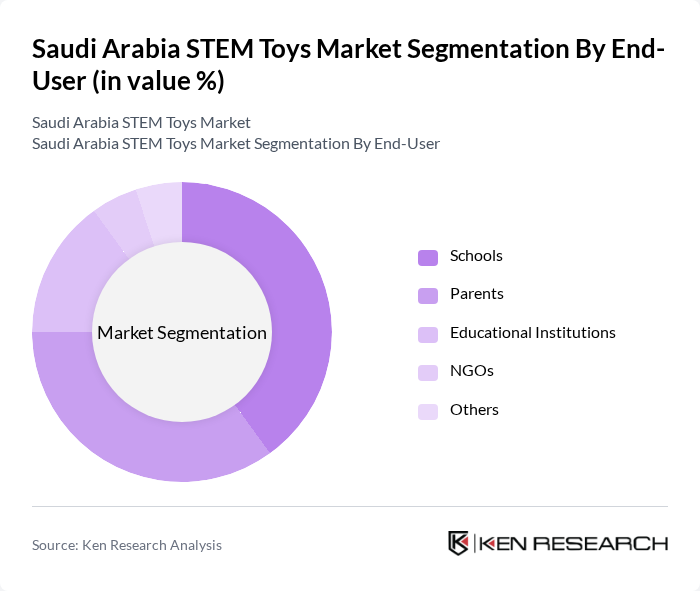
By End-User:The end-user segmentation includes Schools, Parents, Educational Institutions, NGOs, and Others. Schools and Parents are the primary consumers of STEM toys, as they seek to enhance children's learning experiences. Schools often incorporate these toys into their curricula, while parents purchase them for home use to support their children's education. The increasing focus on STEM education in schools has led to a higher demand for these toys, making them essential tools for both formal and informal learning environments. Educational institutions and NGOs are also expanding their procurement of STEM toys to support outreach and enrichment programs , .
The Saudi Arabia STEM Toys Market is characterized by a dynamic mix of regional and international players. Leading participants such as LEGO Group, Mattel, Inc., Hasbro, Inc., Learning Resources, Thames & Kosmos, Snap Circuits (Elenco Electronics, Inc.), Osmo (Tangible Play, Inc.), K'NEX (Basic Fun, Inc.), GoldieBlox, Inc., SmartLab Toys (Quarto Group), Discovery Kids (Discovery, Inc.), Playmobil (Geobra Brandstätter Stiftung & Co. KG), Tinkering Labs, Gears! Gears! Gears! (Learning Resources), ThinkFun (Ravensburger AG), EduFun (Saudi Arabia), Toy Triangle (Saudi Arabia/UAE), Al Othaim Toys (Saudi Arabia), Simba Toys Middle East, VTech Holdings Limited contribute to innovation, geographic expansion, and service delivery in this space.
The Saudi Arabia STEM toys market is poised for significant growth, driven by increasing government support and rising disposable incomes. As educational institutions adopt innovative teaching methods, the demand for STEM toys will likely surge. Additionally, the integration of technology in toys and the rise of subscription services will further enhance market dynamics. Companies that focus on creating engaging, educational, and eco-friendly products will be well-positioned to capitalize on these trends, ensuring a vibrant market landscape in the coming years.
| Segment | Sub-Segments |
|---|---|
| By Type | Building Sets Robotics Kits Science Experiment Kits Coding Toys Engineering Sets Math Games Circuit Boards Art & Craft Kits Others |
| By End-User | Schools Parents Educational Institutions NGOs Others |
| By Age Group | 3 Years 5 Years 8 Years 12 Years + Years Others |
| By Distribution Channel | Online Retail Brick-and-Mortar Stores Educational Institutions Events and Expos Specialty Toy Stores Others |
| By Material | Plastic Wood Metal Eco-friendly Materials Others |
| By Price Range | Low-End Mid-Range High-End Others |
| By Brand | Local Brands International Brands Private Labels Others |
| Scope Item/Segment | Sample Size | Target Respondent Profiles |
|---|---|---|
| Parents of Children Aged 5-12 | 100 | Parents, Guardians |
| Educators in Primary Schools | 80 | Teachers, School Administrators |
| Retailers of Educational Toys | 50 | Store Managers, Buyers |
| Child Development Experts | 40 | Psychologists, Educational Consultants |
| STEM Program Coordinators | 40 | Program Directors, Curriculum Developers |
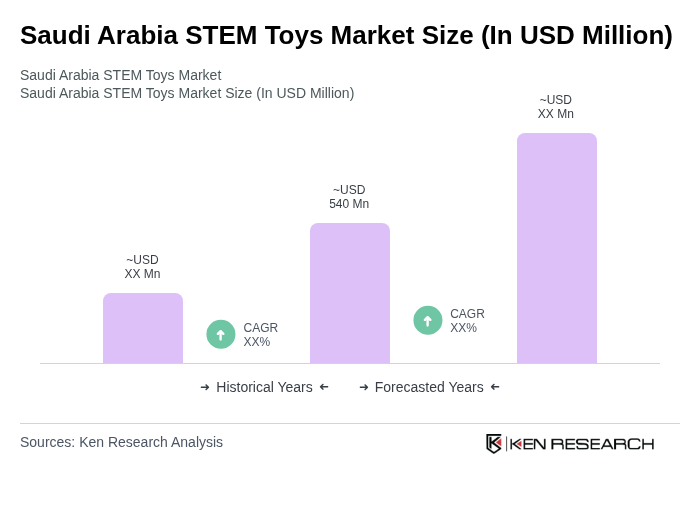
The Saudi Arabia STEM Toys Market is valued at approximately USD 540 million, reflecting a growing demand for educational toys that promote science, technology, engineering, and mathematics skills among children, driven by increased parental awareness and government support for STEM education.

What makes us stand out is that our consultants follow Robust, Refine and Result (RRR) methodology. Robust for clear definitions, approaches and sanity checking, Refine for differentiating respondents' facts and opinions, and Result for presenting data with story.

We have set a benchmark in the industry by offering our clients with syndicated and customized market research reports featuring coverage of entire market as well as meticulous research and analyst insights.

While we don't replace traditional research, we flip the method upside down. Our dual approach of Top Bottom & Bottom Top ensures quality deliverable by not just verifying company fundamentals but also looking at the sector and macroeconomic factors.

With one step in the future, our research team constantly tries to show you the bigger picture. We help with some of the tough questions you may encounter along the way: How is the industry positioned? Best marketing channel? KPI's of competitors? By aligning every element, we help maximize success.

Our report gives you instant access to the answers and sources that other companies might choose to hide. We elaborate each steps of research methodology we have used and showcase you the sample size to earn your trust.

If you need any support, we are here! We pride ourselves on universe strength, data quality, and quick, friendly, and professional service.













