Region:Middle East
Author(s):Dev
Product Code:KRAC3395
Pages:99
Published On:October 2025
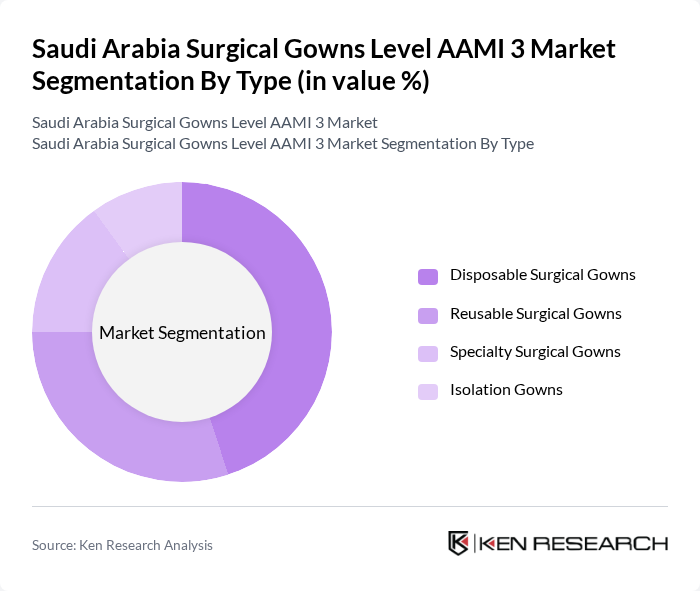
By Type:The market is segmented into various types of surgical gowns, including Disposable Surgical Gowns, Reusable Surgical Gowns, Specialty Surgical Gowns, and Isolation Gowns. Disposable surgical gowns are gaining traction due to their convenience, single-use nature, and effectiveness in preventing cross-contamination, especially in high-volume surgical settings. Reusable gowns are preferred for their cost-effectiveness and environmental benefits in facilities with established sterilization protocols. Specialty gowns address specific procedural requirements, while isolation gowns are essential for infection control across a range of healthcare environments .
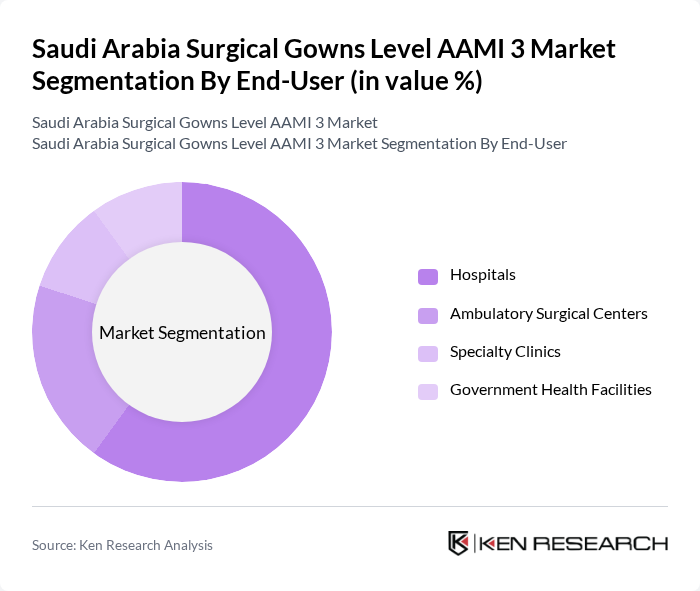
By End-User:The end-user segmentation includes Hospitals, Ambulatory Surgical Centers, Specialty Clinics, and Government Health Facilities. Hospitals are the largest consumers of surgical gowns due to the high volume of surgical procedures performed and strict infection control protocols. Ambulatory surgical centers and specialty clinics also contribute significantly, as they require gowns for outpatient surgeries and specialized medical services. Government health facilities are increasingly adopting AAMI Level 3 gowns to comply with safety regulations and to standardize infection prevention practices across public healthcare institutions .
The Saudi Arabia Surgical Gowns Level AAMI 3 Market is characterized by a dynamic mix of regional and international players. Leading participants such as Medline Industries, Inc., Cardinal Health, Inc., Halyard Health, Inc., 3M Company, Ansell Limited, Kimberly-Clark Corporation, Mölnlycke Health Care AB, Owens & Minor, Inc., Paul Hartmann AG, Medtronic plc, Ahlstrom-Munksjö Oyj, BSN medical GmbH, TIDI Products, LLC, Stryker Corporation, Smith & Nephew plc, Al Maqam Medical Supplies (Saudi Arabia), Al Zahrawi Medical Supplies (Saudi Arabia), Gulf Medical Co. Ltd. (Saudi Arabia), Al Faisaliah Medical Systems (Saudi Arabia), Al-Dawaa Pharmacies (Saudi Arabia) contribute to innovation, geographic expansion, and service delivery in this space.
The future of the Saudi Arabia surgical gowns market is poised for significant transformation, driven by technological advancements and evolving healthcare needs. As hospitals increasingly adopt disposable surgical gowns to enhance infection control, the demand for innovative materials that offer both protection and comfort will rise. Additionally, the integration of smart textiles into surgical gowns is expected to gain traction, providing real-time monitoring of patient conditions and improving surgical outcomes, thereby shaping the market landscape in future.
| Segment | Sub-Segments |
|---|---|
| By Type | Disposable Surgical Gowns Reusable Surgical Gowns Specialty Surgical Gowns Isolation Gowns |
| By End-User | Hospitals Ambulatory Surgical Centers Specialty Clinics Government Health Facilities |
| By Material | Non-woven Fabrics (SMS, SMMS) Woven Fabrics (Cotton, Polyester blends) Laminated Fabrics (PE, PP laminates) Antimicrobial Fabrics |
| By Distribution Channel | Direct Sales (Manufacturers to Hospitals) Online Retail (E-commerce platforms) Medical Distributors Tender-based Procurement |
| By Price Range | Economy Mid-range Premium Bulk/Institutional Pricing |
| By Certification | AAMI Level 1 AAMI Level 2 AAMI Level 3 CE Marked |
| By Application | General Surgery Endoscopic/Minimally Invasive Procedures Emergency Procedures Obstetrics & Gynecology |
| Scope Item/Segment | Sample Size | Target Respondent Profiles |
|---|---|---|
| Public Hospital Procurement | 100 | Procurement Managers, Supply Chain Coordinators |
| Private Healthcare Facilities | 80 | Operations Directors, Surgical Unit Heads |
| Surgical Gown Manufacturers | 50 | Product Managers, Quality Assurance Officers |
| Healthcare Distributors | 60 | Sales Managers, Distribution Network Coordinators |
| Regulatory Bodies | 40 | Policy Makers, Compliance Officers |
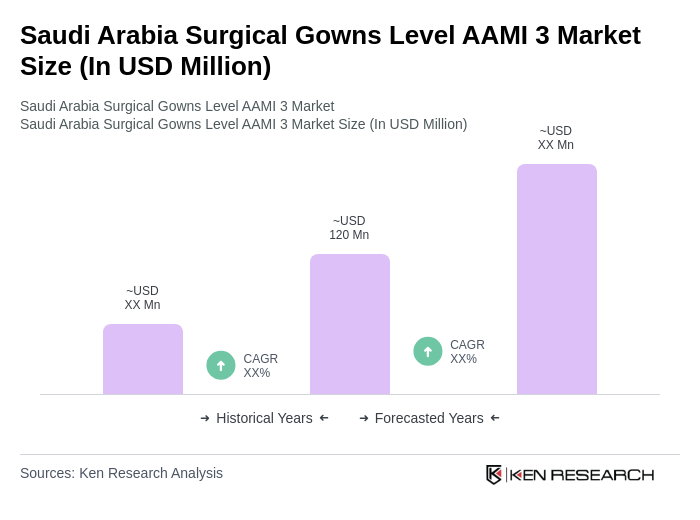
The Saudi Arabia Surgical Gowns Level AAMI 3 Market is valued at approximately USD 120 million, reflecting a significant demand for high-quality surgical gowns driven by increasing surgical procedures and heightened infection control awareness in healthcare settings.

What makes us stand out is that our consultants follow Robust, Refine and Result (RRR) methodology. Robust for clear definitions, approaches and sanity checking, Refine for differentiating respondents' facts and opinions, and Result for presenting data with story.

We have set a benchmark in the industry by offering our clients with syndicated and customized market research reports featuring coverage of entire market as well as meticulous research and analyst insights.

While we don't replace traditional research, we flip the method upside down. Our dual approach of Top Bottom & Bottom Top ensures quality deliverable by not just verifying company fundamentals but also looking at the sector and macroeconomic factors.

With one step in the future, our research team constantly tries to show you the bigger picture. We help with some of the tough questions you may encounter along the way: How is the industry positioned? Best marketing channel? KPI's of competitors? By aligning every element, we help maximize success.

Our report gives you instant access to the answers and sources that other companies might choose to hide. We elaborate each steps of research methodology we have used and showcase you the sample size to earn your trust.

If you need any support, we are here! We pride ourselves on universe strength, data quality, and quick, friendly, and professional service.













