Region:Middle East
Author(s):Shubham
Product Code:KRAD3475
Pages:99
Published On:November 2025
By Type:The market is segmented into various types of bone graft substitutes, including Allografts, Xenografts, Synthetic Bone Grafts, Composite Bone Grafts, Autografts, and Others. Each type serves specific needs in veterinary medicine, with varying levels of acceptance and usage among veterinary professionals. Allografts, derived from donor animals, are widely accepted due to their biological compatibility and ability to promote healing. Xenografts, sourced from different species, are favored for their availability and cost-effectiveness, while synthetic bone grafts offer consistent quality and are increasingly used in complex cases. Composite bone grafts combine materials to optimize regenerative outcomes, and autografts remain the gold standard for certain procedures despite limited availability. Other substitutes, such as bioglass and collagen-based scaffolds, are gaining traction for niche applications .
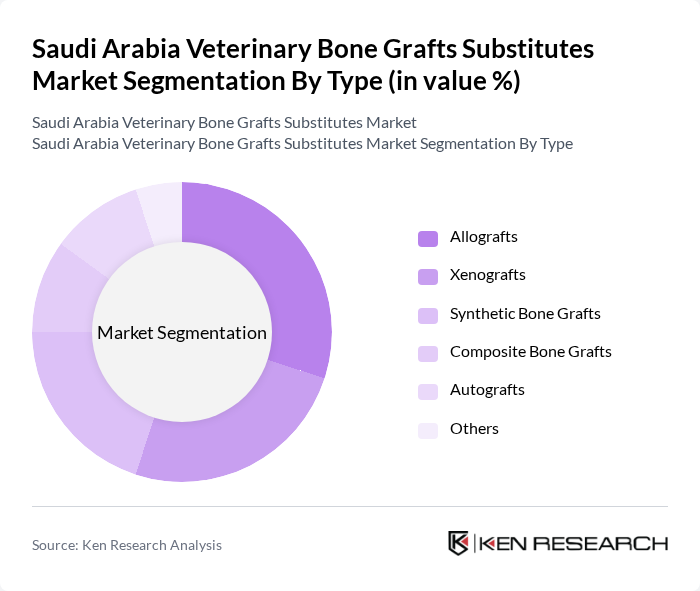
TheAllograftssegment is currently dominating the market due to high acceptance among veterinarians and proven efficacy in various surgical procedures. Allografts are preferred for their biological compatibility and ability to promote healing, especially in orthopedic surgeries for companion animals such as dogs and cats. Advancements in preservation and sterilization techniques have enhanced the availability and safety of allografts, making them a preferred choice in veterinary practices. The rising number of orthopedic surgeries and the integration of regenerative medicine approaches further propel the demand for allografts .
By End-User:The market is segmented based on end-users, including Veterinary Clinics, Animal Hospitals, Research Institutions, Academic & Teaching Hospitals, and Others. Each end-user category plays a crucial role in the distribution and application of veterinary bone graft substitutes. Veterinary clinics are the primary point of care for companion animals, handling a high volume of routine surgeries and orthopedic interventions. Animal hospitals serve both companion and large animals, offering advanced surgical capabilities. Research institutions and academic hospitals contribute to innovation and training, while other end-users include specialty centers and rehabilitation facilities .
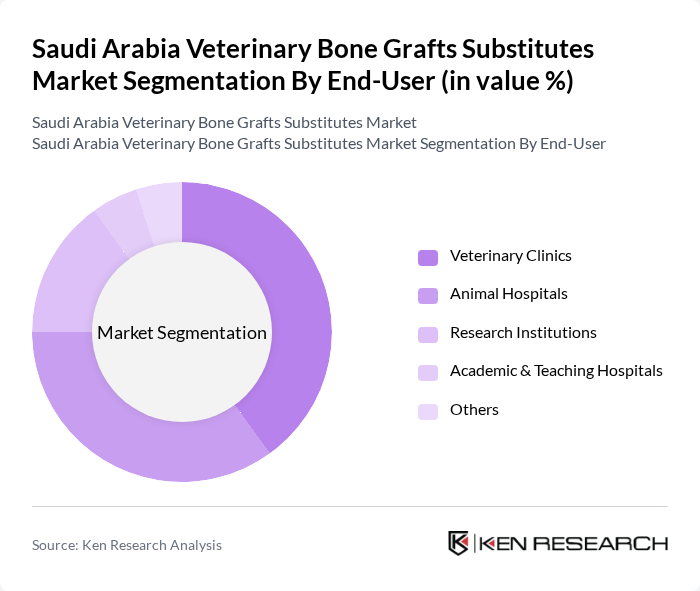
Veterinary Clinicsare the leading end-users in the market, accounting for a significant share due to their high volume of routine surgeries and treatments. These clinics primarily cater to companion animals, which require frequent orthopedic interventions. The rising trend of pet ownership and the increasing willingness of pet owners to invest in advanced veterinary care have further solidified the position of veterinary clinics as the primary consumers of bone graft substitutes. Animal hospitals and research institutions are also expanding their adoption of advanced graft materials, driven by the need for improved surgical outcomes and ongoing research in regenerative veterinary medicine .
The Saudi Arabia Veterinary Bone Grafts Substitutes Market is characterized by a dynamic mix of regional and international players. Leading participants such as Movora (Vimian Group AB), TheraVet SA, Biomendex, Integra LifeSciences Corporation, Progenica Therapeutics, LLC, BioChange, Nutramax Laboratories Veterinary Sciences, Inc., RITA LEIBINGER GmbH & Co. KG, VETEREGEN, AlphaLogix, LLC, Medtronic, DePuy Synthes, Stryker, Zimmer Biomet, Arthrex contribute to innovation, geographic expansion, and service delivery in this space.
The future of the veterinary bone graft substitutes market in Saudi Arabia appears promising, driven by increasing investments in veterinary healthcare and a growing focus on animal welfare. As the government emphasizes the importance of animal health, initiatives to enhance veterinary education and training are expected to emerge. Additionally, the integration of telemedicine in veterinary practices will facilitate better access to specialized care, further driving the demand for advanced surgical solutions and innovative products in the market.
| Segment | Sub-Segments |
|---|---|
| By Type | Allografts Xenografts Synthetic Bone Grafts Composite Bone Grafts Autografts Others |
| By End-User | Veterinary Clinics Animal Hospitals Research Institutions Academic & Teaching Hospitals Others |
| By Animal Type | Companion Animals (Dogs, Cats) Livestock (Cattle, Sheep, Goats) Equine Others (Exotics, Zoo Animals) |
| By Application | Orthopedic Surgery Dental Surgery Trauma & Fracture Repair Spinal Surgery Soft Tissue Repair Others |
| By Distribution Channel | Direct Sales Online Sales Distributors Veterinary Pharmacies Others |
| By Region | Central Region Eastern Region Western Region Southern Region |
| By Product Formulation | Granules Putty Paste Blocks Injectable Others |
| Scope Item/Segment | Sample Size | Target Respondent Profiles |
|---|---|---|
| Veterinary Clinics | 80 | Veterinarians, Clinic Managers |
| Animal Hospitals | 60 | Veterinary Surgeons, Medical Directors |
| Pet Owners | 120 | Pet Owners, Animal Caretakers |
| Livestock Management | 50 | Farm Managers, Veterinary Technicians |
| Industry Experts | 40 | Veterinary Researchers, Academic Professionals |
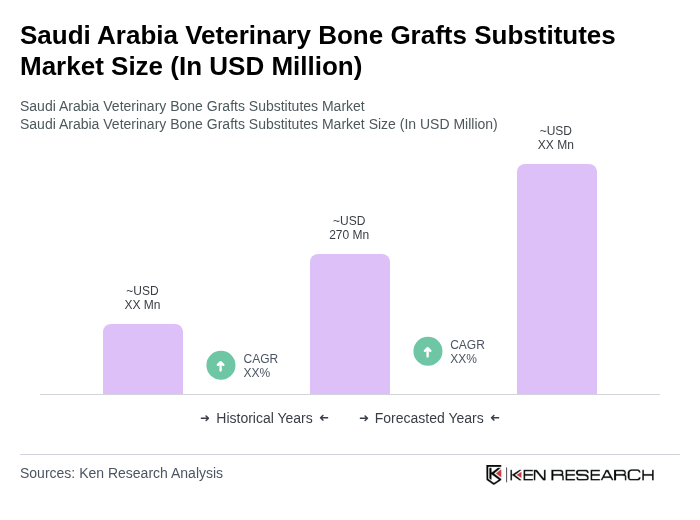
The Saudi Arabia Veterinary Bone Grafts Substitutes Market is valued at approximately USD 270 million, reflecting a five-year historical analysis that highlights significant growth driven by increased pet ownership and advancements in veterinary surgical techniques.

What makes us stand out is that our consultants follow Robust, Refine and Result (RRR) methodology. Robust for clear definitions, approaches and sanity checking, Refine for differentiating respondents' facts and opinions, and Result for presenting data with story.

We have set a benchmark in the industry by offering our clients with syndicated and customized market research reports featuring coverage of entire market as well as meticulous research and analyst insights.

While we don't replace traditional research, we flip the method upside down. Our dual approach of Top Bottom & Bottom Top ensures quality deliverable by not just verifying company fundamentals but also looking at the sector and macroeconomic factors.

With one step in the future, our research team constantly tries to show you the bigger picture. We help with some of the tough questions you may encounter along the way: How is the industry positioned? Best marketing channel? KPI's of competitors? By aligning every element, we help maximize success.

Our report gives you instant access to the answers and sources that other companies might choose to hide. We elaborate each steps of research methodology we have used and showcase you the sample size to earn your trust.

If you need any support, we are here! We pride ourselves on universe strength, data quality, and quick, friendly, and professional service.













