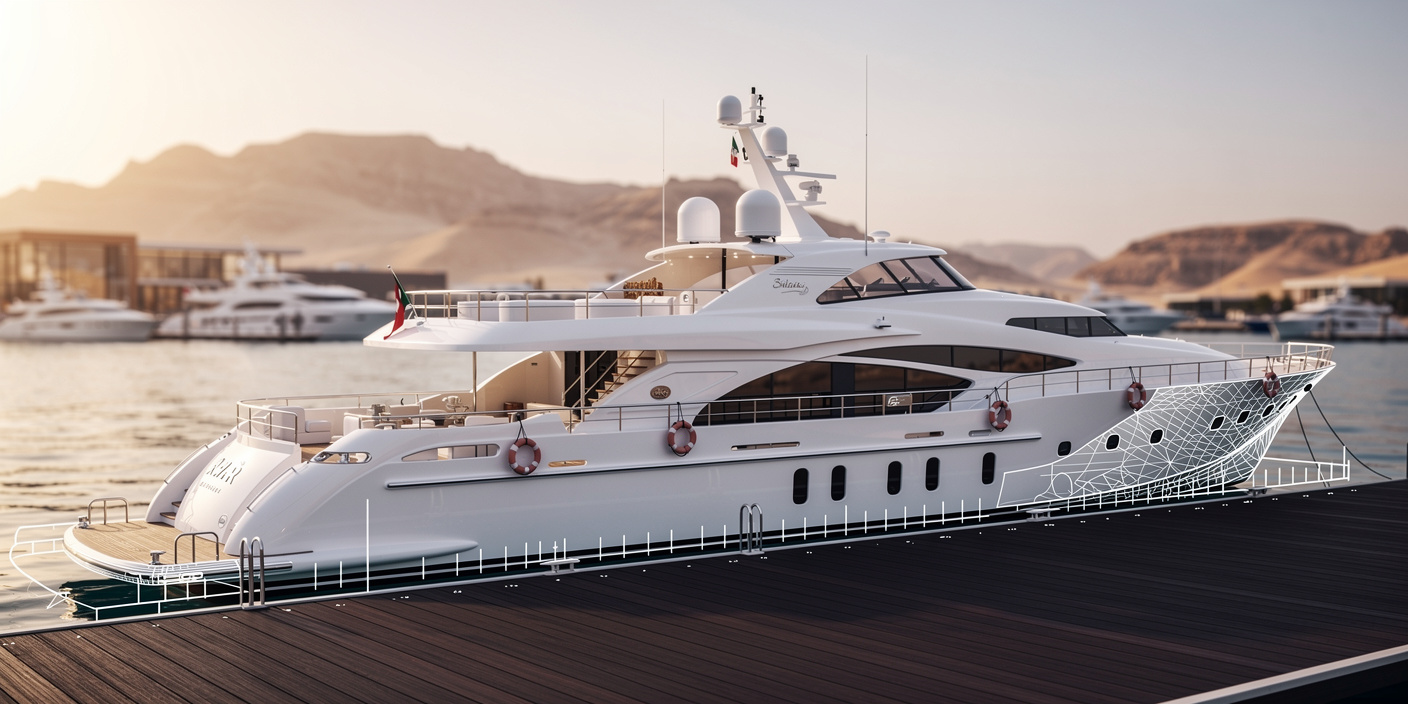
CHAPTER 1 - MARKET SUMMARY
Market Overview
The Saudi Arabia Yacht Charter Market operates through vessel owners, fleet managers, licensed marine tourism agents, charter brokers, destination concierges, and digital booking platforms. Demand is concentrated among affluent nationals, expatriates, international tourists, corporate groups, and event organizers. Approximately 116 million domestic and inbound tourists visited Saudi Arabia in 2024, creating a broader funnel for premium coastal recreation and private marine hospitality.
Jeddah remains the primary operating hub because it combines an established affluent customer base, international air connectivity, waterfront hospitality, and access to coral reefs and Red Sea islands. Saudi Arabia has approximately 2,480 km of coastline, including about 1,830 km along the Red Sea. This geographic scale supports future itinerary expansion beyond short-duration Jeddah charters into Yanbu, NEOM, Jazan, and resort-linked cruising corridors.
Market Value
USD 36.4 million
2025
Dominant Region
Jeddah and Central Red Sea
2025
Dominant Segment
Motor Yachts
fastest growing
Total Number of Players
42
Future Outlook
The Saudi Arabia Yacht Charter Market increased from USD 10.8 million in 2020 to USD 36.4 million in 2025, representing a historical CAGR of 27.5%. Expansion was driven by domestic leisure normalization, waterfront redevelopment, increased tourism arrivals, digital booking availability, and the progressive formalization of coastal tourism activities. Jeddah remained the principal revenue center, while the northern Red Sea began attracting international charter brokers and superyacht service providers. The market is expected to retain double-digit growth as charter supply expands, operating standards improve, and premium hotels incorporate marine excursions into guest itineraries, event packages, residence services, and destination concierge programs.
Under the base forecast, the market is projected to reach USD 109.7 million by 2031, reflecting a 20.2% CAGR during 2026-2031. Charter-equivalent operating days are forecast to increase from approximately 8,900 in 2025 to 19,600 in 2031, while average revenue per charter day rises from about USD 4,090 to USD 5,597. The pricing increase reflects a greater contribution from crewed overnight charters, resort-integrated packages, corporate events, and internationally brokered superyachts. Growth is expected to moderate gradually after 2028 as the market scales, but new marina capacity and destination openings should sustain revenue growth above volume growth.
20.2%
Forecast CAGR
$109.7 Mn
2030 Projection
Base Year
2025
Historical Period
2020-2025
Forecast Period
2026-2031
Historical CAGR
27.5%
CHAPTER 2 - SCOPE OF REPORT
Scope of the Market
CHAPTER 3 - Key Stakeholders
Key Target Audience
Key stakeholders who can leverage from this market analysis for investment, strategy, and operational planning.
Investors
CAGR, utilization, fleet capex, margins, exit pathways, risk
Corporates
hospitality partnerships, charter procurement, events, service standards, pricing
Government
licensing, tourism receipts, safety, marine protection, employment, investment
Operators
fleet utilization, charter yield, crew productivity, channel conversion
Financial institutions
asset finance, residual value, covenants, utilization, insurance risk
CHAPTER 4 - Market Size & Growth
Market Size, Growth Forecast and Trends
This section evaluates the historical market size, analyzes year-over-year growth dynamics, and presents forecast projections supported by market performance indicators and demand-side drivers.
Historical & Projected Market Size ($ Million)
Year-over-Year Growth Rate (%)
Market Value vs Volume Growth (%)
Historical Market Performance (2020-2025)
The strongest annual expansion occurred in 2023, when modeled market revenue increased by 31.8%, compared with the period trough of 21.3% in 2021. Charter-equivalent operating volume rose from approximately 3,600 days in 2020 to 8,900 days in 2025. The main inflection occurred during 2022-2023 as Jeddah-based fleet availability improved and charter products moved beyond informal hourly rentals toward managed private events, reef excursions, corporate hospitality, and overnight services. Revenue remained concentrated in motor yachts and Jeddah, but international brokerage participation began broadening the superyacht and multi-day opportunity.
Forecast Market Outlook (2026-2031)
Market revenue is forecast to increase at a 20.2% CAGR during 2026-2031, reaching USD 109.7 million in 2031. Charter-equivalent days are projected to reach approximately 19,600, representing a 14.1% volume CAGR from the 2025 base. Revenue growth is expected to exceed volume growth because of greater superyacht participation, longer itineraries, higher crew and provisioning content, and resort-linked pricing. Annual growth moderates from 22.8% in 2026 to 17.3% in 2031 as utilization normalizes, although the activation of northern Red Sea marinas creates additional capacity and geographic diversification.
CHAPTER 5 - Market Data
Market Breakdown
The Saudi Arabia Yacht Charter Market is moving from a fragmented, short-duration rental category toward a regulated marine hospitality sector. Revenue expansion is expected to remain above charter-day growth as overnight services, crewed products, superyacht itineraries, provisioning, and resort-integrated packages increase the average transaction value.
Year | Market Size (USD Mn) | YoY Growth (%) | Charter-Equivalent Days | Average Revenue per Charter Day (USD) | Active Charter Fleet (Vessels) | Period |
|---|---|---|---|---|---|---|
| 2020 | $10.8 Mn | +- | 3,600 | 3,000 | Forecast | |
| 2021 | $13.1 Mn | +21.3% | 4,200 | 3,119 | Forecast | |
| 2022 | $17.0 Mn | +29.8% | 5,200 | 3,269 | Forecast | |
| 2023 | $22.4 Mn | +31.8% | 6,400 | 3,500 | Forecast | |
| 2024 | $28.9 Mn | +29.0% | 7,600 | 3,803 | Forecast | |
| 2025 | $36.4 Mn | +26.0% | 8,900 | 4,090 | Forecast | |
| 2026F | $44.7 Mn | +22.8% | 10,400 | 4,298 | Forecast | |
| 2027F | $54.6 Mn | +22.1% | 12,100 | 4,512 | Forecast | |
| 2028F | $66.0 Mn | +20.9% | 13,900 | 4,748 | Forecast | |
| 2029F | $78.8 Mn | +19.4% | 15,700 | 5,019 | Forecast | |
| 2030F | $93.5 Mn | +18.7% | 17,600 | 5,313 | Forecast | |
| 2031F | $109.7 Mn | +17.3% | 19,600 | 5,597 | Forecast |
Charter-Equivalent Days
8,900 days, 2025, Saudi Arabia. Utilization growth is the central operating lever because fixed vessel, crew, insurance, maintenance, and berth costs create strong incremental margins. Saudi Arabia welcomed approximately 116 million domestic and inbound tourists in 2024.
Average Revenue per Charter Day
USD 4,090, 2025, Saudi Arabia. Higher average revenue indicates a shift toward larger vessels, longer durations, premium catering, water sports, and destination services. AMAALA Yacht Club is designed with 120 berths and capacity for yachts up to 130 meters.
Active Charter Fleet
112 vessels, 2025, Saudi Arabia. Fleet availability constrains peak-period bookings and determines geographic coverage. Saudi Arabia has approximately 2,480 km of coastline, including around 1,830 km on the Red Sea, leaving substantial room for route and base expansion.
CHAPTER 6 - Segmentation
Market Segmentation Framework
Comprehensive analysis across key dimensions providing insights into market structure, consumer preferences, and distribution patterns.
No of Segments
7
Dominant Segment
Yacht Type
Fastest Growing Segment
Geography
Charter Type
Yacht Type
Customer Type
Charter Duration
Booking Channel
Operating Model
Geography
Key Segmentation Takeaways
Comprehensive analysis across all extracted segmentation dimensions providing insights into market structure, consumer preferences, and distribution patterns.
Yacht Type
Motor yachts represented the principal revenue pool in 2025 because they suit short-duration private cruises, event charters, island transfers, and family groups while requiring less specialist sailing expertise. Flybridge and mid-sized motor yachts dominate locally supplied capacity. Superyachts generate fewer bookings but materially higher transaction values through weekly rates, crew services, provisioning, fuel, and destination management.
Geography
Northern Red Sea destinations are expected to generate the fastest incremental revenue through new marinas, luxury resorts, residences, airports, yacht clubs, and international brokerage partnerships. Jeddah retains the largest installed customer and vessel base, but AMAALA, Sindalah, and surrounding destination corridors should capture a rising share of overnight, weekly, superyacht, resort-concierge, and cross-border Red Sea itineraries.
CHAPTER 7 - Regional Analysis
Regional Analysis
Saudi Arabia ranked second among the selected Gulf yacht charter markets by modeled 2025 revenue, behind the UAE but ahead of Qatar, Oman, and Bahrain. Its current market is smaller than the UAE hub, although faster forecast growth is supported by Red Sea destination investment, formal yacht regulation, new marina capacity, and a substantially longer undeveloped cruising coastline.
Focus Country Ranking
2nd
Focus Country Market Size
USD 36.4 Mn (2025)
Saudi Arabia CAGR (2026-2031)
20.2%
Focus Country Ranking
2nd
Focus Country Market Size
USD 36.4 Mn (2025)
Saudi Arabia CAGR (2026-2031)
20.2%
Regional Analysis (Current Year)
Regional Analysis Comparison
Market Position
Saudi Arabia ranked second within the selected peer group at USD 36.4 million in 2025, supported by Jeddah demand and the commercialization of northern Red Sea destinations.
Growth Advantage
Saudi Arabia's 20.2% forecast CAGR exceeds the UAE's modeled 9.4% and Oman's 12.6%, positioning the Kingdom as the peer group's principal capacity-led growth market.
Competitive Strengths
AMAALA's 120 berths, Sindalah's 86 berths, and Laheq's planned 115 berths provide at least 321 berths across three destination developments, strengthening premium itinerary economics.
CHAPTER 8 - INDUSTRY ANALYSIS
Growth Drivers, Market Challenges & Market Opportunities
Comprehensive analysis of key factors shaping the Saudi Arabia Yacht Charter Market, including growth catalysts, operational challenges, and emerging opportunities across production, distribution, and consumer segments.
Growth Drivers
Expansion of Domestic and Inbound Tourism
- Domestic travelers represented the majority of total trips, providing operators with recurring weekend and holiday demand that is less dependent on long-haul tourism cycles. The large resident base supports short-duration Jeddah, Al Khobar, and Half Moon Bay products, improving fleet utilization outside international visitor peaks.
- The national tourism target has increased to 150 million visits by 2030 (Saudi Arabia), requiring broader leisure inventory and destination experiences. Yacht operators can capture value through hotel partnerships, packaged itineraries, corporate hospitality, and premium private excursions rather than relying only on direct consumer rentals.
- Saudi Arabia's population reached approximately 35.3 million people (2024, Saudi Arabia). Population growth, a youthful consumer base, and higher participation in entertainment and recreation enlarge the repeat domestic customer pool for celebrations, water sports, reef excursions, and family-oriented private charters.
Marina and Luxury Destination Development
- AMAALA Yacht Club is designed with 120 berths and capacity for yachts up to 130 meters. Large-yacht compatibility enables higher-value charter brokerage, provisioning, maintenance coordination, crew support, and berth services, expanding the profit pool beyond local day-rental activity.
- Sindalah incorporates 86 marina berths alongside a yacht club, luxury accommodation, retail, and dining. The integrated destination model supports multi-product monetization because charter bookings can be bundled with accommodation, restaurants, diving, transfers, events, and residence services.
- Laheq includes a planned 115-berth marina with sailing and water-sports schools. Training infrastructure can stimulate entry-level sailing demand, crew development, and repeat participation, while the marina provides a northern Red Sea base for premium charter fleets and destination itineraries.
Formalization of Yacht and Charter Regulation
- The yacht regulation requires owners seeking tourism charter activity to appoint a licensed maritime tourism agent and obtain the relevant charter authorization. This creates demand for compliance, agency, clearance, documentation, insurance, and destination-management services while reducing uncontrolled informal supply.
- Large-yacht tourism charter licenses can remain valid for up to six months per authorization. The defined validity period supports seasonal deployment of foreign-flagged yachts while giving regulators visibility over vessels, safety documentation, crew, routes, and commercial activity.
- Marina operators must secure operating licenses and comply with planning, environmental, safety, dredging, maintenance, and emergency-response standards. Standardized marinas reduce operational uncertainty for international brokers and yacht managers, supporting higher-quality fleet deployment and longer charter seasons.
Market Challenges
Limited Mature Charter Fleet and Service Depth
- Large portions of available supply remain concentrated in smaller and mid-sized motor yachts around Jeddah and the Eastern Province. Limited catamaran, sailing-yacht, expedition-yacht, and superyacht availability reduces product diversity and can direct premium customers toward established UAE charter hubs.
- International-standard charter delivery requires experienced captains, engineers, deck crew, chefs, guest-service staff, dive professionals, and charter managers. Insufficient specialist labor increases recruitment and training costs while exposing operators to service inconsistency and vessel downtime during maintenance or crew shortages.
- The addressable coastline extends approximately 2,480 km, but commercial charter capacity remains concentrated in a limited number of bases. Operators face repositioning, fuel, spare-parts, provisioning, and crew-logistics costs when serving routes outside established marina and service clusters.
High Operating Costs and Seasonal Utilization
- Commercial yachts require insurance, licensing, berth access, preventive maintenance, haul-out, engine servicing, safety equipment, crew, fuel, cleaning, and periodic refurbishment. Operators with fewer than two vessels have limited capacity to spread these costs across bookings, increasing break-even utilization requirements.
- Red Sea charter demand is strongest from October to May because summer temperatures reduce daytime comfort. Seasonal concentration increases pricing volatility and idle-vessel costs, requiring operators to use evening charters, corporate contracts, maintenance scheduling, and geographic repositioning to stabilize annual utilization.
- Superyacht itineraries involve substantially higher fuel, crew, agency, provisioning, and port-service costs than local day charters. Internationally brokered products can deliver higher absolute margins, but cancellation risk and low booking frequency create more volatile revenue realization for agents and destination partners.
Environmental and Maritime Security Exposure
- Anchoring, wastewater discharge, fuel leakage, noise, reef contact, and unmanaged visitor activity can damage sensitive marine areas. Operators must invest in trained crews, approved mooring practices, waste handling, route planning, and guest supervision, increasing compliance costs but protecting destination quality.
- Regional maritime-security incidents can alter insurance conditions, routing decisions, yacht-owner confidence, and international charter demand. Commercial exposure is highest for long-distance and cross-border itineraries, while protected domestic resort routes and Jeddah day charters are comparatively less sensitive.
- Extreme heat and marine conditions accelerate wear on engines, air-conditioning systems, exterior finishes, electronics, and guest equipment. Higher preventive-maintenance requirements reduce available charter days unless operators hold spare parts locally and schedule servicing outside peak demand periods.
Market Opportunities
Resort-Integrated Charter Packages
- Operators can bundle yacht time, catering, diving, water sports, transfers, island access, photography, and concierge support into higher-margin packages. Revenue-sharing agreements with hotels reduce customer-acquisition costs and increase booking conversion among pre-qualified luxury guests.
- Fleet owners gain utilization, hotels expand ancillary revenue, destination developers improve guest experience, and charter brokers access a concentrated pipeline of affluent travelers. Multi-day guests provide stronger cross-selling potential than stand-alone local rental customers.
- Operators require integrated reservation systems, service-level agreements, standardized safety procedures, bilingual guest support, guaranteed vessel availability, and transparent hotel commissions. Destination planners must also provide reliable embarkation points, provisioning, and shore-side transfer logistics.
International Superyacht and Seasonal Fleet Deployment
- Superyacht visits generate charter commissions, agency fees, berth charges, fuel sales, provisioning, maintenance coordination, crew logistics, concierge spending, and destination excursions. A single weekly charter can produce revenue equivalent to numerous small-yacht day bookings.
- International brokers, local maritime agents, marinas, fuel suppliers, luxury hotels, aviation providers, technical contractors, caterers, and destination operators capture value from foreign-flagged yacht deployment and guest spending.
- Saudi Arabia needs predictable charter-permit processing, customs and immigration coordination, high-capacity bunkering, technical support, crew facilities, secure provisioning, and internationally recognized marina service standards to convert visiting yachts into repeat commercial deployments.
Managed Fleets and Asset-Light Charter Platforms
- Management companies can contract privately owned yachts, handle compliance and operations, and share charter revenue with owners. The model expands commercial inventory without requiring the platform to finance every vessel, improving capital efficiency and fleet diversity.
- Yacht owners offset holding costs, managers earn recurring fees and commissions, customers receive standardized service, and digital marketplaces gain verified supply. Investors can scale booking, management, and concierge businesses with lower vessel-ownership exposure.
- Standard owner agreements, transparent maintenance reserves, insured commercial use, digital availability calendars, verified crew, dynamic pricing, revenue reporting, and service-quality controls are required to attract owners and institutional capital into managed charter fleets.
CHAPTER 9 - Competitive Landscape
Competitive Landscape Overview
The market remains fragmented, with local vessel owners serving short charters and international brokers targeting premium itineraries. Entry barriers are rising through licensing, insurance, marina access, fleet quality, destination relationships, and specialist crew requirements.
Market Share Distribution
Top 5 Players
Market Dynamics
8 new entrants in the past 5 years, indicating strong market attractiveness and growth potential.
Company Name | Market Share | Headquarters | Founding Year | Core Market Focus |
|---|---|---|---|---|
Burgess | 9.8% estimated | London, United Kingdom | 1975 | Superyacht charter, brokerage, management, and Red Sea destination services |
Ocean World Group | 8.2% estimated | - | - | Luxury yacht rental, private events, and crewed charters |
TWW Yachts | 7.4% estimated | Monaco | - | Luxury motor yacht and superyacht charter brokerage |
IYC | 6.8% estimated | - | - | International yacht charter and Red Sea itinerary brokerage |
FGI Yacht Group | 5.9% estimated | - | - | Luxury yacht charter, yacht sales, and personalized itinerary services |
YATCO | 5.4% estimated | - | - | Professional yacht marketplace and charter-broker distribution |
Luxury Charter Group | 4.9% estimated | - | - | Luxury and superyacht charters across Red Sea destinations |
SuperYacht Partners | 4.3% estimated | - | - | Superyacht charter advisory and bespoke destination itineraries |
Yacht Charter Saudi Arabia | 3.9% estimated | - | - | Saudi coastal yacht rentals and customized Red Sea charters |
VIP Yachts Jeddah | 3.1% estimated | Jeddah, Saudi Arabia | - | Local luxury yacht rentals, celebrations, and private cruises |
Cross Comparison Parameters
The report provides detailed cross-comparison of key players across 10 performance parameters to identify competitive strengths and weaknesses.
Charter Fleet Availability
Annual Charter-Day Utilization
Saudi Charter Revenue Growth
Contribution Margin per Charter Day
Analysis Covered
Market Share Analysis:
Compares modeled Saudi charter revenue across leading participating operators
Cross Comparison Matrix:
Benchmarks fleet availability, utilization, revenue growth, and margins
SWOT Analysis:
Assesses positioning, capabilities, constraints, and expansion potential by company
Pricing Strategy Analysis:
Evaluates duration, vessel, season, channel, and service premiums
Company Profiles:
Reviews service focus, geographic activity, fleet access, and differentiation
CHAPTER 10 - REPORT TOC
Market Report Structure
Comprehensive coverage across three strategic phases — Market Assessment, Go-To-Market Strategy, and Survey — delivering end-to-end insights from market analysis and execution roadmap to customer demand validation.
Market Assessment Phase
Supply-side and competitive intelligence covering market sizing, segmentation, competitive dynamics, regulatory landscape, and future forecasts.
Go-To-Market Strategy Phase
15 chapters
Entry strategy evaluation, execution roadmap, partner recommendations, and profitability outlook.
Survey Phase
8 chapters
Demand-side primary research conducted through structured interviews and online surveys with end users across priority metros and Tier 2/3 cities to capture consumption behavior, unmet needs, and purchase drivers.
Complete Report Coverage
201+ detailed sections covering every aspect of the market
143
Assessment Sections
58
Strategy Sections
CHAPTER 11 - Our Approach
Research Methodology
Desk Research
- Reviewed yacht charter licensing regulations
- Mapped marina and berth pipelines
- Benchmarked operator fleets and pricing
- Analyzed tourism and coastal demand
Primary Research
- Interviewed yacht charter operations directors
- Consulted marina general managers
- Engaged licensed maritime tourism agents
- Surveyed charter brokers and concierges
Validation and Triangulation
- Validated assumptions through 316 respondents
- Reconciled fleet utilization with bookings
- Cross-checked rates across charter channels
- Tested destination capacity against demand
CHAPTER 12 - FAQ
FAQs
Still have questions?
Our research team is here to help you find the right solution
CHAPTER 13 - Related Research
Explore Related Reports
Expand your market intelligence with complementary research across regions and adjacent markets.
Regional/Country ReportsRelated market analysis across key regions
Related market analysis across key regions
Adjacent ReportsRelated markets and complementary research
Related markets and complementary research
- South Korea Luxury Tourism Market
- Japan Marina Development Market
- Indonesia Yacht Manufacturing Market
- Japan Marine Hospitality Market
- Indonesia Event Management Services Market
500+
Market Research Reports
50+
Countries Covered
15+
Industry Verticals