Region:Asia
Author(s):Geetanshi
Product Code:KRAB5246
Pages:100
Published On:October 2025
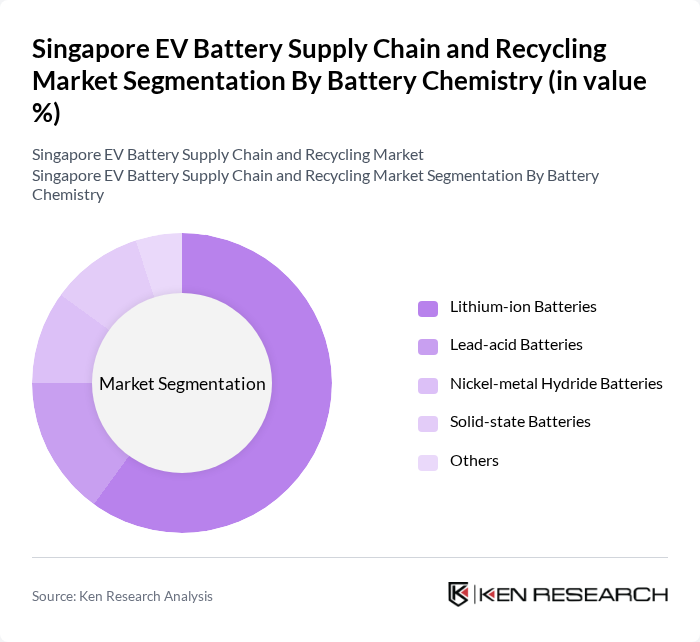
By Battery Chemistry:The battery chemistry segment includes various types of batteries used in electric vehicles and energy storage systems. The primary subsegments are Lithium-ion Batteries, Lead-acid Batteries, Nickel-metal Hydride Batteries, Solid-state Batteries, and Others. Among these, Lithium-ion Batteries dominate the market due to their superior energy density, longer operational lifespan, and declining costs, making them the preferred choice for electric vehicles and portable electronics. The market is also witnessing increased research and pilot deployments of solid-state batteries, which promise higher safety and energy performance, though commercial adoption remains limited .
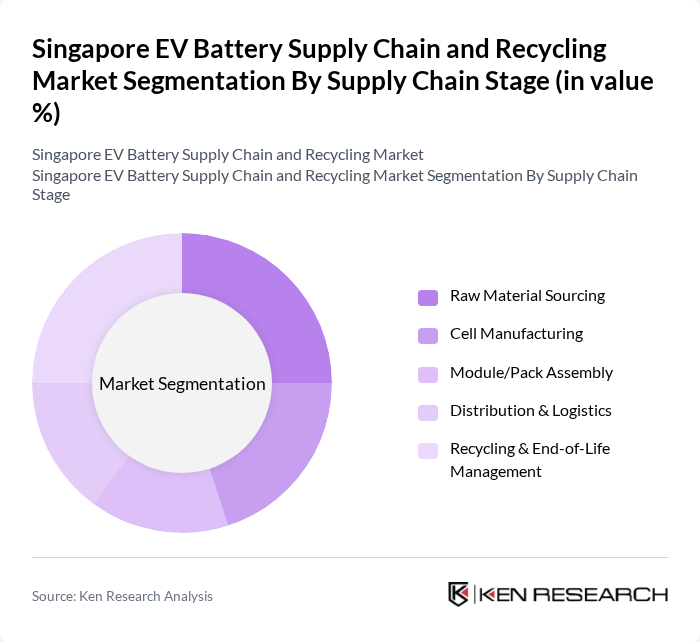
By Supply Chain Stage:This segmentation covers the various stages involved in the battery supply chain, including Raw Material Sourcing, Cell Manufacturing, Module/Pack Assembly, Distribution & Logistics, and Recycling & End-of-Life Management. The Recycling & End-of-Life Management segment is gaining traction as sustainability becomes a priority, with companies focusing on advanced recycling technologies to recover valuable materials from used batteries and meet regulatory requirements. There is also a growing emphasis on closed-loop supply chains and circular economy models, with manufacturers increasingly integrating recycling operations to reduce environmental impact and secure critical raw materials .
The Singapore EV Battery Supply Chain and Recycling Market is characterized by a dynamic mix of regional and international players. Leading participants such as SK Tes (Singapore), Green Li-ion (Singapore), ACE Green Recycling (Singapore), Sembcorp Industries (Singapore), Panasonic Singapore, BYD Singapore, LG Chem, Samsung SDI, CATL, EVE Energy, Amperex Technology Limited (ATL), A123 Systems, Farasis Energy, ReCell, GLC Recycle (Singapore) contribute to innovation, geographic expansion, and service delivery in this space.
The future of the Singapore EV battery supply chain and recycling market appears promising, driven by increasing government support and technological advancements. By future, the market is expected to witness a significant shift towards sustainable practices, with a focus on enhancing recycling capabilities and developing second-life applications for batteries. As consumer awareness of EV benefits grows, the demand for efficient battery solutions will likely accelerate, fostering innovation and collaboration within the industry.
| Segment | Sub-Segments |
|---|---|
| By Battery Chemistry | Lithium-ion Batteries Lead-acid Batteries Nickel-metal Hydride Batteries Solid-state Batteries Others |
| By Supply Chain Stage | Raw Material Sourcing Cell Manufacturing Module/Pack Assembly Distribution & Logistics Recycling & End-of-Life Management |
| By Application | Electric Passenger Vehicles Commercial EVs Public Transport (e-buses, e-taxis) Energy Storage Systems Others |
| By End-User | Automotive OEMs Fleet Operators Battery Manufacturers Recycling Companies Others |
| By Recycling Technology | Hydrometallurgical Recycling Pyrometallurgical Recycling Direct Recycling Others |
| By Sales Channel | Direct Sales Distributors Online Sales Others |
| By Investment Source | Domestic Investment Foreign Direct Investment Public-Private Partnerships Others |
| Scope Item/Segment | Sample Size | Target Respondent Profiles |
|---|---|---|
| EV Battery Manufacturers | 50 | Production Managers, R&D Directors |
| Battery Recycling Facilities | 40 | Operations Managers, Environmental Compliance Officers |
| Electric Vehicle Fleet Operators | 45 | Fleet Managers, Sustainability Coordinators |
| Government Regulatory Bodies | 40 | Policy Makers, Environmental Analysts |
| Academic Institutions and Research Organizations | 40 | Researchers, Professors in Environmental Science |
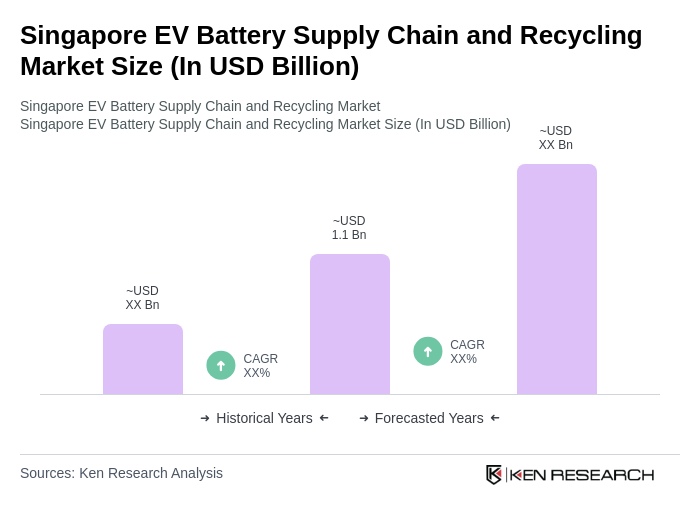
The Singapore EV Battery Supply Chain and Recycling Market is valued at approximately USD 1.1 billion, driven by the increasing adoption of electric vehicles, government initiatives for sustainable energy, and advancements in battery technology.

What makes us stand out is that our consultants follow Robust, Refine and Result (RRR) methodology. Robust for clear definitions, approaches and sanity checking, Refine for differentiating respondents' facts and opinions, and Result for presenting data with story.

We have set a benchmark in the industry by offering our clients with syndicated and customized market research reports featuring coverage of entire market as well as meticulous research and analyst insights.

While we don't replace traditional research, we flip the method upside down. Our dual approach of Top Bottom & Bottom Top ensures quality deliverable by not just verifying company fundamentals but also looking at the sector and macroeconomic factors.

With one step in the future, our research team constantly tries to show you the bigger picture. We help with some of the tough questions you may encounter along the way: How is the industry positioned? Best marketing channel? KPI's of competitors? By aligning every element, we help maximize success.

Our report gives you instant access to the answers and sources that other companies might choose to hide. We elaborate each steps of research methodology we have used and showcase you the sample size to earn your trust.

If you need any support, we are here! We pride ourselves on universe strength, data quality, and quick, friendly, and professional service.













