Region:Asia
Author(s):Shubham
Product Code:KRAB6152
Pages:93
Published On:October 2025
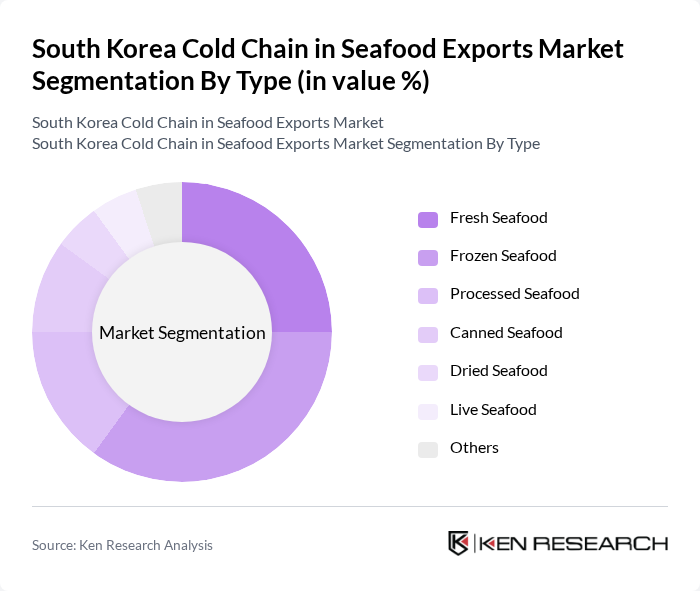
By Type:The market is segmented into various types of seafood products, including fresh, frozen, processed, canned, dried, live seafood, and others. Among these, frozen seafood is the leading sub-segment, driven by its convenience and longer shelf life, which appeals to both consumers and retailers. The growing trend of online grocery shopping has also boosted the demand for frozen seafood, as it allows for easy access to a variety of products. Fresh seafood follows closely, as it remains a staple in traditional markets and restaurants.
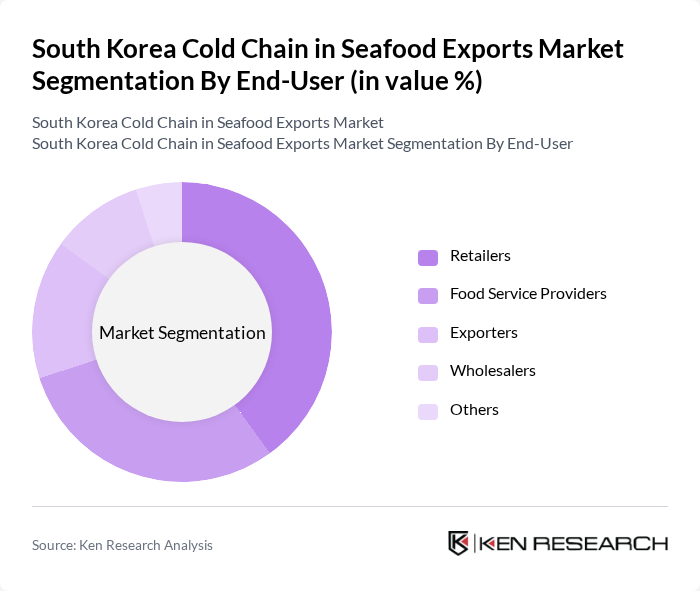
By End-User:The end-user segmentation includes retailers, food service providers, exporters, wholesalers, and others. Retailers dominate the market, driven by the increasing consumer demand for seafood products in supermarkets and grocery stores. The rise of health-conscious consumers has led to a surge in seafood consumption, prompting retailers to expand their offerings. Food service providers, including restaurants and catering services, also play a significant role, as they require a consistent supply of high-quality seafood for their menus.
The South Korea Cold Chain in Seafood Exports Market is characterized by a dynamic mix of regional and international players. Leading participants such as Dongwon Industries Co., Ltd., Sajo Industries Co., Ltd., Jeju Fisheries Co., Ltd., Hansung Seafood Co., Ltd., Samho Fishing Co., Ltd., Daewoo International Corporation, Korea Cold Chain Co., Ltd., Hanjin Shipping Co., Ltd., CJ Logistics Corporation, Lotte Global Logistics, Hyundai Glovis Co., Ltd., SK Networks Co., Ltd., Dongbu Express Co., Ltd., KCTC Co., Ltd., Seung Jin Co., Ltd. contribute to innovation, geographic expansion, and service delivery in this space.
The South Korean cold chain seafood export market is poised for significant growth, driven by technological advancements and increasing global demand. As the government continues to invest in infrastructure and support for exporters, the industry is expected to adapt to evolving consumer preferences for sustainable and traceable seafood. Additionally, the integration of smart technologies will enhance operational efficiency, allowing exporters to meet stringent international standards while capitalizing on emerging market opportunities in Asia and beyond.
| Segment | Sub-Segments |
|---|---|
| By Type | Fresh Seafood Frozen Seafood Processed Seafood Canned Seafood Dried Seafood Live Seafood Others |
| By End-User | Retailers Food Service Providers Exporters Wholesalers Others |
| By Distribution Channel | Direct Sales Online Sales Distributors Retail Chains Others |
| By Packaging Type | Vacuum Packaging Modified Atmosphere Packaging Canned Packaging Bulk Packaging Others |
| By Temperature Control | Chilled Frozen Ambient Others |
| By Region | Seoul Busan Incheon Gwangju Others |
| By Price Range | Premium Mid-range Budget Others |
| Scope Item/Segment | Sample Size | Target Respondent Profiles |
|---|---|---|
| Seafood Exporters | 100 | Export Managers, Operations Directors |
| Cold Chain Logistics Providers | 80 | Logistics Coordinators, Supply Chain Managers |
| Quality Assurance in Seafood Processing | 60 | Quality Control Managers, Food Safety Officers |
| Retail Seafood Distributors | 70 | Distribution Managers, Procurement Specialists |
| Regulatory Bodies and Associations | 50 | Policy Makers, Industry Analysts |
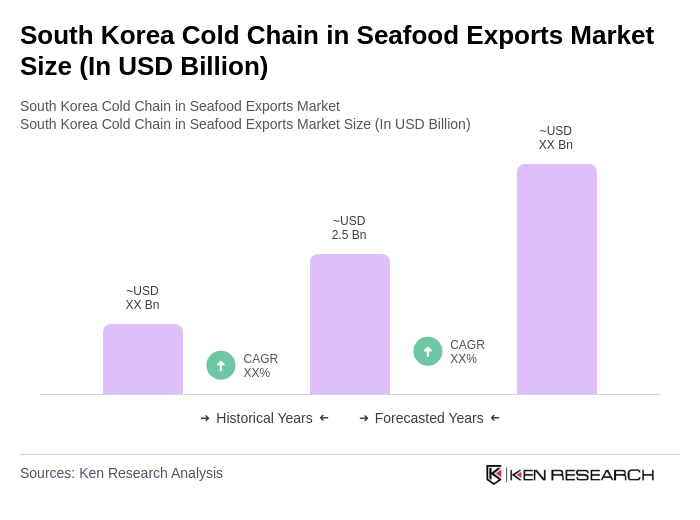
The South Korea Cold Chain in Seafood Exports Market is valued at approximately USD 2.5 billion, reflecting a significant growth driven by rising demand for fresh and frozen seafood products and advancements in cold chain logistics and technology.

What makes us stand out is that our consultants follow Robust, Refine and Result (RRR) methodology. Robust for clear definitions, approaches and sanity checking, Refine for differentiating respondents' facts and opinions, and Result for presenting data with story.

We have set a benchmark in the industry by offering our clients with syndicated and customized market research reports featuring coverage of entire market as well as meticulous research and analyst insights.

While we don't replace traditional research, we flip the method upside down. Our dual approach of Top Bottom & Bottom Top ensures quality deliverable by not just verifying company fundamentals but also looking at the sector and macroeconomic factors.

With one step in the future, our research team constantly tries to show you the bigger picture. We help with some of the tough questions you may encounter along the way: How is the industry positioned? Best marketing channel? KPI's of competitors? By aligning every element, we help maximize success.

Our report gives you instant access to the answers and sources that other companies might choose to hide. We elaborate each steps of research methodology we have used and showcase you the sample size to earn your trust.

If you need any support, we are here! We pride ourselves on universe strength, data quality, and quick, friendly, and professional service.













