Region:Europe
Author(s):Rebecca
Product Code:KRAB1960
Pages:85
Published On:October 2025
By Type:The market can be segmented into various types of lubricants and automotive fluids, including engine oils, transmission fluids, brake fluids, hydraulic fluids, greases, coolants, metalworking fluids, and other specialized lubricants. Each of these sub-segments plays a crucial role in the overall market dynamics.
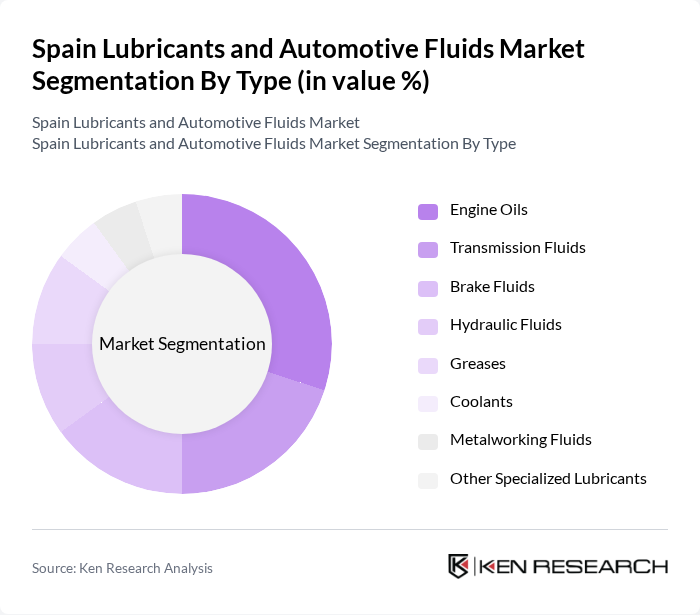
The engine oils segment is the dominant player in the market, accounting for a significant share due to the increasing number of vehicles and the necessity for regular oil changes. Engine oils are essential for vehicle performance, providing lubrication, cooling, and cleaning, which are critical for engine longevity. The trend towards synthetic and high-performance oils is also driving growth in this segment, as consumers are becoming more aware of the benefits of using advanced lubricants.
By End-User:The market can also be segmented based on end-users, which include passenger vehicles, commercial vehicles, two-wheelers (motorcycles & scooters), industrial applications, marine, and agriculture. Each end-user category has distinct requirements and contributes differently to the overall market.
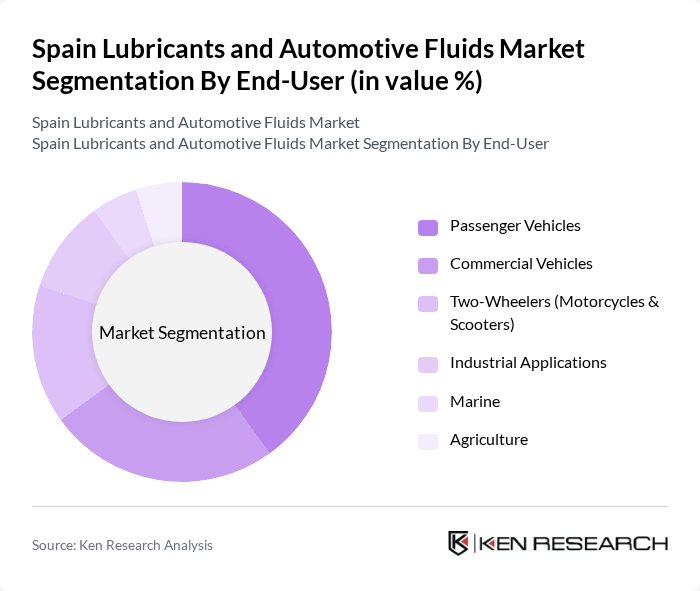
The passenger vehicles segment leads the market, driven by the high number of personal vehicles and the increasing focus on vehicle maintenance. The growing trend of car ownership, especially in urban areas, has led to a consistent demand for lubricants tailored for passenger vehicles. Additionally, the rise in disposable income and changing consumer preferences towards premium lubricants are further enhancing this segment's growth.
The Spain Lubricants and Automotive Fluids Market is characterized by a dynamic mix of regional and international players. Leading participants such as Repsol S.A., Cepsa (Compañía Española de Petróleos, S.A.U.), TotalEnergies SE, Castrol Limited (BP PLC), ExxonMobil Corporation (Mobil), Fuchs Petrolub SE, Valvoline Inc., Shell plc, Petronas Lubricants International, Gulf Oil International, Klüber Lubrication (Freudenberg Group), Liqui Moly GmbH, Motul S.A., Bardahl Manufacturing Corporation, Chevron Corporation contribute to innovation, geographic expansion, and service delivery in this space.
The Spain lubricants and automotive fluids market is poised for significant transformation in the coming years, driven by technological advancements and evolving consumer preferences. The shift towards eco-friendly products and the increasing adoption of electric vehicles will reshape the competitive landscape. Additionally, the integration of digital technologies in supply chain management is expected to enhance operational efficiency. As manufacturers adapt to these trends, the market will likely witness innovative product offerings and improved sustainability practices, positioning it for robust growth.
| Segment | Sub-Segments |
|---|---|
| By Type | Engine Oils Transmission Fluids Brake Fluids Hydraulic Fluids Greases Coolants Metalworking Fluids Other Specialized Lubricants |
| By End-User | Passenger Vehicles Commercial Vehicles Two-Wheelers (Motorcycles & Scooters) Industrial Applications Marine Agriculture |
| By Distribution Channel | Retail Outlets Online Sales Direct Sales Distributors |
| By Application | Automotive Industrial Marine Agriculture Aerospace Heavy Machinery |
| By Packaging Type | Bulk Packaging Retail Packaging Industrial Packaging |
| By Price Range | Economy Mid-Range Premium |
| By Brand Loyalty | Brand-Conscious Consumers Price-Sensitive Consumers Quality-Driven Consumers |
| Scope Item/Segment | Sample Size | Target Respondent Profiles |
|---|---|---|
| Automotive OEMs | 50 | Product Development Managers, Procurement Officers |
| Aftermarket Service Centers | 80 | Service Managers, Workshop Owners |
| Lubricant Distributors | 40 | Sales Managers, Distribution Coordinators |
| Regulatory Bodies | 40 | Policy Makers, Environmental Compliance Officers |
| Consumer Insights | 60 | Car Owners, Fleet Managers |
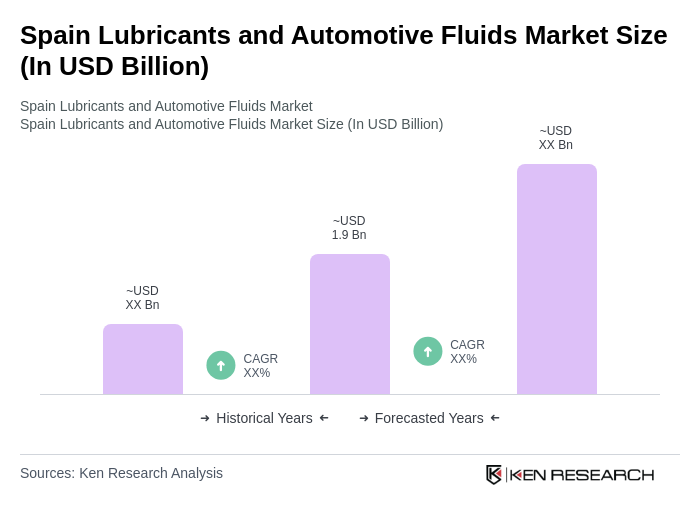
The Spain Lubricants and Automotive Fluids Market is valued at approximately USD 1.9 billion, reflecting a significant growth driven by the increasing demand for high-performance lubricants and the rising number of vehicles on the road.

What makes us stand out is that our consultants follow Robust, Refine and Result (RRR) methodology. Robust for clear definitions, approaches and sanity checking, Refine for differentiating respondents' facts and opinions, and Result for presenting data with story.

We have set a benchmark in the industry by offering our clients with syndicated and customized market research reports featuring coverage of entire market as well as meticulous research and analyst insights.

While we don't replace traditional research, we flip the method upside down. Our dual approach of Top Bottom & Bottom Top ensures quality deliverable by not just verifying company fundamentals but also looking at the sector and macroeconomic factors.

With one step in the future, our research team constantly tries to show you the bigger picture. We help with some of the tough questions you may encounter along the way: How is the industry positioned? Best marketing channel? KPI's of competitors? By aligning every element, we help maximize success.

Our report gives you instant access to the answers and sources that other companies might choose to hide. We elaborate each steps of research methodology we have used and showcase you the sample size to earn your trust.

If you need any support, we are here! We pride ourselves on universe strength, data quality, and quick, friendly, and professional service.













