Region:Europe
Author(s):Rebecca
Product Code:KRAB4191
Pages:99
Published On:October 2025
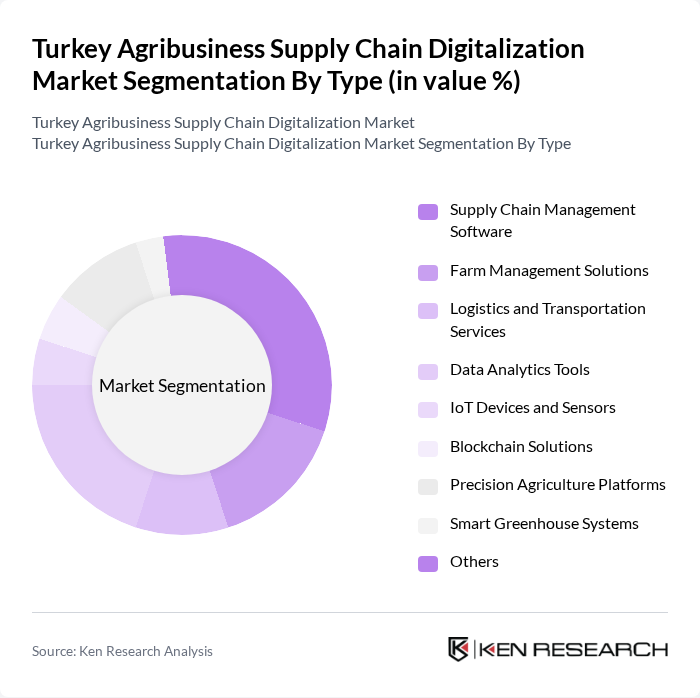
By Type:The market is segmented into various types, including Supply Chain Management Software, Farm Management Solutions, Logistics and Transportation Services, Data Analytics Tools, IoT Devices and Sensors, Blockchain Solutions, Precision Agriculture Platforms, Smart Greenhouse Systems, and Others. Among these, Supply Chain Management Software and Data Analytics Tools are particularly prominent due to their critical role in enhancing operational efficiency, traceability, and data-driven decision-making processes in agribusiness .
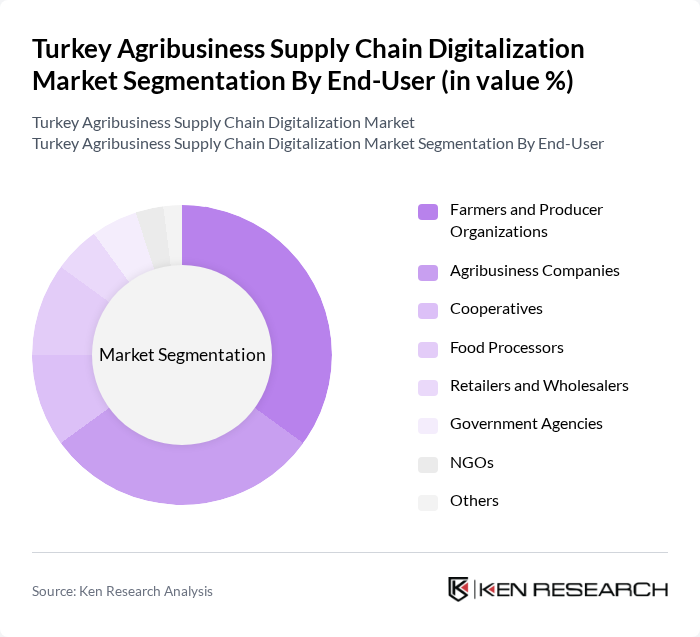
By End-User:The end-user segmentation includes Farmers and Producer Organizations, Agribusiness Companies, Cooperatives, Food Processors, Retailers and Wholesalers, Government Agencies, NGOs, and Others. Agribusiness Companies and Farmers and Producer Organizations are the leading segments, driven by their need for efficient supply chain management, traceability, and data-driven decision-making to enhance productivity and profitability .
The Turkey Agribusiness Supply Chain Digitalization Market is characterized by a dynamic mix of regional and international players. Leading participants such as Doktar Tar?m ve Teknoloji A.?., Tarfin Tar?m A.?., Tarlasera (Agrovisio Teknoloji A.?.), Vodafone Turkey (Vodafone Ak?ll? Tar?m Çözümleri), Ziraat Bankas? (Digital Agriculture Financing), Anadolu Efes Birac?l?k ve Malt Sanayii A.?., P?nar Süt Mamulleri Sanayi A.?., Ekol Lojistik A.?., TAT G?da Sanayi A.?., Dardanel Önenta? G?da Sanayi A.?., Yara Türkiye (Yara International ASA), BASF Türk Kimya Sanayi ve Ticaret Ltd. ?ti., Syngenta Türkiye, Netafim Turkey, Turkcell ?leti?im Hizmetleri A.?. (Tar?mcell) contribute to innovation, geographic expansion, and service delivery in this space.
The future of Turkey's agribusiness supply chain digitalization is poised for significant advancements, driven by technological innovations and evolving consumer preferences. As the demand for sustainable practices grows, agribusinesses are likely to invest in precision agriculture and data analytics to optimize resource use. Additionally, the integration of blockchain technology will enhance transparency and traceability, addressing consumer concerns. With government support and increasing investments in agritech, the sector is expected to witness a transformative shift towards a more efficient and digitally-enabled landscape in future.
| Segment | Sub-Segments |
|---|---|
| By Type | Supply Chain Management Software Farm Management Solutions Logistics and Transportation Services Data Analytics Tools IoT Devices and Sensors Blockchain Solutions Precision Agriculture Platforms Smart Greenhouse Systems Others |
| By End-User | Farmers and Producer Organizations Agribusiness Companies Cooperatives Food Processors Retailers and Wholesalers Government Agencies NGOs Others |
| By Application | Crop Management Livestock Management Supply Chain Optimization Market Access Solutions Quality Control & Traceability Inventory Management Yield Monitoring & Forecasting Others |
| By Sales Channel | Direct Sales Online Platforms Distributors Retail Outlets Others |
| By Distribution Mode | Online Distribution Offline Distribution Hybrid Distribution Others |
| By Investment Source | Private Investments Government Funding International Aid Venture Capital Others |
| By Policy Support | Subsidies Tax Incentives Grants Others |
| Scope Item/Segment | Sample Size | Target Respondent Profiles |
|---|---|---|
| Agritech Solutions Adoption | 100 | IT Managers, Agribusiness Owners |
| Supply Chain Digitalization Practices | 90 | Supply Chain Managers, Operations Directors |
| Logistics and Distribution Innovations | 70 | Logistics Managers, Warehouse Managers |
| Data Analytics in Agribusiness | 60 | Data Analysts, Business Intelligence Managers |
| Government Policy Impact on Digitalization | 50 | Policy Makers, Regulatory Affairs Managers |
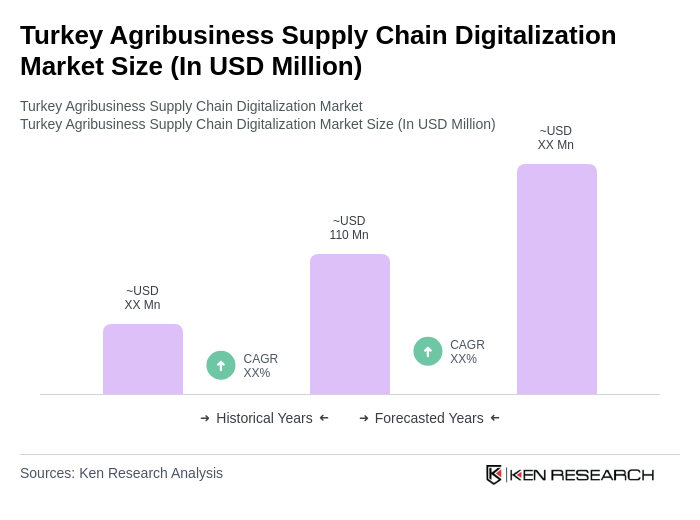
The Turkey Agribusiness Supply Chain Digitalization Market is valued at approximately USD 110 million, reflecting a significant growth trend driven by the adoption of advanced technologies in agriculture, such as precision farming and data analytics.

What makes us stand out is that our consultants follow Robust, Refine and Result (RRR) methodology. Robust for clear definitions, approaches and sanity checking, Refine for differentiating respondents' facts and opinions, and Result for presenting data with story.

We have set a benchmark in the industry by offering our clients with syndicated and customized market research reports featuring coverage of entire market as well as meticulous research and analyst insights.

While we don't replace traditional research, we flip the method upside down. Our dual approach of Top Bottom & Bottom Top ensures quality deliverable by not just verifying company fundamentals but also looking at the sector and macroeconomic factors.

With one step in the future, our research team constantly tries to show you the bigger picture. We help with some of the tough questions you may encounter along the way: How is the industry positioned? Best marketing channel? KPI's of competitors? By aligning every element, we help maximize success.

Our report gives you instant access to the answers and sources that other companies might choose to hide. We elaborate each steps of research methodology we have used and showcase you the sample size to earn your trust.

If you need any support, we are here! We pride ourselves on universe strength, data quality, and quick, friendly, and professional service.













